



Predator: Badlands opened to $40 million domestically and $80 million worldwide in its first weekend, delivering the best domestic opening in franchise history and proving there’s still life in the 38-year-old property. With a reported production budget of $100 million, the film is already halfway to profitability before international markets fully kick in.
The numbers tell a story of resurrection. Badlands scored an 85% critics rating on Rotten Tomatoes alongside a 95% verified audience score, also the highest marks any Predator film has ever received. It earned an A- CinemaScore, another franchise first. Audiences gave it five out of five stars on PostTrak. The reception is enthusiastic in ways the franchise hasn’t seen since 1987.
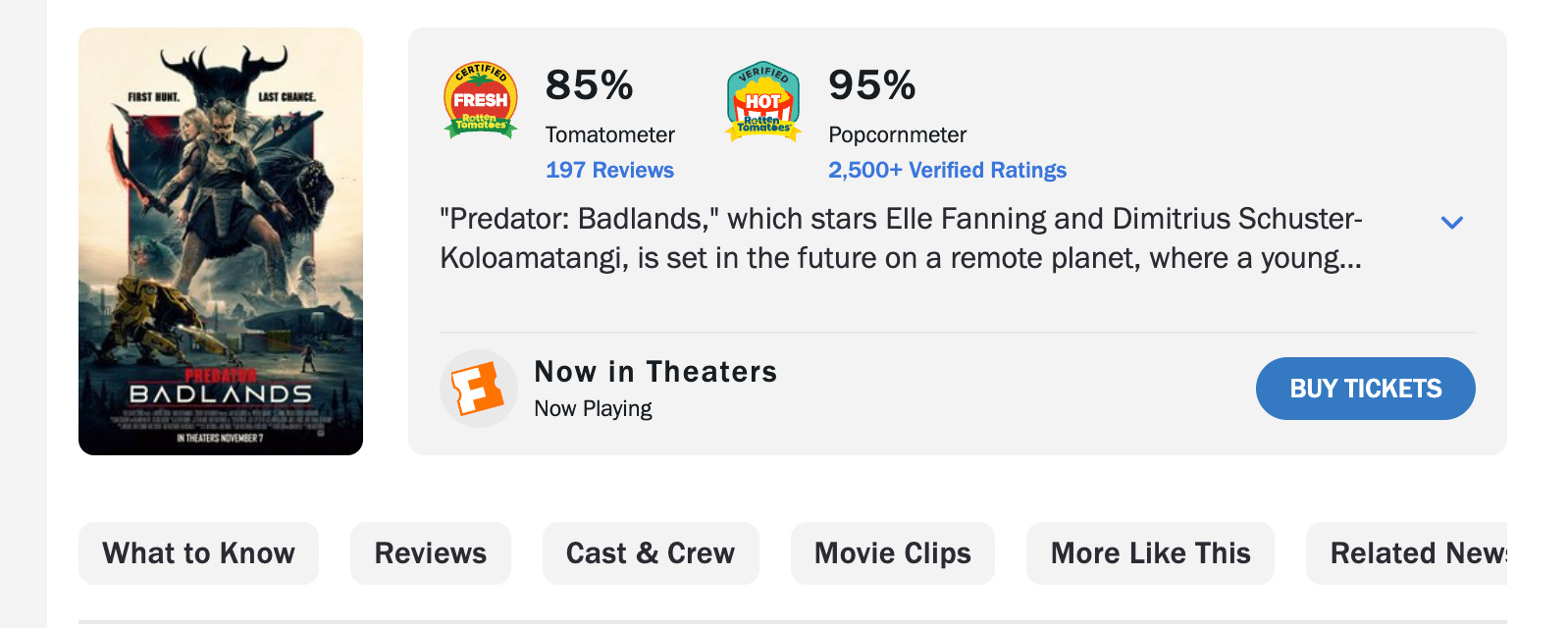
Trachtenberg made an odd choice in making a Predator the protagonist, casting Elle Fanning as a synthetic opposite a newcomer playing the alien hunter, and delivered a film that works both as action spectacle and comedic buddy cop movie. It felt a lot like a Marvel movie compared to the old Predator, and many wondered if it would work. The gamble paid off.
The franchise needed this. After nearly four decades of diminishing returns and creative dead ends, Predator had become a cautionary tale about squandering IP. John McTiernan’s 1987 original starring Arnold Schwarzenegger earned $98.3 million worldwide on a $15 million budget, becoming an instant classic that defined the action genre for a generation. The film worked because it was simple: elite soldiers hunted by an invisible alien warrior in the jungle. Schwarzenegger’s Dutch Schaefer survived through intelligence and determination, not superior firepower.
Stephen Hopkins’ Predator 2 (1990) moved the action to Los Angeles and swapped Schwarzenegger for Danny Glover. The film earned $57 million worldwide on a $35 million budget—a commercial disappointment that killed sequel plans for over a decade. Critics savaged it, audiences stayed away, and the franchise went dormant.
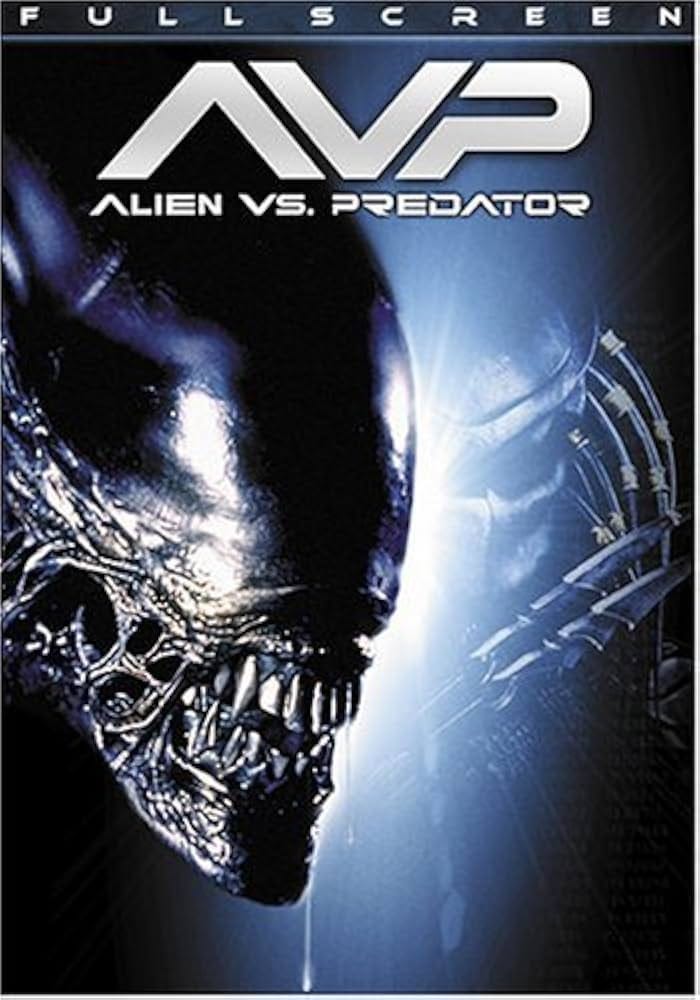
The property resurfaced in 2004 with AVP: Alien vs. Predator, Paul W.S. Anderson’s PG-13 mashup that pitted the two iconic creatures against each other in an Antarctic pyramid. The film earned $177.4 million worldwide on a $60 million budget, becoming the highest-grossing Predator-related film to that point. But the R-rating was gone, the violence neutered, and fans felt betrayed. The sequel, Aliens vs. Predator: Requiem (2007), doubled down on darkness quite literally, with cinematography so murky audiences couldn’t see the action. It earned $130.3 million worldwide on a $40 million budget, enough to turn a profit but not enough to justify continuing the crossover concept.
Robert Rodriguez produced Predators in 2010, a back-to-basics approach starring Adrien Brody as a mercenary dropped on an alien game preserve. The film earned $127.2 million worldwide on a $40 million budget—respectable but not spectacular. It felt like a retread, offering nothing the original hadn’t done better.
Shane Black’s The Predator (2018) should have been the franchise’s salvation. Black starred in the 1987 original and understood what made it work. Instead, he delivered a tonal mess that tried to be comedy, horror, and action simultaneously while succeeding at none. The film earned $160.5 million worldwide on a $88 million budget, a commercial failure that lost money after marketing costs. Critics hated it. Audiences were confused. The franchise looked dead.
Then came Dan Trachtenberg.

Prey debuted on Hulu in August 2022, a prequel set in 1719 following Naru, a young Comanche warrior facing a Predator in the Great Plains. The film garnered a lot of heat for being so female-centric in a time when so many Hollywood films were going that direction. However, it didn’t seem to faze most fans. It became Hulu’s most-watched premiere ever, earned critical acclaim, and reminded everyone that Predator stories could still work if filmmakers respected the material.
Trachtenberg followed with Predator: Killer of Killers in June 2025, an animated anthology exploring different Predator encounters throughout history. The Hulu release further expanded the mythology while maintaining quality control.
Badlands moved the franchise in a different direction, not following up on Prey as many expected from Trachtenberg. Set in the future on a remote planet, the film follows Dek, a young Predator outcast from his clan, who teams with Thia, a Weyland-Yutani synthetic played by Elle Fanning. Dek flies to Genna, the most dangerous planet in the universe, for an unsanctioned hunt to prove himself. The premise inverts franchise: the Predator becomes the hero, the human becomes the ally, and the story explores redemption rather than survival.
The $40 million domestic opening surpasses AVP: Alien vs. Predator’s $38.4 million debut in 2004, claiming the franchise crown without inflation adjustment. More importantly, it demonstrates audience hunger for quality Predator content. The film opened well ahead of $25 million tracking estimates, suggesting strong word-of-mouth drove ticket sales beyond marketing reach.
The $80 million global total after one weekend positions Badlands for a strong theatrical run. China hasn’t reported yet, and several major markets are still rolling out. If the film maintains momentum, and the audience scores suggest it will, a $200-250 million worldwide total is achievable. Against a $100 million budget, that’s a solid hit that justifies continued investment in the franchise.
“Predator: Badlands is a rollicking adventure that transforms one of cinema’s most iconic brutes into a hero worth rooting for,” reads the Rotten Tomatoes critics consensus.
The A- CinemaScore is particularly telling. Horror and action films rarely score above B+, and franchise entries typically perform worse than originals. Badlands matched or exceeded audience expectations, delivering the experience trailers promised. In an era where marketing often oversells and underdelivers, that’s a genuine achievement.
Though there are certainly flaws with the film, it is something that worked well enough that it was entertaining (see my full review here).
The film’s success validates 20th Century Studios’ decision to give Trachtenberg creative freedom. After Disney acquired Fox in 2019, the Predator franchise’s future looked uncertain. Disney doesn’t typically prioritize R-rated action properties, and the brand had been damaged by The Predator’s failure. Letting Trachtenberg experiment with Prey on streaming was a low-risk move. Greenlighting Badlands for theatrical release with a $100 million budget showed real confidence.
That confidence paid off. Badlands proves the franchise can evolve beyond “soldiers vs. alien hunter” while maintaining core appeal. The Predator mythology is rich enough to support different time periods, different protagonists, and different narrative approaches. Trachtenberg understands this in ways previous filmmakers didn’t.
What do you think? Has Dan Trachtenberg finally cracked the code for sustainable Predator sequels?
I’m putting out a trilogy of some of the best science fiction in years, bringing back the sense of wonder and exploration to the genre. The crowdfund is open now, and if you miss what sci-fi used to be, this is the series for you. Back it today.

"What do you think? Has Dan Trachtenberg finally cracked the code for sustainable Predator sequels?'
No but he did get lucky. I've yet to see it myself (plan to see it later today) but of the reviews I've heard from trusted sources it;s a serviceable popcorn film and that's why its not bombed. It still has annoying pro-female empowerment moments but their few enough you can just ignore them and enjoy the rest which is a lot of well done action. If PREDATORS is going to realy suced they ned to do better than BADLANDS.
"Robert Rodriguez produced Predators in 2010, a back-to-basics approach starring Adrien Brody as a mercenary dropped on an alien game preserve. The film earned $127.2 million worldwide on a $40 million budget—respectable but not spectacular. '
True but what's most important to takeaway from PREDATORS is that Rodriguez proved you didn't ned toa huge budget to make a film that could be profitable. in 2010, 40 million for a Predators movie was a low budget. I believe lack of marketing and stiff competition. Other movies at the Box Office at the same time included; DESPICABLE ME, TWILIGHT SAGA, TOY STORY 3 and IRON MAN just to name a few. They released this movie during heavy competition so its not surprising it did less then it likely could have.