


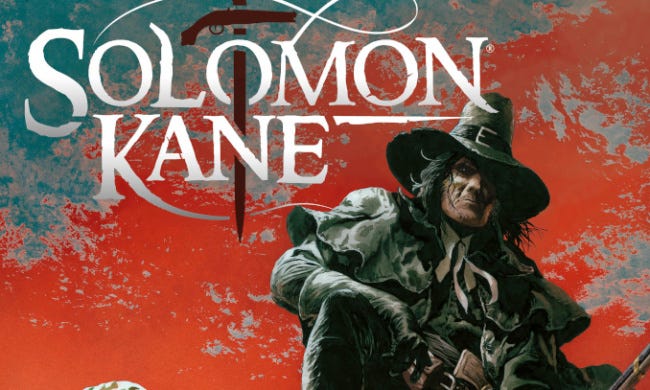
Patrick Zircher and Titan Comics proved once again that modern comics can still deliver quality Robert E. Howard adaptations. Solomon Kane: The Serpent Ring collects the four-issue miniseries into a gorgeous graphic novel that respects the source material.
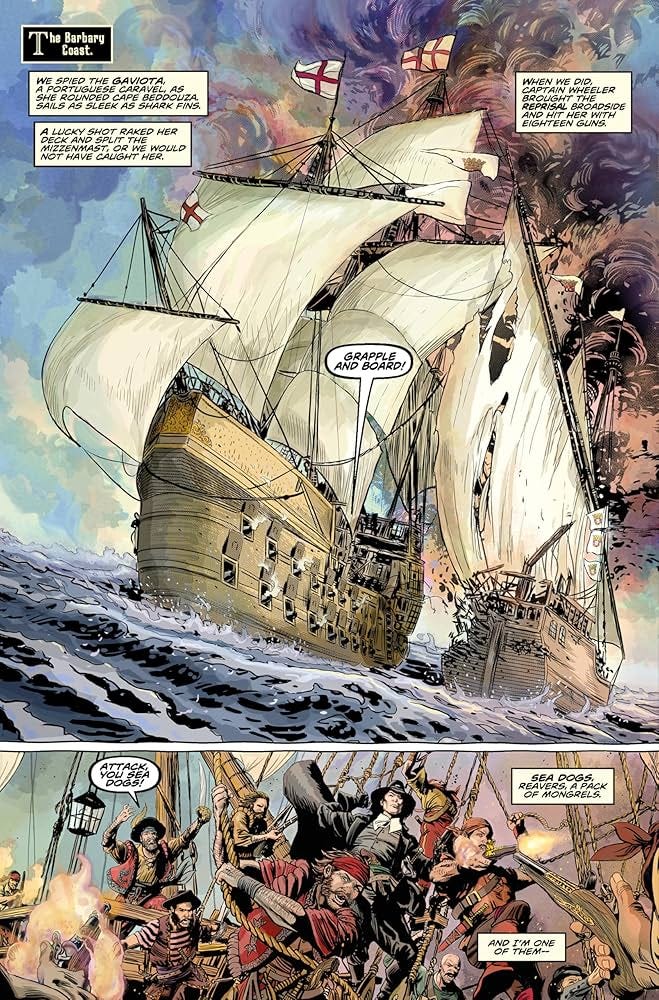
Zircher earned his reputation through decades of mainstream work at Marvel and DC, but his Solomon Kane work might be the best of his career. The art is stunning. Every panel drips with detail from swirling clouds rendered almost impressionistically, ships drawn with architectural precision, figures that move with weight and purpose. Zircher handled pencils, inks, and most of the colors himself (with assists on issues three and four), giving the book a visual consistency that’s rare in modern comics.
The shift from his previous black-and-white Solomon Kane backup story in Savage Sword of Conan to full color changes the tone. The black-and-white work had a gritty, visceral quality that matched the character’s Puritan severity. The Serpent Ring’s vibrant colors make it more swashbuckling, less oppressive. The colors are rich without being garish, atmospheric without muddying the linework.
Solomon Kane enters the narrative pursuing rumors of supernatural evil. The Puritan warrior remains true to Howard’s characterization as a grim, relentless, driven by faith and a compulsion to fight evil wherever he finds it.
The Serpent Ring ties into Titan’s recent Conan event through the titular artifact, a relic from the Conan mythos that bridges the two properties. It’s a clever connection that enriches both without requiring readers to follow multiple series. The ring grants power and corrupts those who seek it in standard sword-and-sorcery fare, but Zircher executes it with enough craft that familiar elements feel fresh.
The pacing is deliberate. The first two issues establish the situation, introduce Kane’s dangers, and build atmosphere. Some readers might find the setup slow, but it’s necessary worldbuilding. By the time Kane arrives and the supernatural threats escalate, the groundwork is laid for payoffs that land with impact.
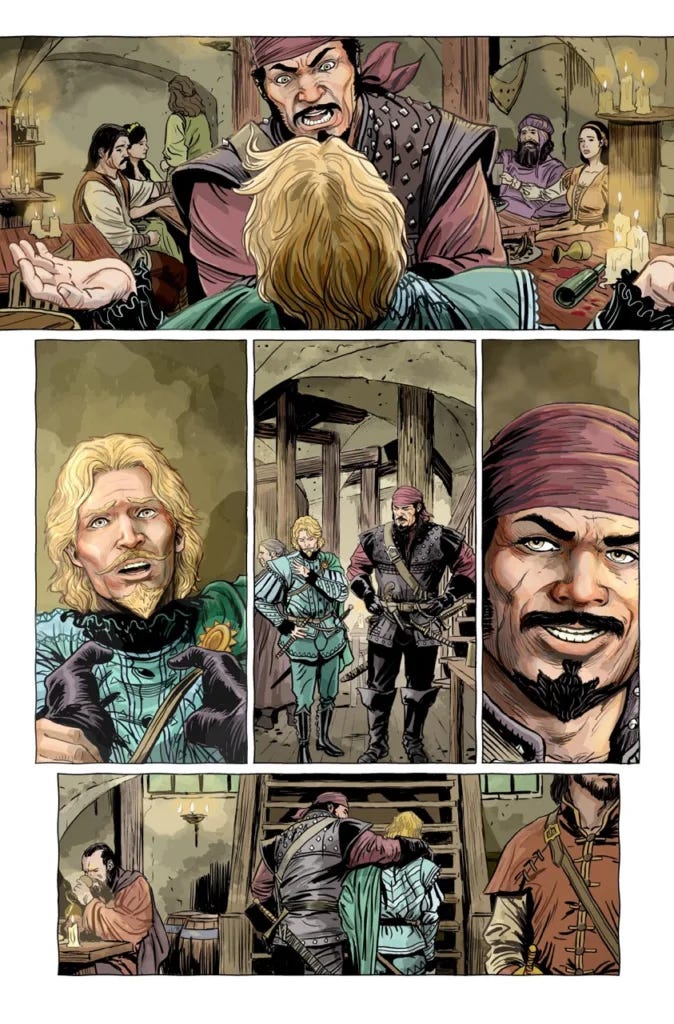
Zircher avoids the found-family trope that plagues modern storytelling. When Kane teams up with other characters, including a woman seeking her kidnapped father and a brigand with his own agenda, it’s an alliance of convenience, not friendship. The brigands betray the group. People die. Trust is a liability. That’s refreshing. Too many modern comics assume every protagonist needs a surrogate family. Solomon Kane stories work because the characters are isolated, desperate, and operating in a world where betrayal is expected.
The action sequences are clear and brutal. Zircher’s years drawing superhero fights translate well to sword-and-sorcery combat. When Kane swashbuckles in at the climax to save the day, it feels earned rather than convenient. The final confrontation delivers the catharsis the buildup promised.
There are minor modernisms that feel out of place. A Jewish character worries about oppression in ways that feel contemporary rather than period-appropriate. The brigand treats his Black guide poorly in a scene that reads like a “white guy bad, Black guy noble” setup common in current media. Kane makes a comment about slavery that sounds like a modern writer’s conscience rather than a 17th-century Puritan’s perspective. These moments are subtle, but they’re noticeable if you’re paying attention.
One theological quibble: an evil priestess slays a priest who invokes Christ’s name, and the invocation provides no protection. In the Solomon Kane universe, faith matters. Kane’s Christianity is a source of strength against supernatural evil. Having a faithful priest’s prayer fail completely feels wrong for the setting. Maybe it’s defensible, but in a pulp story where the hero’s Puritan convictions give him power against darkness, it’s jarring when another Christian’s faith is shown as impotent.
These are nitpicks. The book succeeds far more than it stumbles. Zircher delivered a complete, professional product. The story has a beginning, middle, and end. The art is exceptional. The book was finished before the Kickstarter launched, so backers received exactly what was promised on schedule. That’s increasingly rare in crowdfunded comics.
Solomon Kane: The Serpent Ring proves the pulp genre still has life. Zircher is not trying to reinvent Solomon Kane or comment on the problematic elements of pulp fiction. He’s telling a Solomon Kane story with craft and respect for what made the character work in the first place.
Titan’s Conan and Robert E. Howard line has been one of the bright spots in modern comics. They’re treating these properties seriously, hiring talented creators, and producing quality books. The Serpent Ring is another success in that line. If you’re a fan of Howard’s work, pulp adventure, or just well-crafted comics, this is worth your time and money.
Patrick Zircher has expressed interest in doing more Solomon Kane stories. Based on The Serpent Ring’s quality, Titan should let him. There aren’t many creators working today who understand pulp fiction well enough to adapt it faithfully while making it feel vital. Zircher is one of them. Give him more Howard properties and let him work.
Solomon Kane: The Serpent Ring is a win for pulp fans, a win for Titan Comics, and proof that respecting source material and delivering quality craftsmanship still matters. In an industry drowning in mediocrity and ideological posturing, that’s worth celebrating.

Rating: 9/10
Minor modernisms and one theological misstep keep it from perfection, but the art is exceptional, the story is solid, and the book delivers exactly what Solomon Kane fans want. Highly recommended.
What do you think? Are you picking up The Serpent Ring, or have you already read it?
I enjoyed the short story compilation of Howard's, but found the Christianity of Howard/Kane to be very tragic. There was no understanding of the Bible, apologetics, nor of Creation... the author confessed a sad acceptance of Evolution in it, back then before the modern explosion of Creation Science starting about 2000, that is revealing the 150+ years of lies evolutionism has beaten the drums upon authors and storytellers. Kane was a frustrated blind faith warrior, which isn't necessarily bad, but boy a few Bible study sessions with some fellow Christian men could have really helped. Apologetics didn't even come into popular culture until the Case For Christ by Les Strobel wrote his book that became a best seller and helped start a revival.
But a great read nonetheless bridging the antediluvian Hyboria with the Age of Black Powder.