



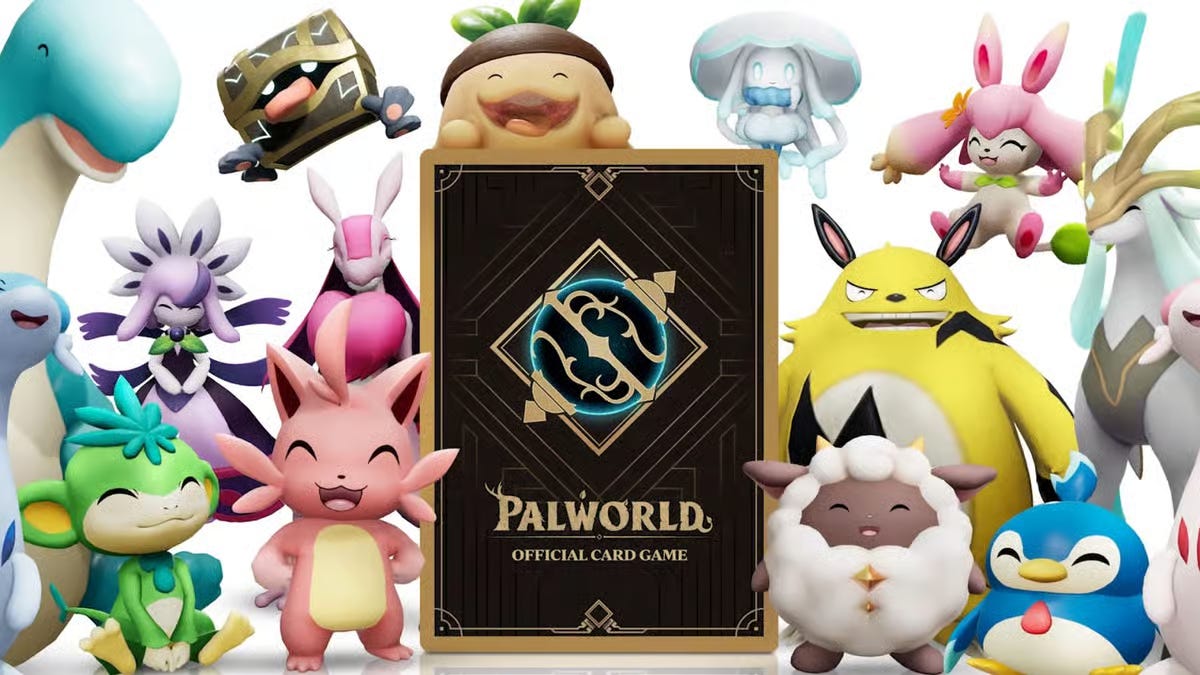
Pocketpair announced that Palworld is getting its own trading card game, launching July 30, 2026, in a move that will almost certainly intensify the company’s ongoing legal battle with Nintendo and The Pokémon Company. The tabletop expansion comes as the survival game continues fighting patent infringement lawsuits in Japanese courts.
According to details shared on the game’s official website, the Palworld TCG is designed as a two-player competitive card game built around the same core mechanics that made the creature-collecting survival game controversial. Players will deploy different Pals, use their unique traits, gather resources, and build bases as they battle toward victory.
“Team up with your trusty Pals and experience the thrill of overcoming formidable enemies through this exciting trading card game,” reads the official description. The card game is structured to mirror Palworld’s mix of creature collecting, base management, and tactical combat, with each Pal bringing unique abilities that allow players to create different strategies.
The announcement comes at a particularly contentious moment. Nintendo and The Pokémon Company filed patent infringement lawsuits against Pocketpair in September 2024, claiming Palworld violates three patents related to monster capture mechanics and character mounting systems. The case involves patents granted by the Japan Patent Office in 2024, though they derive from earlier Nintendo patents dating to 2021.
Palworld exploded onto the gaming scene in January 2024, quickly becoming one of Steam’s most-played games with over 2 million concurrent players. The game’s premise, essentially “Pokémon with guns,” generated immediate controversy and comparisons to Nintendo’s flagship franchise. Players capture creatures called Pals in spheres, use them for combat and labor, and can even butcher them for resources or enslave human NPCs.
The similarities to Pokémon sparked accusations of plagiarism, with some designers claiming certain Pal designs closely resembled specific Pokémon. However, Nintendo’s lawsuit focuses on gameplay mechanics rather than character designs, specifically targeting Palworld’s creature capture and mounting systems.
The legal battle has seen several developments. In October 2025, the Japan Patent Office rejected one of Nintendo’s monster capture patents for lacking originality, citing older games like ARK: Survival Evolved (2015), Monster Hunter 4 (2013), and ironically, Pokémon Go (2016) as prior art. While this non-final decision doesn’t directly impact the lawsuit, it casts doubt on the validity of the patents Nintendo is using against Palworld.
Nintendo has also rewritten patents mid-lawsuit and argued that game mods shouldn’t count as prior art because they’re “not full games.” The aggressive legal maneuvering suggests Nintendo views Palworld as a serious threat to Pokémon’s market dominance.
Now, Pocketpair is entering the trading card game space, directly competing with one of Nintendo’s most profitable ventures. The Pokémon Trading Card Game generates billions in annual revenue. According to The Pokémon Company’s financial reports, the TCG saw record sales in 2023, with the global market for Pokémon cards estimated at over $5 billion annually. Rare cards regularly sell for thousands of dollars, and competitive tournaments draw massive audiences.
The Pokémon TCG has maintained popularity for nearly three decades since its 1996 launch in Japan. Recent sets have broken sales records, with special promotional cards and collaborations driving collector demand. The game’s competitive scene includes World Championships with substantial prize pools, and Pokémon card openings have become a YouTube phenomenon, generating millions of views.
Palworld’s entry into this market is a direct challenge to Pokémon’s trading card dominance. While no pricing, card lists, or starter deck details have been revealed yet, the July 30, 2026 release date gives Pocketpair less than eight months to develop, manufacture, and distribute a competitive TCG.

The Palworld card game will need to differentiate itself from Pokémon while maintaining the survival and base-building elements that made the video game unique. According to Dexerto, players will “fight alongside their Pal companions” while facing off against opponents, with matches focused on strategic and tactical battles that reward smart deployment and synergy between cards.
The timing raises questions about Pocketpair’s strategy. Launching a trading card game while fighting patent lawsuits over the video game seems provocative, potentially giving Nintendo additional ammunition in court. However, it also demonstrates Pocketpair’s confidence in their legal position and commitment to expanding the Palworld brand despite legal pressure.
The card game announcement follows other Palworld expansions. The game received its 1.0 full release in September 2025 after spending over a year in early access. Pocketpair also announced Palfarm, a cozy farming spin-off, just days after Nintendo revealed Pokémon Pokopia, a similar farming game.
Whether the Palworld TCG can compete with Pokémon’s established market remains to be seen. Pokémon benefits from decades of brand recognition, established distribution networks, and a massive competitive scene. Palworld offers novelty and the appeal of a scrappier underdog challenging an industry giant.
For now, Palworld fans have a July 30, 2026 date to mark on their calendars. Whether the trading card game succeeds commercially or becomes another front in the legal war between Pocketpair and Nintendo, it represents a bold move by a company refusing to back down from the gaming industry’s most litigious giant.
What do you think about Palworld launching a trading card game while fighting Nintendo in court?
NEXT: The Dice Tower Contributor And Gaming Journalist Try To Cancel “Corps Of Discovery” Board Game