


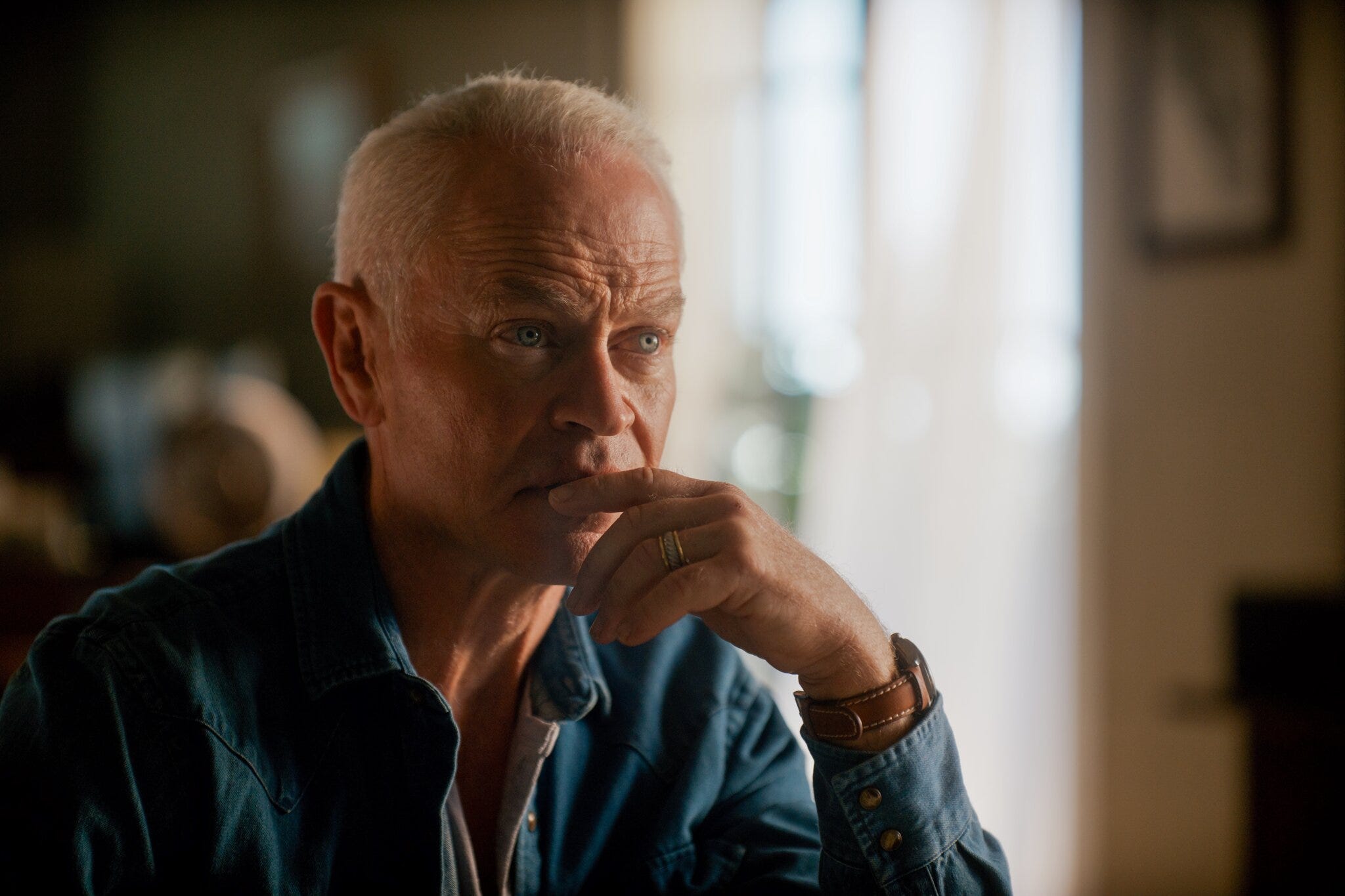
Actor Neal McDonough known for his role as Damien Darhk in the Arrowverse, Robert Quarles in Justified, Dave Williams in Desperate Housewives, and a plethora of character roles in movies explains why faith-driven films matter.
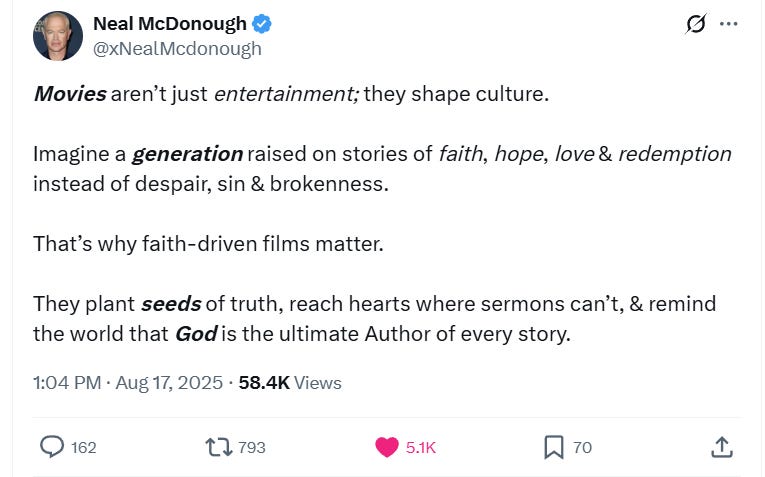
In a post to X, McDonough stated, “Movies aren’t just entertainment; they shape culture. Imagine a generation raised on stories of faith, hope, love & redemption instead of despair, sin & brokenness. That’s why faith-driven films matter.”
“They plant seeds of truth, reach hearts where sermons can’t, & remind the world that God is the ultimate Author of every story,” he concluded.
READ: Existing In Perpetual Reaction Is Hell
McDonough is not alone in believing that movies shape culture. The sentiment is also shared by The Mandalorian creator and Iron Man director Jon Favreau. During an appearance at Vanity Fair’s New Establishment Summit, Favreau said, “Understanding that stories for the generation that’s coming of age can open doors to people and help guide the values of our culture if stories are told well. So to me that’s the part that I feel.”
Favreau continued, “That there are life lessons that are in these stories, that carry on the tradition and speaking to [George Lucas] he felt that the western was the genre that helped teach a generation of people coming of age about the value systems that are espoused by that genre, and that Star Wars part of that responsibility is remembering that part of your audience is a whole generation that’s coming of age and through stories we express our values to the next generation. And so one of the things he said was not to lose sight that this is the main audience for stories.”
Pope Paul VI also observed this back in 1963. He wrote in Inter Mirifica, “The principle moral responsibility for the proper use of the media of social communication falls on newsmen, writers, actors, designers, producers, displayers, distributors, operators and sellers, as well as critics and all others who play any part in the production and transmission of mass presentations. It is quite evident what gravely important responsibilities they have in the present day when they are in a position to lead the human race to good or to evil by informing or arousing mankind.”
As far as what a faith-driven film or story looks like, it does not have to be what many see as the narrow Christian Fiction niche market. Rather as novelist Brian Niemeier has explained, it includes “stories that reveal truth and beauty to the widest possible audience. Stories that profoundly affect readers can plant seeds of faith deeper than direct preaching.”
Some examples he shares include Beowulf, Dracula, The Lord of the Rings, and Gene Wolf’s The Book of the New Sun.
Others would include Redwall, The Secret of Nimh, Apocalypto, and The Patriot among others.
What do you make of McDonough’s explanation?
Aye, not just movies. Faith-driven everything.
It's the fight for a morality-based good that delivers. That struggle against fear and hopelessness with an ultimate victory that presents a deep value.
When the "fight" of a premise is about struggling against resistance to the social group-think flavor of the month, the effect is saccharine. It's sweet at first touch but bitter and quickly forgotten - a shallow value.
We need faith-driven video games, too.