


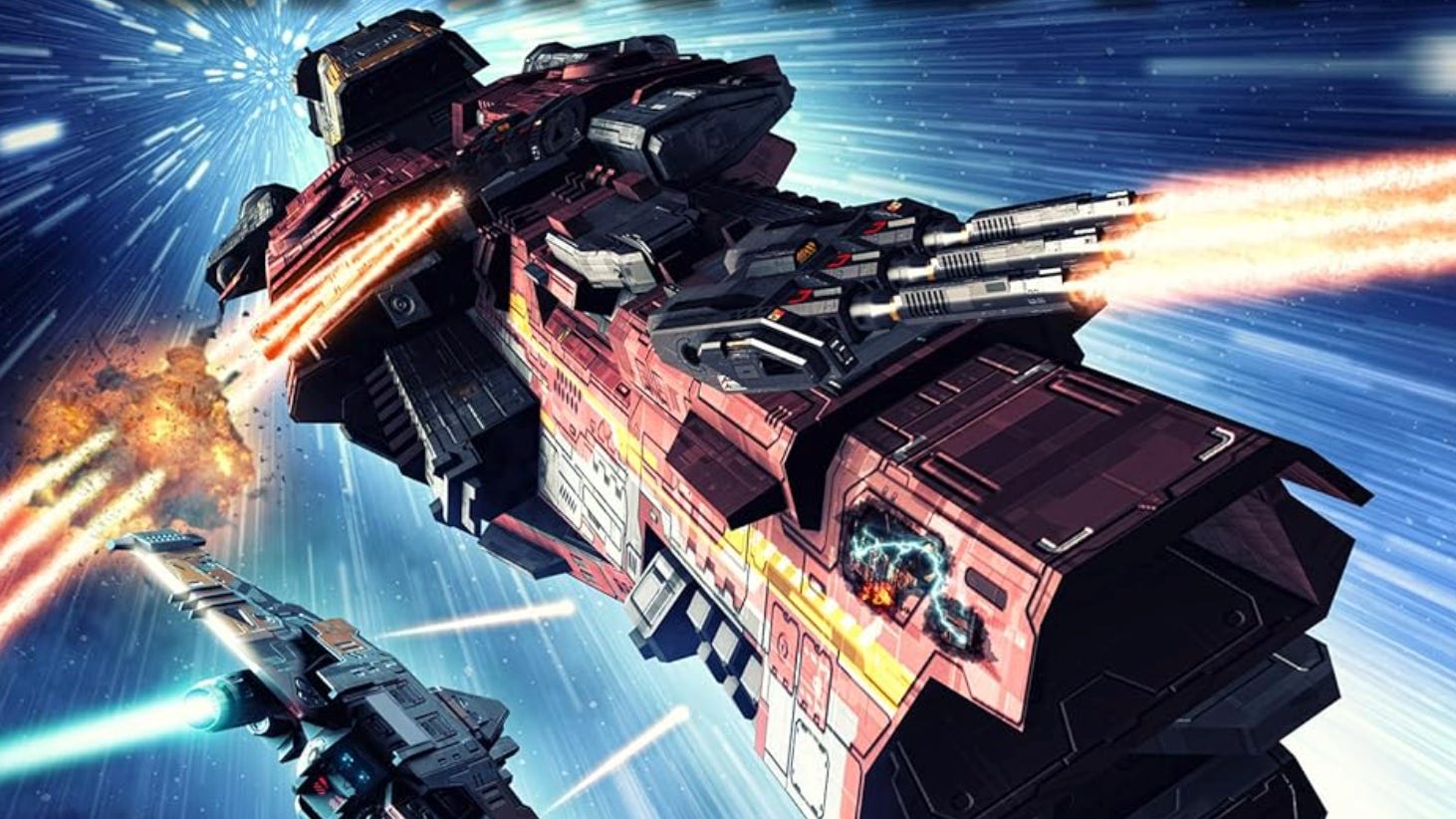
Richard Fox built one of indie sci-fi’s most successful franchises with The Ember War, a series that understood exactly what military science fiction readers want: competent heroes, credible stakes, and action that keeps the pages turning. Thane’s Gambit, the first book in his Ghost Division series, delivers all three and then some.
Fox’s opening chapter is a masterclass in in-medias-res military SF. Sergeant Dorian and his squad are already in the fight on a Blight-consumed planet, the Vorash closing in, one bullet left in the magazine. Fox does not stop to explain the world. He drops you into the smell of recycled air inside a combat suit, the sound of creeping artillery, and the banter of soldiers who have been in bad situations before and expect to survive this one.
The Vorash are legitimately alien and unsettling: coral-armored Hollows built from consumed human skeletons, driven by a hive intelligence that learns and adapts mid-fight. Fox has designed a compelling antagonist species that avoids the usual bug-war clichés, and the tactical mechanics of fighting them, finding the right ammunition mix before the hive adapts, give the combat scenes a problem-solving tension that elevates them above standard action beats.
Thane, the android protagonist introduced in Chapter 2, is the series’ most original asset. He is not a robot soldier. He is something stranger, a cyborg built on whatever human core originally existed inside him, capable of physical feats that defy infantry logic, emotionally detached in ways that read as genuinely alien rather than simply cold. The scene where he terminates a compromised teammate mid-flight is quietly devastating, executed without melodrama, which makes it land harder than a page of anguish would.

Fox’s worldbuilding is ambitious and patient. The Dominion, the Aether Crystal communication network, the distinction between Pioneer Confederacy culture and core human worlds, the Chorus Nodes at the heart of Vorash occupation, the hint of a Dreamer child who perceives across space: all of it suggests a universe with real depth. Fox trusts readers to absorb the world through action and context rather than exposition dumps, and it pays off.
The split between Dorian’s grunt-level POV and Thane’s operative perspective gives the book a structural range that most military SF doesn’t attempt. Fox handles it with discipline. He gives Dorian real estate well past the evacuation, including a quiet scene in the Marauder bay where Dorian describes chocolate cake to brain-boxed mech pilots who can no longer eat. That is the best character work in the book, small and earned and genuinely moving.
Fox understands something many military SF writers miss: soldiers talk like soldiers, not like war-movie soldiers. Niko, Theo, and Juliana bicker, complain, and steal from dead men’s lockers. The loss of Fontanez hits hard because Fox spent the time on the locker scene beforehand, the flask passed around, the nameplate crumpled in a fist. He earns every beat.
There are moments where the prose leans on filter words where the action would carry the weight on its own, and the Maddox POV sits in a slightly different tonal register than the combat chapters around it. Neither issue derails the book. Fox’s instincts are sound enough that the rough edges read like the natural friction of a series finding its full footing which I expect will pick up as the series goes along, much like the Ember War really hit its stride in later books as well.
Thane’s Gambit is a strong series opener. Fox delivers on action, alien design, worldbuilding, and military character work. Ghost Division has the bones of something special, and readers who loved The Ember War will find plenty to sink into here.
What do you think of the Ghost Division series? Let us know.
NEXT: Brandon Sanderson Is Shrinking The Mistborn Crew To Center On Its Strong, Female Lead: Vin
Richard Fox's The Ember War or the series was mentioned twice in my aggregation of the top military sci-fi novels from 31 lists: https://medium.com/@Eric_Kay_SciFi/top-space-mil-soldier-spacemarine-sci-fi-meta-analysis-of-31-lists-4d41428130a2. Jon one of your Star Realms books was listed in one of the 30 lists.