


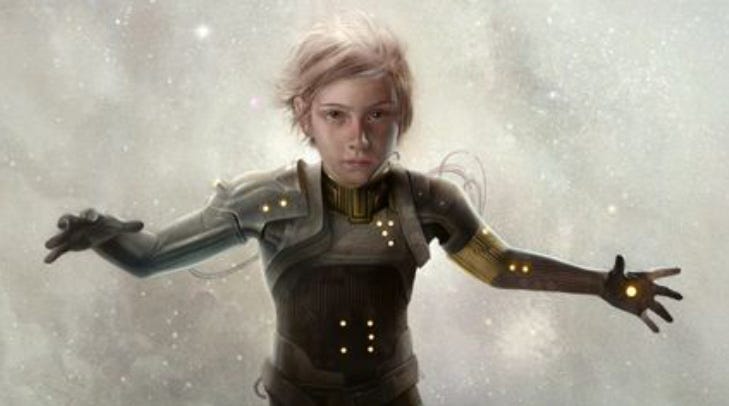
Ender’s Game by Orson Scott Card is hailed as one of the classics of science fiction, but how does it hold up for a current read?
First published in 1985, Ender’s Game by Orson Scott Card still hits like a gut punch. It’s a psychological deep dive into what it means to grow up in a world that’s already decided who you need to be. Set in a future where Earth has narrowly survived two wars with an insectoid alien race known as the Formics, humanity is preparing for a possible third invasion. But instead of training seasoned soldiers, the government decides to mold children into commanders. Kids who can learn fast, think tactically, and adapt in ways adults can’t. That’s where we meet Ender Wiggin, a gifted child recruited to attend Battle School, a zero-gravity military academy orbiting Earth.
Ender is brilliant, but he’s still a kid. That’s the core tension in this novel: watching someone so young navigate high-stakes war games, isolation, manipulation, and the crushing burden of leadership. Card shows the psychological cost of making a child into a weapon. Much of the novel takes place in the Battle Room, a zero-gravity arena where teams of children engage in tactical combat simulations. These scenes are incredibly vivid and dynamic. It’s like watching esports meet boot camp! Ender’s strategies are inventive, thrilling, and always a little bit desperate.

What elevates Ender’s Game from a good sci-fi story to a great one is its moral complexity. Ender is forced again and again to choose between compassion and efficiency, between winning and retaining his humanity. The adults around him (teachers, commanders, mentors) systematically strip away his innocence, justifying their actions with the idea that he’s saving the world. But at what cost?
Without spoiling anything (but come on, it's been 40 years; there was a movie; and this book ranks 1 in Amazon's Military Sci-Fi category; and can always be found among the top 10 in many Best Sci-Fi Books lists), the twist at the end reframes the entire narrative. It’s one of the most devastating reveals in sci-fi literature. Everything Ender’s been through - the pain, the triumph, the alienation - suddenly takes on new meaning, and you’re left sitting there, questioning everything right along with him. Ender’s Game isn’t a feel-good hero story. No, it’s intense, unsettling, and thought-provoking. But if you’re looking for science fiction that combines tactical action with ethical dilemmas and deep psychological insight, it’s a must-read. Ender Wiggin is one of the most layered protagonists in the genre, and his journey stays with you long after the final page.
You can read Ender's Game here.
Watch my full review here:

I read the original short story when it came out, yes I am that old. One of my former soldiers named his son Ender.
Excellent book and it still holds up today.