


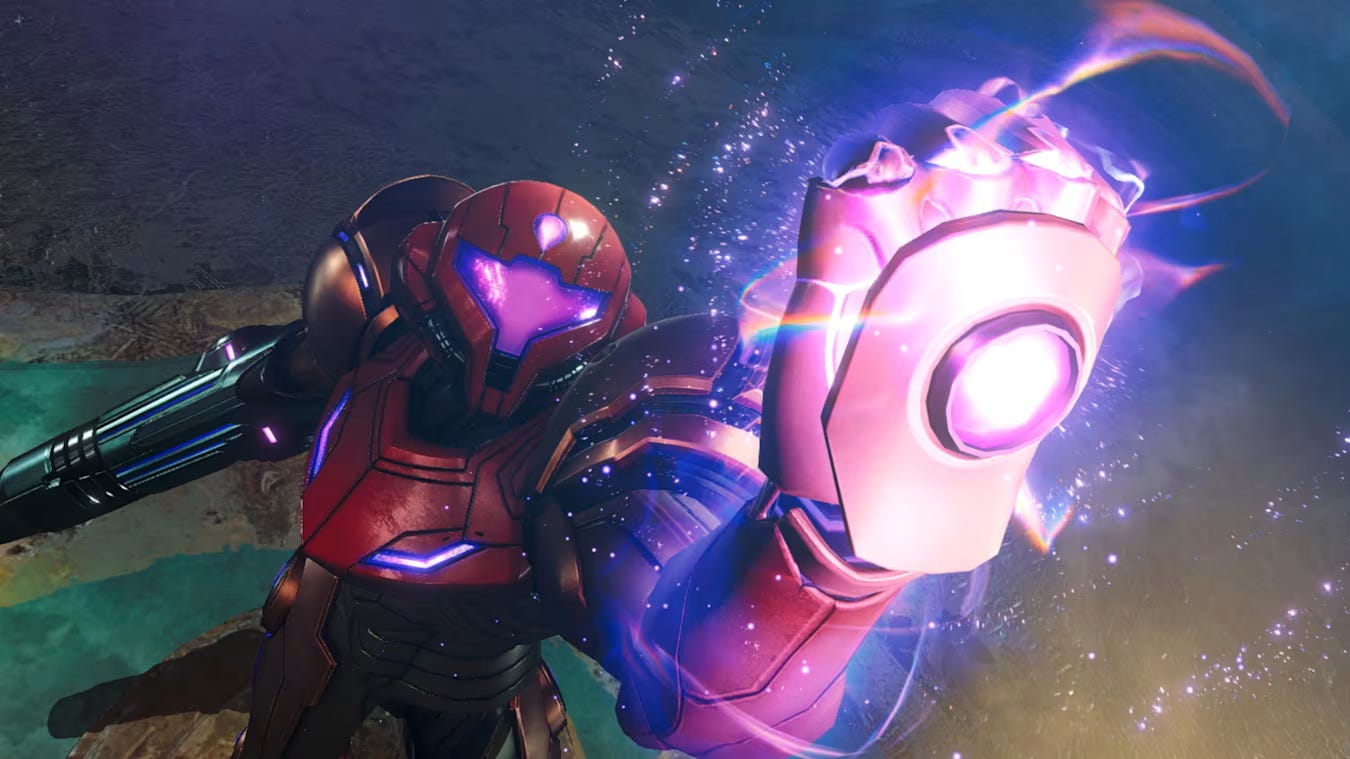
Many Metroid fans who have since long become accustomed to the isolation and alien environs of the past era are, in recent days, feeling very, very displaced. Hold onto that feeling as it becoming more and more common among older gamers. Particularly, the Millennial generation who grew up playing most of the original games that got the ball rolling for many of these franchises in the first place. The current realization is one that I’ve become aware of over the past two decades: Continuing franchises are not made to appeal to the audiences that popularized them in the first place.
This is our modern media dystopia. Look in the mirror, Metroid fan, and repeat the following:
“I am not the intended audience. I am irrelevant.”
Do this until the realization sets it.
If you’re confused about why beloved IPs like Metroid are being distorted in ways that do not befit them, let me make this clear to you: fidelity to tradition is no longer the metric. Massmarket appeal is. You are not the mass market. These developers do not care about what you think, much less what you used to love. If you’re not consuming the soy, you might as well not exist. That is your reality and it is why so many “fanboys” have capitulated and even go out to defend Nintendo.
Commodification and the Lowest Common Denominator
Nintendo does not act for fans nor even primarily for its critics. The numbers critics assign only matter as far as the ritual is concerned. But Nintendo acts for itself and for an imagined audience it wishes to manufacture: future Metroid fans who never experienced the series in its hay-day. So if you or any other pre-established fans have rejected Metroid Prime 4, know that it does not matter to Nintendo. As long as the average “normie” consumer accepts it and consumes it, Nintendo considers that a win.
Nintendo’s wager is simple: that the voices of custodians will be drowned out. That shills will be loud enough, critics safe enough, consumers blind enough, that Metroid’s heritage can be erased without consequence. Each future release will be a gamble. Nintendo bets that appealing to those who do not care about tradition will be more profitable than fidelity to those who do. They hope complaints will be stifled, silenced, covered up. They hope the average consumer will remain deaf and blind, buying the product regardless.
Nintendo, like Disney, does not wish to rely on its established fan base to sustain itself. Instead, Nintendo seeks to cater to a the lowest common denominator: consumers whose interest in games is unnuanced and wholly shaped by advertising. These consumers play what is marketed to them, attaining to what is fashionable or popular in the moment, and that’s it. Therefore, Metroid had to be turned into something more simplified (dumbed down) and digestible. Side characters have been inserted to explain what once needed no explanation. A Federation soldier exclaims, “Wow, it’s Samus!” while another points out the morph ball. This all exists so that the average “normie” gamer will know what is important. What was once discovered at length through haunting atmosphere is now marred by incessant narration and exposition.
For fans capable of critical thought, this is definitely frustrating. They see the dilution and the betrayal of tradition. Yet, what they should realize is their greatest enemy in this regard is not Nintendo, but Nintendo’s defenders. Nintendo has many shills and white knights who, to this day, insist that everything being vomited out by their favorite multinational video game company is good and wholesome, and they will defend Nintendo to the bitter end, even when they know the truth and recognize that this is not good.
Fanboy Consumerism as Replacement Religion
The reason Nintendo shills will never back down, thereby contributing to the worsening of all franchises, is because the value of these franchises has shifted from the product to the fans themselves. Brand name loyalty is a modern-day spiritual practice. It is a liturgy that shapes our hearts and minds. William T. Cavanugh talks about his in his book, Being Consumed.
The market no longer simply provides goods and services, it provides meaning. It offers a counterfeit communion for people who have been bereft of community, binding individuals together not in a shared tradition, but in common consumption. That is the logic at work in fanboyism. To be a Nintendo fanboy doesn’t just mean you enjoy Nintendo games, it means you are participating in a ritual of loyalty where the corporation becomes the object of your devotion. Your identity is built within and subjected to the branding.
Even so, why would a fanboy stand by as these franchises are desecrated? In a word: detachment.
In the modern market, consumption is not about communion or rootedness, but about constant displacement:
Objects without origin: Most people consume goods without knowing where they come from, who made them, or under what conditions. The connection between producer and consumer is severed.
Desire without satisfaction: Consumerism thrives on keeping desire open-ended. You never rest in what you’ve received; you’re always detached from fulfillment and always moving to the next purchase.
Communion replaced by isolation: Instead of binding people together in shared tradition or community, consumption isolates. It becomes a ritual of detachment, where loyalty is to the brand or product cycle rather than to other people.
Thus, the Nintendo fanboy is not communing with other fans in truth. He is detached from tradition, defending the corporation regardless of fidelity. His “communion” is with the brand, not with people. Fanboyism is a replacement religion. It is a counterfeit liturgy, a ritual of consumption that mimics communion but delivers detachment. The fandom is not about Metroid’s heritage, but about defending the corporation.

And that's why sometimes I wish a franchise die out, like my all-time favorite Splinter Cell franchise, they will never make it for the modern audience like it was for me back in the day, it can only get worst, and it will be branded as rubbish
I still haven't been able to play it myself, but the most consistent and significant criticism I've come across (because there are press outlets and content creators who act like they just invented fire) is about the NPCs and the absurdity of having a companion constantly guiding you and saying stupid things. This mechanic became popular earlier, but I really noticed it starting with God of War. And while there are games where this makes sense, in these cases it doesn't help at all—it's unnecessary and annoying.
However, the criticism he makes goes beyond just video games. People's entertainment has become a sacred cow; it's their new object of worship, and they behave like extremist fanatics if you dare question it. The same happens in cinema and Japanese animation too. The latter is especially hard to deal with because many have taken refuge there due to the poor quality of Western productions.
In the end, people have been stripped of their gods and have transferred that role elsewhere—part of it to the State, and another part to their products.