


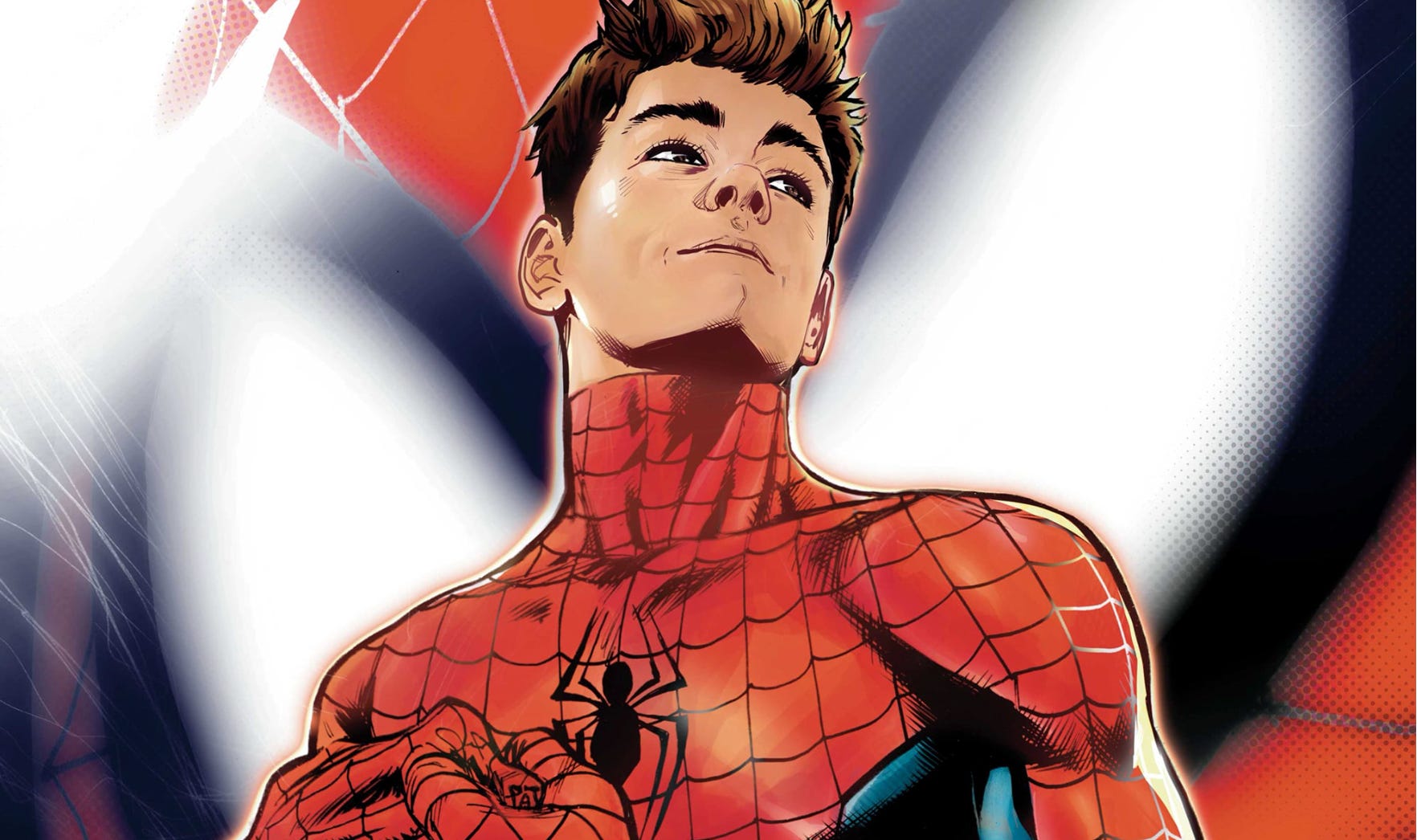
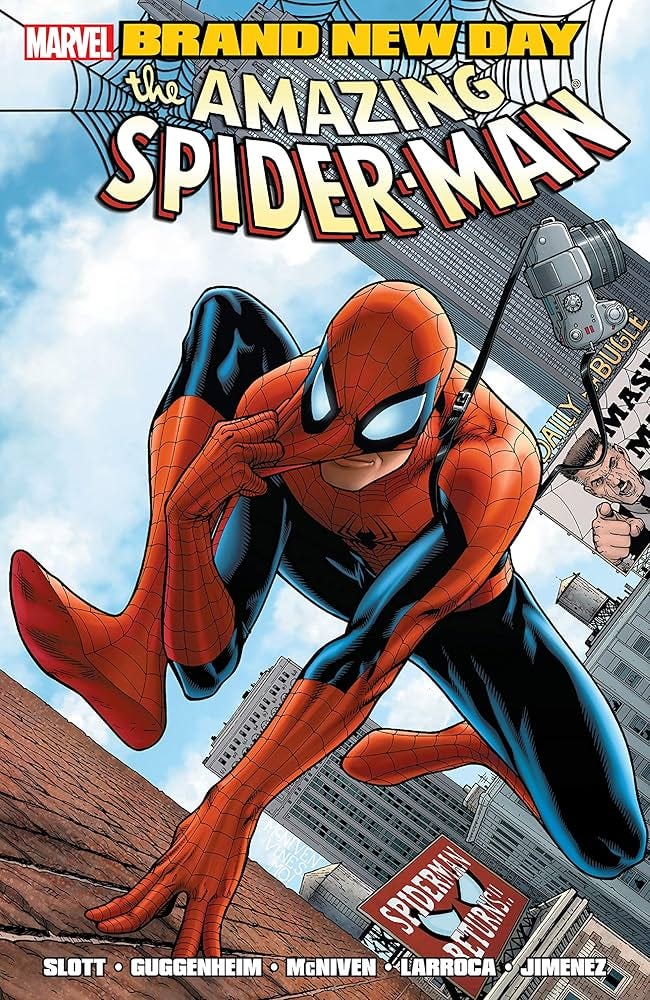
Marvel Comics is relaunching Brand New Day this month. Dan Slott returns to write it. The promotional copy calls the era “one of the most transformative times in Spider-Man comic book history” and “beloved by fans.” That is not how fans remember it.
Brand New Day launched in 2008 as the direct sequel to One More Day, the storyline in which Peter Parker made a deal with the demon Mephisto to erase his marriage to Mary Jane Watson in exchange for saving Aunt May’s life. The deal wiped his public unmasking during Civil War, reset his status quo to a younger, single version, and dismantled two decades of character development. One More Day and Brand New Day went down in history as some of the lowest points in Spider-Man or Marvel Comics editorial history. That is not a fringe assessment. It is the settled consensus of the readership that lived through it.
What followed One More Day was a structural mess that matched its premise. Brand New Day ran Amazing Spider-Man as a thrice-monthly anthology, cycling through a rotating cast of writers including Marc Guggenheim, Bob Gale, Zeb Wells, and Mark Waid alongside Slott, each taking turns with the book in a format that made consistent characterization nearly impossible. Peter felt like a different person depending on who had written that week’s issue. The rotating writer experiment was Marvel’s attempt to sustain high-frequency publication. It produced a Spider-Man who felt unmoored from himself. Readers who had followed Peter for years watched him bounce between creative voices with no through-line on who he actually was anymore.
More than the inconsistency, the core problem was structural. Peter Parker without Mary Jane is not a more relatable Peter Parker. He is a lesser one. MJ was not just a love interest. She was his anchor, the person who knew his secret when he couldn’t carry it alone, the character whose relationship with Peter developed across decades into something genuinely irreplaceable in superhero comics. Erasing that marriage with a demonic deal and then building three years of comics on the back of that erasure sent a message to every reader who had invested in that relationship: it does not matter. Mephisto can undo anything. Your emotional investment means nothing. That wound never fully healed, and a generation of Spider-Man readers dropped the book in response and never came back.
Slott eventually became the solo writer on Amazing Spider-Man in 2010, running the book for eight straight years. That run had genuine creative high points. Spider-Island was inventive. Spider-Verse worked. The Superior Spider-Man storyline, in which Doctor Octopus swapped minds with Peter and left him to die in Ock’s dying body, was the most audacious swing anyone had taken with the character in years. It was also the flashpoint for a sustained, ugly public standoff between Slott and his readers.
At WonderCon 2025, Slott described his convention approach to fans asking when Peter Parker would come back during the Superior run: “The first time someone would ask me that, I would lean down the line and go, [yelling] ‘PETER PARKER IS DEAD! HE’S NEVER COMING BACK! IT’S OTTO OCTAVIUS.’ And I could spare myself a couple hours without hearing the question.” He presented this as crowd management. Fans who had been reading Spider-Man for twenty years experienced it as the writer of their favorite comic screaming at them in a convention line.
The Superior Spider-Man storyline generated death threats, which is deranged behavior that deserves no defense. It also generated something more broadly significant: a years-long pattern of Slott publicly dismissing fan criticism of his decisions, blocking critics on social media, and treating reader dissatisfaction as evidence of limited comprehension rather than legitimate response to the work. When fan backlash to changes on Amazing Spider-Man peaked, Slott’s public response was to post that “it’s impossible to ruin a longstanding legacy character” and that upset readers should use the time waiting for their preferred status quo to catch up on older stories. Essentially: your complaints are invalid and your feelings will pass.
He also turned Black Cat into a murderous villain because Doctor Octopus punched her while occupying Peter’s body. She spent years as a villain on Slott’s watch for a motivation that even her defenders acknowledged was thin. Ben Reilly returned from the dead as a villain named the Jackal. The Parker Industries arc ran thirty issues and then evaporated with minimal lasting consequence.
Now Slott is back to celebrate Brand New Day in a five-issue series timed to Marvel’s upcoming Spider-Man: Brand New Day film releasing July 31. The promotional copy calls the era beloved. The marketing need is obvious: Marvel has a $200 million film carrying that name and needs the cultural association to be positive before the movie opens. Reframing a hated creative era as a celebrated one is not artistic reassessment. It is a promotional strategy.
The direct market numbers sitting underneath this relaunch are not encouraging. In Q1 2026, DC holds 34.7% of the direct market compared to Marvel’s 29.4%. A year prior, Marvel had 37.5% and DC had 25.5%. Marvel flipped from dominant to second place in under twelve months. Launching a nostalgia series built around the nadir of Spider-Man publishing to promote a film built on that same era is not the move of a publisher operating from strength.
Peter Parker and Mary Jane Watson belong together. Every reader who has ever cared about Spider-Man knows this. Mephisto’s deal was wrong in 2007 and it still reads wrong today. Brand New Day was the three years of comics built on that wrongness, produced by a rotating crew of writers who could not give the book a consistent voice. Marvel is calling it beloved.
The fans who bought those issues weekly know exactly what they thought of them.
What do you think of Marvel relaunching Brand New Day? Let us know in the comments.
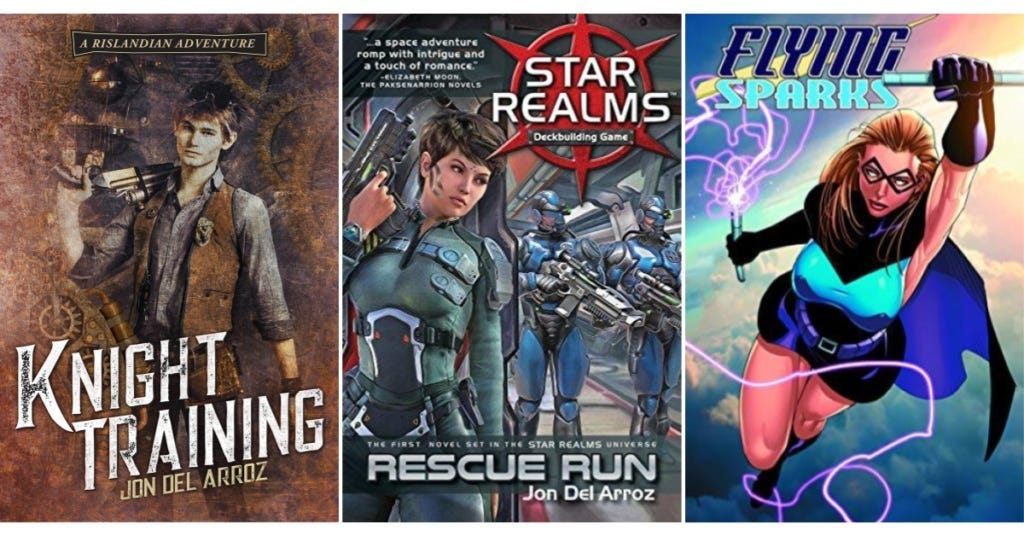
Three free books. No spam. Just new releases, deals, and the occasional update from the front lines of independent publishing. Sign up for the Jon Del Arroz newsletter and start reading today.
NEXT: 103 Variants But No Readers: The Absolute Batman Bubble and What Comics Became
One More Day, the story that broke the Marvel Comic Universe. Nothing after that should be considered canon.
Manga won.