


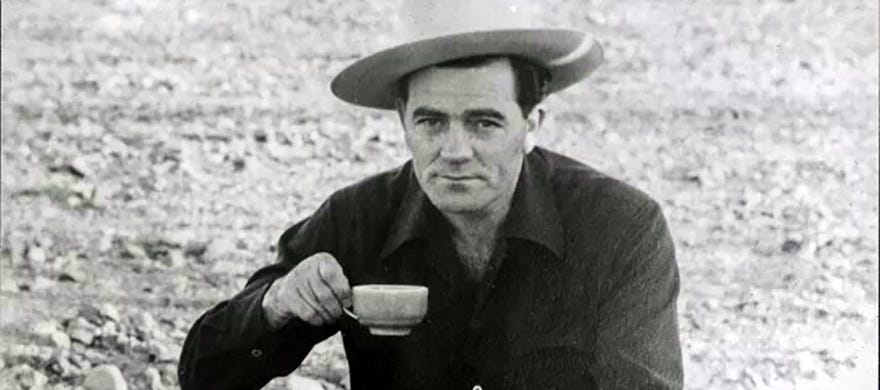
Lous L’amour was known as America’s Favorite Storyteller, the definitive Western genre writer. Now, his son tackles the question as to what happened to men’s fiction over the last few decades.
Men’s fiction has been a hot topic lately, as almost every mainstream publisher doesn’t cater to male reader tastes. There’s a common mantra: “Men don’t read,” even though there are several genres on Amazon of independent writers making great livings off of men’s fiction. What’s happened is that the publishing industry has skewed heavily toward female employees who only purchase female-driven works and only stock them on bookshelves in stores. It’s almost impossible to go to a bookstore to find a book worth reading for a male reader, creating the lack of reading in a self-fulfilling prophecy.
But how did the publishing industry get to this point? Louis L’amour’s son spoke with popular BookTuber, The Nonsense-Free Editor, at length to review the history of what he’s seen in publishing from the perspective of managing the estates of one of the most popular fiction writers of all time.
"I can't tell you how many times in the last two decades I have been informed, 'men don't read,'" he said. "That's by people in publishing, people I work with. People who know my business is still selling male-oriented fiction and is, year on year, among the top 50 authors in the world."
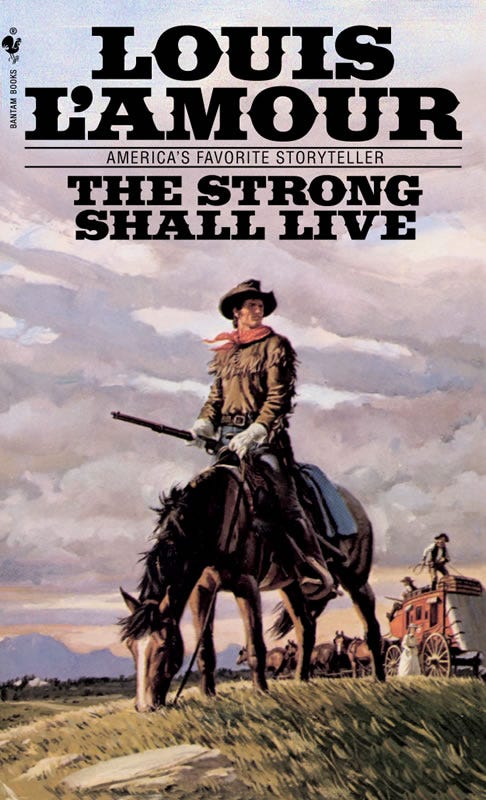
Like many, Beau L’amour sees the golden age of fiction of the pulp magazines as the point where the industry was most geared toward men and male reading interests. Pulp magazines sold by the millions at the time, and reading was a regular habit from westerns to mysteries to science fiction and fantasy. “The landscape was filled with material aimed at boys and men, as well as women,” he said of this era.
He stated an interesting phenomenon happened by the end of the 1950s because publishers migrated away from magazine stands and into bookstores. They wanted more organization for their titles, which they called “integration,” and so narrow genres were formed to help customers search for their specific reading interests. This was the beginning of the change for publishing.
Unlike the modern feminist mantra, L’amour says there wasn’t any discrimination against women going on in the publishing industry where women weren’t accounted for. “They clearly recognized the sales potential of material aimed at women, and they also stood behind female authors.”
He laments that both Westerns and science fiction had deaths in the 1970s. Westerns, he believes, was because it was hard to push the envelope in such a setting, and science fiction, he believes, “died with Apollo” because of the realities of space travel.
While those points are debatable, he also says that the publishing industry largely stayed the same and was fine catering to both men and women until the early 2000s when feminism crept into the industry, and it began to rapidly change, and not for the better.
He noted of the change, “I saw two changes, one in product, the other in personnel, occur around 2010. Starting in the 1990s there was a myth going around the business that ‘fewer people read.’ The remaining customers, so the story went, were very dedicated, so the goal was to sell them upscale, attractive, and somewhat more expensive books, to make up the difference. More hardcovers, at a higher price point, were pushed into the marketplace. This had the effect of edging genre fiction slowly out of the market and replacing it with general fiction or literature.”
As that myth compounded, it shifted to a “men don’t read” narrative.
He said, “Now the story became ‘men don’t read’ … very similar to the myth that readership was dropping off. I am sure that both of these things are true to a certain extent and it was also true that there were ways that being female helped sell books. A lot of librarians were female, same with educators, same with the members of informal reading groups and clubs … remember that the business, most businesses, will take the easiest path, even if it’s deadly in the long term.”
He also noted that with this trend came political correctness that anything edgy and subversive to what they considered polite politics disappeared from the shelves at the time. This became worse as time went on.
He then posited, “I suspect that while ‘fewer people read’ the problem is not as big as mainstream publishing makes it out to be. I wonder if ‘fewer men read’ or if they have migrated to finding indies on KDP.”
The latter is very much true. Almost every male reader we’ve spoken with at Fandom Pulse gets most of their fiction from specific genre authors on Amazon, and most successful authors say they have a rabid and voracious male readership. While bookstores refuse to carry anything for men, they simply don’t bother and go to where the fiction is at, and they can read the authors they love, with most men being working professionals who don’t have time to sit online and complain about the structural systems of the book industry. They simply want their reading for their fun time.
Despite L’amour still selling tons of his father’s work, he maintains traditional publishers largely ignore him and others like him. He said, “I think they think we’re special, and to a certain extent, we are. Dad’s books are handed down from generation to generation. They could learn a lot about what they might do from our history but it’s also true that publishers publish, they don’t write. They can only discover a writer, they can’t create one.”
When asked what could be done for a male readership, he has tangible demographics that need to be targeted, saying, “You have to get boys. My sister says that if you don’t get a boy between 10 and 13, you don’t get them at all. Unfortunately the marketplace for this age kid is fractured and each segment kind of turns into a silo. Each age range is sort of an island to itself with not much overlap.”
He also has this advice for those who want to cater toward men, “Men need you. Boys need you. I fear a future where the imaginations of our young have been robbed of the practice they are given with fiction, with decoding the alphabet into amazing stories and entertaining and educational experiences that we no longer can invent … not just stories but clocks, microwave ovens, and innovative software.”
For a great adventure fiction novel geared toward male readers, read The Demon’s Eye, an incredible new classic fantasy novel. Support Fandom Pulse!

NEXT: Fantasy Author Goes Viral Lambasting Bookstores: "It's All Chick Lit And BookTok Slop"
I grew up reading the Hardy Boys and Sherlock Holmes. Then I got into Westerns and then into fantasy and science fiction. Romance was usually women only and was in those books in the front of the supermarket.
I still like to read, and I do get some books off of amazon, but anymore and I try to find the same titles in Indie stores.