


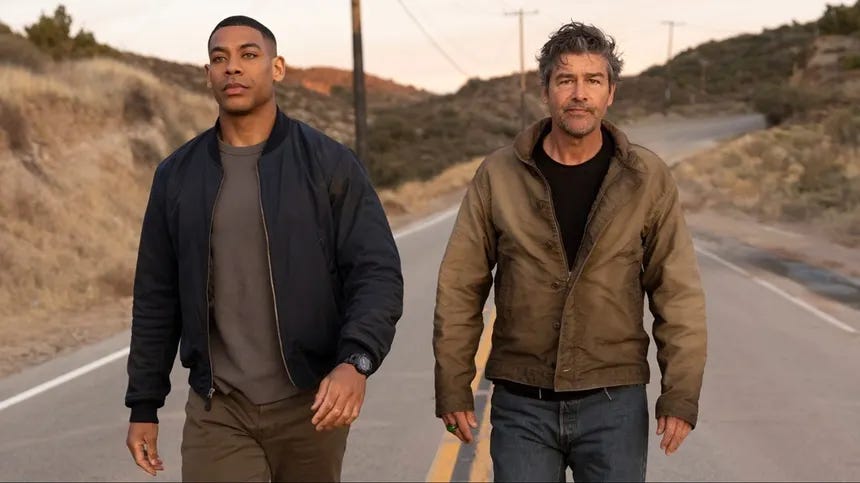
Two people paid by DC Studios to promote Lanterns are, this week, publicly building the case that the property itself is broken along the lines of sex and race. Not fan theorists. Not critics. The Episode 3 writer and a co-host of DC’s official podcast.
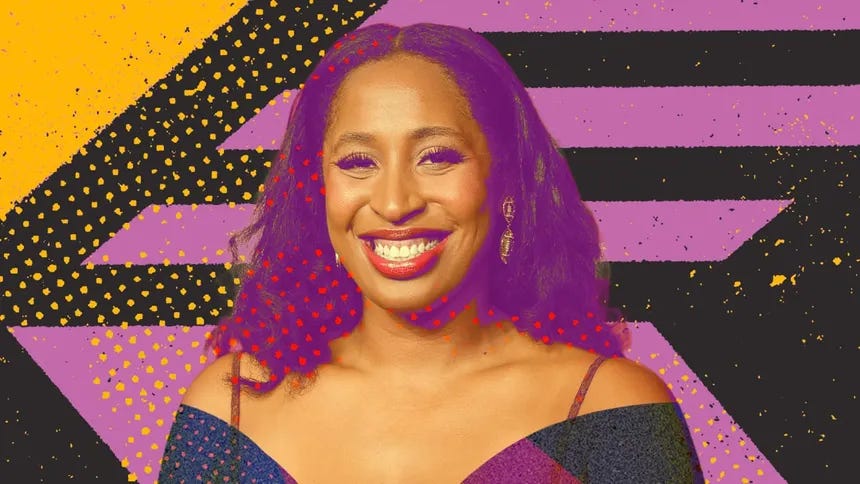
Vanessa Baden Kelly, who wrote “OutKast” and serves as a co-executive producer on Lanterns, told Collider exactly what she’d been arguing throughout the writers’ room. “If the ring wasn’t sexist, Bernadette would have been chosen,” she said, calling John Stewart’s mother the most fearless character in the entire story. This wasn’t a one-off comment made after the episode aired. Baden Kelly described it as something she said repeatedly during development, meaning the writers’ room debated whether a 60-year-old fictional alien artifact discriminates against women, and the writer lost that argument only in the sense that the show still aired.
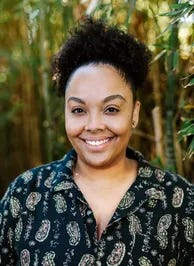
Frankey Smith, co-host of DC Studios Showcase: The Official Podcast, a program produced in partnership with DC and Max, has been running her own parallel campaign accusing Hal Jordan specifically of racism. In an Instagram Reel, she said: “Hal casually enacts misogyny and racism when it suits him, and not because he believes in the system so much, but because he wants to get the job done and he’s lazy.” She added that Hal “is not absolved from inherent racism that plagues our country, and he has no issues enacting that.” When a fan named Raymond Weijland pushed back on her original claim in her DMs, Smith told him directly: “The DC may not be for you love, the heros are complex and flawed. I suggest paw patrol.” When he said he’d keep watching anyway, she told him to check his privilege and to “buckle up” because more of this was coming.
Both of these positions collapse under about ten seconds of scrutiny. Baden Kelly’s ring argument requires ignoring that the Green Lantern Corps has been packed with female Lanterns since the 1980s: Katma Tui, Arisia, Boodikka, Soranik Natu, Jade, Jessica Cruz, an entire roster spanning every species and sex in fiction. Katma Tui isn’t just a random example either, she’s John Stewart’s own wife in the comics. The ring has never once operated on a rule that excludes women. It measures the ability to overcome great fear, which Baden Kelly herself described accurately in the same interview, then somehow concluded that measurement is sexist anyway.
Smith’s case is even shakier on inspection. Her go-to piece of evidence is Emerald Twilight, the 1994 story where Hal destroys the Green Lantern Corps and becomes the villain Parallax. What she leaves out is Green Lantern: Rebirth, DC’s own canonical follow-up establishing that Parallax was an ancient fear-entity that Sinestro deliberately unleashed on Hal while he was psychologically shattered from watching his home city get destroyed. Citing a hero’s actions under supernatural possession as proof of his everyday character isn’t analysis, it’s cherry-picking a result and working backward to justify it. Her other core piece of evidence, Hal calling John “Junior,” is condescending and rude. It’s also not automatically racial just because the person receiving it is Black, a distinction Smith’s framework doesn’t appear to allow for at all: in her telling, every insult directed at John becomes proof of racism, every conflict with the sheriff becomes proof of misogyny, and Hal’s simple refusal to hand over his own ring to a replacement the Guardians unilaterally chose becomes “participation in an unjust power structure.” There’s no version of Hal Jordan resisting his own forced removal that wouldn’t get flagged as bigotry under that logic.
This isn’t confined to two people going rogue on social media. It’s baked into the show itself. Episode 3’s “OutKast” has Bernadette explicitly telling Laura Linney’s Guardian character that Hal gets to live without fear because he’s a white man, directly framing his courage as a function of racial privilege rather than character. Frankey Smith’s own defense of the backlash cites Peacemaker Season 2 exploring how “white complicity in these structures” can be “just as harmful” as active racism, meaning the show’s writers’ room and its own official promotional podcast are both explicitly running white privilege and complicity as a throughline across multiple entries in the DCU, not as subtext audiences are reading into it, but as text the people making it are describing out loud. When your own writer says the villain’s mother was right to blame a white man’s ease on his race, and your own podcast host says any white character’s passive existence inside the story counts as harm, you’ve stopped writing a superhero show and started writing a lecture with a Green Lantern logo stapled to it.
The ratings are already reacting. Samba TV’s household chart shows Lanterns falling from No. 2 to No. 4 in the same week both of these stories broke. James Gunn is publicly calling the episode “one of the best” of the season while the show’s own creative and promotional team hands ammunition to every critic calling this exact pattern out.
None of this requires audiences to invent a race-war narrative. The people writing and promoting the show are typing it out themselves, on the record, in their own words, and then acting surprised when fans notice.
Sign up for the Ayla Rin: Gateway to Doom Crowdfund, coming soon for great cosmic comic books with a cover by legendary Green Lantern artist, Ethan Van Sciver:

NEXT: Grant Morrison Watches “Lanterns,” Delivers Mixed Verdict After Slamming Damon Lindelof
Ironic, since John Stewart was stopping a race war, that made him a Green Lantern, and got Hal Jordan’s respect. Now both Vanessa Baden Kelly and Frankey Smith are trying to start a race war, using an I.P. to do it.
The Parallax point is interesting too ignoring the later canon completely changes how Hal’s actions read.