


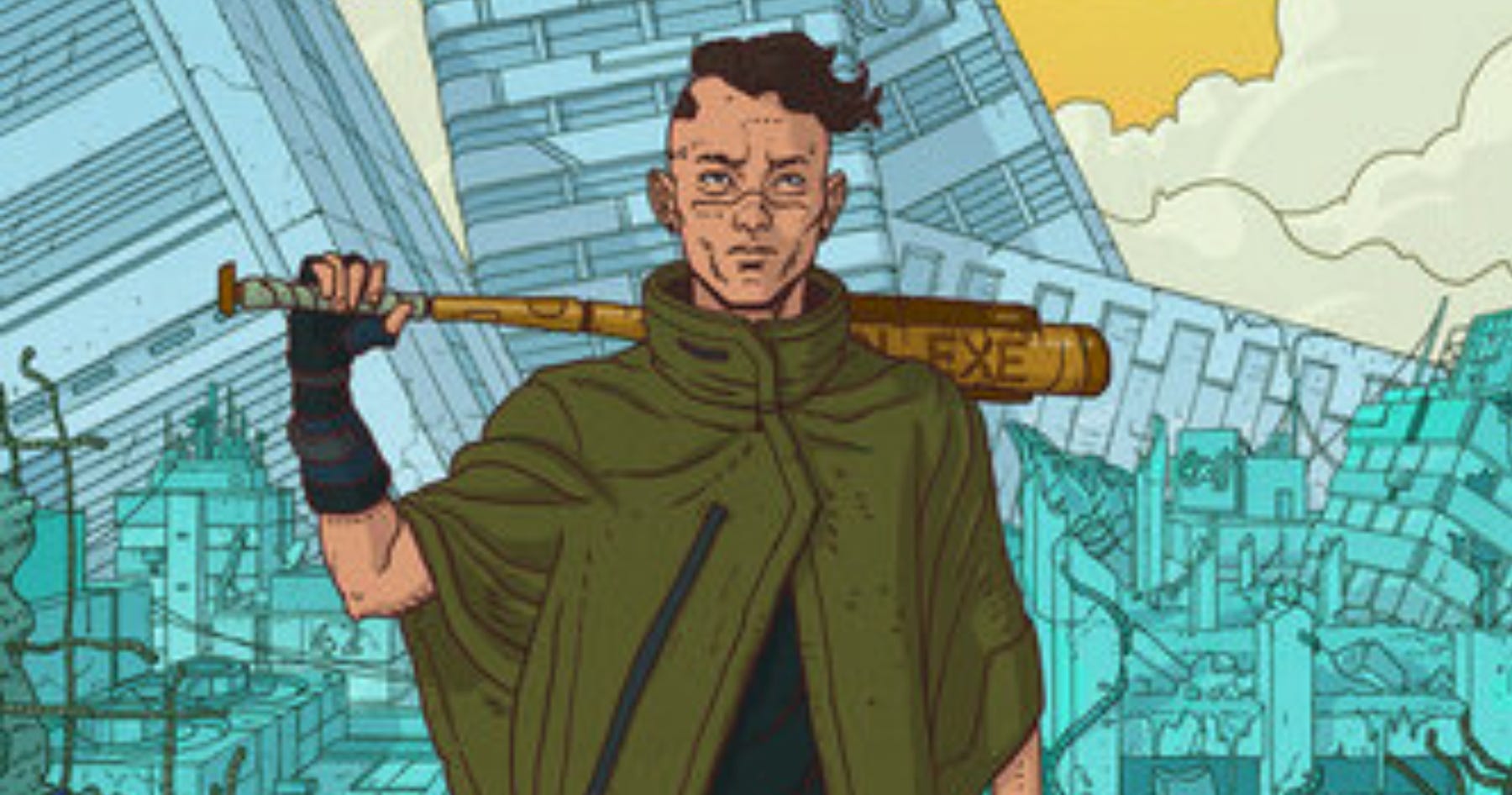
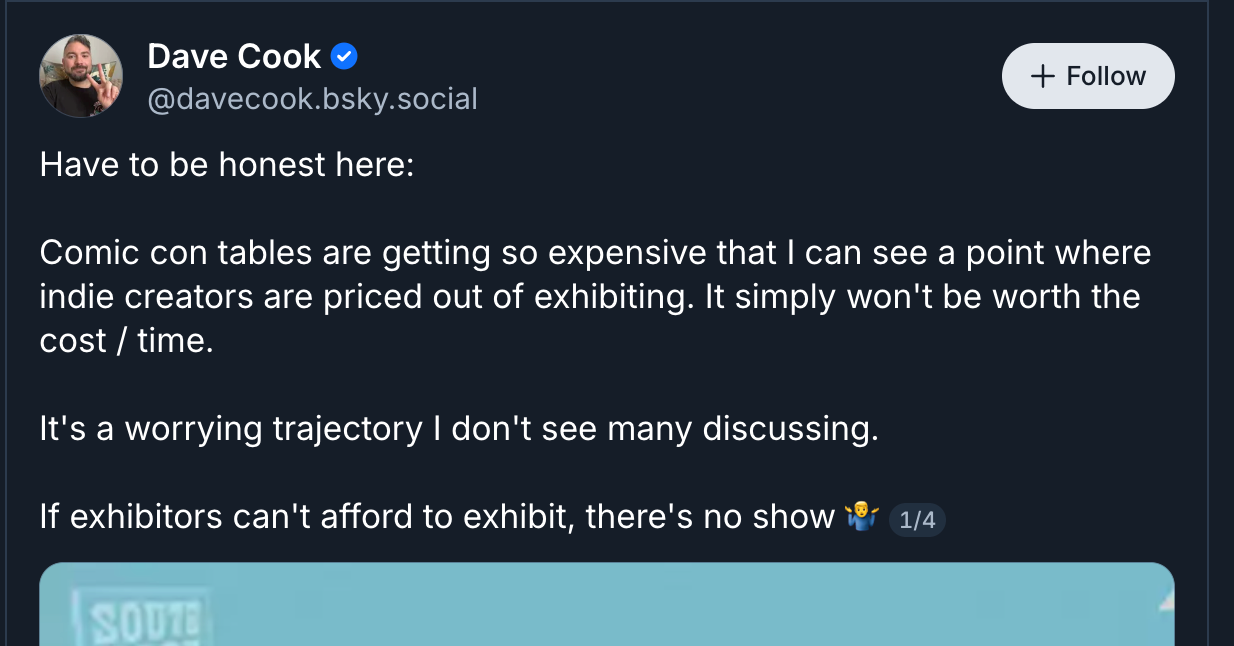
Killtopia writer Dave Cook posted a four-part thread on Bluesky warning that convention table prices are heading toward a point where independent creators can no longer afford to exhibit. “Comic con tables are getting so expensive that I can see a point where indie creators are priced out of exhibiting.” He then named the consequence for the shows themselves: “If exhibitors can’t afford to exhibit, there’s no show.”
Cook has the track record to speak on this. By 2021 he had run ten Kickstarter campaigns and raised over £73,000. Killtopia: Phantoms #1 funded at £7,339 against a £5,000 goal, with 388 backers. His earlier Killtopia books were picked up by BHP Comics, and Titan Comics scheduled a 288-page Complete Collection of all five volumes for September 2024. A creator with a publisher, a crowdfunding base and a collected edition is the type of exhibitor a convention should want at a table.
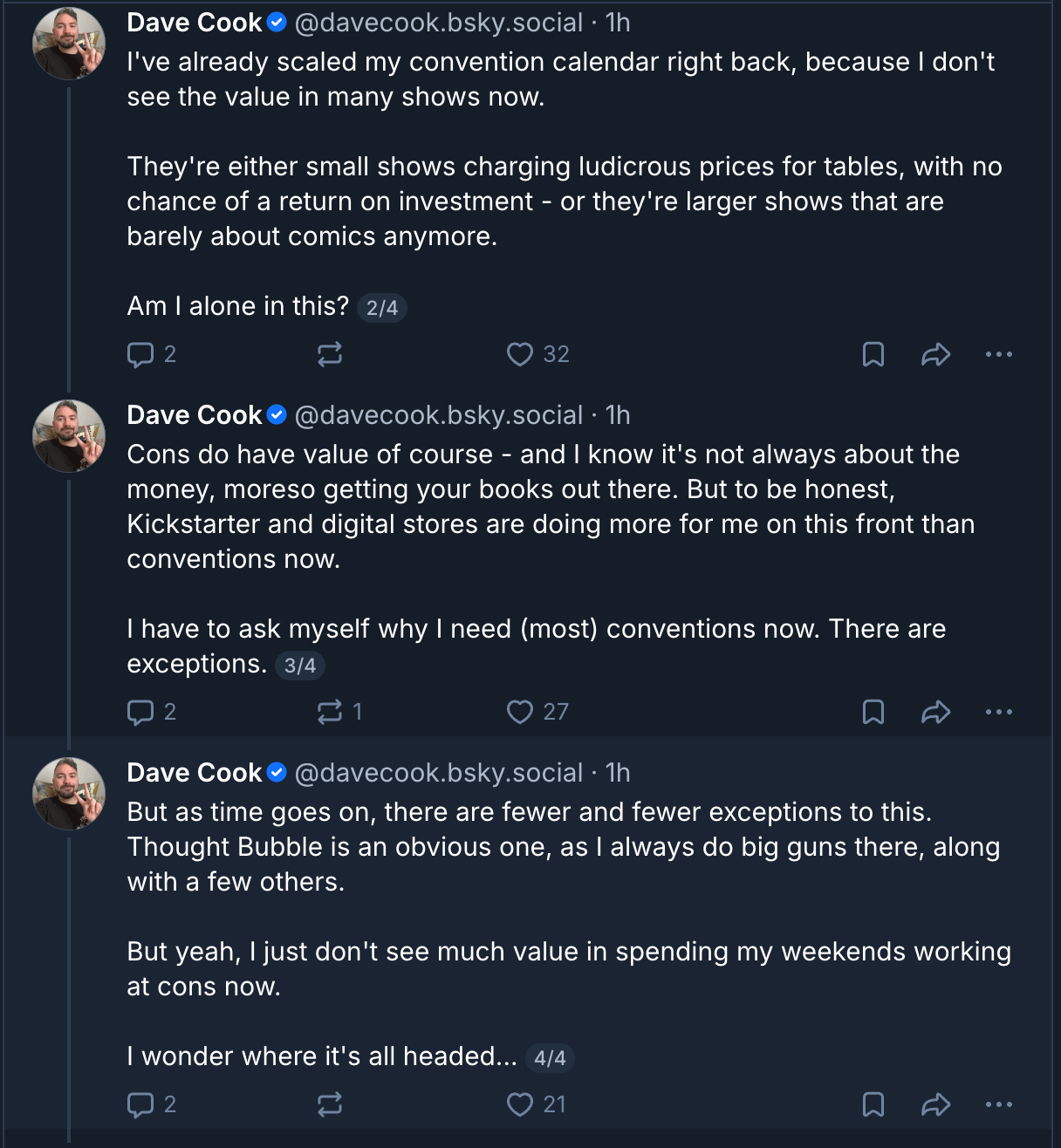
He has already cut back. “They’re either small shows charging ludicrous prices for tables, with no chance of a return on investment - or they’re larger shows that are barely about comics anymore.” His reason is simple: “But to be honest, Kickstarter and digital stores are doing more for me on this front than conventions now.”
The table fees are only the first line of the budget. Thought Bubble’s 2026 creator rate is £225 for a full table. New York Comic Con’s Artist Alley tables run $565, up from $525 in 2023. Lifeline Comics reported more than $3,300 in sales at Rose City Comic Con against roughly $2,600 in expenses, which leaves about $700 for a full weekend of work from the team. Add flights, a hotel and three days away from the desk, and the margin disappears. Table prices at some shows now approach $400 to $500, and weekend passes have climbed as well, so fans arrive with less money left for the tables.
The deeper problem is who the shows are built for. Most conventions sell tickets on celebrity guests, autograph lines and licensed merchandise. Indie comics have always sat at the edge of that floor plan, and a creator selling a new series next to a row of prints and stickers is competing for attention the organizers never planned to give. The small regional shows used to offer low table fees and a fair shot at profit, but many now price like their larger cousins. The gap between what the show promotes and what the indie exhibitor sells widens every year the fees go up.
Crowdfunding sidesteps all of it. A Kickstarter backer pays before the book is printed, the creator ships from home, and nobody stands behind a table for 30 hours. Cook still carves out exceptions. “Thought Bubble is an obvious one, as I always do big guns there, along with a few others.” He adds that the list is shrinking: “But as time goes on, there are fewer and fewer exceptions to this.”
His closing line is the one convention organizers should read twice: “But yeah, I just don’t see much value in spending my weekends working at cons now.”
If creators who fund their books on Kickstarter keep trimming their convention calendars, what do these shows have left to sell besides celebrity autographs?
Sign up for the Ayla Rin: Gateway to Doom Crowdfund, coming soon for great cosmic comic books with a cover by legendary Green Lantern artist, Ethan Van Sciver:
