


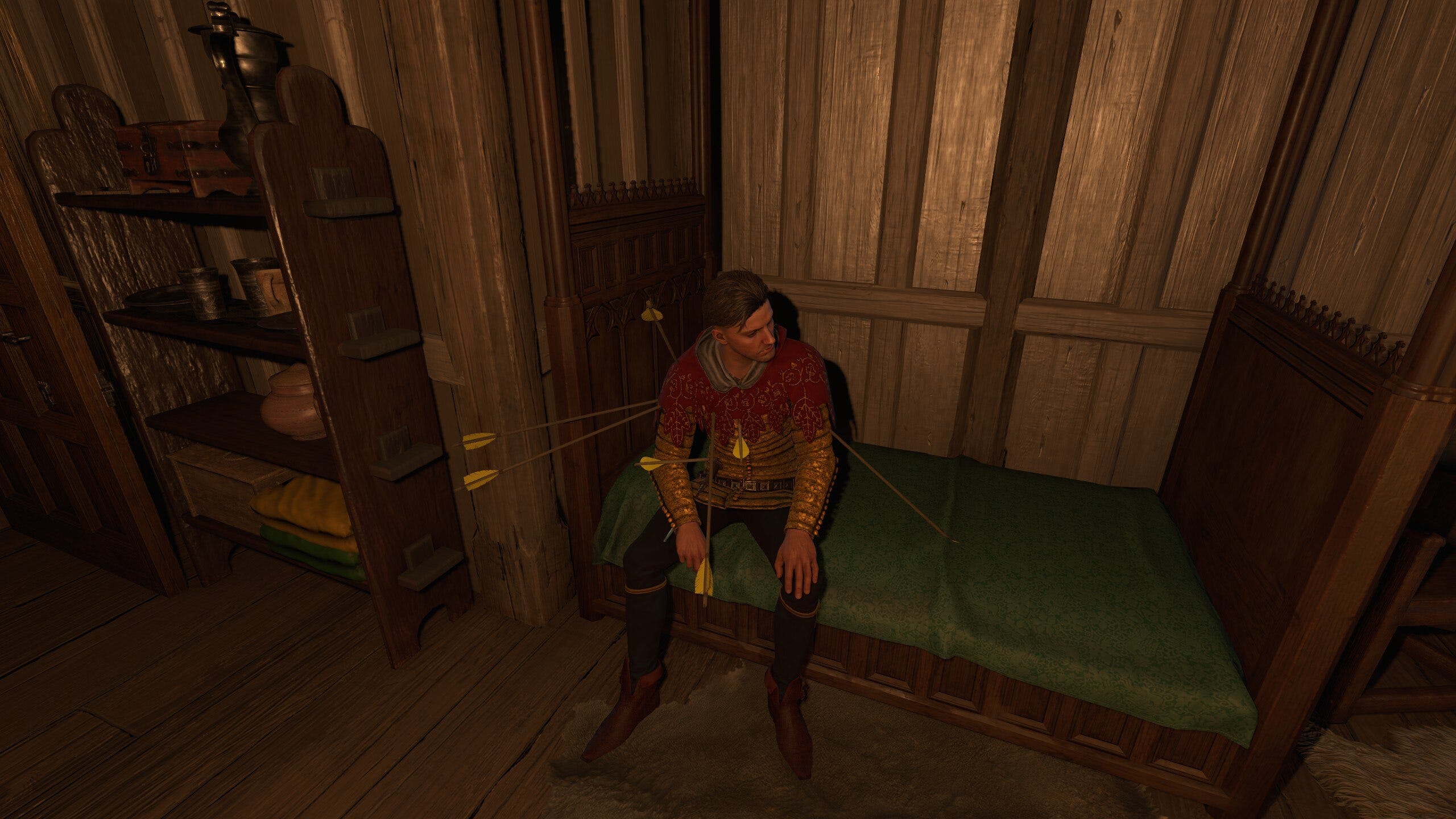
In the current deluge of online commentary, where most voices speak in the performative dialect of brand maintenance and consumer appeasement, Kingdom Come: Deliverance 2 was greeted not with discernment but with an undeserved digital hosanna. Influencers and commentators lined up to shill the game with a practiced enthusiasm, their praise shaped less by conviction than by the same access, sponsorship, and algorithmic reward that was once denounced during GamerGate.
Very few commentators were willing to speak honestly about the game; most simply lied outright, ignoring the elephants in the room and refusing to name what was plainly before them. But one voice refused to join the chorus:
Kane’s Games
Where others did not merely equivocate but lied outright about the game, Kane answered with a sharpened edge. From his outrageous thumbnail to his biting commentary, his review strikes the iron with precision. His abrasive posture, the snark, the sarcasm, the gleeful demolition of pretense, functions as a direct rebuke to not only the game itself but also the culture of dishonesty that surrounded the game’s release.
This refusal to soften one's words is necessity and is a lost art in a world where much is censored and shadow-banned. His review exposes what many others concealed and forces into the open what so many have, since its release, refused to acknowledge about Kingdom Come: Deliverance 2.
Kane’s review of Kingdom Come: Deliverance 2 is, on its surface, a furious catalogue of frustrations. But beneath his gleeful verbal body‑slams lies something more: a refusal to accept the thin gruel of contemporary consumer culture as nourishment. His abrasive posture alongside his intricate and comedic format is a delightful tirade of performative resistance against the woke monster in modern gaming.
What Kane Examines in His Review
While he talks at appreciable length about the game's mechanics, the heart of Kane’s review lies in his recounting of the story of Kingdom Come: Deliverance 2. Unlike so many other reviewers who praised the game without even having played through its entirety, Kane is thorough. He devoted ~70 hours to it and recounts his experiences as a long procession of errands, scripted events, and unresolved arcs. In much of his essay, he exposes the gap between the promise of player agency and the reality of a system that overtly constrains the "fun" factor.
No bars held, Kane also remarks on the game’s inclusion of a homosexual romance involving the character Hans Capon, noting Hans is drawn from a historical figure who was also a minor at the time. Kane also talks about the early life section of Daniel Vávra, understanding that games do not emerge from a vacuum and that they are shaped by the convictions and histories of the people who make them. While many other reviewers avoided this topic entirely, either out of ignorance or fear of complicating their praise, Kane stepped directly into it.
Appropriately, he treats Vávra’s background not as necessary context for why many writing decisions were made. Kane traces the formative experiences, the ideological tensions, and contradictions that echo throughout the game's story. He names the ways these influences surface in the narrative, sometimes subtly and sometimes with a heavy hand. None of what Kane talks about is sanitized in any way which is why his review is so exceptional. He follows the thread where it leads, even if it leads outside the game itself. He is willing to acknowledge that art is not separable from the artist and that understanding one can illuminate the failures and ambitions of the other. This is a level of critical seriousness that the liars and shills never approached with regard to Kingdom Come: Deliverance 2.
Conclusion
Ultimately, Kane’s review stands as a refusal to the easy comforts of consensus and the hollow rituals of consumer enthusiasm. While others performed for an audience they hoped to retain, Kane chose instead to speak plainly about what he actually saw. He named the fractures, the contradictions, and the failures of craft that so many others ignored.
Kane refused to participate in the collective pretense that greeted Kingdom Come: Deliverance 2. Instead, he cut through the noise with a seriousness that the game’s release never received from the commentators who claimed to evaluate it. In the end, his review stands as a rare thing in modern gaming discourse: a piece of criticism that treats his audience with hard respect. He tells the truth. He names what others won't and he refuses to bow to all the pressures that have so thoroughly hollowed out so much of online commentary. And for that reason alone, Kane's video deserves to be seen, heard, and remembered long after the digital hosannas have faded.

Best review of a review ever. Thank you for highlighting the video, it's even funnier in hindsight.
I mean damn… Even DSP trashed it.
If Phil thinks a game is boring and too full of scripted scenes, maaaybe we can quit pretending it was a masterpiece?