


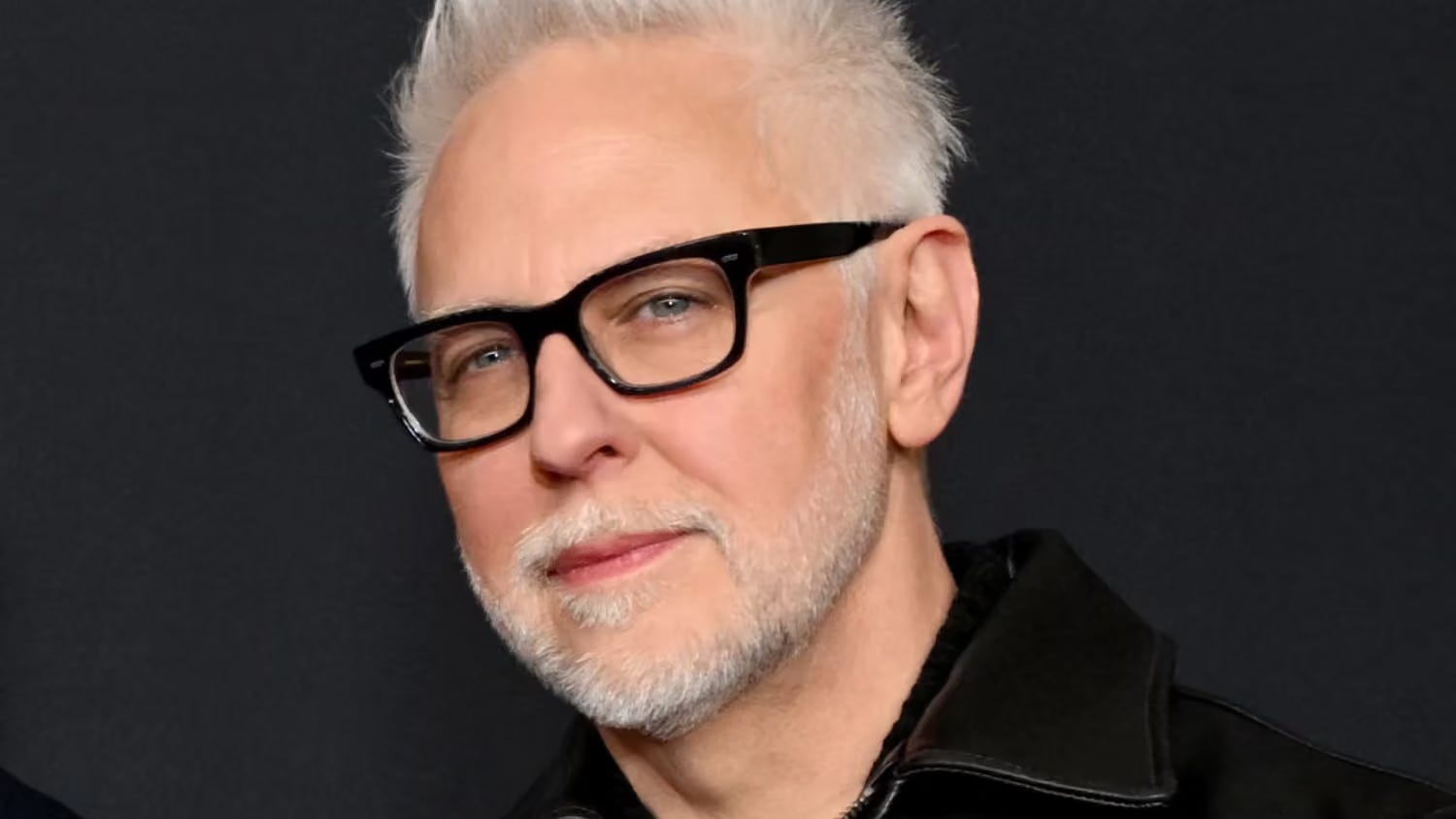
James Gunn and Peter Safran are stepping down as co-CEOs of DC Studios, effective December 1. Skydance, now running the division after its acquisition of Warner Bros. Discovery, has named former Marvel executive Jeremy Latcham as president and chief creative officer. The announcement lands four years after the pair took the job to considerable fanfare and a decade-long roadmap in hand.
The timing says plenty. Gunn has Man of Tomorrow, the sequel to his Superman, sitting in post-production for release next year. He has The People v. Gorilla Grodd in post. He and Safran remain producers on The Batman: Part II, slated for 2028. In other words, the exit arrives at the exact moment the studio’s near-term slate is locked and the long-term planning becomes someone else’s problem.
What Four Years Actually Produced
Gunn and Safran released three films: Superman, Supergirl, and Clayface. They produced three live-action series: The Penguin, Peacemaker season two, and Lanterns. For a division that was supposed to reset an entire shared universe and shed the shadow of the Snyder era, that is a thin return on four years of executive control over one of the most valuable character libraries in American pop culture.
Superman opened the new continuity in 2025 and did what a relaunch has to do — it got the character back to something audiences recognized and made Clark Kent feel like the center of DC again. It also failed to become the commercial anchor a studio betting its next decade on a shared universe needs. One respectable opening does not fund a slate. Supergirl answered that question with a thud: a critical and commercial bomb that arrived before the new universe had established enough goodwill to survive a miss. Clayface drew strong reviews and made money, but a mid-budget horror-adjacent character piece earning back its budget does not offset a tentpole collapse.
Three films, one clear hit, one clear flop, one modest win. That is the ledger Gunn and Safran are leaving behind.
The Man They Handed It To
Latcham is a Marvel lifer in the most literal sense. He joined Marvel Studios in 2004 as one of its earliest employees, climbed to senior vice president of production and development, and spent years as Kevin Feige’s right hand. His credits run through Iron Man, Iron Man 2, The Avengers, Guardians of the Galaxy, Avengers: Age of Ultron, and Spider-Man: Homecoming. He worked directly with Gunn on Guardians, the 2014 film that turned Gunn into an A-list director.
Skydance chairman and CEO David Ellison and co-CEO Ynon Kreiz framed the handoff as continuity:
“James and Peter launched a new era for DC Studios and led it through a period of real transformation, resetting the foundation and building a slate we’re incredibly proud of. We’re grateful for their passion, contributions and commitment to this legendary brand.”
They added of Latcham:
“Jeremy has been a longtime creative partner to both, and we have complete confidence that James and Peter will ensure a smooth, collaborative transition and continue this work with care.”
Read the reporting structure closely, because it tells you what Skydance thinks of the job. Gunn and Safran reported to David Zaslav, then to Ellison directly. Latcham reports to Dana Goldberg and Josh Greenstein, co-chairs of the Skydance Motion Picture Group. The head of DC now answers to two film executives instead of a CEO. That is a demotion of the seat, wrapped in a press release that calls it an opportunity.
Latcham’s own statement kept to the script:
“DC’s pantheon of characters is among the most iconic in American popular culture. I’ve had the privilege to help bring some of the most celebrated superhero stories to life on the big screen, and I’m excited and honored for the opportunity to now lead DC Studios into its next era.”
Gunn’s Statement
Gunn posted a four-part statement to Instagram, and it reads like a man who wants the record to show he chose this. He opened warm and closed relieved:
“Oh, boy. What a four years. Thanks to all of you who have supported me and Peter in our time as the heads of DC Studios. When I was a kid growing up in Manchester, Missouri, I used to write and draw my own comics with a mix of DC Comics characters and my own characters. Having full access to these characters to do whatever we wanted has been a dream come true. I didn’t know if I wanted this job when it was offered to me, but I just couldn’t pass up the unique opportunity. I’m glad I took the job.”
Then the part that will get quoted everywhere:
“But what only the closest people to me have known over the past four years is my time at DC Studios has been trying, to say the least. I dislike the at-times corporate nature of the job (thanks to Peter for taking the brunt of that). I’m always a very hard worker, but as a filmmaker I would at least get to take short breaks to unwind, and I’ve stolen even that time from both myself and my loved ones over the past four years (Jenn, I love you and I’m sorry and you don’t need to feel guilty for being the happiest of all people that I’m no longer doing this job). And the thing my ADHD hyperfocus has had the most difficulty with has been dividing my time between projects I’m incredibly passionate about and the ones I’m not so much and all the things I have to do as a studio head.”
That last sentence is the most revealing thing in the whole post. A studio head who admits he could not muster passion for part of his own slate has described the job better than any analyst could. He also praises the people and names the work he loved:
“There have been so many highs along the way — releasing Superman and Clayface, making Peacemaker, reading the scripts to The People Vs, the entire process of Man of Tomorrow, which thus far has been the best filmmaking experience of my life, and numerous other moments.”
On his partner:
“And the best part of all has been working with Peter Safran, the smartest and most competent person I know. You’ve been the best partner a person could ask for, and, more so, a truly good friend.”
And on what comes next:
“So, yes, I will miss the people around me, and I will miss being the co-caretaker of these great characters, but I’m also incredibly relieved and excited to get back to pure filmmaking. That’s not to say Peter and I are immediately done with DC or superheroes. We have Man of Tomorrow out this summer. And we’ve just been engaged on another DC project which I’m writing, and we’ll see where it goes after that. And, of course, the characters we set up will live on.”
The pair’s joint statement hit the same notes:
“Four years ago, we set out to unite DC under one creative vision. In that time, we helped restore Superman to the heart of DC, while opening new doors and telling new stories in film and television with Peacemaker, Creature Commandos, Lanterns and Clayface.”
Pushed or Jumped?
Hollywood will spend the next month arguing about which it was. Ellison flew to the set of Man of Tomorrow before the merger closed — a signal of support at the time. Weeks ago, Gunn and Safran presented their long-term plan to him, and sources told The Hollywood Reporter that Ellison told them to keep going. Gunn said as much to THR last month: “David knows everything… he’s been great with us.”
And then they left. A vote of confidence in October, an exit announced in November, with the division’s reporting line quietly lowered on the way out. Two of those three facts fit the story that this was voluntary.
The other one doesn’t.
What’s Left Standing
DC now has a new chief with a Marvel résumé, an unfinished universe built around a Superman sequel that hasn’t opened yet, a film slate built on a plan its architects no longer oversee, and a boss who just told the public his heart was never fully in the administrative half of the job. Gunn gets to make movies again, which is what he wanted. DC gets another reset. Whether the audience gets anything better out of it depends on a man who has never run a studio, working under two executives who just showed the world how much they value the seat he’s sitting in.
Sign up for the Ayla Rin: Gateway to Doom Crowdfund, coming soon for great cosmic comic books with a cover by legendary Green Lantern artist, Ethan Van Sciver:

I agree. Four years of hype and Gunn blabbing on social media 24/7, yet depressingly little to show for it. Endless developmental purgatory, Batman II caginess, and always, ALWAYS that stupid moussed-up hair and smug face of Gunn’s. Good riddance to this “punk rock” poseur and his Dawson’s Creek buddy boy.