



Soulfinder creator Doug Ernst and Kamen America writer Mark Pellegrini opened up about what makes good Christian writing in a story and how to utilize one’s faith positively in comics and books.
Christian authors often get accused of making books too corny or ham-fisted with their content as it’s difficult to walk a line between preachiness in the message and creating a solid, engaging story. It’s a difficult balance to find, though historically most of the best works of fiction have been Christian in nature, such as C.S. Lewis’s Chronicles of Narnia and J.R.R. Tolkien’s Lord of the Rings.
Modern Christian authors often sacrifice stories at the expense of writing shortcuts that make the characters feel not real and take the reader out of immersion, but it doesn’t have to be that way.
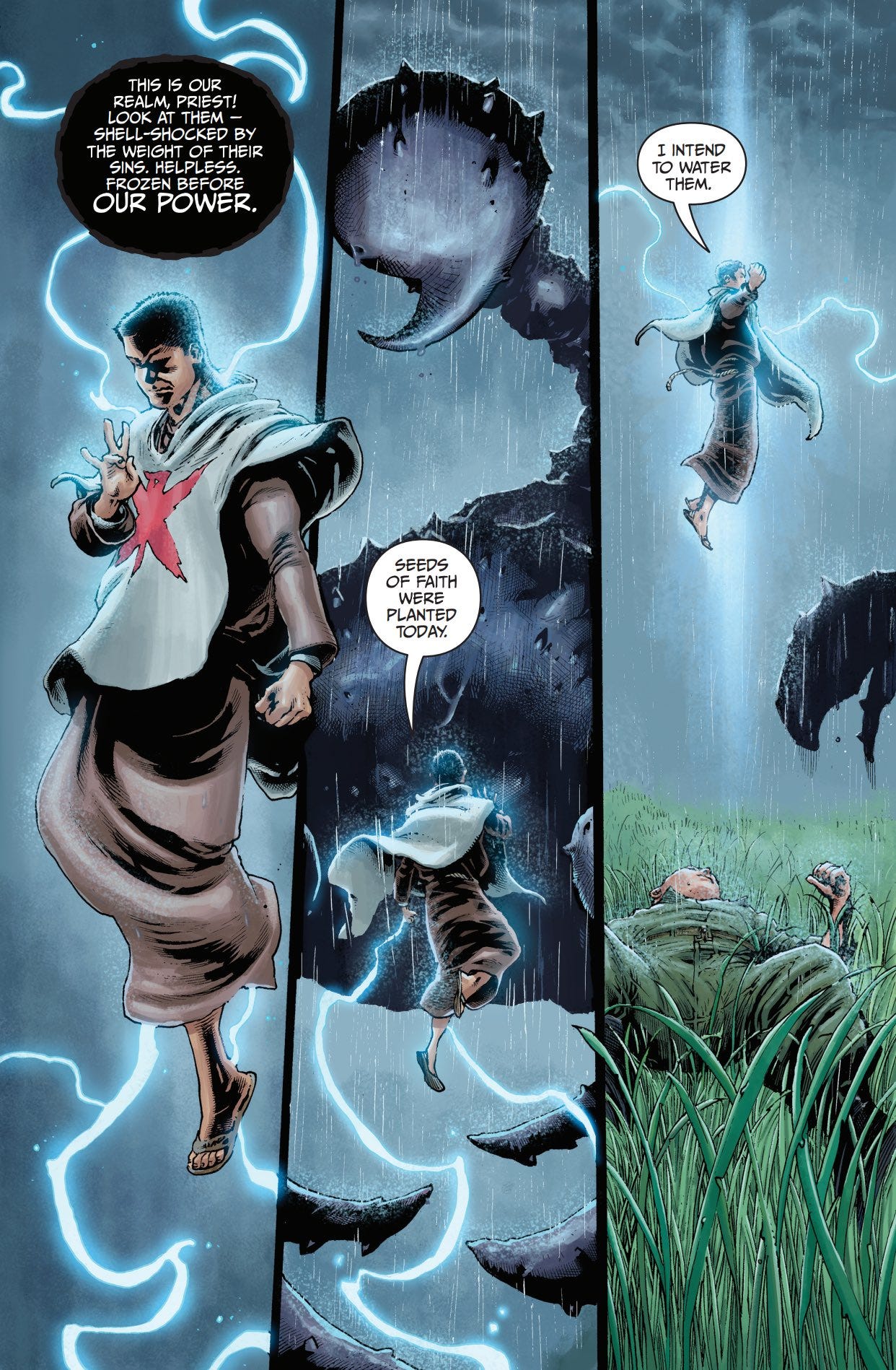
Doug Ernst has a Catholic priest as a main character for his Iconic Comics book, Soulfinder, discussing a recent video by Comics by Perch on the topic.
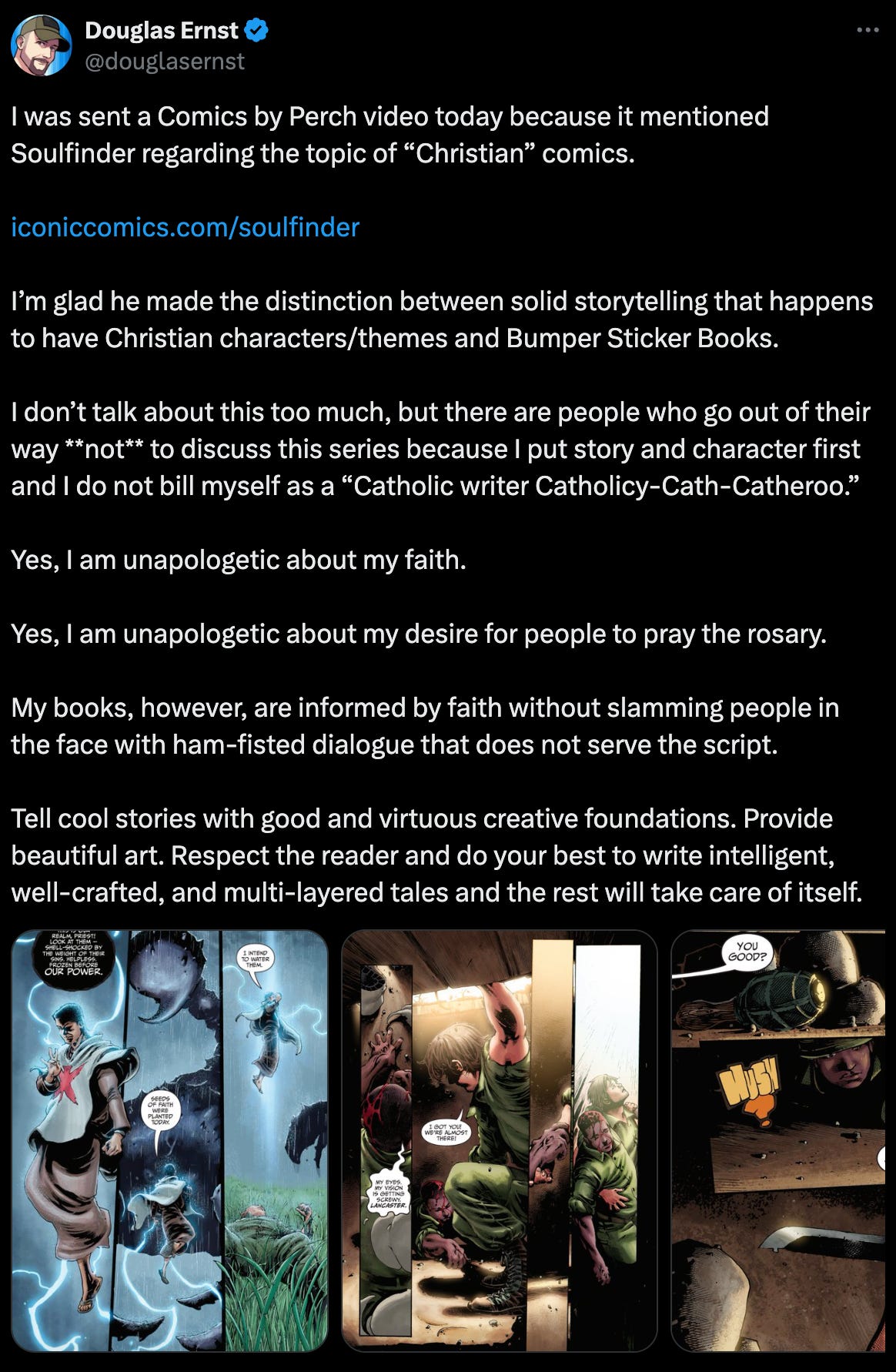
He posted to X, “I was sent a Comics by Perch video today because it mentioned Soulfinder regarding the topic of “Christian” comics. http://iconiccomics.com/soulfinder I’m glad he made the distinction between solid storytelling that happens to have Christian characters/themes and Bumper Sticker Books.”
“I don’t talk about this too much, but there are people who go out of their way **not** to discuss this series because I put story and character first and I do not bill myself as a ‘Catholic writer Catholicy-Cath-Catheroo.’ Yes, I am unapologetic about my faith,” he continues."
“Yes, I am unapologetic about my desire for people to pray the rosary. My books, however, are informed by faith without slamming people in the face with ham-fisted dialogue that does not serve the script. Tell cool stories with good and virtuous creative foundations. Provide beautiful art. Respect the reader and do your best to write intelligent, well-crafted, and multi-layered tales and the rest will take care of itself,” he concludes.
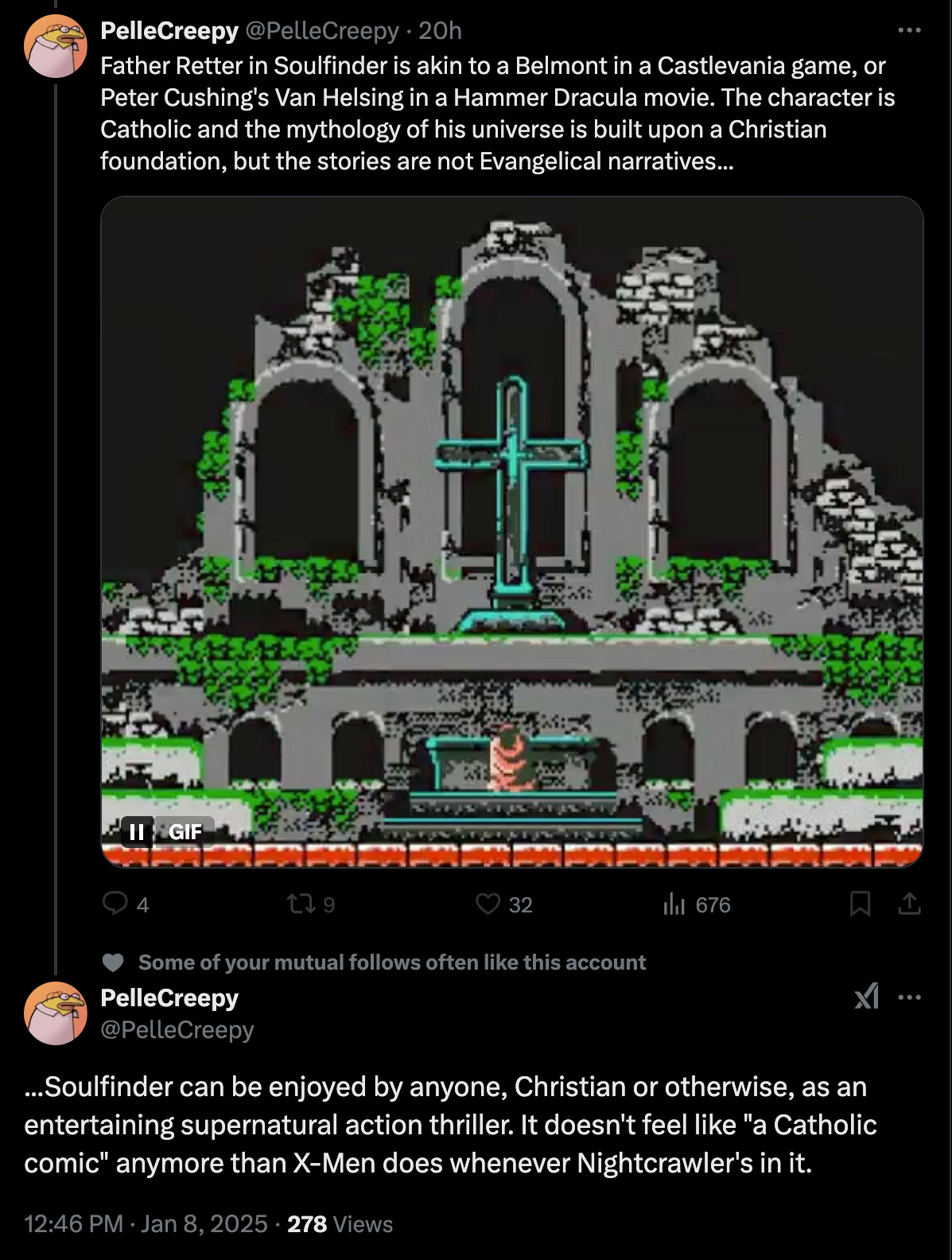
Mark Pellegrini who writes Kamen America emphasized the point as well, saying, “Father Retter in Soulfinder is akin to a Belmont in a Castlevania game, or Peter Cushing's Van Helsing in a Hammer Dracula movie. The character is Catholic and the mythology of his universe is built upon a Christian foundation, but the stories are not Evangelical narratives...”
He concluded, “...Soulfinder can be enjoyed by anyone, Christian or otherwise, as an entertaining supernatural action thriller. It doesn't feel like "a Catholic comic" anymore than X-Men does whenever Nightcrawler's in it.”
The point is made that one can put in quality Catholic representation into books and have the story be engaging. It won’t turn off readers simply because it has Christian themes, but it’s also important not to break the immersion of the world, the characters, and the plot while implementing those themes.
The key to quality Christian fiction is ensuring a keen eye for editorial to make sure the message flows with the story rather than supersedes it, which can be a difficult line to walk as maintaining Christian faith in a broken world.
What do you think of Doug Ernst and Mark Pellegrini from Iconic Comics’ comments on Christian writing? Leave a comment and let us know.

For a quality science fiction Christian graphic novel, Back THE EMERALD ARRAY book on Fund My Comic for real heroism and a great read - Only 11 days left! Don’t miss it!
Regardless of an author's worldview, a quality story is true to life and human nature, not neatly packaged propaganda.
I've always like the Flannery O'Connor quote, "The Christian writer does not decide what would be good for the world and then proceed to deliver it. Like a very doubtful Jacob, he confronts what stands in his path and wonders if he will come out of the struggle at all."
Whether or not Christian writers choose to incorporate Christian themes or references in their stories, it's that kind of humility described in the above quote that lends itself to nuance and quality work.
When creating Christian fiction, I think its important to know WHO your audience is and WHY you're creating what you're creating. Walking the line between compelling and causing some folks to stumble is tricky.
I think if you're creating content for "everyone" and you have characters that are Christian, understand that there might still be too much sin and darkness being used to make the story compelling (extreme gore or violence graphically portrayed and sexually suggestive portrayals of women) can plant sinful thoughts and images in more innocent believers. That's where knowing who you're audience is intended to be (marketed to) is important.
There's also room for Christian fiction, done well, that can feel ham-fisted to some but offer younger or more intentionally discerning Christians something to enjoy. If you're creating Christian fiction for Christians you wouldn't (shouldn't?) graphically depict extreme violence or sexually suggestive situations and imagery.
There's room for both.
Story first, for sure. But you CAN have a great, overtly Christian story where their faith in Christ is what gives them strength or peace, causes them to forgive, inspires them to sacrifice or do something heroic.
As a Christian consumer, I try to stick to the Christian content aimed at Christians, created by Christians. It's painful at times to find the quality offerings but I support my family in Christ.
Although, I wasn't always Christian, so I am tempted to revisit my favorite super heroes when I think it's safe (or relatively safe) from THE MESSAGE or the extreme gore, violence, language, & sex.