


Time travel used to mean something in science fiction. When Captain Kirk slingshot around the sun in “Tomorrow is Yesterday,” the audience felt the struggle of a crew stranded in the wrong century with no guarantee of getting home. When the Doctor stepped out of the TARDIS, he carried the burden of a civilization he could never save.
Modern sci-fi abandoned all of that. But Valiant Frontiers is your new answer.
Doctor Who Stopped Caring
Doctor Who’s regeneration was the most elegant solution to a production problem that television ever invented. The lead actor leaves, the character transforms, and the show continues. For decades it worked because each Doctor brought a different personality, a different moral framework, and a different relationship with the universe. Regeneration carried cost. The old Doctor died. The new one grieved what was lost.
Under Chris Chibnall, regeneration became a party trick. The Timeless Child retcon told audiences that the Doctor had regenerated countless times before, across infinite lives none of them could remember. In one reveal, the show gutted the stakes of its own central mechanic. If the Doctor has always been regenerating, if there is no limit and no permanent cost, then each death is theatrical. The audience stops caring because the show stopped caring first.
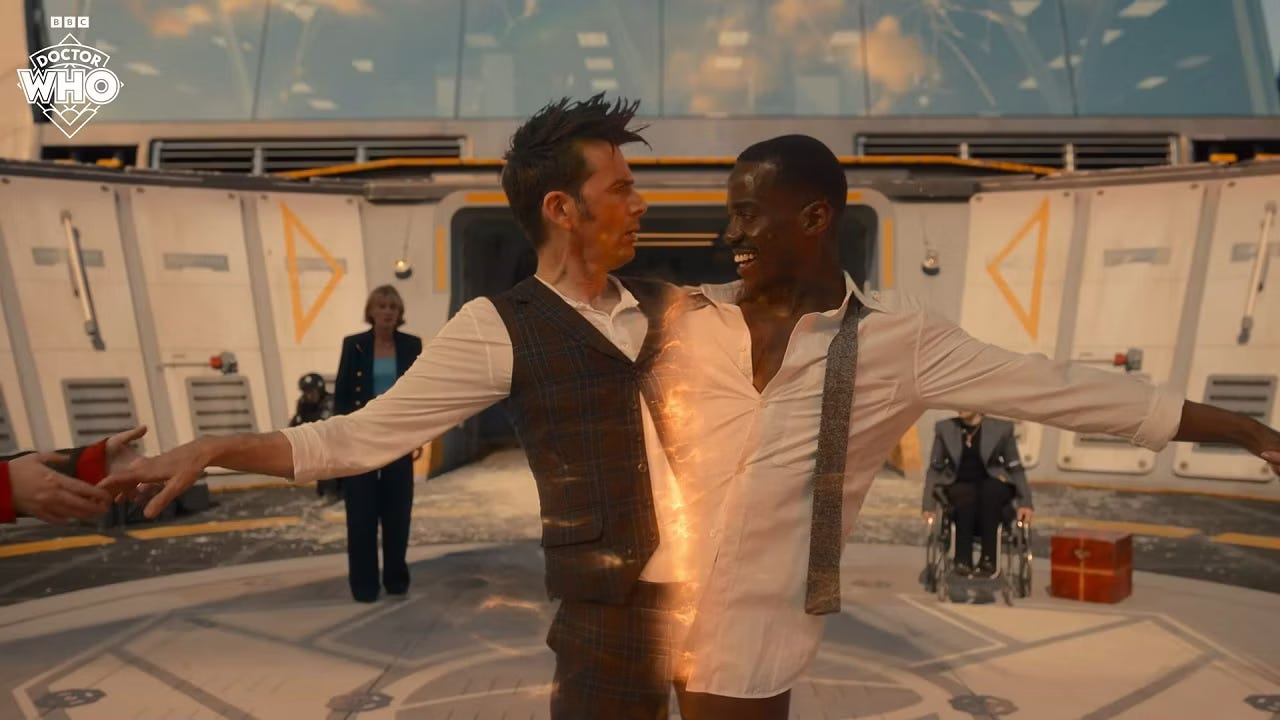
Russell T. Davies came back and kept the problem. Ncuti Gatwa’s Doctor carries none of the drama that Tennant’s or Eccleston’s did because the show no longer treats regeneration as a sacrifice. It treats it as a costume change.
The deeper issue goes past regeneration. Modern Doctor Who has abandoned the idea that time has rules. Davies himself said they’re now a fantasy show just so he doesn’t have to face those rules. The TARDIS goes where the plot needs it. Paradoxes resolve themselves offscreen. Characters fix mistakes by going back and trying again. When time travel has no limits, stories have no tension. The audience is watching a character play a video game with infinite lives.
Star Trek Forgot Its Own Lessons
Star Trek’s best time travel episode is “The City on the Edge of Forever.” Kirk falls in love with Edith Keeler. He learns she has to die for the timeline to survive. He lets it happen. The episode ends in silence. No technobabble solution. No reset. Just a man carrying the cost of doing the right thing.
Compare that to Discovery. The show sent its entire cast to the 32nd century as a plot device to escape continuity problems the writers created. Time travel stopped being a moral question and became a narrative escape hatch. When the timeline becomes inconvenient, the show jumps to a new one.
Strange New Worlds played with time travel for comedy. Musical episodes. Crossovers. Stories where the threat of temporal disruption gets resolved in the final act so cleanly that nothing changes. The crew goes home, cracks a joke, and moves on.
Star Trek used to understand that time travel stories work because they force characters into impossible positions. “Yesterday’s Enterprise” made Picard send a crew back to their certain deaths because the alternative was worse. That episode haunts you because Picard can’t cheat his way out. He has to choose, and both options cost him something he can’t get back.
What I Built Instead

Time Bomb, Book 3 of Valiant Frontiers, is my answer.
The crew of the E.A.S. Valiant discovers time travel not as a technology they control but as a crisis forced on them by a rogue agent from the 41st century. They don’t choose to travel through time. They’re dragged into it because a man who broke himself trying to cheat the natural order is tearing apart the timeline, and they’re the only crew in a position to stop it.
It’s my most complicated plot ever, delving into three time periods. Captain Conley leads one. Commander Selah leads another. Ensign Robinson, the youngest officer on the bridge, gets handed command of the third because there’s no one else left. Each team drops into a period of history where the stakes are real and the people around them aren’t props. They’re living through the worst moments of their civilizations, and the crew has to move through those moments without breaking them further.
The rules are consistent and they cannot be cheated. Temporal mechanics in this book operate on fixed principles that I established before writing a single chapter. When a character violates those principles, the consequences hit immediately and permanently. There is no reset. There is no going back to fix what went wrong. When crew members die in the past, they stay dead. When someone the crew meets in another century turns out to be gone in their own time, that loss is real and it sits with them through the epilogue.
I did something specific with the antagonist that I think readers will find interesting, especially fans of a certain long-running British show. Without spoiling it: the technology that was supposed to preserve him destroyed him instead. The thing that should have given him more life took everything that made life worth living. I’ll let readers discover the details for themselves.
The morality is the point. Conley has to make decisions in the heat of a crisis that he can’t undo. Selah walks through a period of Aryshan history that almost destroyed her people and meets someone she’ll never see again. Robinson, a pilot and a wise-cracker, finds himself holding a sword in medieval Spain with real blood on it and has to reckon with what that means when he gets home.
Nobody walks away clean and cracks a joke in the final scene to pretend it didn’t happen. The crew returns to their own time carrying what they experienced, and the epilogue gives each of them space to sit with it.
That’s what time travel is supposed to do. Not transport characters to a convenient plot location. Not give writers a reset button when they’ve written themselves into a corner. Time travel is supposed to put a human being in front of a choice that has no clean answer, make them choose, and then live with what they chose.
Doctor Who and Star Trek stopped doing that. Time Bomb is my attempt to bring it back.
Time Bomb, Valiant Frontiers Book 3, is available now on Kindle and Kindle Unlimited.
If you haven’t started the series, The Soul Catcher (Book 1) is where it begins.
Can science fiction reclaim time travel as a storytelling tool with real stakes, or has the genre permanently reduced it to a plot convenience?
I miss that actions used to have consequences.
If you killed someone, even by accident, it was permenent.
Everything today is feel good and fixable.
Thanks for reminding me the book is out, I just picked it up.