


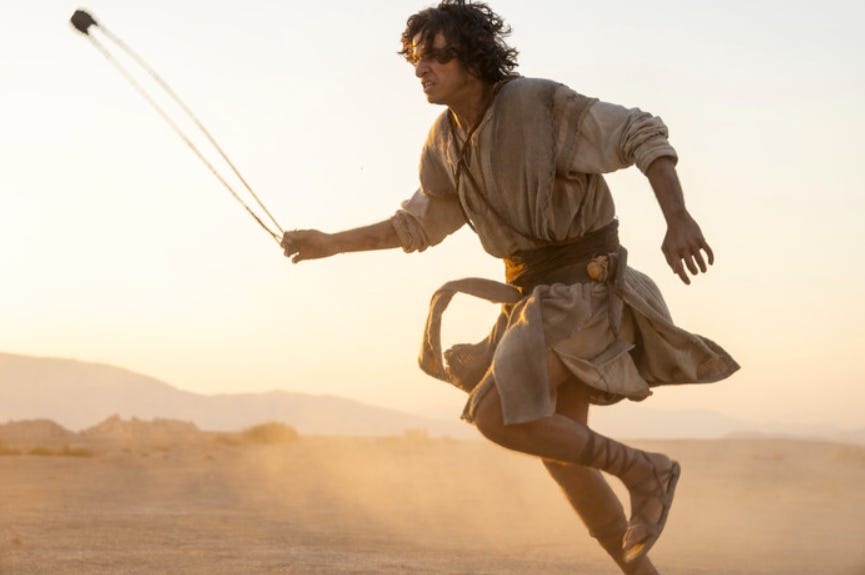
House of David is Amazon MGM Studios’ first big foray into religious storytelling with a collaboration with the show’s creator Jon Erwin and his The Wonder Project production company.
The series’ first season aims to tell the story of the downfall of King Saul, the first king of Israel, due to his own pride and arrogance, and contrasts it with the rise of David from a simple shepherd boy who is anointed the future king of Israel by the prophet Samuel and culminates with him being the only one with the courage to confront the Philistine giant Goliath.
The series has a lot of potential and it shines bright in a number of spots, especially when it hews straight from Scripture, but like many shows in the modern streaming era, and especially adaptations, it begins to falter when it veers away from its source material and incorporates unnecessary scenes or characterizations in the name of “creative liberty” for “storytelling purposes.” Aside from its departures from Scripture, the show’s other biggest failing is its pacing, which again, is common in modern streaming series. The series would have fared better if it had been cut in half or at least pared down to 6 episodes from 8.
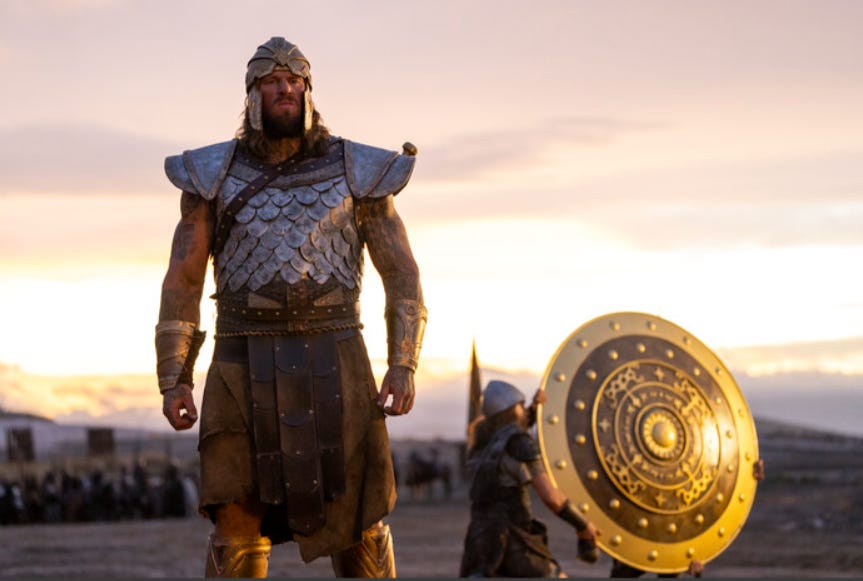
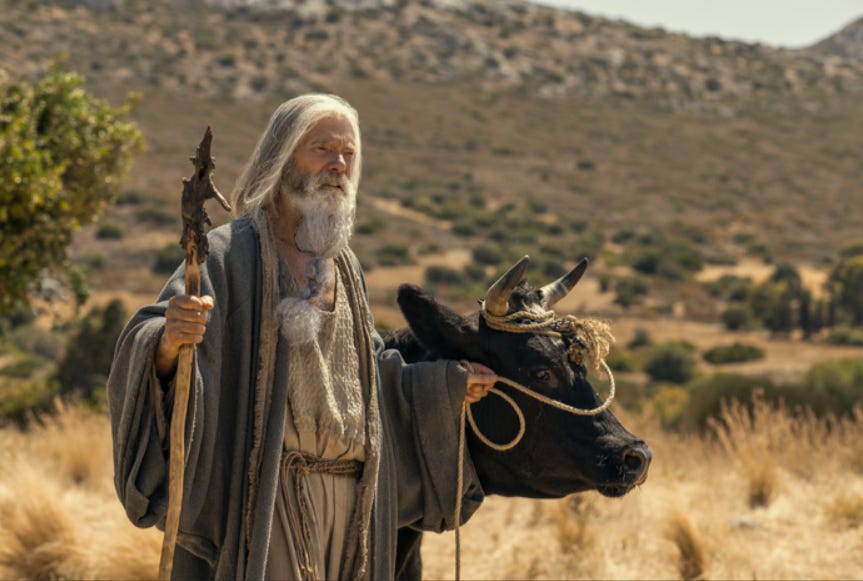
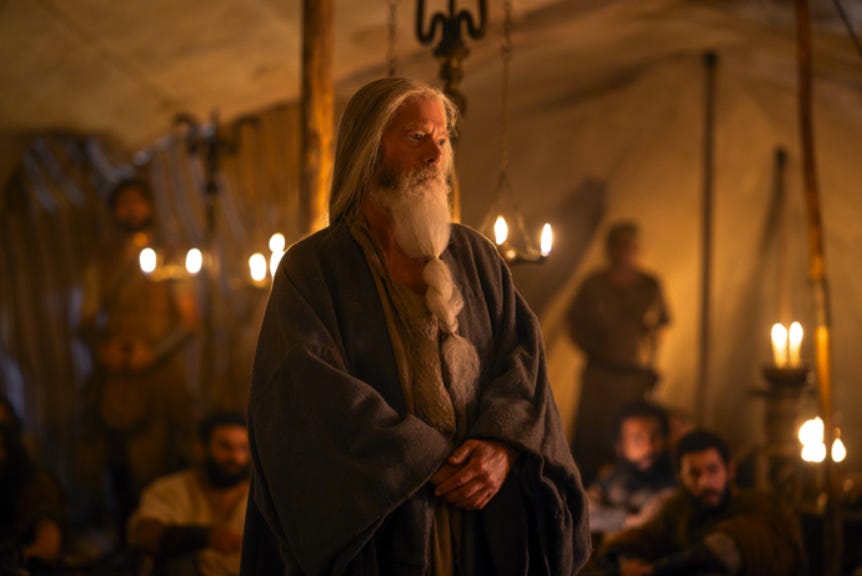
As for the show’s bright spots, many of them involve Stephen Lang’s depiction of Samuel when he is either rebuking Saul for making himself a god and placing himself above God or when he’s providing much needed advice to David or Jesse albeit the latter is the result of a character assassination of Jesse that never should have happened in the first place.
Another bright spot is how the show’s symbolism is used to show that many of the characters depicted are prefigures of individuals in the New Testament whether that be Mary or Jesus Christ. In fact, the show makes this abundantly clear in its first episode when it shows Goliath striking David with a spear on the same side that Christ was pierced on the cross by the Roman soldier.
Similarly, Samuel tells the story of his mother Hannah to David, and the prayer she made to the Lord, which prefigures Mary’s Magnificat that she sings during the Visitation with Elizabeth.
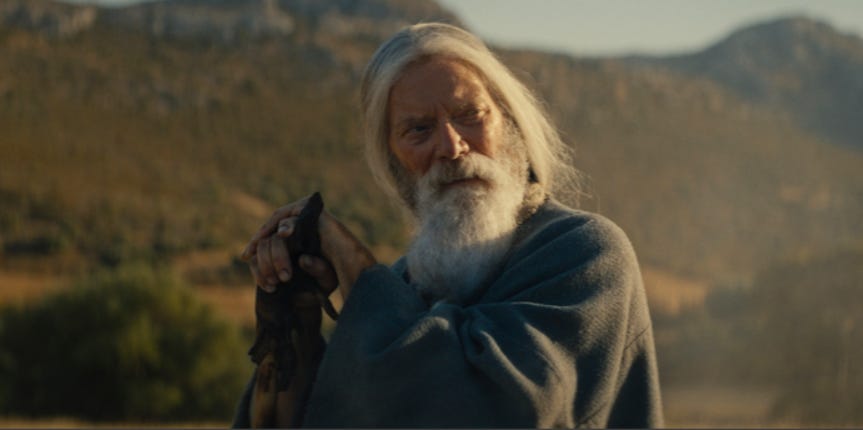
The romance subplot between Michal and David is also nicely done although they should have used more restraint in the final episodes as befitting their stations.
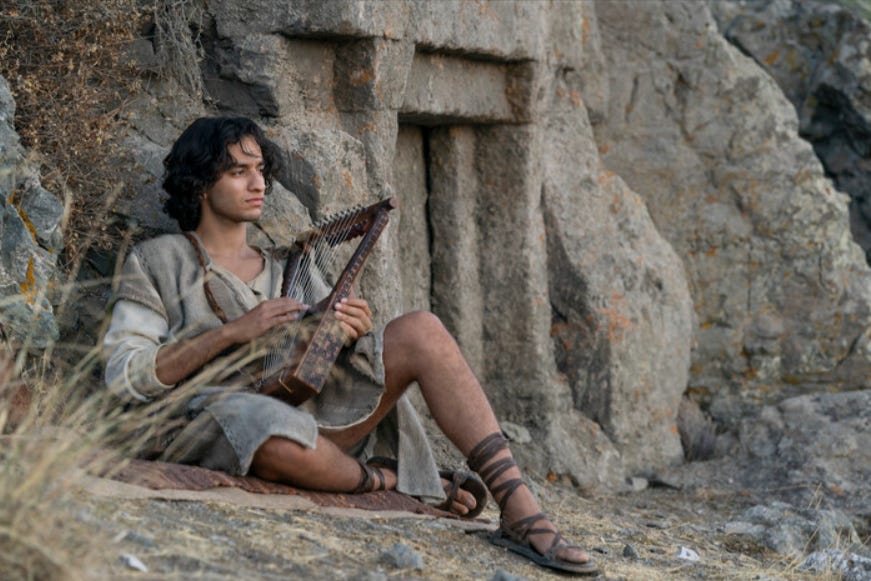
The show also does a great job of incorporating David’s love of music and all the Psalms that he wrote. Michael Iskander, who plays David, sings a number of the songs in Hebrew throughout the show and they are entertainment in itself. The only drawback is they chose not to provide subtitles so for English speakers who do not speak Hebrew it’s unclear what’s he singing. Nevertheless, they are gorgeous to listen to.
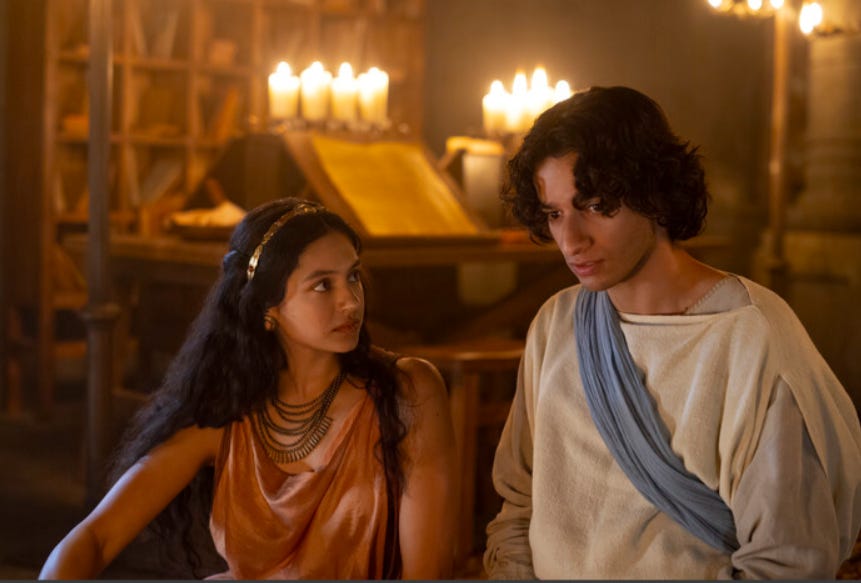
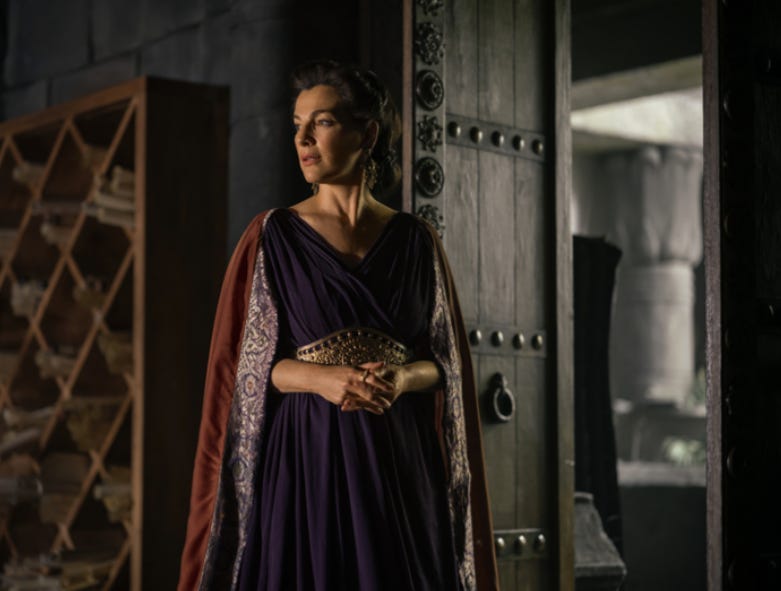
While much of the show’s faults lay in not staying true to Scripture, one of the creative liberties the show took that did stand out was in the characterization of Saul’s wife Queen Ahinoam. Now, on the surface she might be seen as the typical woke Hollywood strong female character taking over the throne and duties of her husband while he is cursed with a demon, but the fact that she is depicted as this is why it’s good. It’s because while she takes over his duties, she follows his example by abandoning God and thus fails at nearly everything she does. No matter the steps she takes to shore up Saul’s reign, it backfires in some way against her way.
For example, in order to try to alleviate Saul’s suffering at the hands of God, she brings in a witch to give him potions and cast spells on him. This does not help Saul at all. Instead, he descends ever deeper into madness even killing one of his servants during one of his spells of madness.
In another instance, she instructs Saul’s general Abner to track down Samuel after God had cursed Saul. Abner, who is initially depicted as an upstanding man of God, begins a downward descent himself and contracts with a Philistine assassin to hunt down Samuel. This is a catastrophic decision as this Philistine eventually betrays Israel and does the bidding of the Philistine King Achish to win Goliath to his cause, albeit how he does this is an example of a scene that should have been cut.
As mentioned above the show’s biggest fault is its pacing and this is a problem from the very first episode. The show tries to conjure up drama that is simply a distraction whether that be among David’s family with his brothers, between David and his father Jesse, among Saul’s family, or between the tribe of Judah and Benjamin, which is Saul’s tribe.
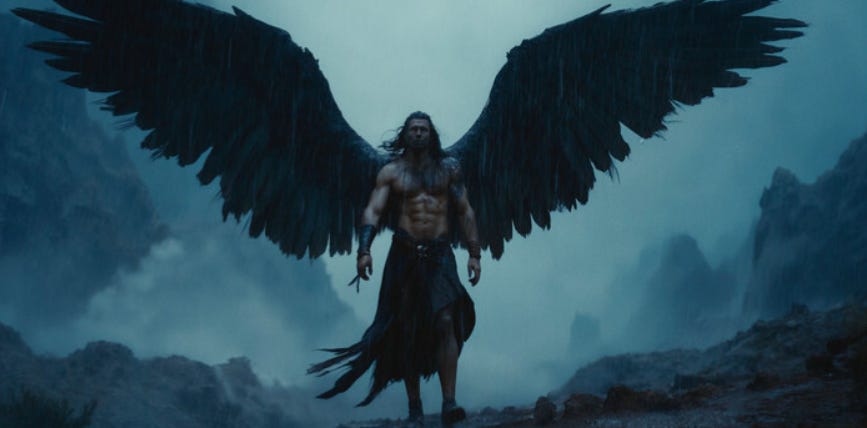
When the show is not interweaving these various dramatic scenes it is attempting to build up a foreboding feeling with Goliath and his brother giants as they lurk in the background attacking border villages until the final confrontation that we know will take place with David.
Many of these scenes take away from the core story and are simply not needed and should have been left on the cutting room floor.
Not only do these scenes draw the show out, but they also create a false picture of David’s relationship with Jesse and his brothers.
While Scripture makes no mention of King David’s mother, she plays a significant factor in the show in how both Jesse and his brothers interact with David. David is called a bastard on numerous occasions by his brothers and derided by them.
David’s relationship with his father Jesse is also strained and David resents him for keeping him in the fields and not allowing him to become a man like his brothers and follow the destiny he sees before himself.
This strained relationship is eventually resolved by the end of the season in a predictable manner (Jesse keeps David near because he is the last memory of his beloved wife) with a lesson from Samuel on sacrifice. While the scene is performed and delivered excellently by Stephen Lang, it was unnecessary and could have been conducted in another way. For example, this lesson could have been delivered to Saul by Samuel, and Saul would pay the consequences for his failure to follow instructions.
The characterization of David is also off putting. While Scripture makes it clear that he is a youth at this time, the show depicts him as whiny and petulant in his interactions with Jesse. Even in his romance of Michal, he suggests she abandon her station and run off with him.
This is completely contrary to Scripture where David is described as “a man of valor, a man of war, prudent in speech, and a man of good presence; and the Lord is with him.”
Depicting David as it does is an obvious attempt by the show to try to give him some character growth. This is another ill that plagues modern Hollywood. It tries to have character arcs and character growth when it is not needed. And in the case of David, he will have plenty of time to grow and learn from his own failings if the show is able to proceed past the already greenlit second season.
There is nothing wrong with having a child of Jesse shown as being a man of valor, a man of war, prudent in speech, and a man of good presence who has the Lord with him.

As hinted at previously the show has an entire subplot where the Philistine King Achish tracks down the Mother of Giants or Oprah and attempts to win her and her sons including Goliath to his cause. This entire subplot should have been completely cut from the show.
While the intention of trying to include the Nephilim into the show is an interesting concept, having the mother of these Nephilim negotiate with Achish does nothing for the characters. It does not provide any new layers for Achish nor give us any depth to Oprah or even Goliath.
What it does do though is allow Hollywood to make their villain characters sympathetic, a trend that cannot die fast enough. It does so by having Achish send an assassin to kill Oprah, but he uses an Israelite weapon to do so and informs her that he is an Israelite. Goliath discovers his dying mother, who tells him with her dying breath to seek vengeance on the Israelites. Goliath and his brothers then join the Philistine cause.
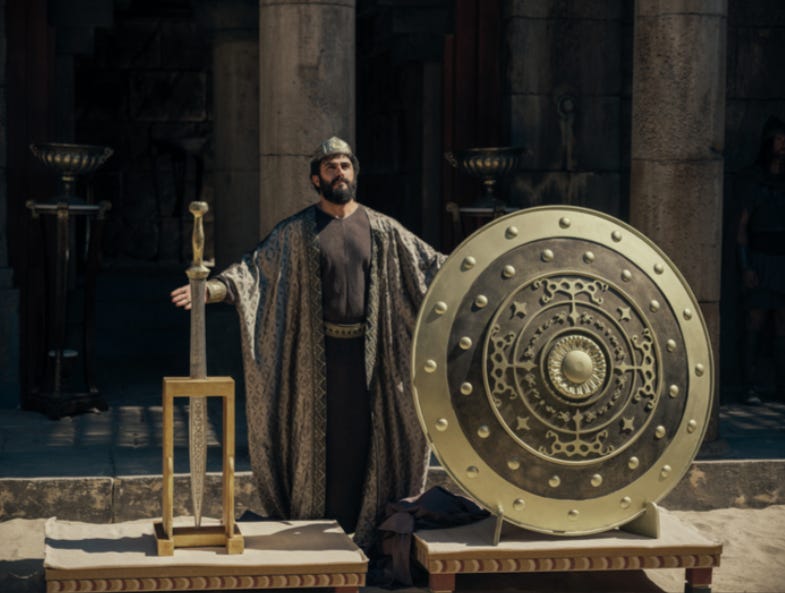
The show also spends too much time with Saul being tormented. And the way he is tormented becomes a little too repetitive. Instead of being tormented regularly by an evil spirit only to be calmed by David’s playing of the harp, Saul is bedridden much of the show suffering from nightmares.
When he is not bedridden, and is being attacked by the evil spirit, it is usually done through a vision where the spirit alters his perception of reality. It would have been refreshing to see some more imaginative ways that the spirit could have attacked him rather than the same nightmarish visions.
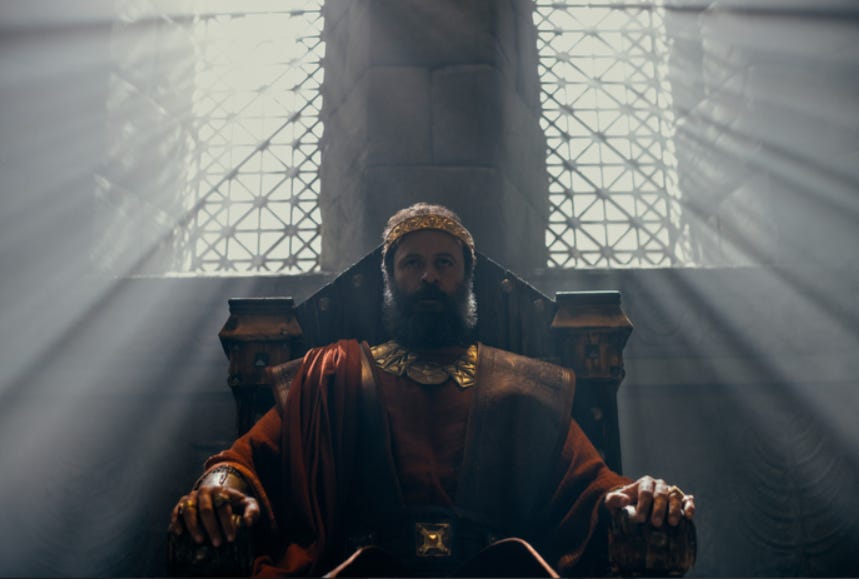
While the creative license with Queen Ahinoam allows for an exploration of disorder and when you are disordered it leads to ruin, the show makes the typical Hollywood decision to have Michal and her sister Mirab leave the fortress of Gibeah to provide succor to Saul on the battlefield. While the show typically stays true to Scripture with David’s music keeping the evil spirit at bay, in the final episode it is simply Michal’s presence and love that rouses Saul from his stupor. It’s a usurpation of David’s role and his favor with the Lord.
This scene, which shows Michal’s faith in contrast to her father’s, could have been depicted better if she had stayed at Gibeah and prayed to God there. It also would have been more powerful because it would show that God’s answers to our prayers are not what we expect. Her prayers would have been answered with David’s slaying of Goliath and her eventual hand in marriage to David.

If you are expecting a ton of action in the show, it is few and far between and it is apparent that they did not film certain actions scenes to keep costs down. The most obvious one is a battle that David has with a lion that is attacking his sheep. He tracks the lion to its den, but when he is about to confront it, the actual battle is shown off screen. Similarly after David kills Goliath, the Israelite army charges the fleeing Philistines, but the scene is cut before any action takes place.
Now, there are action scenes, such as the battle against the Amalekites in the beginning of the show, but it primarily focuses on a single warrior such as Saul’s son Jonathan. Nevertheless, the way it was shot makes you feel like you are part of the battle. The fact that it was shot at sunset and you only really see the silhouettes of the soldiers creates a certain awe that contrasts with the brutality of the Amalekites being butchered.
The other major action sequence takes place at the end of the second episode and sees David’s oldest brother Eliab take on a squad of Philistines. This set piece was creative with different surprises and ambushes that both David and his brother have to react to. It creates a real sense of danger. However, the scene eventually falls flat in how it is connected to the larger story. King Achish refuses to finish them off. Obviously, because you can’t kill off David nor his brother yet. But neither Eliab nor David report the fact that the King of the Philistines is encroaching into Israeli border towns.
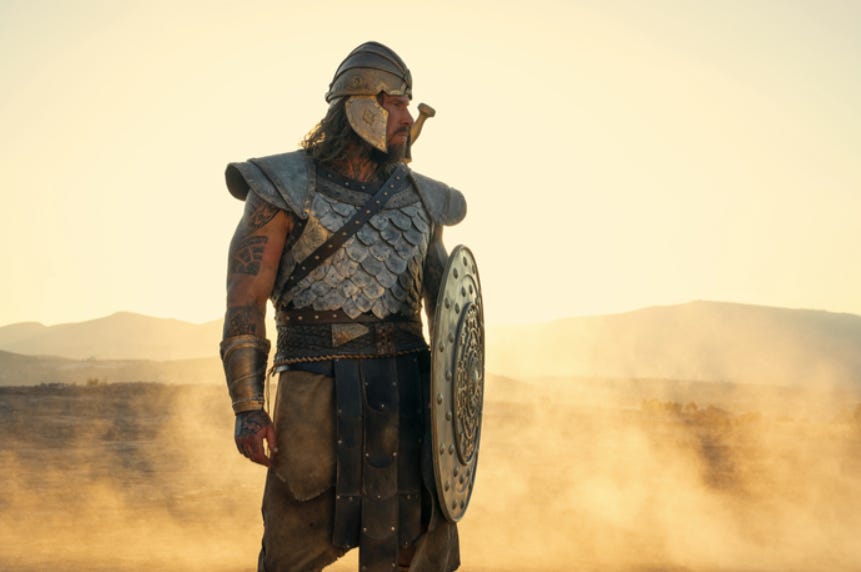
To conclude, House of David has some excellent scenes with Samuel and when the show stays true to Scripture it really shines. However, when it takes creative license it adds in too many subplots, needlessly mischaracterizes these historical figures, and bogs the show down.
With that said, I recommend watching the show. It is not your typical Hollywood subversion of the Bible. In fact, it does a decent job of glorifying God and using various symbols and themes to show David as a prefigure to Christ as well as Samuel’s mother as a prefigure of Mary, the Mother of God. I am looking forward to what they do in the second season and the improvements they will make from their own learnings and the feedback they’ve received from viewers.
This show has a ton of potential, but there are a few areas it needed to improve upon with the most important being the pace. This could have been done by shrinking the number of episodes needed to tell the story. And while I suggest less episodes, I also think the show should have started further back during the reign of King of Saul. It should have kept the opening idea of the narration, but have it stop with the Israelites demanding a king. The show could then begin with Saul being anointed and Samuel rebuking them for desiring a king when they already have God as their king.
This then allows the first episode to explore Saul and his son Jonathan’s various military exploits that are in Scripture including their battles with the Ammonites and the Philistines. It also gives room to show more of Saul’s downfall and how God did provide Saul opportunities to reconcile himself to Him before he decided to make himself a god after the battle with the Amalekites. In fact, an entire second episode could have been devoted to Samuel’s instruction to Saul regarding the Amalekites, the battle with the Amalekites, and then Samuel’s rebuke of Saul, which might be the best scene in the entire show at the end of the first episode.
From there, you would depict Samuel’s mourning over Saul, his escape from Saul, his journey to Bethlehem, the anointing of David, David’s defense of his flock from the bear and a lion, and David’s journey to Gibeah where he was needed to play his lyre for Saul because he had been afflicted by the evil spirit.
Next, you could engage in the romance subplot with Michal while Saul takes to David and “loved him greatly” as Scripture states. This also gives you the opportunity to depict David as the armor bearer of Saul as Scripture makes clear he is. Something the show makes no mention of. This would be where you might also include Ahinoam’s subplot and there could also be a minor skirmish on a border town between the Israelites and the Philistines with Goliath in their ranks.
Finally, the fifth episode would be the mustering of the Israeli forces, the continued romance between Michal and David, one imagines Michal wishing her knight well. It would culminate with David entering the Israelite camp after coming from his father’s flock and confronting them over their cowardice to fight Goliath and volunteering to take on the giant, and eventually felling him.
If you enjoy epic fiction with a strong spiritual backbone, read The Domes of Calrathia.

NEXT: Netflix's Version Of 'The Passion Of The Christ' Cuts Out Isaiah's Prophecy About Jesus Christ
If u want the real story of David go to the source. Pick up and read the bible.