


Wizards of the Coast has done irreparable damage to the brands of Dungeons & Dragons and Magic: the Gathering. The Hasbro 2024 Q4 Financial reports confirm that Magic: The Gathering revenues are down but that profits are only holding steady because of “licensing and digital gaming.”
2024 Dungeons & Dragons or 5.5 edition as some are calling it has had more than its share of controversy over the last year of its release with players voicing concerns over the game’s direction. It looks like recent reports of the new edition failing to sell are true, given financial reports of Hasbro showing that Wizrads of the Coast only broke even last year, despite this new edition releasing.
As far as reasons for new D&D to fail, there have been several.
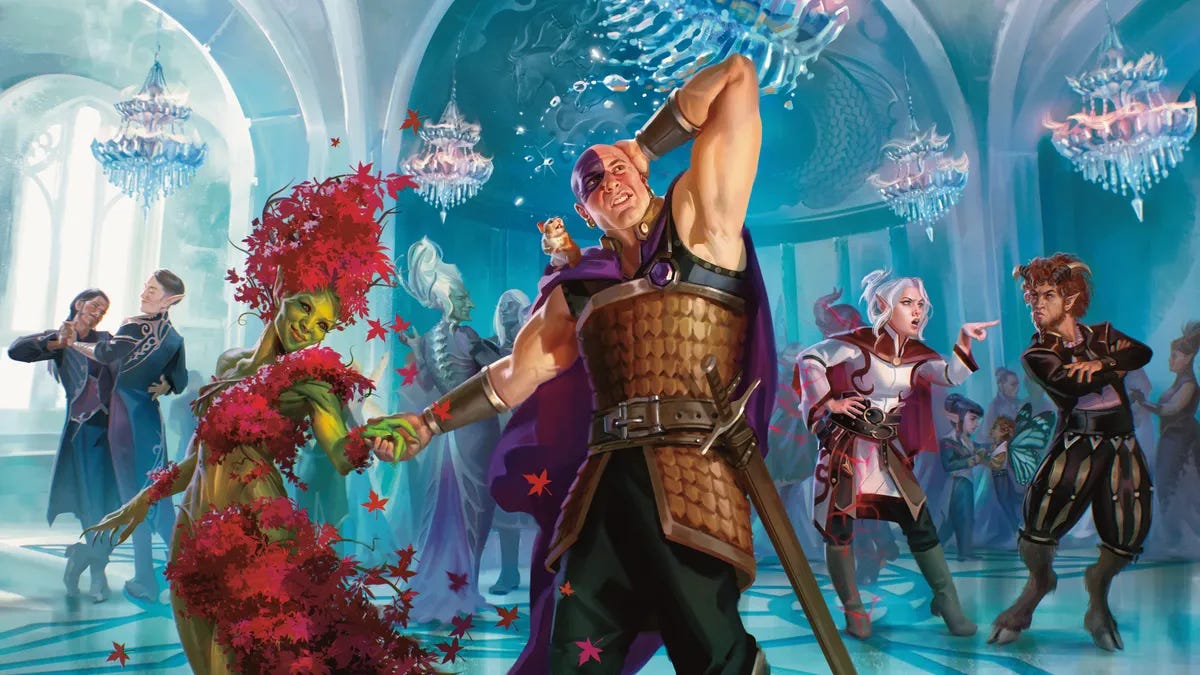
The Player’s Handbook was filled with diversity, equity, and inclusion imagery and language that shows that Wizards of the Coast does not want returning players but seems to be trying to chase a modern audience with most of their art in the book centering around black people and women, and includes content removing terms like “race” in exchange for “species” and removing Half-Orcs from the book.
This is exactly what former Executive producer Kyle Brink called for in an infamous 2023 interview where he said, “This is not the face of the hobby anymore,” Brink said, “and I think there’s been mistakes made in years past where people assumed that D&D players were all, you know, white dudes in a basement. Which has been a faulty assumption for a lot of years and gets more and more false every day. And so in my viewpoint, guys like me can’t leave soon enough.”
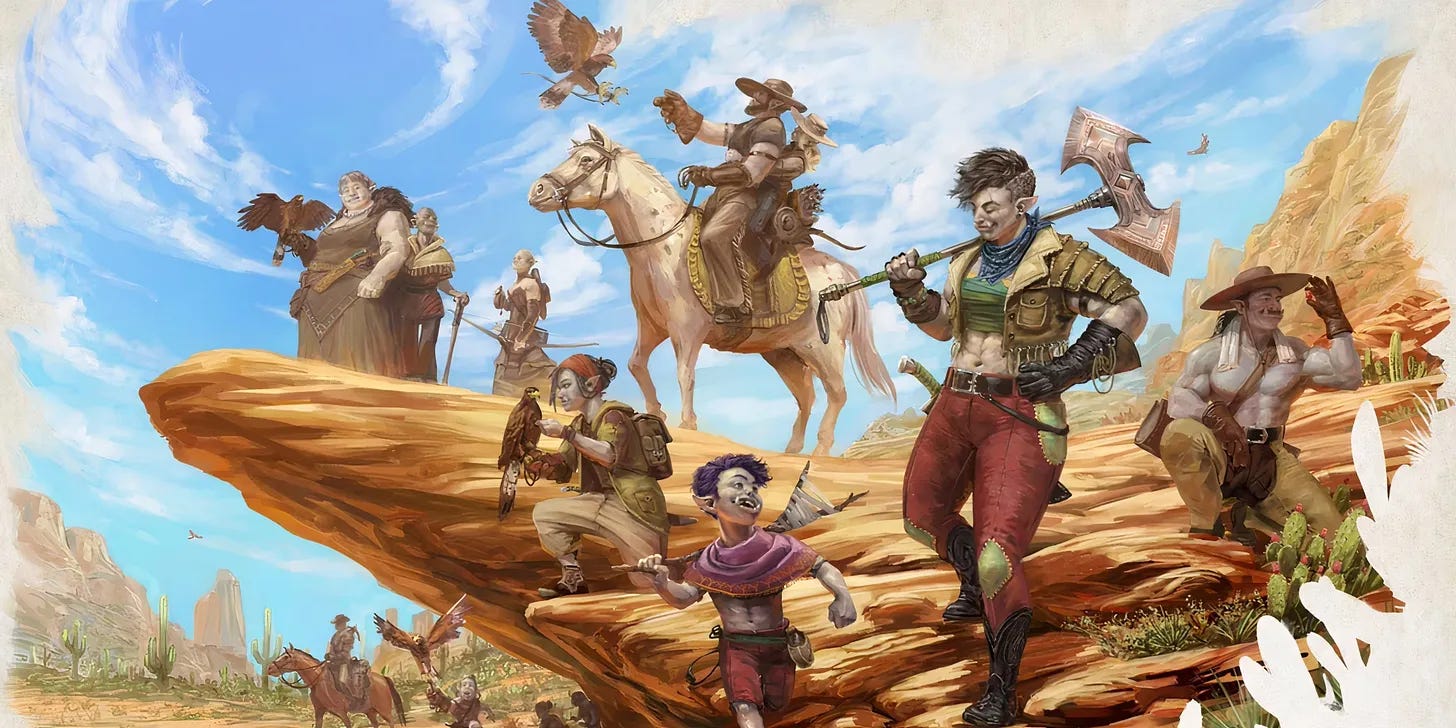
On top of this controversy, the new Monster Manual excludes orcs and caters to extreme gender ideology by turning traditionally female characters like Hags and Dryads into something non-gender exclusive, and more changes that have left players scratching their heads about its content.
The icing on the cake came last year when Senior Designer Jason Tondro penned a forward to a history of Dungeons & Dragons book attacking its creator Gary Gygax as misogynistic and accusing him of colonialism.
Magic: The Gathering has been in terrible shape for years as well.
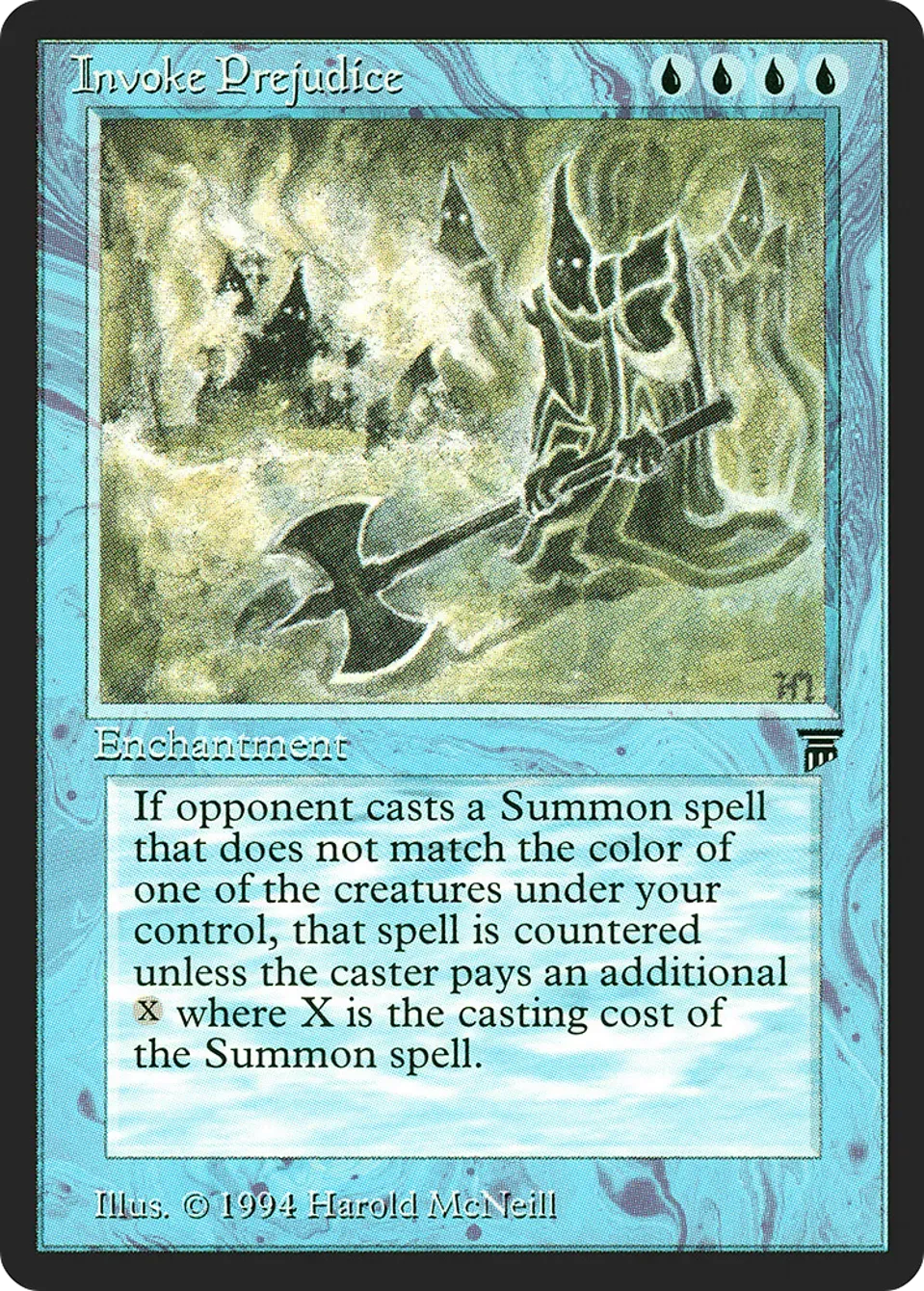
It began with a simple removal of original cards from the game which included “Invoke Prejudice,” “Cleanse,” “Stone-Throwing Devils,” “Pradesh Gypsies,” “Jihad,” “Imprison,” and “Crusade,” as they wanted to make the game more politically correct. The media cheered this on as removing “racist cards” from the game in 2020, but since then, it’s only gotten worse.
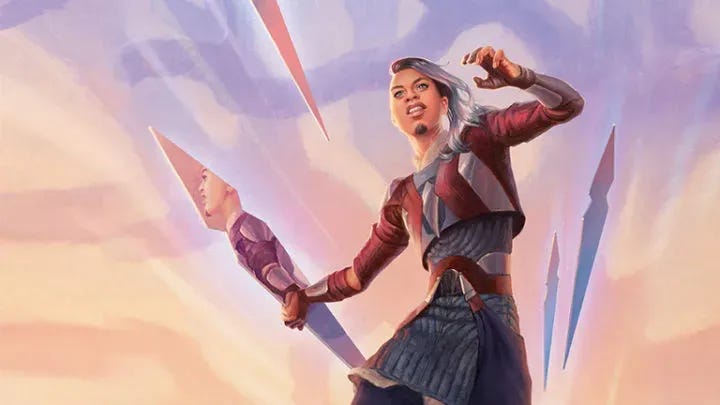
As the game went on, WotC introduced “trans and non-binary representation” to the cards in the game. Alesha, Who Smiles At Death, was specifically a card adding a marquee transgender character to the game as the company decided to push mental illness on its players in a game about intense combat and destroying opposing summoners.
Magic: The Gathering even put up a piece of story fiction on the website reiterating the character is her with italics to make sure players knew this was virtue signaling about a man wearing women’s clothing somehow magically becoming a real woman.
Magic doubled down with the planeswalker Niko Aris, who has the look of a mentally ill leftist in addition to the transgender implication of the card.
The biggest controversy for Magic: The Gathering, however, came when the company decided to dip into other settings to produce cards. Wizards of the Coast obtained the license for Lord Of The Rings, and upon making a card set for the game involving Tolkien’s beloved characters, they decided to make changes.
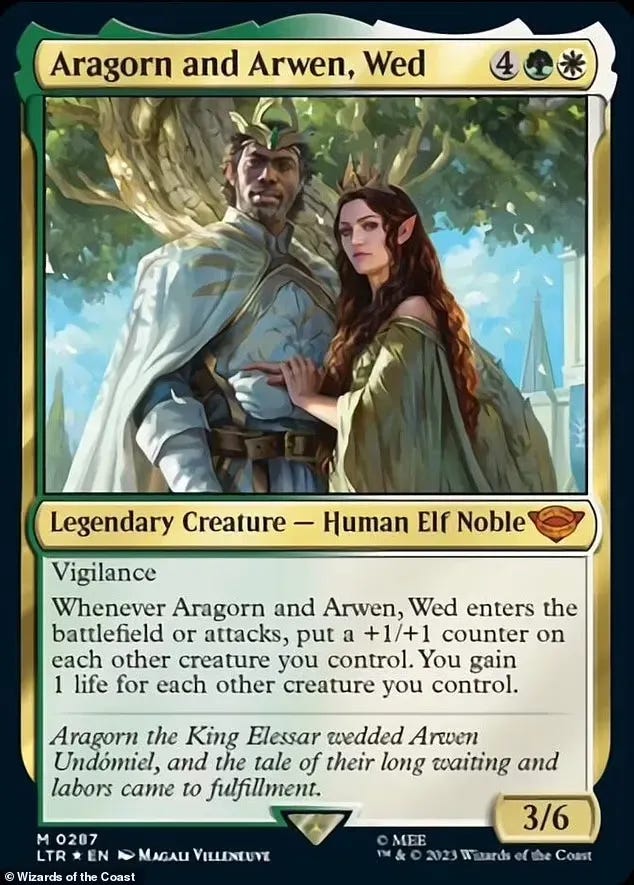
They’re struggling to recover at this point as the game playerbase has dwindled with IcV2 reporting that new Pokemon TCGs are outselling Magic: The Gathering sets, with M:tG now having lost its place as the king of trading card games.
Hasbro financials at the end of 2024 are also painting a dismal picture. With a new core book coming out, D&D should be at its peak with sales surpassing anything in recent years, but we’ve seen that the books are failing to chart even at the level of niche books like Tasha’s Caldron of Everything.
Wizards of the Coast and Digital Gaming were listed as flat for 2024’s Q3, but in Q4, Magic: The Gathering revenues decreased by 1%. While Magic: The Gathering is said to have been in a slump, it was picked up to be flat because of games like Baldur’s Gate 3 bringing the segment back to zero, according to the report.
This is a bad sign for tabletop gaming as it means it’s diminishing and only being propped up by video game licensing.
The financial reports hardly mention Dungeons & Dragons, lumping it in with “total gaming” in their financials. The failure to speak as to the releases of the new core books means that the game had little to no impact on their revenue—another sign that tabletop gaming is in decline and players passed on this new edition of D&D.
In the Q4, their tabletop gaming is listed as declining by 22% in revenue, odd given the Christmas season and with the new releases of D&D core books.
Again, licensed gaming offset these numbers with an increase of 35%, keeping the company afloat.
These numbers bode ill for the future of Magic: The Gathering and Dungeons & Dragons as indicators are showing players tuning out of these brand franchises of tabletop gaming and getting their entertainment elsewhere.
What do you think of Hasbro’s 2024 Q4 Financials? Leave a comment and let us know.
Jayden was one of an evil empire’s top soldiers, but he’s defected and vowed never to do violence again. However, something terrible has awakened and he may be the only one who can stop it. Pre-Order The Demon’s Eye, an incredible new classic fantasy novel.

NEXT: George R.R. Martin Opening New Bar "Milk Of The Poppy" Instead Of Completing The Winds Of Winter
Let me fix the headline. It should be self-explanatory:
Hasbro 2024 Q4 Financials Show Net Decrease Of 22% For Tabletop Gaming *Because* Dungeons & Dragons Core Book Release contains LGBT+ pedophilia, and BDSM perversity.
I was an avid purchaser and player of Magic since 2019. I gave it up this year with the release of Aetherdrift. I have also played DnD since 2018. I’ve bought a decent amount of 5e’s books. I have absolutely no desire to touch 2024, or 5.5e (which Wizards weirdly doesn’t want to call it). I suspect there are a lot of players like me.
The edition is completely unnecessary, and any rules-changes which players like, they can easily adopt in 5e homebrew. While most players were fine to purchase new sourcebooks when new additions came out, these sourcebooks didn’t actively hate their customer base. Yes, the most reliable customers and active players are still straight white males. And, strangely, they are increasingly socially conservative and even religious. So now, these players are instead looking to older editions. 5.5e ought to have been advanced 5e, much like 3.5e was to 3e. It was instead 5e “fixed”
There was little need to amend 5e, as so many of its supplemental books already did so. The only amendments that were added in 5.5e were along ideological lines, like changing race to species (even though race has been a term recognized since 1st edition), and removing stat bonuses from races. There was also the weird homogenization of classes, making all of them obtain their subclass at level 3, which felt unnecessary and unflavorful.
Frankly, Baldur’s Gate 3 is a much better amendment to 5e than 5.5e. Yes, stat bonuses were unrestricted by race, but race was still a restrictive matter with highly relevant racial abilities. Regardless, the game showed that 5e is a good system, and with merely a few fixes (like additional weapon abilities obtained with proficiency), it can make a phenomenal experience.
Wizards broke the social contract they had with their faithful customers. The games are not merely their systems. Perhaps DnD more so, but Dungeons and Dragons without its high fantasy roots is empty. Without instead leveraging their IP and turning that into the product, the MtG and DnD systems are not meant to be multibillion dollar products. Hasbro is bleeding the IP dry, and turning off their customers in the process. Yes, games adapt. And they ought to adapt or die. But they shouldn’t evolve into an entirely different creature. To whom are they appealing? The wider market? The vocal but parasitic minorities? I promise you, you will get no more sustainable returns than with those who you have already convinced of your product. A bird in the hand is better than two in the bush.