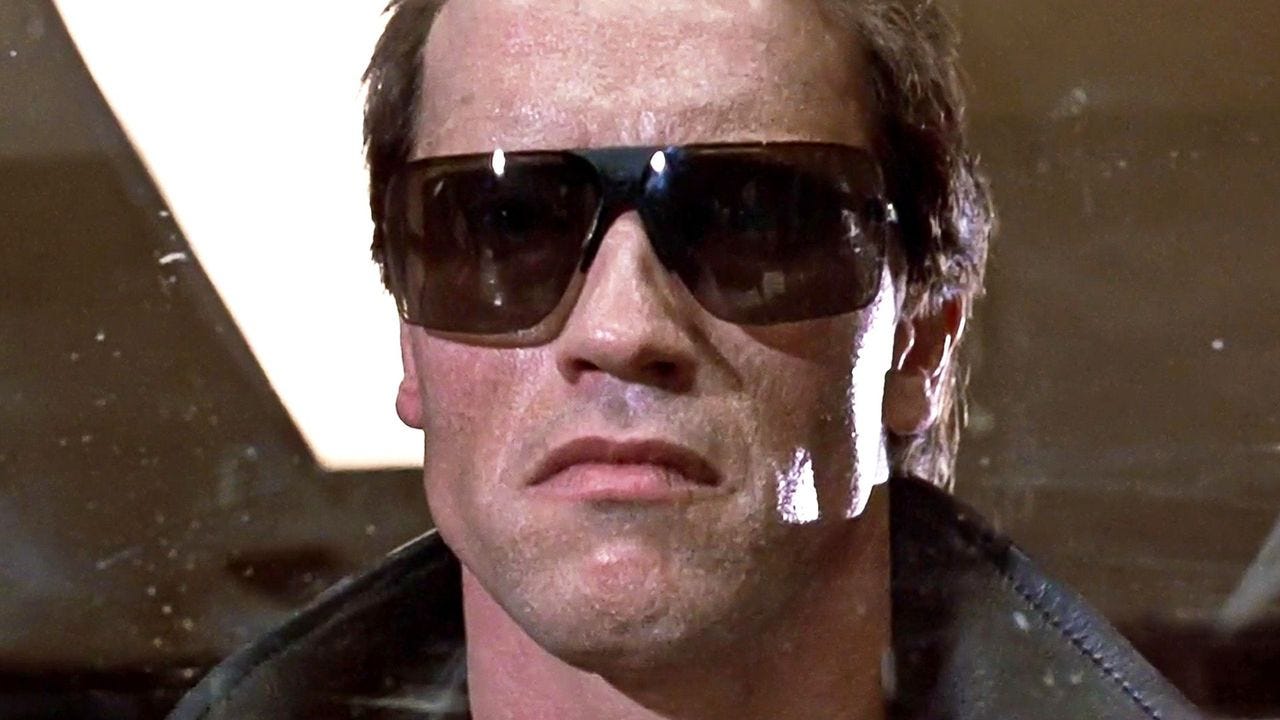
Harlan Ellison threatened to sue James Cameron over The Terminator, and he got what he came for. After the film’s October 1984 release, Hemdale and Orion Pictures settled out of court for an undisclosed sum and agreed that future releases would carry the line “Acknowledgment to the works of Harlan Ellison.” Forty-two years later, with fan fiction climbing the bestseller lists and courts treating shared premises as common property, the claim reads differently than it did in 1984.
The popular version of the story isn’t what most people think. Fans usually say Ellison went after Cameron over “Demon with a Glass Hand,” his 1964 Outer Limits episode about an android sent back from the future. Ellison said otherwise. In a 2001 post on his official website, he wrote that The Terminator was not taken from “Demon” but was a ripoff of his other Outer Limits script, “Soldier.” The case never reached a courtroom, so no judge or jury ever compared the two works side by side.
What “Soldier” and The Terminator Share
“Soldier,” adapted from Ellison’s 1957 short story “Soldier from Tomorrow,” follows Qarlo Clobregnny (Michael Ansara), a clone bred from birth for endless war. A misfiring energy weapon throws him from the far future to 1964. Authorities capture him and he repeats a garbled phrase that linguist Tom Kagan (Lloyd Nolan) decodes as name, rank and serial letters. Kagan takes him in. An enemy soldier follows through the same tear in time, and the two kill each other in the Kagan home.
The overlap with Cameron’s film sits in the opening minutes. A fighter from a future war lands in the present, a second one follows, and when police detain Kyle Reese he gives only his name and rank. Ellison said that after he sneaked into a screening, he judged the first three minutes of his episode and the first three minutes of the film to be identical.
Then the two stories part ways. Qarlo spends most of the hour in captivity and in the Kagan living room, and the script asks whether a man engineered to kill can learn tenderness. The Terminator is a chase. A machine hunts Sarah Connor, Reese protects her, and their night together produces the son the machine was built to prevent. The film ends in a factory.
“Demon with a Glass Hand” overlaps even less, for those who keep track. Trent (Robert Culp), a man with a glass-covered computer hand missing three fingers and no memory, is hunted by aliens through a downtown office building before he learns he is an android. An artificial man from the future, a time device and relentless pursuers share a genre with Cameron’s film. They share no sequence of events with it.
The Starlog Interview
According to Ellison, what moved the studios was a Starlog interview. He said an editor told him that in the original transcript Cameron credited “a couple of ‘Outer Limits’ segments” as the source of the film, and that Cameron’s side pressed the magazine to cut it. The printed interview contains no such line. In it, Cameron calls the idea a fever dream. Ellison also said writer Tracy Torme told him Cameron had boasted that he “ripped off a couple of Harlan Ellison stories.” Cameron has denied plagiarizing anyone.
Cameron addressed the settlement in Rebecca Keegan’s 2009 biography The Futurist. “It was a nuisance suit that could easily have been fought,” he said. He added that he expected Hemdale and Orion to defend him, that the insurer warned him he would face personal liability for damages if they lost, that he had no money at the time, and that a gag order kept him from telling his side. He called Ellison a parasite. In a 1991 interview, the same Cameron said Ellison and Larry Niven were part of his late-high-school science fiction diet.
Ellison’s Track Record
Ellison had collected before. In 1980 he won $337,000 from ABC and Paramount over “Brillo,” a short story he wrote with Ben Bova, a sum later reduced in a settlement. A year before The Terminator, Marvel’s Incredible Hulk #286 (1983) lifted “Soldier” almost line for line: a soldier from the 41st century, a helmet that forces him to keep fighting, the special rifle. Marvel editor-in-chief Jim Shooter later recalled that when Ellison called, he admitted the copying on the spot. Ellison settled for the script fee the writer was paid, a credit, and a lifetime subscription to everything Marvel published. Shooter said statutory damages could have reached the hundreds of thousands.
The Marvel issue copied expression. The Terminator dispute concerned a premise and an opening scene, which is a different kind of claim.
What a 2026 Court Would Weigh
Federal copyright law protects expression and leaves ideas free. In the Ninth Circuit, home of Hollywood litigation, courts apply a two-part test: an objective extrinsic comparison, then a subjective intrinsic one. Before the comparison begins, the court filters out ideas and scènes à faire, the stock elements any story in a genre tends to use. In Berkic v. Crichton, the court said the comparison looks at the concrete sequence of events and the relationships between major characters, not at a general plot idea. The Second Circuit applied the same logic when it affirmed dismissal of a game designer’s claim against a CBS series, calling tardigrades, space travel and alien encounters stock elements of science fiction.
Run that filter on “Soldier.” Qarlo’s clone upbringing, the invented-language phrase, the Kagan household and the question of whether a killer can learn tenderness appear nowhere in Cameron’s film. What survives is a time-displaced soldier, a name-and-rank exchange and a pursuer. Cameron’s script adds Sarah Connor, Skynet, a villain built as a machine, a romance and a paradox about who fathers the resistance leader. A creator can admit to being inspired and still prevail if only ideas were taken.
One caution applies. The two-part test dates to the 1970s, and Berkic was decided in 1985, so the doctrine was close to its current shape when Ellison called his lawyers. What has changed more is the economics and the culture. A settlement is a business decision, and by Cameron’s account an insurer made this one.
Fan Fiction and the Shifting Line
The publishing market now shows the same line at work. Fifty Shades of Grey began as Twilight fan fiction titled Master of the Universe, posted on fan archives, then stripped of direct references before publication. Cassandra Clare’s Mortal Instruments grew out of Harry Potter fan fiction. At least three authors of Twilight fan fiction reached the New York Times list.
Anna Todd posted After to Wattpad in April 2013 as One Direction fan fiction. She changed Harry Styles to Hardin Scott, drew a reported mid-six-figure deal from Simon & Schuster in 2014 at age 25, and sold more than 10 million copies of the series. Fans call the process “filing off the serial numbers” or “pulled to publish.” Writers delete the fan version, rewrite it and remove the source’s names and settings. What remains are tropes, which belong to everyone. That follows the law’s logic.
The difference from 1984 is tolerance. Readers, publishers and platforms treat shared tropes as common stock, and a lawsuit built on a shared premise now invites a skeptical reception.
If Ellison’s lawyers sent the same letter to Hemdale today, would an insurer still pay to avoid a trial, or would a motion to dismiss on the idea-expression line end it in one filing?
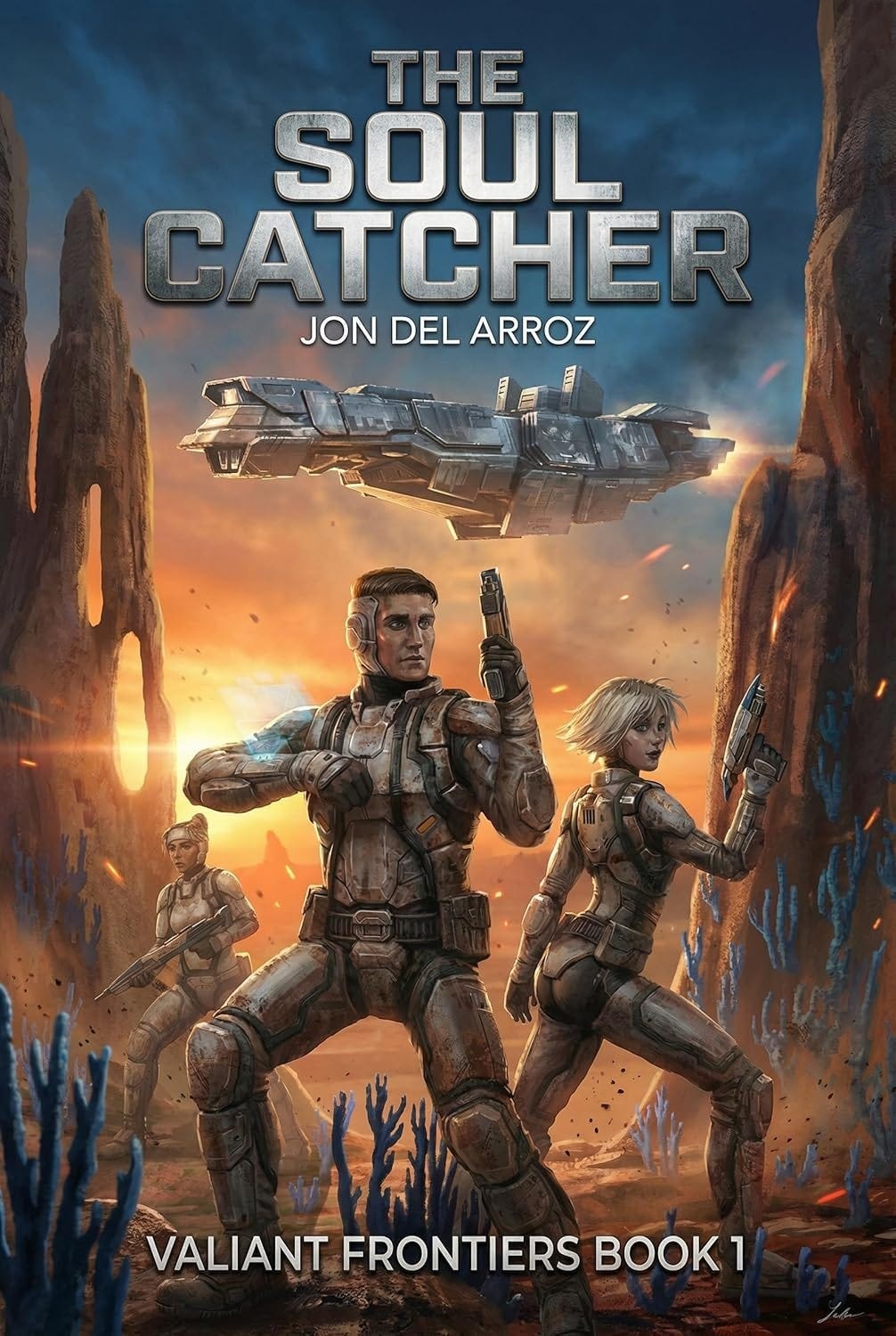
First contact with the Oridians was supposed to be humanity’s proudest moment. Instead, their chief engineer is dead, their ship is sabotaged, and an ancient alien technology is stealing souls. Book one of the Valiant Frontiers series delivers exploration, mystery, and the kind of crew you’ll want to follow across the galaxy. Read The Soul Catcher on Amazon and start the adventure.