


GraphicAudio has released its full-cast dramatization of Into the Fire, the second book of Elizabeth Moon’s Vatta’s Peace, and with that release the studio has now adapted the entire seven-book Vatta saga. For longtime readers of Moon’s military science fiction, the whole run, from Trading in Danger through Into the Fire, is now available as a dramatized production. That is a real event for a series that has spent two decades as one of the genre’s quieter standouts.
Why a GraphicAudio Production Is Worth Noticing
A GraphicAudio title is not a single narrator reading a book. The studio bills its work as “A Movie in Your Mind,” and the format earns the tag: a full cast voices the characters, a narrator carries the prose, and the whole thing rides on cinematic scoring and sound effects. Blaster fire, ship klaxons, the hum of a bridge under load. It sits closer to old-time radio drama than to a standard audiobook, and for action-heavy space opera that production style pays off, because the battles and the bridge crews come through as performance rather than recitation.
What makes the Vatta adaptation a small surprise is GraphicAudio’s usual lane. The studio tends to pour its biggest productions into marquee franchises and sprawling catalogs: Brandon Sanderson’s Stormlight Archive and Mistborn, Sarah J. Maas, Pierce Brown’s Red Rising, DC and Dark Horse comics, R.A. Salvatore’s DemonWars. Vatta is a comparatively compact, older military SF series from a single author, and it does not carry that kind of blockbuster footprint. Seeing it get the full dramatized treatment, all seven books, is the sort of choice that rewards the genre’s core readers rather than chasing the largest possible audience.
The Series GraphicAudio Adapted

Vatta’s War runs five books, published by Del Rey between 2003 and 2008: Trading in Danger, Marque and Reprisal (released as Moving Target in the UK and Australia), Engaging the Enemy, Command Decision, and Victory Conditions. The hero is Kylara Vatta, daughter of a powerful interstellar shipping family from the planet Slotter Key. Ky washes out of her world’s Spaceforce Academy in her final year after she is maneuvered into helping the wrong cadet, and her family hands her command of an aging trade ship bound for the scrapyards. Then assassins kill most of the Vatta family and gut the company in a coordinated attack, and Ky’s military training stops being a footnote. Across the five books she builds a fighting force out of salvage and survivors, takes on the pirate warlord Gammis Turek, and rises to admiral of a real interstellar defense fleet.
This is grounded, character-first military science fiction, and it belongs in the conversation with Lois McMaster Bujold’s Vorkosigan books and David Weber’s naval SF. Moon writes command, logistics, and the weight of decisions with the authority of someone who has worn the uniform. She served three years of active duty in the Marine Corps and reached first lieutenant, and that experience shows in how her officers think under pressure and how her crews hold together when everything goes wrong. She is a serious writer with the hardware to match, including the Nebula Award for The Speed of Dark and a Hugo nomination for Remnant Population. The Vatta books are pure science fiction done well, the kind of work that built the field, and they have been overlooked far longer than they deserve.
Moon Came Back and Rounded Out the Story

The five-book war could have been the end. Years later, at her editor’s suggestion and with steady pushing from fans, Moon returned to Ky Vatta and wrote a sequel duology, Vatta’s Peace: Cold Welcome (2017) and Into the Fire (2018). The gap between Victory Conditions and Cold Welcome ran close to a decade, and the return added more than a victory lap. The two later books pull Ky off the bridge and back to Slotter Key, into the harder, slower problem of what a war hero does when the shooting stops and the enemies move into courtrooms, bureaucracies, and family history.
Into the Fire picks up directly from the events of Cold Welcome. Ky has survived a sabotaged shuttle crash and a brutal stranding on a remote arctic continent, and she has uncovered a hidden military base that someone was willing to kill to keep secret. Back on the mainland, the fight turns into a different kind of siege. Her accounts are frozen, she faces murder charges over the deaths on that mission, an immigration statute is turned against her, and the survivors she led to safety are locked away and drugged while her evidence quietly disappears. Working with her cousin Stella, her formidable great-aunt Grace, and her fiancé Rafe, Ky has to drag a decades-old conspiracy into the light, one whose roots reach the heart of the planet’s government and back into the tragedy that nearly wiped out her family. The duology deepens the Vatta family’s history and closes the saga’s open threads, and it does so without losing the spine that made the original run work.

With Into the Fire finished, every book of both series is now available from GraphicAudio in full dramatized form. For readers who came up with these books and have wanted to hear them performed rather than read, this is the payoff, and it puts a deserving, underrated military space opera in front of a format built to do it justice.
Which other overlooked military SF series from the 2000s would you most want to hear GraphicAudio adapt with a full cast next?
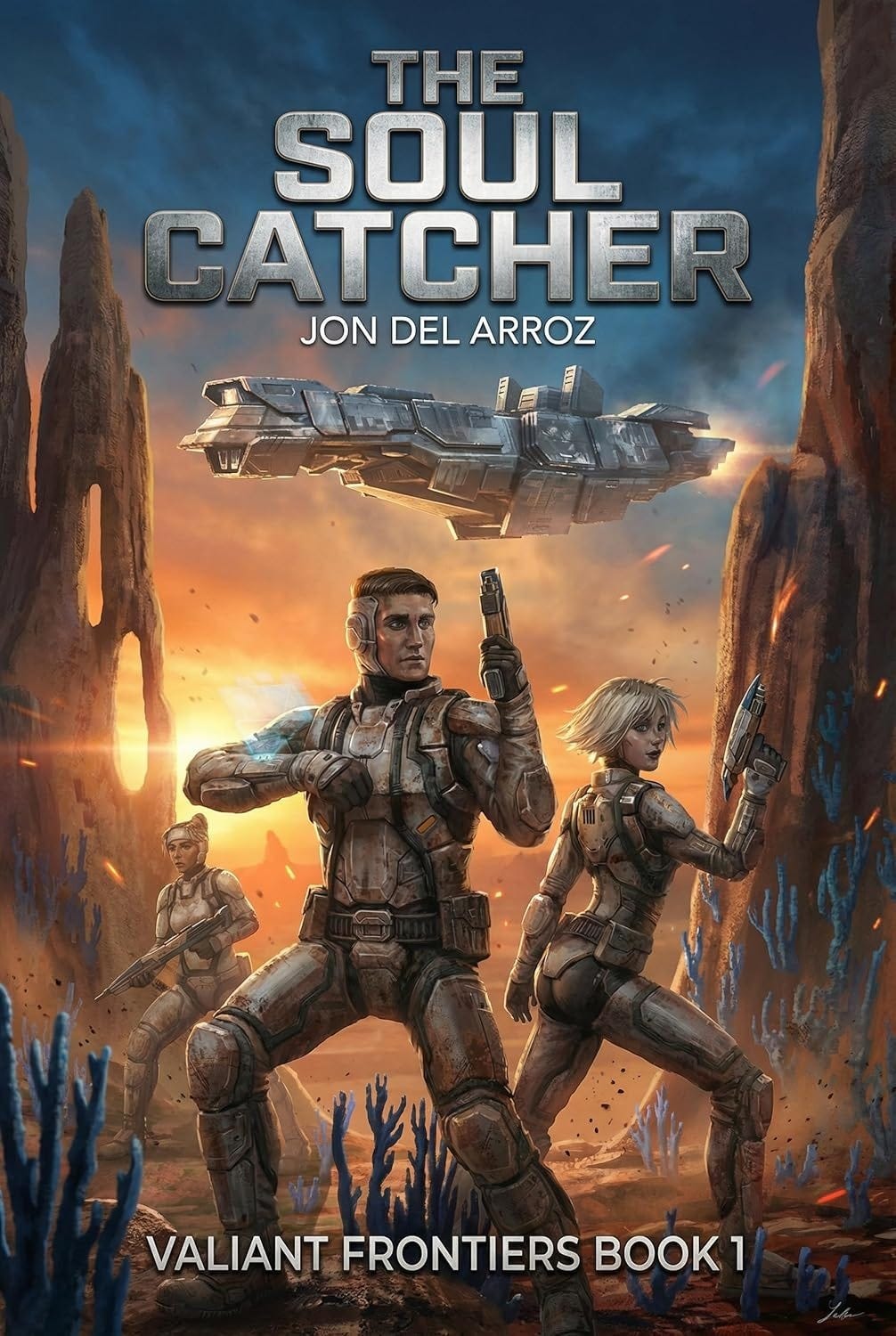
First contact with the Oridians was supposed to be humanity’s proudest moment. Instead, their chief engineer is dead, their ship is sabotaged, and an ancient alien technology is stealing souls. Book one of the Valiant Frontiers series delivers exploration, mystery, and the kind of crew you’ll want to follow across the galaxy. Read The Soul Catcher on Amazon and start the adventure.
NEXT: How Sharon Lee and Steve Miller Built the Liaden Universe One Convention Chapbook at a Time