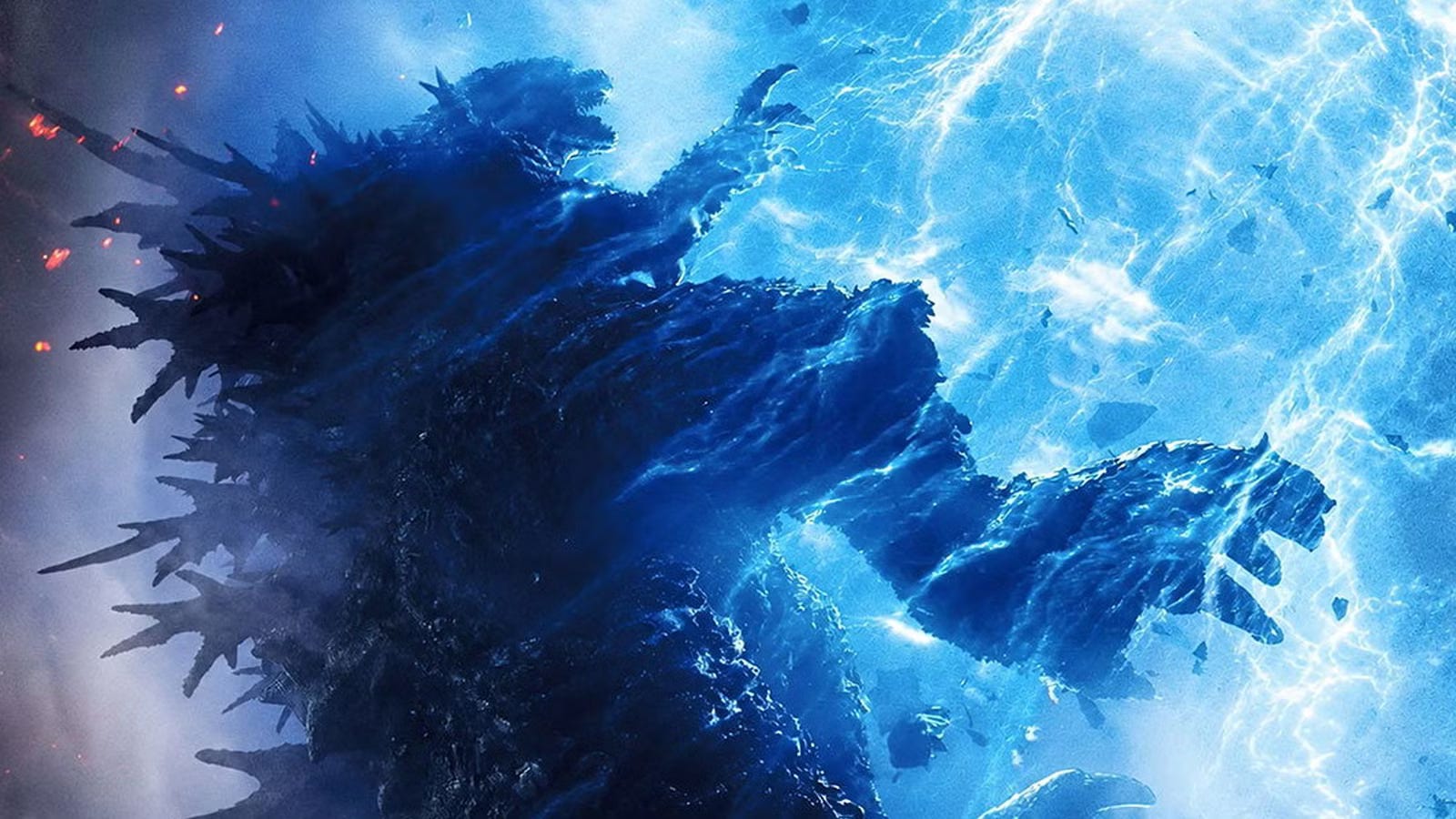
Godzilla Minus Zero is watchable and mildly entertaining, and it is nowhere near the level of Godzilla Minus One. Minus One was one of the most perfect monster movies ever made, amazing from start to finish. Takashi Yamazaki’s sequel tries to top it by raising the stakes, and the effort backfires.
The stakes were already high. Minus One put its characters in the middle of a war and then in the middle of Godzilla rampaging through Japan and destroying everything, and he looked like an insurmountable monster. Minus Zero adds a second monster on top of that. A new creature tears through the country, and the characters have to deal with it. A bigger threat does not raise the tension, because the movie gives you less to lose. The personal stakes are far lower this time. The main couple has a child and is just living their lives when they get sucked back into the fight.
The opening is a slow start. It spends a lot of time on character melodrama, which is fine in principle. Minus One worked because it grounded you in people you cared about, and Minus Zero tries to do the same thing. It does not land the same way.
On the other side is the monster-response group. The man who runs it brings in Makoto Aoyama, a weather forecaster, and she turns out to be so smart and so capable that she seems to know everything. At first he diminishes her and tells her to go be with “you people.” That is a feminist message inserted into the story, and it makes you roll your eyes. Come on. By the end she is in charge and predicts weather patterns so accurately that it is absurd even for a monster movie.
It was also obvious the film was setting up Godzilla against the new creature, and it delivers exactly that. Before the matchup, the military bombs the creature. They cannot get it, they hurt it, and nothing they do stops it. This comes after they already dealt with Godzilla once. It gets a little ridiculous, and you never feel the tension.
The effects changed the experience too. In Minus One you barely saw Godzilla. You caught him in the corner of the lens, and that restraint helped a lower budget and built dread. Minus Zero has so much CGI that it feels cartoony at times. There is also a lot of back and forth and too many slow stretches. The movie should have been 20 to 30 minutes shorter, and it goes a little too far in nearly every direction.
The way they bring Godzilla out is ridiculous. They use a generic sci-fi device, something like a resonance amplifier. They attach the girl from the last movie to it for personal stakes, then have the couple leave their daughter behind, crying, for even more. It comes off as corny.
Then the fight. The fight is cool to watch and entertaining, and it is predictable. Godzilla almost dies, comes back, and blows up the monster. His return is sudden. He is gone for most of the movie, and then someone mentions that he has regenerative powers and he is back. The timing does not work well, given everything else going on. On the other front, several characters die to up the stakes and make the story feel right.
The doctor handling the Godzilla research is strongly anti-American, and the Americans in the movie are interested in the creatures for weapons and for fighting the Soviets. They are barely in it. One idea is interesting: once the monsters are fighting each other, the plan is to have the Americans finish them off. But the doctor gets multiple flashbacks to the aftermath of Hiroshima, and eventually a dream sequence in which he imagines Godzilla destroying New York, as if he could make that happen, and he laughs maniacally about it. Minus One had so much realism that it felt like it was happening. This pulled me out of the movie immediately, and the sequence is hard to follow. It cuts to New York with the Americans there, and for a moment you cannot tell whether it is real, until you work out that it is a dream. It is not done well and is not clear about what is happening.
After the fight, Aoyama decides she wants to preserve Godzilla’s life and says they have new orders to do so. I do not know where those orders came from, and it makes no sense, and it is not explained. They let Godzilla go back into the sea. Why would you do that? That is insane.
Then they get back aboard the aircraft with their resonance device. The main character points a gun at the doctor who did it and says he is going to hijack the aircraft. The doctor says not to, he has a better plan, and then he goes with the Americans and they ride off. What is happening and why is very unclear. It feels like there was too much going on, they did not know how to wrap it up, and they wanted to leave it open for the next movie without killing Godzilla again.
The last stretch has one more forced moment. Because they are going on the run, they plan to leave the little girl in an orphanage, and they go to tell her. That is a stupid decision. It is a forced emotional moment, they eventually change their minds, and the question is why do it at all. Why torture a kid like that? The movie has too many forced emotional moments, and too many scenes where it devolves into shouting and people arguing for the sake of adding drama.
I did not hate it. It was all right, and certainly watchable. But there are a lot of flaws, and it was not anywhere near the level of the first one, which is a disappointment.
Did the second monster raise the stakes for you, or had Minus One’s single Godzilla already hit the ceiling?
If the golden age of Trek and Babylon 5 left a hole in your sci-fi diet, The Stars Entwined fills it — interstellar espionage between two civilizations on the brink of war. Read The Stars Entwined on Amazon!