


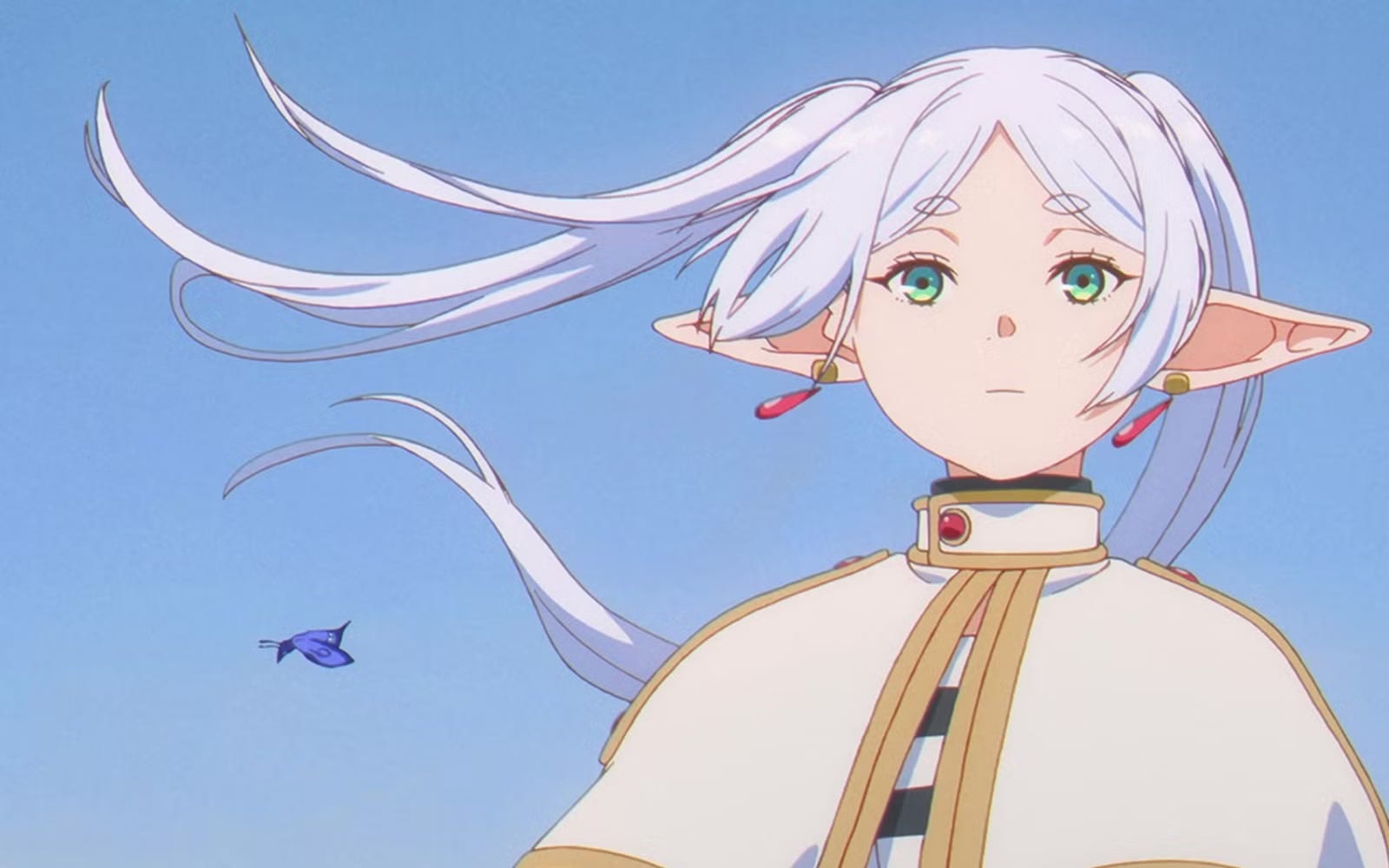
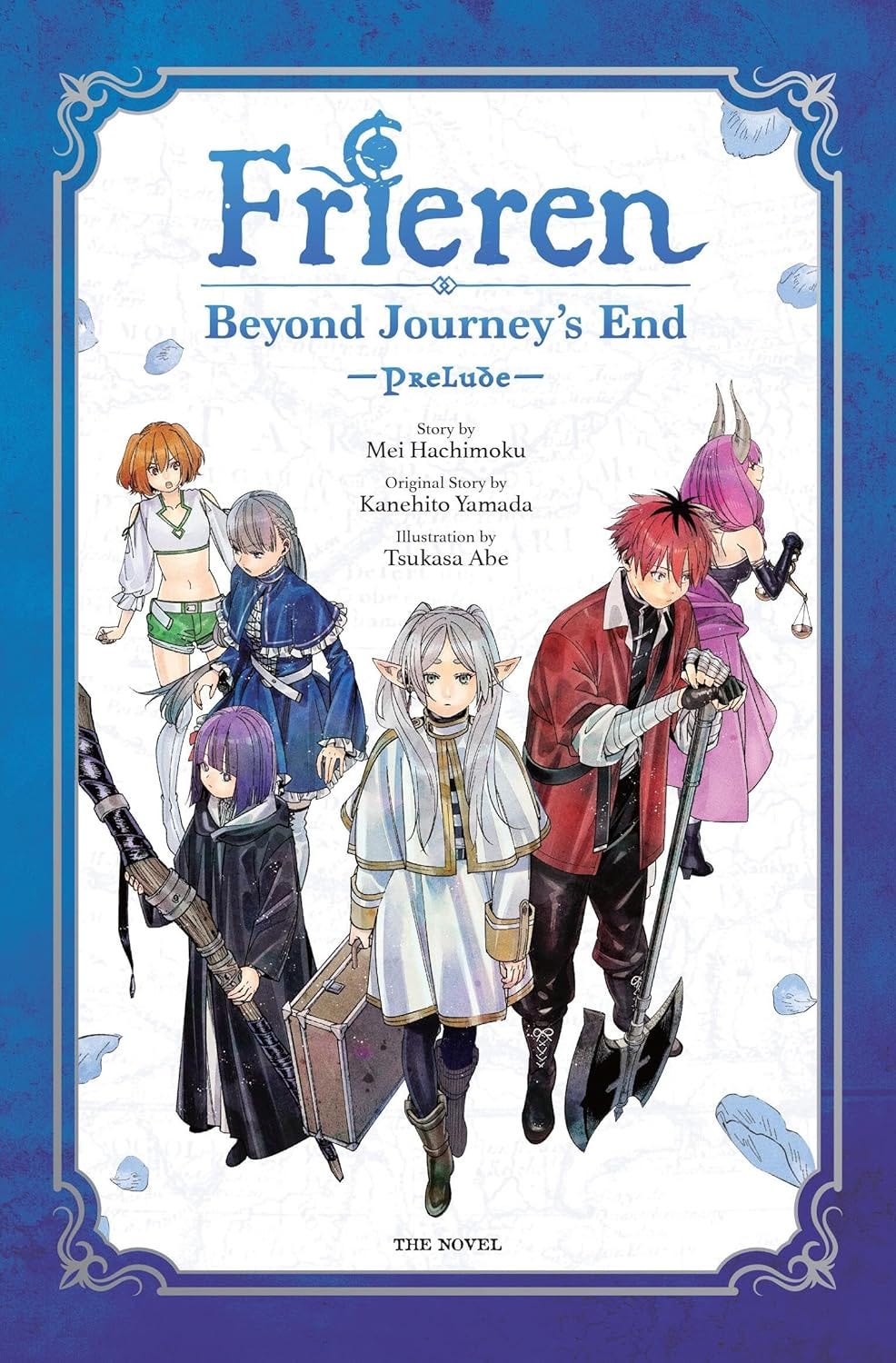
The first thing worth knowing about Frieren: Beyond Journey’s End Prelude is who wrote it, which is not Kanehito Yamada, the manga’s author. The light novel prequel was written by Mei Hachimoku, a separate writer brought in for the project. Yamada supervised, credited as having consulted on the material to keep things consistent, but his voice is not the one on the page.
Published in Japan in April 2024 and released in English by Yen Press in early 2026, Prelude collects five short stories set before the events of the main manga. Each focuses on a different character and functions as a setup vignette, giving a glimpse of where everyone was just before the series proper picks them up.
The Two That Work
Fern’s story opens the book and is the strongest thing in it. She’s caring for Heiter, who is ill, and goes searching for herbs that might help him. Simple premise. But it works because Fern is a character readers already care about, and watching her quiet determination in service of someone she loves earns the page time. The story ends right before Frieren enters her life. As a prelude — in the literal sense — it lands. There’s a completeness to it, emotional if not plot-driven.
Stark’s story is second and almost as good. He’s defending a town from a dragon he has never actually faced. He’s coasting on a reputation he isn’t sure he deserves, and the story forces him to confront that. He does end up saving someone. It’s modest adventure fiction, but it has stakes and a character arc that fits neatly within the space of a short story. Like Fern’s chapter, it positions itself right at the edge of his arc in the anime — you finish it and understand exactly where he’s standing emotionally when things begin.
The book is wise to lead with these two as they carry the most goodwill.
Where It Loses Ground
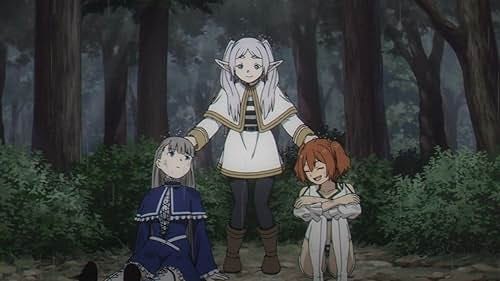
Lawine and Kanne’s story is the third, and here the book starts to coast. These are the two mage academy characters Frieren and company encounter during the first-class mage certification exam arc. These are minor characters. Their story involves a joint test, a difficult wealthy mage they have to deal with, and learning to work alongside each other despite clashing personalities. Structurally, it is probably the most complete story in the volume. Something actually happens. There’s a beginning, conflict, and resolution. But the characters asking readers to follow them for those pages are ones most will struggle to care about, and competent plotting cannot paper over that gap.
The Aura story afterward, who, if you remember from the early manga, is the Guillotine Demon, is harder to justify. Aura loses her magic, loses her confidence, regains both. The arc is clean enough. The problem is she’s a villain who is dead by this point in the timeline. Developing her further requires readers to invest emotional energy in a character with no future in the story. There’s a version of this that works as tragedy — the reader knowing what Aura doesn’t. This isn’t quite that version. It sits on the page without much resonance.
The Frieren Chapter and the Translation Problem
The final story, centering on Frieren herself, is the most thematically on-point piece in the collection. She’s asleep in a carriage, dreaming her way through memories of people across centuries, and the drift between those dreams and waking is the entire emotional mechanism of the series condensed into a short story. Time moved, but the people are gone. She is only now beginning to understand the weight of that. As a piece of thematic work, it belongs here.
But even here, a persistent problem surfaces that runs through the whole book: the translation flattens the voices. Fern, Stark, Aura, and Frieren end up reading with a similar register, which is modern, slightly casual, a little generic. When a demon and a grieving young girl feel like they were written by the same hand in the same mood, something has been lost. Some of this may trace back to Hachimoku’s prose, but the English translation carries its own layer of responsibility. The language choices push contemporary in a way that works against the series’ characteristic melancholy and remove.
The Verdict
Prelude is not a bad book. It’s a short one. This reads in an afternoon and asks very little of the reader. The Fern and Stark stories justify picking it up. The other three range from passable to skippable, and none of them will change how anyone reads the manga or watches the anime.
What it isn’t is essential. These are reminder vignettes, reinforcing things readers already understood and add no real layer to the characters that carry the book across the finish line. Yamada’s supervision kept it from going badly wrong, but the absence of hisvoice is felt in every chapter.
7/10.
What did you think about this light novel?
Six books. One unforgettable world. The Adventures of Baron Von Monocle is steampunk adventure with the kind of worldbuilding and heart that made you fall in love with fantasy in the first place. Start the series on Amazon.
NEXT: Reclaiming The Shire: The Right Wing And Christian Soul Of The Lord Of The Rings (Part 3)
Weighing in on the anime itself.
It's excellent. The concept is heartbreaking: an elf who lives for thousands of years retracing the journey she took with her companions decades ago. Reliving the experience, she slowly begins to realize that one of them, a human, loved her deeply. She had no concept of it at the time, but in her retrospection, she's starting to love him back.
The only problem?
He's already dead.
It's such a brilliant and timeless feeling concept, but I don't know if it's ever been done before. The execution at times isn't perfect (trope-y and sidetracks itself too often) but it's pretty good overall and the core idea is incredibly strong.
The Aura story is justified by Aura’s insane popularity with the anime audience. The book came out after the anime. Aura is their Boba Fett.
As for Kanne and Lawine, they’re among the manga author’s favorite characters, so it may be a nod to him. Plus, their dynamic is interesting. Almost symbiotic. I do agree that casual readers will be hard-pressed to care about them.