


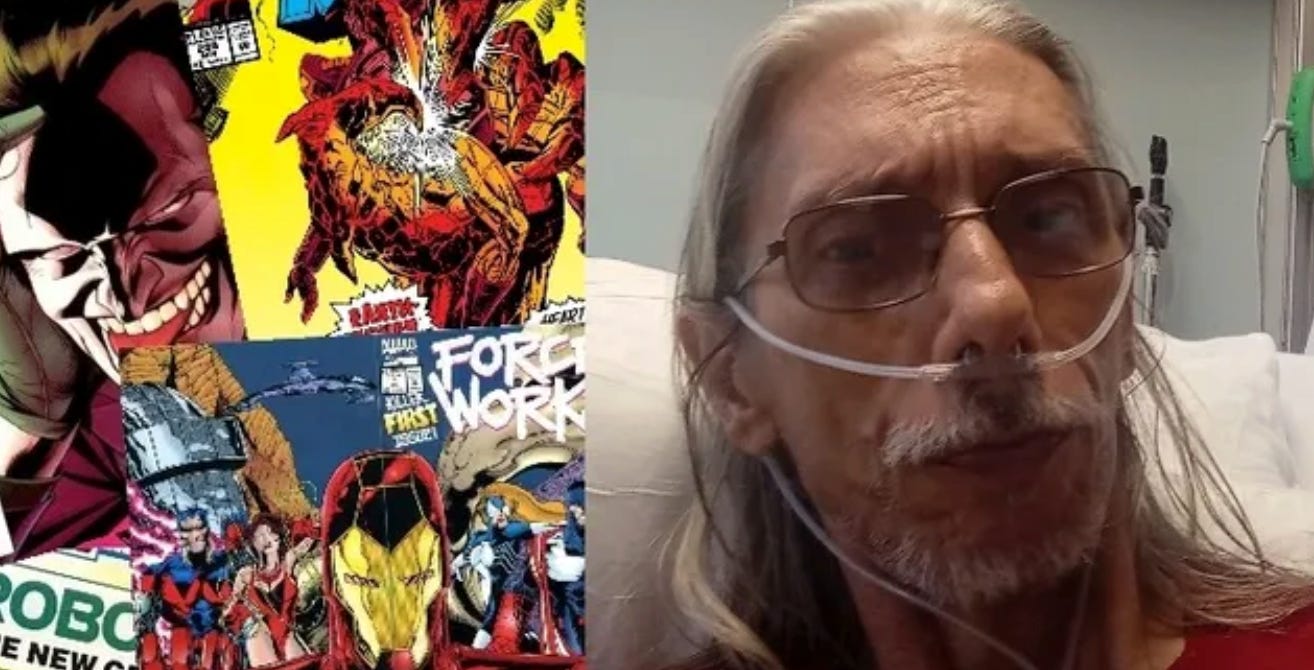
Tom Tenney, the artist who co-created Marvel’s Force Works in 1994, is sleeping in a car in Florida with his family while battling advanced COPD that leaves him unable to walk ten yards without oxygen support. A GoFundMe campaign has raised $3,580 of its $5,000 goal - a modest target that underscores just how little the comics industry does for the creators who built it.
Tenney stated plainly in his campaign: “Trying to manage advanced COPD — needing medication, oxygen support, the ability to rest — while living in a car has been terrifying. I can’t even walk 10 yards without the need of oxygen and medications. And we can’t even afford daily food. All of it is dangerous for someone in my condition. It’s dangerous for any family, especially for us right now.”
His plea cuts to the heart of an industry-wide problem that Marvel and DC have never adequately addressed: the complete absence of any financial safety net for the freelance creators who built these billion-dollar franchises.
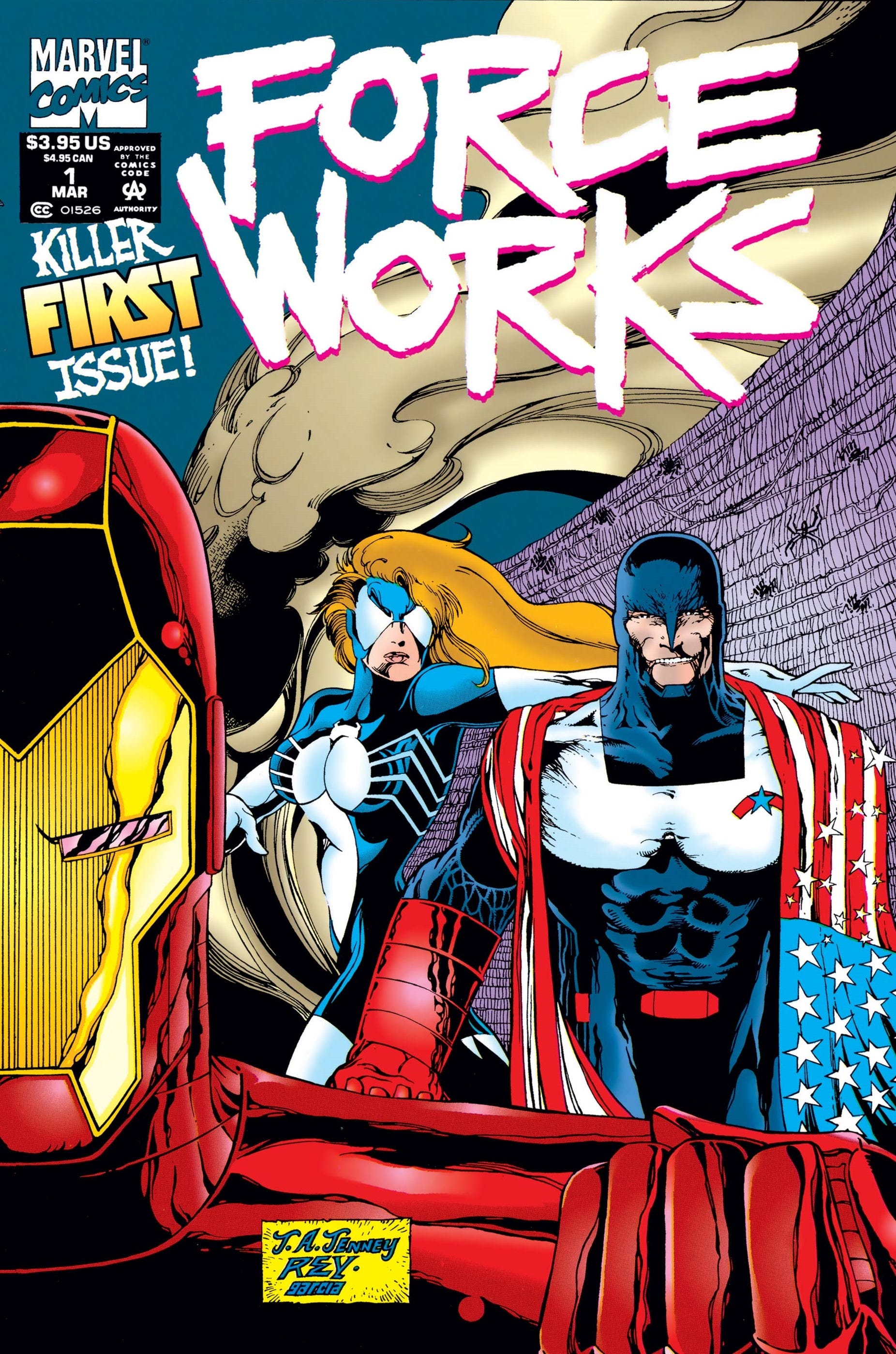
Force Works launched in 1994 as a splinter team from the West Coast Avengers, featuring Iron Man, War Machine, Scarlet Witch, Spider-Woman, and the alien hero Century. The series represented Marvel’s attempt to build a more proactive superhero team operating out of a California compound using predictive technology to stop threats before they happened. It ran 22 issues and remains a significant piece of 1990s Marvel continuity. Tenney’s kinetic artwork defined the book’s visual identity during a period when Marvel was competing aggressively with Image Comics’ flashier aesthetic.
His career extended well beyond that title. Tenney’s credits include NOW Comics’ original Terminator run from 1988, Robotech, DC’s L.E.G.I.O.N., Youngblood, Image’s Chapel, and Nightwatch. A protégé of legendary Marvel artist Gene Colan, he also created the cover illustration for AC/DC’s 1995 album Ballbreaker - one of the most recognizable rock album covers of that decade - and contributed artwork to Shudder’s Creepshow series.
That’s a career spanning decades across multiple publishers and media. And yet here he is, unable to afford food while managing a terminal lung condition.
The reality is that Marvel and DC have historically classified their artists as independent contractors rather than employees, a business decision that insulates the publishers from any obligation to provide healthcare, retirement benefits, or financial support when creators fall on hard times. The publishers profit enormously from characters and stories these artists created, while the creators themselves bear full financial risk throughout their careers and beyond.
Tenney’s situation echoes two previous cases that exposed the same structural failure.
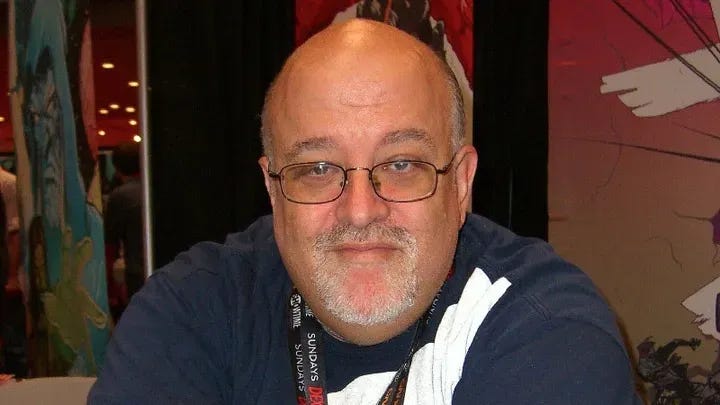
Peter David, the legendary writer behind celebrated runs on The Incredible Hulk, X-Factor, and Aquaman, suffered a stroke in December 2012. The resulting medical bills created a financial crisis for a writer who had contributed decades of foundational work to both major publishers. Fans rallied, conventions organized benefits, and the community came together - because the industry itself offered nothing. David recovered and returned to work, but his situation highlighted how one medical event could devastate even a relatively successful comics creator.
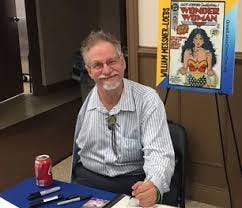
William Messner-Loebs cut even closer to the bone. The writer responsible for celebrated runs on The Flash, Thor, and Wonder Woman - work that shaped those characters for years - was discovered to be essentially homeless with his wife in 2013. Messner-Loebs had contributed some of the most important comics writing of the late 1980s and 1990s, yet found himself destitute while the characters he wrote appeared in blockbuster films generating billions in revenue. Again, the community organized benefits. Again, the publishers offered nothing systematic.
The pattern is impossible to ignore. Veteran creators who built Marvel and DC’s libraries fall into medical and financial crises with alarming regularity, and the response is always the same: fan GoFundMes, convention charity auctions, and community generosity filling the void that the publishers created.
Tenney’s situation carries additional weight because his partner is diabetic and serves as a full-time carer for her autistic daughter. This family needed stability, not crisis. His GoFundMe target of $5,000 is heartbreakingly modest given the circumstances.
He addressed his situation with dignity: “I wish I didn’t have to write this. I wish pride or strength mattered more than survival. I wish there was an easy answer, and we cannot do this alone. If you can donate — anything — to help us and keep air in my lungs. If you cannot donate, please share this. Visibility could save my life.”
The GoFundMe can be found here. The $5,000 goal represents the bare minimum for immediate stability - a number that should embarrass an industry generating hundreds of millions annually from intellectual properties these creators helped build.
What do you think about the comics industry’s failure to provide financial safety nets for veteran creators?
Three free books. No spam. Just new releases, deals, and the occasional update from the front lines of independent publishing. Sign up for the Jon Del Arroz newsletter and start reading today.
NEXT: The Boys Season 5 Premiere: Eric Kripke’s Superhero Satire Has Become the Thing It Mocks
Well he's NOT a "Liberal" Communist milk-shake drinking Satanic feminist... So, no soup for you or your family White Boy. - Sincerely, The Comic Industry.
This is heartbreaking. I hope someone out there can help him.