


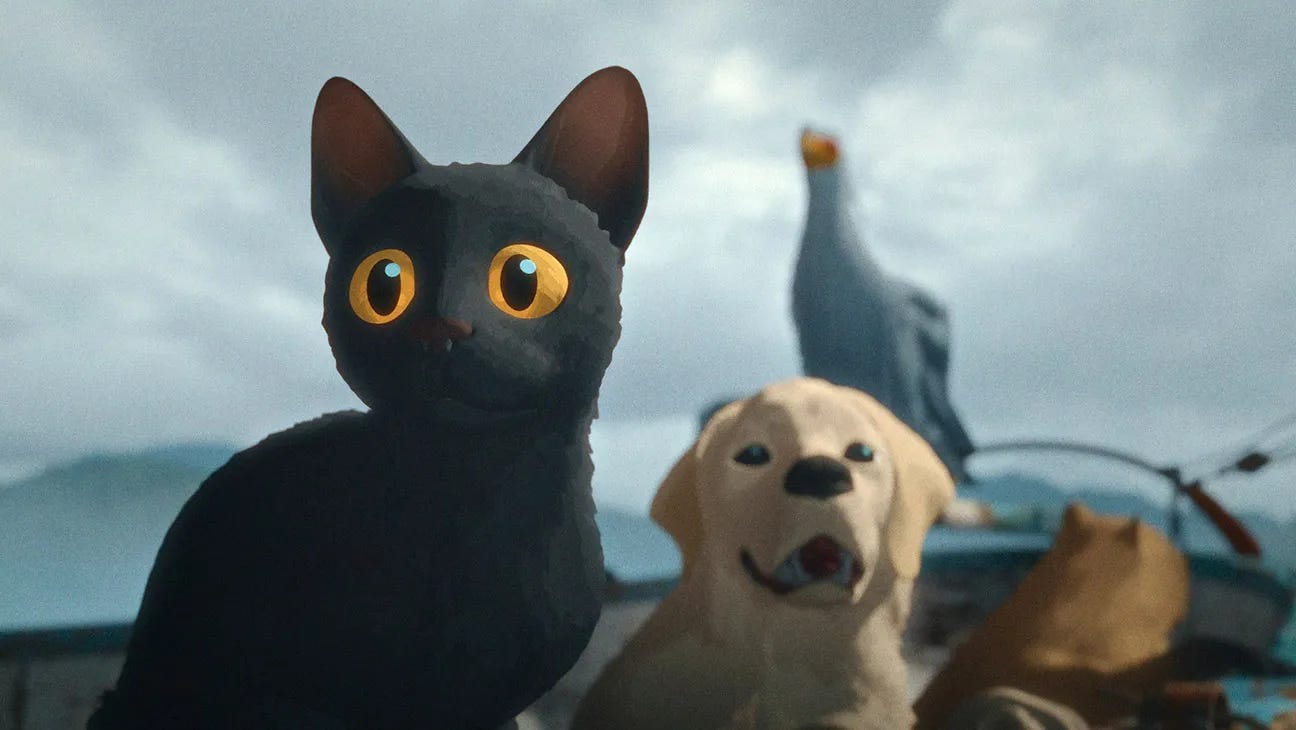
The 97th Annual Academy Awards has come and gone with a few surprises. There were political speeches and statements by award winners and presenters, but there weren’t as many as the previous year. Politics aside, there were a few surprises that took the spotlight. Well, there was one surprise in particular that needs to be discussed. No, not the best picture winner. The best animated film winner, and why it’s important.
The winner of best animated film was an indie film made with Blender for under four million that had no cast. No actors participated in the making of the film since the film’s stars consisted of a cat, a dog, a lemur, and a bird. Now that was a way to get past the woke guard rails that prevented Dennis Quaid from being nominated for Reagan, which is a crime unto itself.
The animated film in question is Flow from Gints Zibalodis, a filmmaker from Latvia, who made his debut with the 2019 animated film Away previously. For his sophomore feature he employed a team of twenty artists that worked remotely across Europe. It was released through Janus films, the film distribution arm of Criterion.
It’s an 84-minute film that generates buzz because it was made on a common open source software and managed to beat Disney/Pixar at the awards. Forget the awards themselves, which are irrelevant. What’s relevant is that the filmmaking process is becoming more democratized with each ensuing year, which opens an opportunity for aspiring creators to create their own content.
This should open the floodgates for indie creators all over. To add salt to the wounds of Hollywood, producer Pouya Shahbaziab of the Divergent film series, has launched Staircase Studios AI, which he claims can create studio-quality movies via ForwardMotion for $500,000 a piece, and aims to release thirty such films within the next three to four years. In a statement he said:
“After packaging and selling 150 projects into the studio system over the past 15 years, I’ve borne witness to far too much inefficiency to continue the status quo. Over the past year, I’ve dedicated myself to pairing ethical AI usage with our industry’s most underutilized assets- overlooked stories waiting to be produced from fantastic writers and directors.”
His studio will soon debut the film The Woman With Red Hair, a drama based on the true story of WWII resistance fighter Johanna “Hannie” Schaft. It is expected to be released this summer. You can see a five-minute presentation of footage at the link below.
Hollywood is already jumping on the bandwagon. They know that the days of spending hundreds of millions of dollars to make a studio film are coming to an end. The writing’s on the wall. While this may be scary for some, for others it is an opportunity for indie creators across the globe to utilize tools like Blender, which now has an AI feature to simplify and streamline the creative process.
It is fair to say that the efforts of the most recent Hollywood strike have not halted the AI presence, but merely speeded up its own demise to create something new and innovative. It’s too early to say what that will look like, but the next few years should be interesting for cinema. Will there be a rebirth or a death from a Generation Z that seems to be more interested in games and 30-second TikTok videos rather than good old cinema?
Ko-fi:
https://ko-fi.com/thomashyland
Hylandia:


Congratulations to Latvia and all who made this remarkable accomplishment happen.
I sometimes wonder if part of the reason the elite of Hollywood, Silicon valley, etc. pushed their entitled underlings to become so intolerable was so people would applaud when they were replaced by AI.