



In the early 2000s, as fantasy literature enjoyed unprecedented mainstream success thanks to Harry Potter and The Lord of the Rings films, an obscure self-published author named Robert Stanek emerged, claiming to be fantasy's next big thing. His books allegedly spent 26 weeks on "Amazon's Top 50 lists," were voted "Top 10 Fantasy of 2004," and earned him the title of "Best New Voice in Fantasy." His publisher boasted that his Ruin Mist series had sold millions of copies worldwide and was being considered for film adaptation by major studios.
There was just one problem: none of it was true.
Robert Stanek represents perhaps the most elaborate and persistent literary fraud in the internet age – a case study in how one determined individual manipulated Amazon's review system, created dozens of fake websites, impersonated fans, and even fabricated awards to create the illusion of success. His two-decade campaign of deception offers a fascinating glimpse into both the psychology of literary desperation and the vulnerabilities of online retail platforms.
The Bestseller That Never Was
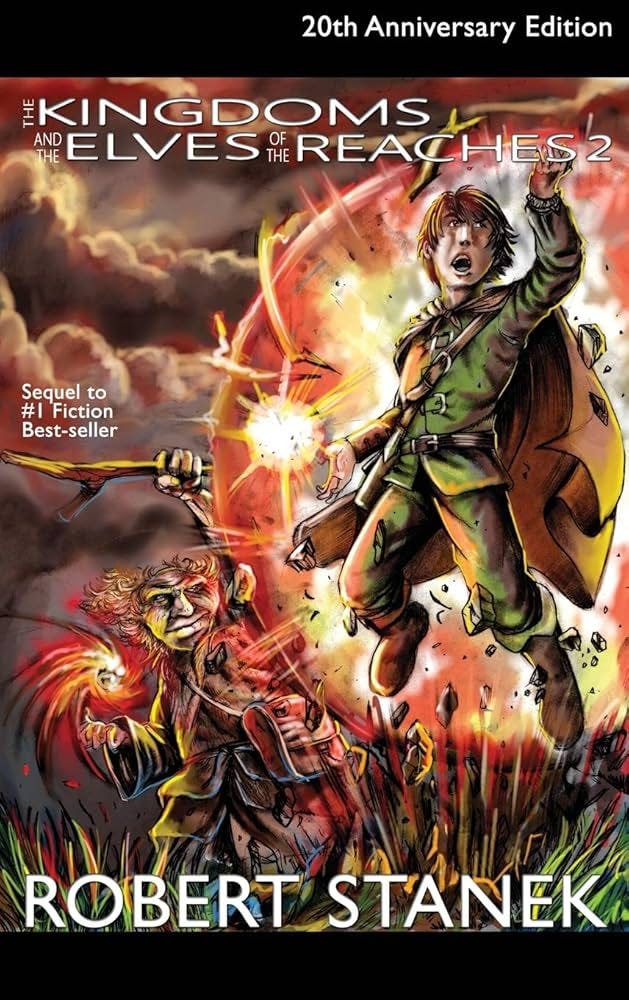
Stanek's primary claim to fame was that his book "The Kingdoms and the Elves of the Reaches" was a "#1 Fiction Bestseller" and a "Top 50 All Time Bestseller." The companion novel, "Keeper Martin's Tale," allegedly spent 26 weeks on "Amazon's SciFi Top 50" and was the "#1 Fantasy of the Year in 2002."
These claims immediately raise red flags. Amazon doesn't have "Top 50" lists – they have Top 100 lists. And a search through Amazon's bestseller archives for 2001-2002 reveals exactly zero books by Robert Stanek that made any bestseller list.
When confronted with this discrepancy, Stanek claimed that "lies" had "knocked the books off Amazon's Top 50 lists after a 26-week run." This defensive posture – blaming unnamed "haters" for his lack of verifiable success – would become a recurring theme in Stanek's response to scrutiny.
The "Best New Voice in Fantasy" award Stanek claimed to have won appears to be entirely fabricated. Google searches for this award lead only to Stanek's own websites and sockpuppet accounts mentioning it. No independent organization has ever confirmed giving Stanek this award.
The Sockpuppet Army
Perhaps Stanek's most brazen deception was his creation of hundreds of fake Amazon accounts to write glowing reviews of his own books. Analysis by the Conjugal Felicity blog found that Stanek's books had suspiciously high percentages of 5-star reviews compared to legitimate bestsellers:
The Kingdoms and the Elves of the Reaches IV: 98.9% positive reviews
Harry Potter and the Sorcerer's Stone: 93.9% positive reviews
The Hobbit: 90.3% positive reviews
The Fellowship of the Ring: 86.4% positive reviews
These fake reviews shared distinctive patterns: they frequently compared Stanek favorably to Tolkien or Rowling, referred to him respectfully as "Mr. Stanek," listed out his books' full titles (despite their unwieldy length), and often mentioned the same characters by name.
The sockpuppet reviewers also created "lists" on their Amazon profiles that included popular fantasy books alongside Stanek's works. This clever manipulation was designed to game Amazon's recommendation algorithm – when enough accounts listed Stanek's books alongside legitimate bestsellers, Amazon's system would begin recommending Stanek to fans of those popular series.
The fraud became so blatant that Amazon eventually took the extraordinary step of deleting all reviews – both positive and negative – from Stanek's books in 2012, effectively acknowledging the manipulation.
The Photoshop Debacle
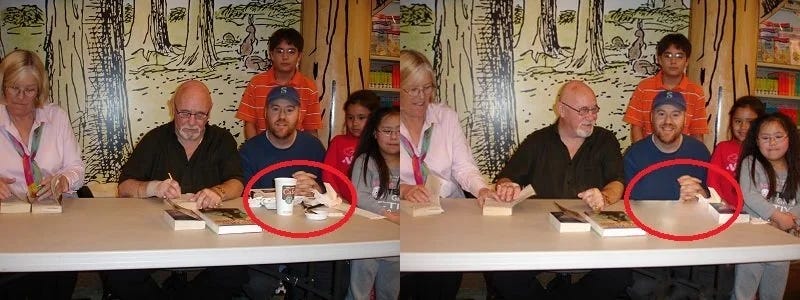
Not content with fake reviews, Stanek attempted to manufacture literary credibility by claiming connections to established authors. He circulated a photo purporting to show him signing books alongside Redwall author Brian Jacques in 2005. While Stanek did apparently meet Jacques, close examination revealed he had digitally altered the image, removing trash from the table and adding what appeared to be one of his own books.
Even more brazenly, Stanek claimed to have done a book-signing tour with R.A. Salvatore, a well-known fantasy author. When contacted, Salvatore confirmed he had never heard of Robert Stanek.
The Phantom Fandom
Perhaps most bizarre was Stanek's creation of an entire fictional fandom. He established a Robert Stanek message board populated almost entirely by sockpuppet accounts with usernames like "Shire Hobbit," "huntress," and "AdrinaAlder." These "fans" would discuss potential Ruin Mist movie adaptations, share fan casts, and even post fake newspaper articles about how Stanek's books were poised to become blockbuster films.
Stanek even created a page listing "Top 25 Fan Sites" for his work, which actually linked to 34 sites – most of which were dead Geocities pages, his own websites, or bare-bones pages with minimal content clearly created by Stanek himself.
The Real Robert Stanek
Behind this elaborate fantasy empire stands William Robert Stanek, a family man from Olympia, Washington who served in the Gulf War and received the Distinguished Flying Cross. His legitimate career appears to be writing Microsoft technical manuals under his first name, William.
This dichotomy – between the successful technical writer and the fantasy author desperate for recognition – makes Stanek's case fascinating. He clearly possesses the skills and work ethic to build a legitimate career, yet has devoted decades to maintaining an elaborate fiction about his success. Perhaps as a person who codes and understands Microsoft systems he understood the algorithms of Amazon better than actual writing.
Even today, Stanek continues his campaign. His websites still claim he's sold "20 million books" (down from the "hundreds of millions" he once claimed), and he's expanded into children's books with his "Bugville Critters" series. Most recently, he's ventured into AI-generated historical fiction, suggesting that even after two decades, his desire for literary recognition remains undiminished.
The Legacy of a Fraud
What makes Stanek's case remarkable isn't just the scope of his deception but its longevity. For over twenty years, he has maintained this elaborate fantasy of success, adapting his tactics as technology evolved and platforms changed.
While his books themselves are objectively poor – featuring wooden dialogue, confusing plots, and bizarre naming conventions (characters include both "Midori" and "King Andrew") – there's something almost admirable about the sheer persistence of his fraud. As one commenter noted, "Stanek's books are bad, but his marketing is brilliant."
In an age of increasing concern about online misinformation, Robert Stanek stands as a pioneer – a man who understood before most how digital platforms could be manipulated to create the illusion of success. That his deception was ultimately exposed speaks to the internet's capacity for collective fact-checking, but the fact that it persisted for so long reveals just how vulnerable our information ecosystem remains to determined manipulation.
h/t to Tor’s Cabinet of Curiosities for much of the information contained in this article:
What do you think of Robert Stanek and his fantasy book empire? Leave a comment and let us know.
If you enjoy clean fantasy fiction with great worldbuilding and a classic feel, read The Adventures of Baron von Monocle six-book series and support Fandom Pulse!

Man this is crazy. It's remarkable how he did it all by himself.
I think someone needs to create the Stanek award. I vote Stanek for the 2025 Stanek!