


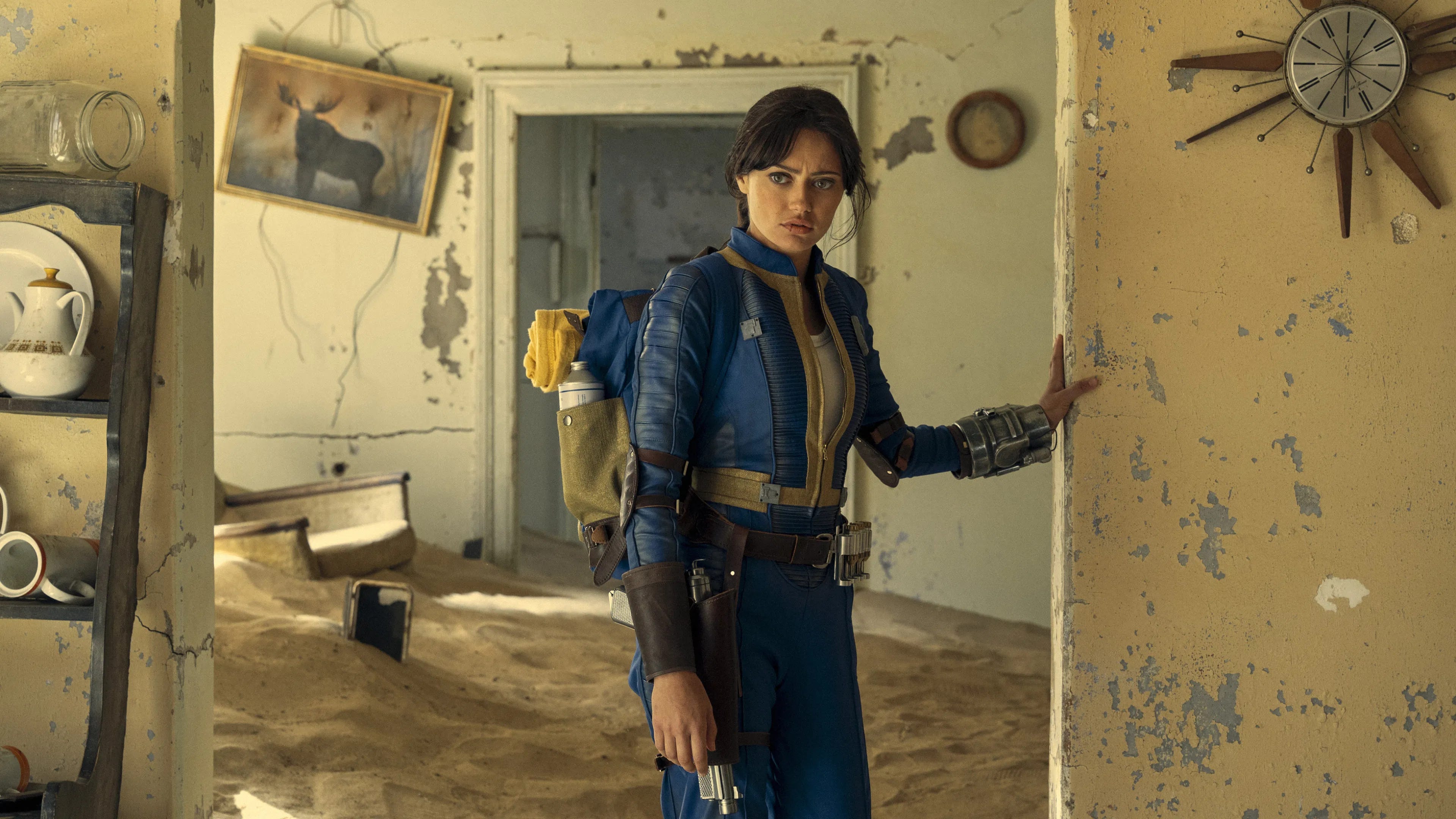
One of the most persistent myths of our age is that consumption is an expression of freedom. We imagine that by shopping, we are exercising our autonomy. But as long as our desires are shaped by the very systems that claim to satisfy them, our freedom is illusory. The viewer who insists that the show is “just entertainment” is often unaware of the ways in which their imagination has already been formed by the patterns of consumption that structure their life.
We are shaped by the practices we participate in, and the practice of consuming media is one of the most powerful formative forces in contemporary life. When story becomes a commodity and not a living mythology, our capacity to discern the deeper meanings of the real world is will be diminished.
Keep this in mind as you witness yet another bastardized reimagining of a popular franchise: Amazon's Fallout. As Season 2 unfolds, the writers don’t even bother to conceal their disregard for longtime fans. By Episode 3, it’s already clear that the factions of Fallout: New Vegas have been stripped of their complexity and rendered into something more easily digested for the lowIQ rabble the showrunners are trying to appeal to.
The show is tailored for a new kind of Fallout audience: viewers whose first encounter with the series was Fallout 4, and who have never touched the earlier games that defined the franchise’s identity. If Season 1 hadn’t already tipped its hand, Season 2 makes it unmistakable: Amazon’s Fallout is engineered for that elusive “modern audience” we’re constantly told exists somewhere out there, nodding approvingly at every corporate‑approved decision.
The first season at least pretended to build toward its grand insight, slowly peeling back the layers until, at last, we were treated to the shocking discovery that Capitalism is, in fact, bad. Also, Trump is evil. We know this because the bad capitalist man who proposes they destroy the world also said the words "make America great."
This is really well-written, guys. Can't you tell?
Anyway, Season 2 doesn’t bother with the foreplay. It assumes you’re already primed to swallow corporate ejaculate by the gallon, so why delay? By Episode 3, the show has already taken a sledgehammer to Fallout: New Vegas. And why not? The working assumption seems to be that anyone who cared about the original games has long since wandered off, leaving behind an audience perfectly content to consume the latest batch of slop.
New Product for a Modern Audience
Media consumption has become the primary way many people imagine ourselves participating in the world. When people buy products, they do so for reasons that go far beyond the practical: a product is now an identity and an affiliation; a sense that you belong to something larger than yourself. Season 2 of the Fallout show is best understood within this framework. The show is a commodity whose value lies in that it signals a big "I see you" to new fans.
The show functions much like a new pair of Jordan sneakers. The point is not that you have a new pair of shoes to walk in, but the performance of desire. As William T. Cavanaugh argues in Being Consumed, our economy has trained us to long not for the thing itself but for the act of acquisition, the fleeting thrill of aligning ourselves with a brand. The value lies not in the shoe’s capacity to carry us anywhere, but in the way it allows us to display a carefully manufactured longing. In the same way, Fallout Season 2 is consumed not as an compelling story but as a commodity through which viewers rehearse their identity as Fallout fans. The show becomes a ritual of desire, shaping what new fans think that they want long before they will ever ask whether it leads them anywhere worthwhile.
The show’s creators understand this dynamic well. The season is saturated with references, callbacks, and familiar iconography. These elements do not serve the narrative so much as they serve the viewer’s desire to recognize and be recognized. The viewer is invited to feel “seen” by the corporation that produces the show, as if the insertion of a bobblehead or a familiar suit of armor were a gesture of personal acknowledgment. The story becomes secondary to the experience of being catered to.
This is the logic of late‑stage capitalism. The product is meant to stimulate desire without satisfying it. Because in satisfying it, then you would have no reason to return for more.
Soft Power and the Formation of Desire
Markets shape our desires as much as they respond to them. Season 2 of Fallout participates in this formation by presenting a future that subtly encodes Progressive ideals. Diversity, miscegenation, White villains, anti-Capitalism, anti-Trumpism, etc. all communicates a moral vision meant to program and reprogram your brain. These signals are woven into the fabric of the narrative in ways that make them appear natural and even inevitable.
This is a form of soft power. It is not coercive, but persuasive. It shapes the viewer’s imagination by presenting a world where certain social arrangements are simply taken for granted. And because these signals are embedded in a beloved franchise, they bypass the critical faculties that might otherwise interrogate them. The viewer consumes not only the story but the values that accompany it. Values will be absorbed uncritically, as part of a package deal. All the while, the viewer is not invited to discern, to question, or to participate in the shaping of the mythology of Fallout, as was set down by the first game and continued up and until Fallout: New Vegas. Instead, they are invited only to consume.
And, no, you can't argue for adherence to lore in this economy because "muh story" has also just become another commodity. Stories and characters are not valued for their capacity to exist organically within a self-contained mythology. Instead, they are valued for their capacity to generate engagement and keep viewers within the franchise ecosystem.
We should be wary of the subtle reach of soft power, especially when it clothes itself in the borrowed garments of Christian virtue. The modern State and its institutions often adopt the language of compassion, dignity, and communal belonging because such values lend moral credibility to their actions. Yet the hand beneath this borrowed vestment is far less gentle. Soft power trades on the appearance of the good while quietly reshaping our desires and directing them toward ends that serve human means rather than those the Kingdom of God.
NEXT: 'Rings Of Power' Director Reveals Producers Wanted To Cut Out One Of The Show's Worst Scenes

"you’re already primed to swallow corporate ejaculate by the gallon, so why delay?"
I am immediately skeptical of any mainstream studio creating movies or shows of well established franchises. In today's world, we already know what sort of messaging they will be putting in these stories. They love to bastardize the material
These shows that put on the anti-capitalist skin suit are very cringe.