


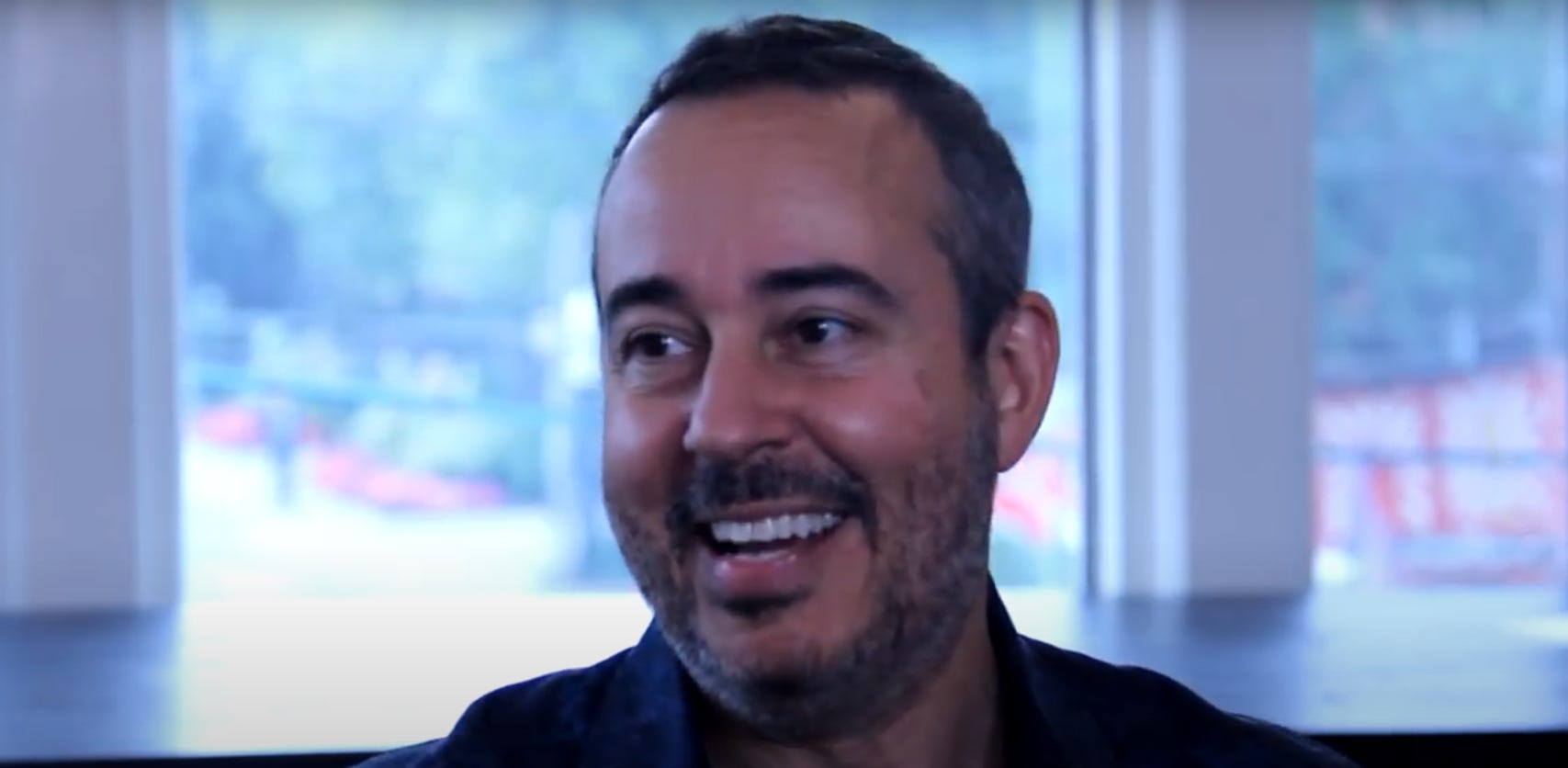
Joseph Mallozzi is a Stargate veteran joining Stargate SG-1 in its fourth season and going on to executive produce Stargate: Atlantis, Stargate Universe and create his own show Dark Matter.
He spoke with Fandom Pulse about the current state of science fiction in Hollywood, what projects he’s working on, and what some of his TV recommendations are.
Fandom Pulse (FP): It’s been 25 years since you first started working on Stargate SG-1 and you’ve worked on Stargate: Atlantis, Stargate Universe, and Dark Matter since then, but what have you been working on lately?
Joseph Mallozzi: The sad fact is that, in this business, most of your hard work goes unrecognized. It ends up filed away on some desktop folder, unseen by most with the exception of that odd executive who passed on the project. I’m talking detailed pitches, series overviews, and pilot scripts that you agonize over for weeks, often months, that go absolutely nowhere, all that work for naught. But that’s the t.v. business. It can be dispiriting but you can’t give up because, sooner or later, lightning will strike. Possibly. Such was the case with Dark Matter, a show that got green lit because a whole bunch of pieces fell into place. That and fortuitous timing. So, all that to say - like most writers/creators, when I’m not in production, I am trying to set up my next show. And the way to do that is to cast a wide net. I’m presently out with two crime shows (that lean into humor because that’s what I do best), am about to pitch a studio a t.v. adaptation of one of their movies, and I’m consulting on a sci-fi series. I recently went out with an adaptation of Larry Niven and Jerry Pournelle’s The Mote in God’s Eye but, unfortunately, the industry does not presently have the appetite for big budget space operas.

FP: How has the science fiction genre changed since you started working on Stargate SG-1?
Mallozzi: I think in terms of t.v, the sci-fi genre has both evolved and, in some ways, devolved. The shows are obviously better looking and better financed with far superior visual effects and talent both in front of and behind the camera. Sci-fi has certainly gained wider acceptance amongst discerning viewers and executives alike, but I think that brings with it its own set of problems.
In the past, sci-fi leaned more into humor and a sense of family that was reflected in its viewership (I’m thinking shows like SG-1, Atlantis, the early Star Treks). I can’t tell you how many messages I’ve received over the years from fans who tell me they used to watch Stargate with their parents or grandparents, a shared experience of a hopeful future. Somewhere along the way, sci-fi took a darker turn and the critics responded positively. Executives, in turn, responded by commissioning darker sci-fi even though these shows were not commercially successful (or certainly not as commercially successful as their more lighthearted predecessors). But critical accolades trumped the bottom line and the type of optimistic sci-fi I grew up with and worked on, was slowly fazed out. Instead, there was a concerted effort to fulfill a mandate for “elevated science fiction”, darker and, necessarily, more direct in its messaging to the point now where a lot of sci-fi feels like VFX-laden PSA’s. This isn’t to say sci-fi didn’t contain social commentary in the past. I would argue it always did. But I would also argue that writers of the past were a lot more clever and nuanced in the way they delivered that message.
FP: I’ve been rewatching some of the early SG-1 episodes, and the show, in my opinion, rebukes Star Trek’s Prime Directive and non-interference directive. Is that something you discussed when you joined in Season 4? And what are your overall thoughts on SG-1 interfering when they visited planets?
Mallozzi: It’s not something we discussed but it became a sort of a running joke in the writers’ room. We were all familiar with Star Trek and many of us were huge fans of the original series, so we were well versed with the Prime Directive - and well aware of how SG-1 was the antithesis to what I’ve always considered a (debatably) problematic guiding principle. Theoretically commendable but practically thorny. I mean, I looking back at the original series, I can remember at least a half dozen episodes where Kirk and co. flout the Prime Directive. On Stargate, we adhered to a more…er…fluid approach, allowing SG-1 the autonomy to assess and evaluate the situation on a case by case basis. In the end, I’m not sure how many times SG-1 flouted the Prime Detective, but I bet you it was a hell of a lot more than a half dozen times.

FP: You’ve launched social media campaigns in the past in an attempt to do more Stargate; do you have an update on where those stand and what Amazon’s thoughts on doing more Stargate is?
Mallozzi: Alas, I’m not the guy to ask. The franchise rights presently rest with Amazon, so the ball is in their court.
FP: What are your thoughts on the current state of Hollywood and how things have shifted with the transition to streaming as well as coming out of the writer and actor strikes?
Mallozzi: The expansion of broadcast homes and streaming services offered writers many more work opportunities, something I can’t argue with although I do feel that, after a while, it became clear that the talent pool was growing increasingly stretched. For a while there, it seemed like a new channel or streamer was popping up every week and while great for writers, I knew it was unsupportable, that we would eventually see a contraction. And that’s exactly what has happened. I don’t think the strikes really had anything to do with it. In the end, the industry overextended itself, overspent, and now the time has come to pay the piper in the form of layoffs, fewer broadcast homes, and much tighter budgets.
FP: What do you make of the current trend of serialized TV over episodic TV? Is it possible to do episodic in today’s culture?
Mallozzi: It’s still very possible to do episodic in today’s culture. Network television has a huge appetite for procedurals and I know, for my experience pitching of late, that there are many buyers for episodic shows. I, personally, love serialized t.v., but have sensed a growing reticence on the part of foreign buyers in particular. As a creator, I love crafting a series that offers the best of both, an episodic show with serialized elements - which Dark Matter (2015) very much was.
FP: Are there any good sci-fi shows you’re watching now?
