



Sandy Peterson has one of the most storied careers of any game designer, becoming a legend in both video and tabletop gaming through his excellent design work that stands the test of time. He sat down with Fandom Pulse for an interview to talk about some of his successes and what makes his games tick.
You can follow Sandy Petersen on X and check out his games here.
You’ve had success in three distinct areas of game design in tabletop RPGs with Call of Cthulhu, video games with Doom and Quake, and board games with Cthulhu Wars. What are the fundamental differences in designing for these three mediums, and which do you find most creatively fulfilling?
Man, that’s an open-ended question that could go on for a whole semester of teaching. In short, tabletop RPGs are more of a one-man job – your task is mostly teaching the players how it works and watching them play. Video games are an entire team, and much of your time as designer is spent politicking and reacting to your team and their desires. Board games (to me) are focused on the playtesters and interacting with them. They are all intellectually and emotionally rewarding to me.
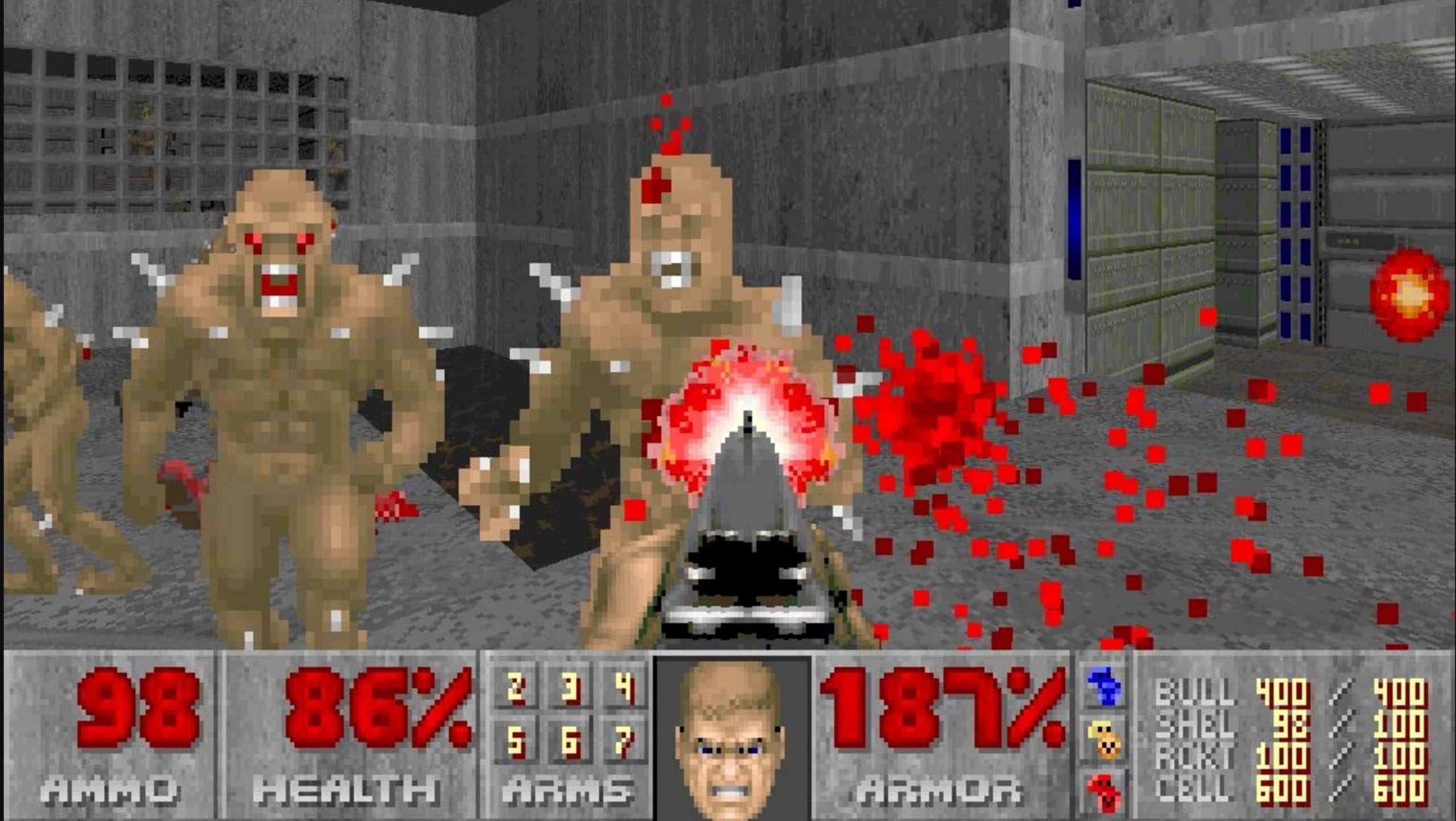
Your level design work on Doom and Quake helped define what first-person shooters could be. When you were creating those iconic levels in the early ‘90s, did you have any sense you were establishing design principles that would influence the genre for decades, or were you just solving problems and making cool spaces?
We could tell that we were making what would be one of the great games of all time. What we did NOT realize is that it would essentially create interactive play – in which people would go head-to-head. That’s the most important aspect of Doom, and it caught us by surprise. We only left the PvP in the game because we, personally liked it. We didn’t expect it to catch on and to have that aspect of play dominate the computer game world.
Call of Cthulhu has been in continuous print since 1981, which is extraordinary longevity for a tabletop RPG. What do you think has allowed it to endure when so many other games from that era have faded away? What makes Lovecraftian horror work so well in the RPG format?
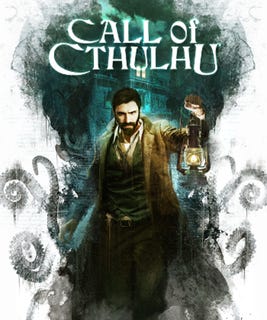
Every other role-playing game has exactly the same sequence – kill a baddy, get rewards & level up, then kill a bigger baddy. It’s a compelling cycl,e which is why it’s used. Call of Cthulhu, uniquely, is NOT that cycle. You investigate instead of fight. Your characters tend to get worse over time as they lose Sanity, accumulate phobias and curses, and learn things man was not meant to know. And the treasure is a moldy old book that drives you mad just by looking at the pictures. It’s a complete inversion of the typical RPG. That’s why it’s long-lived. If you want the normal experience of fighting monsters & leveling up, then you can literally play any other RPG. But if you want something different, there’s only Call of Cthulhu.
You’re a devout Mormon who’s spent decades creating horror content based on H.P. Lovecraft’s atheistic cosmic horror. How does your faith inform your creative work, and how do you reconcile creating entertainment about godless, uncaring cosmic entities with your religious beliefs?
I don’t believe in pagan gods either, but when I play D&D or RuneQuest my characters take them seriously. Also, my faith, as Christian, informs me that evil wins much of the time here on Earth. Goodness and virtue does not always triumph and dying for a hopeless cause is heroic. This fits perfectly in with the Lovecraftian vibe.
As someone who reads extensively, what are your favorite fantasy and science fiction books? Are there authors or specific works that have influenced your game design philosophy or the way you approach storytelling in games?
I don’t Lovecraft, I really like Jack Vance and Arthur Machen. I read others in Lovecraft’s circle, like Frank Belknap Long, Clark Ashton Smith, and so forth. And I read some newer authors. I have a stream of books I’m currently in the process of going through, and they’re from a variety of authors.
Probably everything I read has an influence on my games in some way. I draw on a wide range of ideas and concepts and pull things out of my brain for games. I’m a syncretic, rather than creative designer, so instead of just inventing stuff I’m likelier to combine ideas from two or more sources to create something new.
The tabletop RPG industry has seen significant DEI (Diversity, Equity, and Inclusion) influence in recent years, with some publishers prioritizing representation over gameplay or narrative quality. What’s your perspective on this trend, and do you think there’s a way to get back to focusing on what makes games fun and compelling rather than ideologically driven?
