


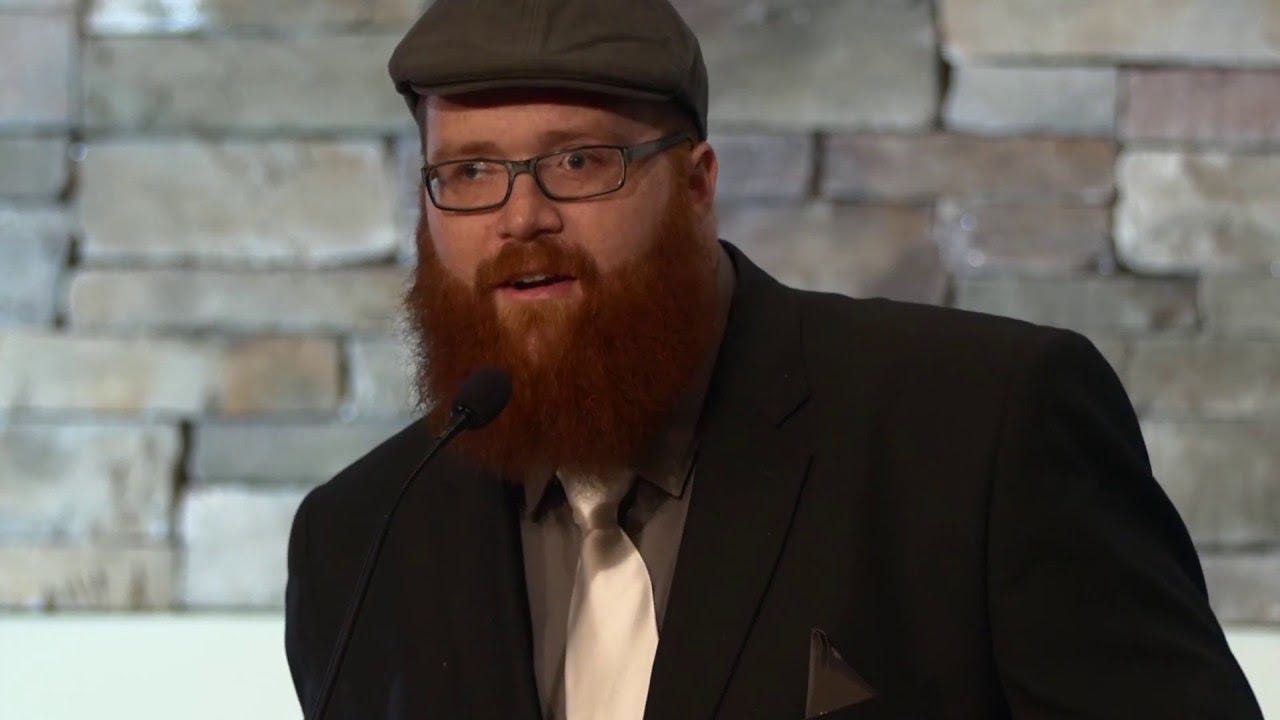
Marcus Pittman has been making waves on X, talking about films and specifically the problems surrounding Christians in culture, from being blacklisted to the corporate industrial complex around Christian media that he believes is holding many Christian artists back. He’s started a site Loor.tv to build independent filmmaking in a new way. He sat down to speak with us about his projects and about his viral discussion on Angel Studios’ new Animal Farm film that’s stirring a lot of controversy.
You can also find him on X here.

You run a streaming site called Loor.tv. What’s the concept behind it, and how is it going?
LOOR TV is a way for filmmakers to receive money from the monthly subscribers to produce and stream their movies, animations, and TV shows. The goal is to serve as an incubator for the next generation of talent, who would never get their stories made in Hollywood. The monthly subscribers get to allocate a portion of their monthly subscription every month towards entertainment they want to see get made. Our platform is also well-positioned for AI filmmakers, and we are looking forward to using our platform to launch mainstream AI filmmakers who can use our platform to raise money for AI Credits and Platform costs.
LOOR is still in the early stages, but we’ve already funded several IPs, including Bearly Biblical, Fleur De Lis, and a feature documentary called Gothix. The next phase for us is raising capital to scale and grow the brand. We brought on Shon Tomlin as our CEO, who built Fuel TV for Fox Cable Network and has worked with many incredible youth-oriented brands such as X-Games and Red Bull to help us prepare for and begin the process of scaling the company.

Christian culture used to be the standard for excellence in almost everything, from architecture to paintings to music. When did that shift and what do you think was the cause of it?
Not just the cathedrals, the reformation era paintings, and music. We pioneered technology from the telegraph, Morse code, and the transatlantic cable that is still the basis of worldwide communications today. That was right up to the time of the rise of end times eschatology, really taking dominance in the Church in the late 1800’s. When you believe that Jesus will be rapturing Christians any day, you tend to invest less in the future. Think about Arthur Guinness, the Christian who invented Guinness Beer. He signed a 9,000-year lease for St. James Gate that is still active to this day. I don’t know many Christians who plan ahead 9,000 years anymore, and I think that desire to just escape the earth has consequences on innovation.
Many Christian artists are afraid to be open about their work at this point and try to caveat “I’m a Christian… but this ISN’T preaching” as if somehow proclaiming Christ is a negative. How do we break that mindset?
First, I don’t think that Christian entertainment needs to be a preaching medium. That job is reserved for the Pastor and Evangelist. Not the artist. This is not to say that preaching with your art should never be done, but the mainstream Christian entertainment industry has ruined the reputation of Christian entertainment, full stop. Whenever this point is brought up to those deeply ingrained within the faith-based film industry, they never take the blame and admit their errors. Instead, they blame the lack of talent and the artists, even though they are the ones making the hiring decisions. I don’t know if they properly understand the differences between general revelation (art that doesn’t save) and special revelation (Exposition and Proclamation of the Gospel), or if they just don’t care.
You mentioned in a tweet something pretty provocative that Christian film is intentionally made to be bad. What do you mean by that exactly?
First, and this is important to understand, the Christian film industry is dependent on mainstream Hollywood’s acceptance. Almost all Christian movies are partnerships with major studios. Sony Pictures, DreamWorks, Lionsgate, etc. So every movie has to be made knowing that a major film studio has to be willing to put its name on it. This was evidenced by Kendrick Brothers and Kirk Cameron’s film Lifemark, which was rejected by major studios for distribution because they didn’t want to attach their name to a Pro-Life film.
https://www.bloomberg.com/news/articles/2022-09-09/kirk-cameron-s-anti-abortion-film-lifemark-rides-wave-of-christian-movies
Second, the entire Christian Entertainment space was created for the female Christian bookstore shopper in mind in the 1990’s. They even gave her a name. Bookstore Becky/Betty.
This meant that all music, movies, books, and every other form of entertainment at your local Christian bookstore was not made for college-aged men, but for women. This greatly feminized the entire Christian entertainment industry.
This was all on purpose. This was all business strategy. It wasn’t a lack of talent or an inability to find great artists who want to make Christian movies. I’ve spoken to hundreds, and they all have stories as to how Faith-Based executives routinely rejected their work because it was too masculine and wouldn’t fit the female demographic. This is a top-down problem.
Who are the gatekeepers keeping Christian art and film this way?
