


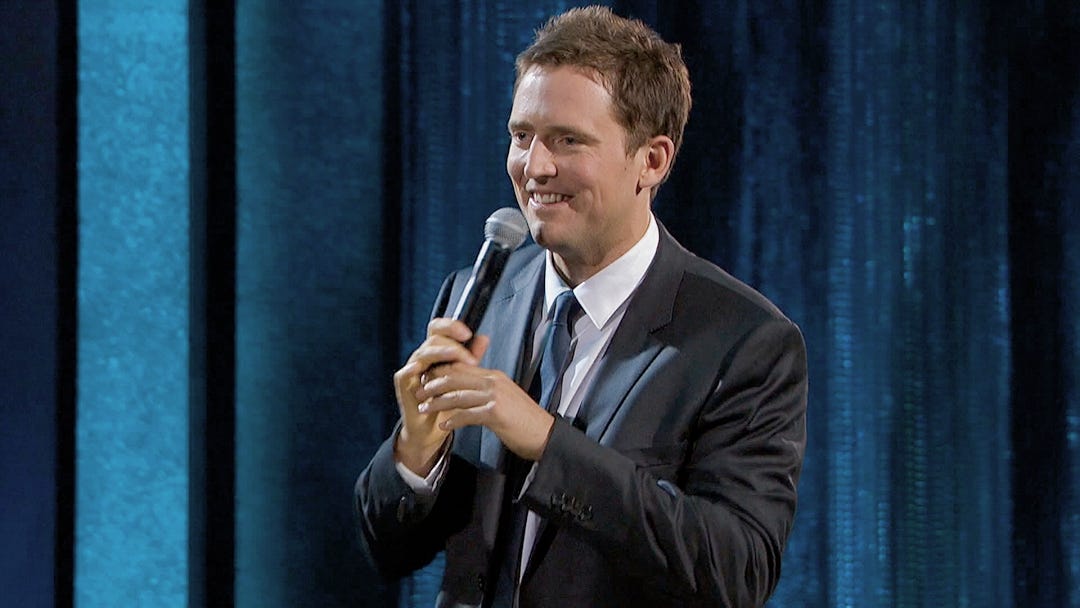
Owen Benjamin may be one of the funniest men alive. His comedy is so poignant that it seemed at one point nothing could stop his career trajectory. Some even allege that Dave Chappelle steals his jokes. However, like many who ran afoul of The Narrative, one day Benjamin was canceled and found his life forever changed.
In recent years, he’s built an incredible community and focused on family in an inspirational journey that he’s partially laid out in his new book, How To Slay A Wizard, in context with his philosophy he’s been developing along the way. The book has become a #1 bestseller and keeps staying at the top of the charts with fans loving his first outing as an author, giving it a 4.8-star rating on Amazon.

Benjamin sat down with Fandom Pulse for an interview this week:
You open with the etymology of “spell” and “broadcast.” When did you first notice that the language of magic and the language of media weren’t just metaphorically connected — that the overlap was intentional?
I had seen the overlap with “spelling” and “cursive” etc for a while, but what actually pushed me past the coincidence phase and into the “definitely intentional” came after I started farming. I saw a similar overlap in its language with social engineering. What an actual stock market is, how pastures are rotated, how gatekeepers keep gates, and how broadcasting seeds works.
That really helped me see how blatant this stuff actually is. They’re only hidden in that people wouldn’t even think it’s possible.
You draw a sharp line between the wizard and the alchemist. Most people reading this will recognize wizards in politics and media, but where do people most often fail to recognize the wizard operating in their own personal relationships that causes them problems?
Yeah, I made that distinction because I think people who can do amazing things with transforming compounds or natural extracts can get lumped in with the wizards. Baking great bread is alchemy. It’s just applying heat and pressure to transform something. Wizards are always deceiving and manipulating people for their “transformations” to occur. That’s an important distinction. The sneaky hidden versus just the “if I boil this thing, it gets sweeter.”
Wizards typically start thinking they can separate their “craft” from their personal and home life, but it doesn’t work that way. If someone can intentionally misrepresent themselves, change the meaning of words, and induce destructive emotions in complete strangers for money, what’s stopping them from doing that to anyone?
A way to tell if someone is a wizard in your life is, a wizard just pays attention to how something is perceived versus what it actually is. They also never answer questions directly, and constantly diagnose others' intentions and speculate on their emotions.
You argue that nonsensical rules produce more compliance than logical ones. That’s counterintuitive. Walk us through the psychology. Why does absurdity work better than coherent authority?
Because if a logical rule is followed, the target may be following the overall order and logic of the situation. He could be complying with the external and objective truth of a situation that will lead to success and production. When a target follows rules that clearly are counterintuitive, destructive, and constantly changing, that means they are following the will of the wizard. The more absurd, the clearer to the Wizard that he has created an obedient servant.
It all starts with “Simon says.” I was never good at that game I would respond that Simon should “go fuck himself.”
The chapter on being “seen” maps almost perfectly onto what happened to your career. When you were living through it, did you understand what was happening in those terms, or did that framework come later?
The framework definitely came later. At the time, I kept thinking there was some big misunderstanding and all I had to do was a better job at explaining myself. I had yet to realize that we have such fundamentally different world views and goals that there is no possible common ground.
You’ve said you take responsibility for some of what happened during your public unraveling. Where do you draw the line between “I made real mistakes” and “the machine would have come for me regardless”?
