


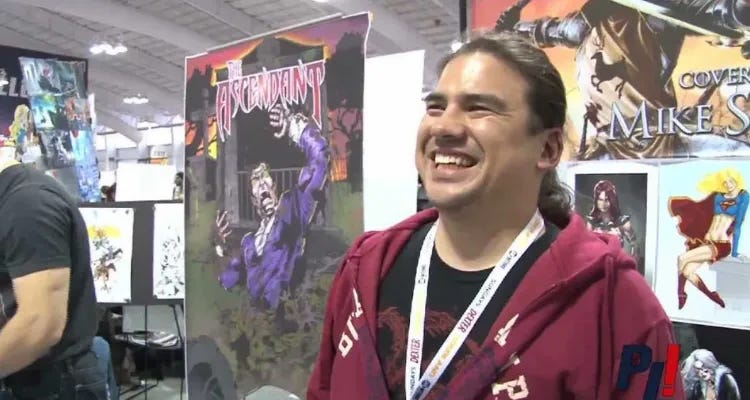
Mike S. Miller has been recognized by many fans as one of the best artists to emerge from the comic industry in the modern era. His work on DC Comics’ Injustice, as well as George R.R. Martin’s The Hedge Knight (known now as A Knight Of The Seven Kingdoms), has been a major accomplishment in the field. After a decade of being blacklisted for his outspoken Christian beliefs, Miller has teamed with Rippasend to produce a wordless gospel comic meant to reach people regardless of language. It’s a true monumental moment for Christian art.
The book is available on Rippasend here, and fans have shown great enthusiasm for this beautiful project.
You have a long history in mainstream comics, working on titles for both Marvel and DC as well as high-profile licensed properties like Game of Thrones. At what point did you realize the mainstream industry had fundamentally changed, and what was the moment that made you decide to chart your own course?
When I got blacklisted for sharing a Christian perspective on the DC comics forums, back in 2000. I already knew there was a blacklist; my former editor, the late Bryan Augustin, who himself was a liberal but was happy to work with conservatives, told me point-blank that there was a blacklist at DC, and that some editors just LOVED blacklisting creators. I wasn’t the first, but I was probably in before the snowball effect took place. That was still a ‘hush hush’ time about blacklisting, they pretended it didn’t happen, it just so happened that I went from being on their flagship title to being persona non-grata. I’m sure it was all coincidence. Except then a gay friend of mine in the industry (irony, right?) told me that his boyfriend heard from higher ups that I was blacklisted at DC and at Marvel. So, I was sort of forced to chart another course into the indy market.
You served as the artist on the A Game of Thrones graphic novel adaptation. George R.R. Martin’s A Knight of the Seven Kingdoms recently became an HBO series. Did your work on that graphic novel property open any doors, bring renewed attention to your career, or did the industry’s current gatekeeping ensure that the mainstream largely moved on without you regardless of your body of work?
Ironically, even though I was blacklisted at Marvel, when George worked out a deal with them to publish the second book, The Sworn Sword, they HAD to work with me. George is a loyal guy, and made sure it was my project to draw. After that, I did end up back at DC through the circumstance of DC having bought out Wildstorm, my old alma mater. They didn’t have the sway in the Wildstorm editorial office to blacklist me, and so I started picking up work there, which ultimately landed me on INJUSTICE, which has been the other big project that people know me for. But since then, I started doing my own projects, and my connections at DC have died or retired... mostly.
Tell us about the worldless Bible comic. What was the creative vision behind making it wordless, and why did you feel that format was the right vehicle for bringing Scripture to as broad an audience as possible?
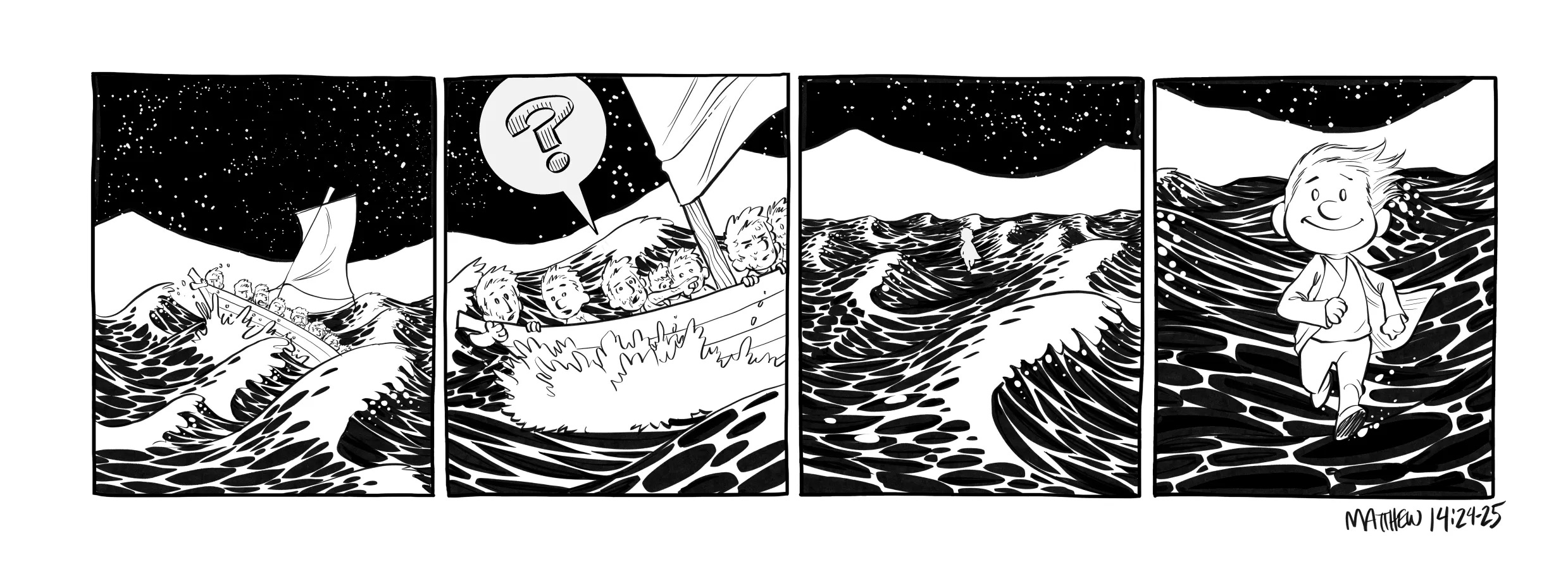
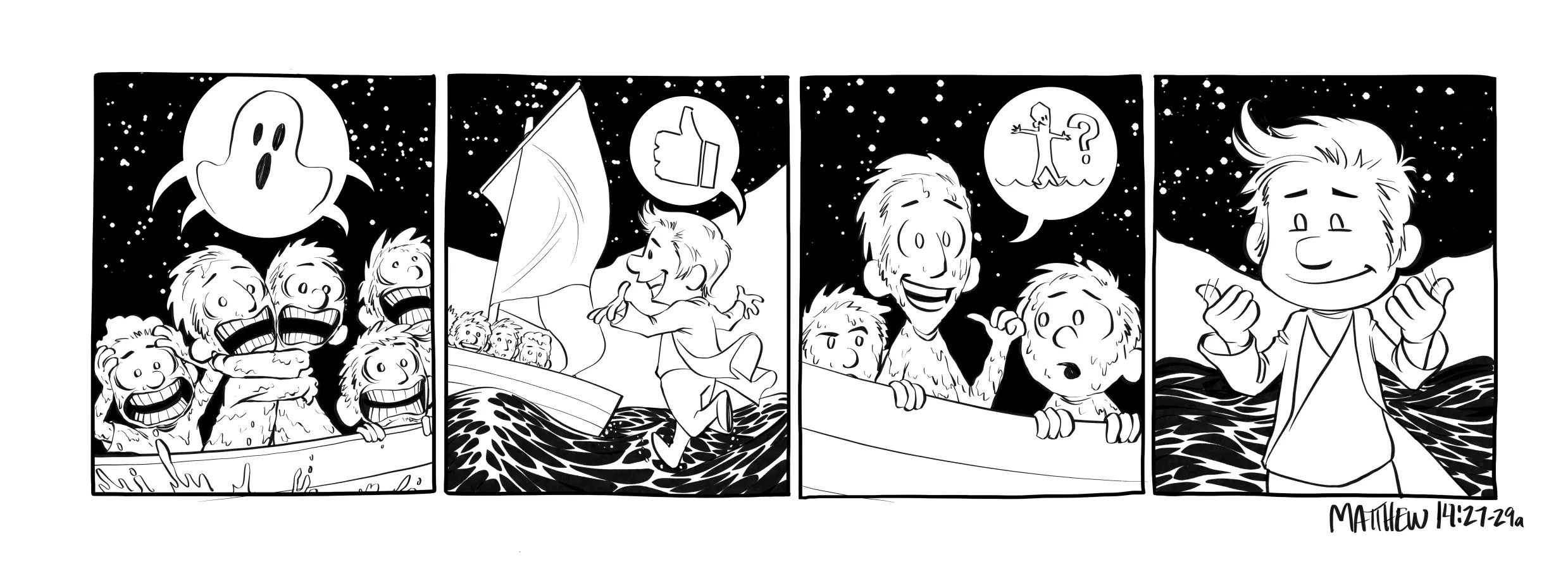
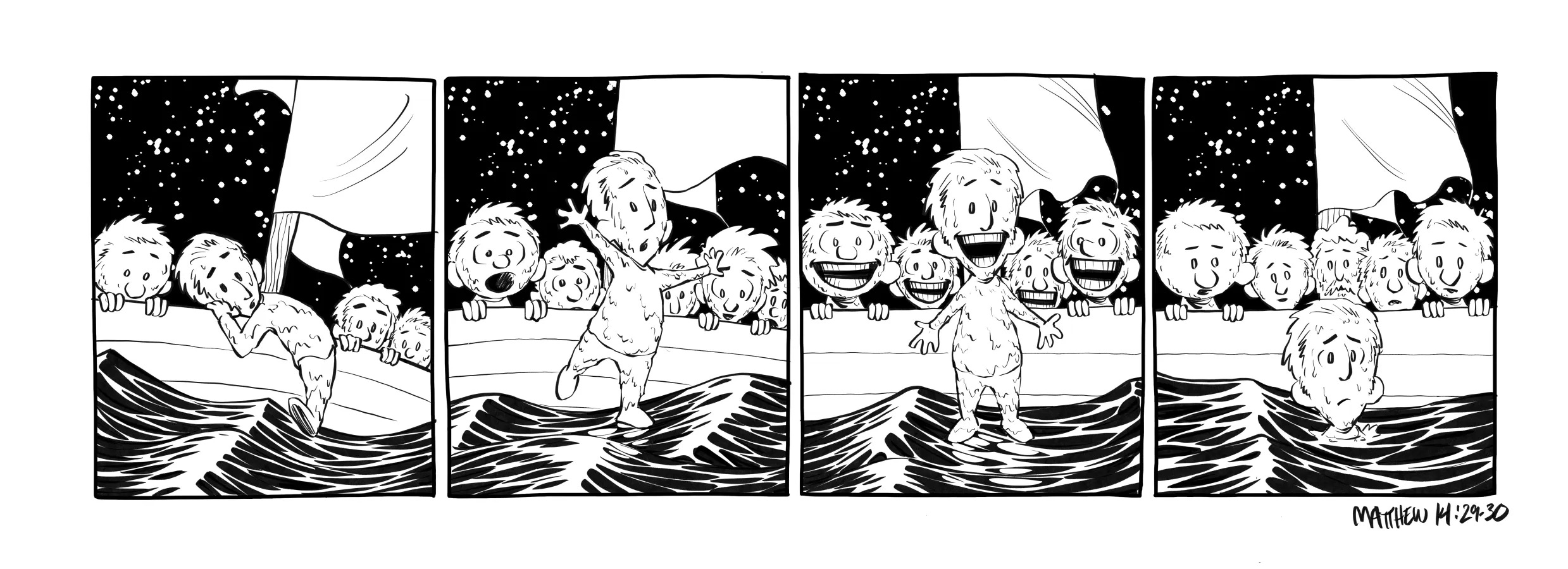
I had a vision, or an idea, while at church, of a white canvas representing Heaven, and dirt on that canvas making it imperfect, which is why sin cannot exist in God’s presence. Imperfection cannot exist within perfection. Then the image was of men covered in the filth of their sin visibly, meanwhile Christ is there sinless and clean. But when he’s on the cross, he takes all of our sin on himself, which can be visualized by the dust and dirt and muck on our bodies being transferred to him on the cross, making us clean instead. I just thought, ‘I have to visualize this’, but I couldn’t just do it in a drawing, it would have to be the entire gospel. And to reach as many people as possible, I’d have to do it in a style that appealed to everyone. Hence the ‘Calvin and Hobbes’ style illustrations.
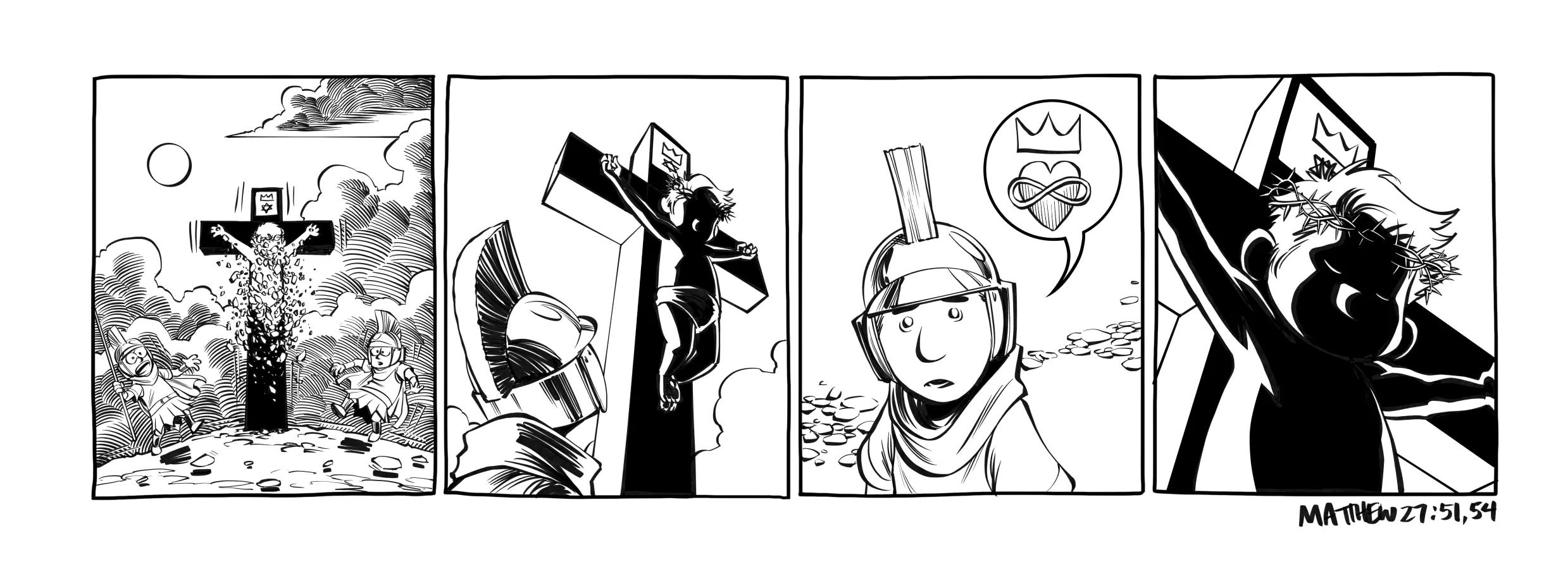
A wordless format means the art carries everything. What were the biggest artistic challenges in communicating the depth and weight of Biblical narrative through image alone, without any text to anchor the reader?
There are clearly portions of Jesus teaching that get left behind, because it’s impossible to express in just pictures, but I tried to tackle all of the events of the 4 gospels that can be visualized. You’ll see that my references bounce around from book to book, because I was using a chronologized list of gospel events to tell the tale.
This project has an explicitly evangelical purpose in that it is designed to reach readers across every language barrier on earth. How do you think about the relationship between your faith and your craft, and has that relationship changed over the course of your career?
I believe we all have gifts granted from God. We all have time, talent, and treasure. Some of us have more time, some more talent, some more treasure, but whatever it is you’ve been blessed with, it should be purposed toward building the kingdom of God. Bringing people to faith. Changing the culture to reflect God’s purpose. Since I became a Christian, I have always tried to find ways to use my talents to that end. Unfortunately, sometimes you just have to pay the bills, and be an example of Christ as a servant to an employer, but having this gift to use to reach people in this unique way is certainly the highlight of my career.
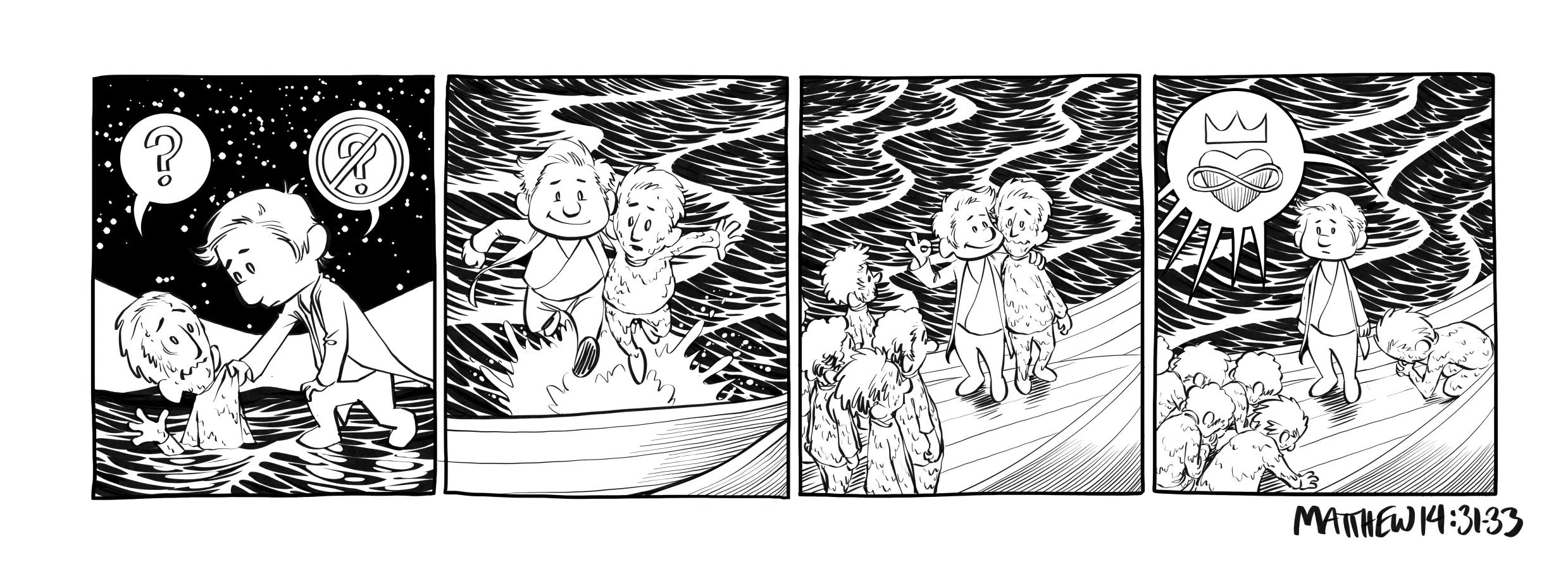
You are publishing through Eric July’s Rippaverse. Eric has built one of the most successful independent comics operations in the industry specifically by refusing to bow to the mainstream gatekeepers. What drew you to Rippaverse as the home for this project, and what does that partnership mean to you?
