


This was a tough one because it’s taking something bad and going over all of it for what’s the worst of the worst, but we managed to do it! Alex Kurtzman has run Star Trek since 2017. Over nearly a decade, his Secret Hideout production company delivered five seasons of Discovery, three seasons of Picard, two seasons of Strange New Worlds, five seasons of Lower Decks, and one season each of Starfleet Academy and the Section 31 film. That is eighteen distinct seasons or entries. Here is every one of them, ranked from bad to worst, with a summary of what each season actually did so readers can follow the argument.
#1 — Strange New Worlds Season 1 (2022)
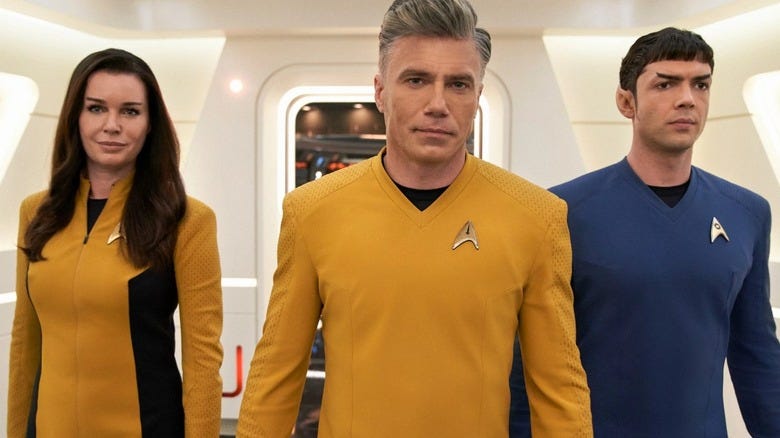
The first season of Strange New Worlds arrived as the closest thing the Kurtzman era produced to traditional Star Trek. Set aboard the Enterprise before Kirk’s command, the season follows Captain Christopher Pike (Anson Mount), Number One (Rebecca Romijn), and a young Spock (Ethan Peck). Each episode is largely self-contained, leaning into the episodic format that defined the franchise’s best years rather than the serialized grief-and-trauma arcs that had plagued Discovery and Picard. Pike gets his character-defining burden early: he knows his fate, a fact established in Discovery Season 2, and the show uses it to examine courage rather than to manufacture endless cliffhangers. The season includes strong standalone episodes across multiple genres and reintroduced the idea that Star Trek could be fun, hopeful, and rooted in exploring ideas rather than processing the crew’s trauma for ten episodes straight.
#2 — Lower Decks Season 3 (2022)
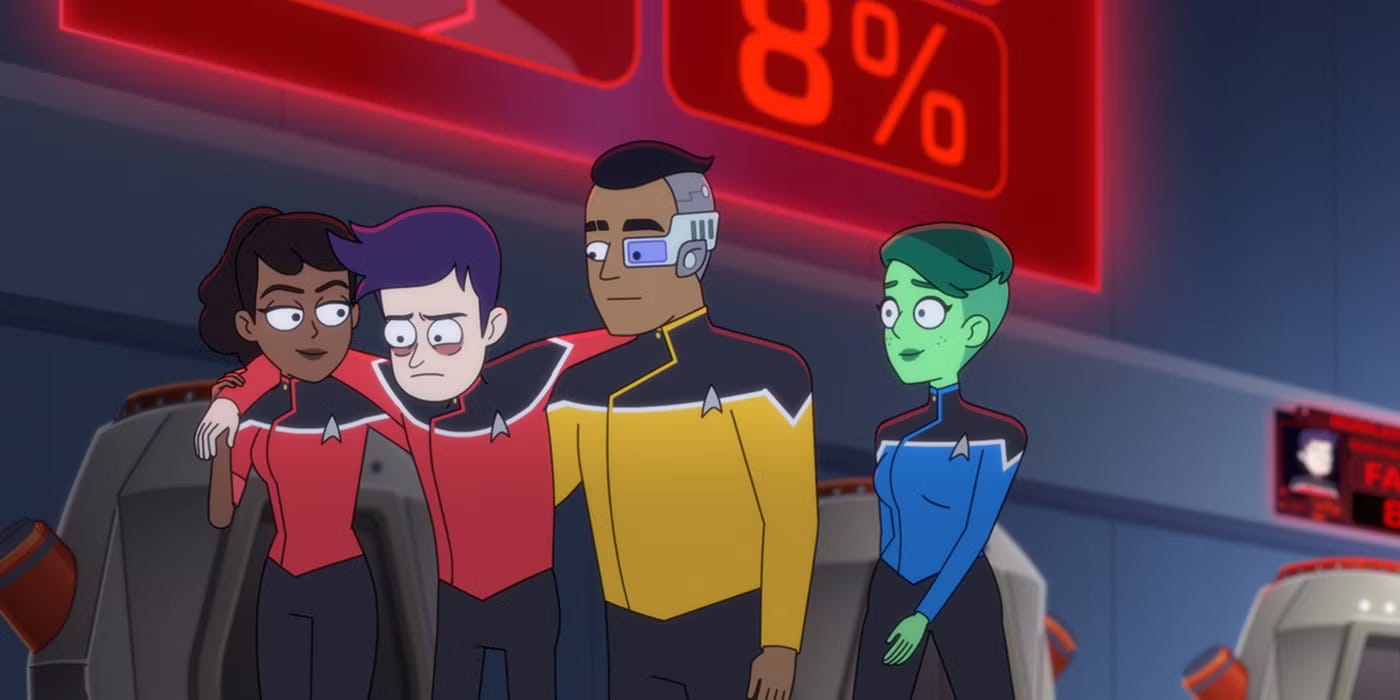
Lower Decks spent its first two seasons establishing a voice. Season 3 is where the show cashed that investment. Set aboard the USS Cerritos, a California-class ship assigned to second-contact and support missions, the series follows four lower-ranking crew members: Mariner, Boimler, Tendi, and Rutherford. By Season 3, the writers knew who these characters were, and the scripts moved with the confidence of a show that had found its footing. The season’s centerpiece is “Those Old Scientists,” a crossover episode with Strange New Worlds that brought the animated crew into live action. It is one of the most purely enjoyable hours of the Kurtzman era. The season also delivered several strong standalone entries and a satisfying arc that didn’t require the characters to suffer through manufactured personal crises to earn their payoffs.
#3 — Lower Decks Season 1 (2020)
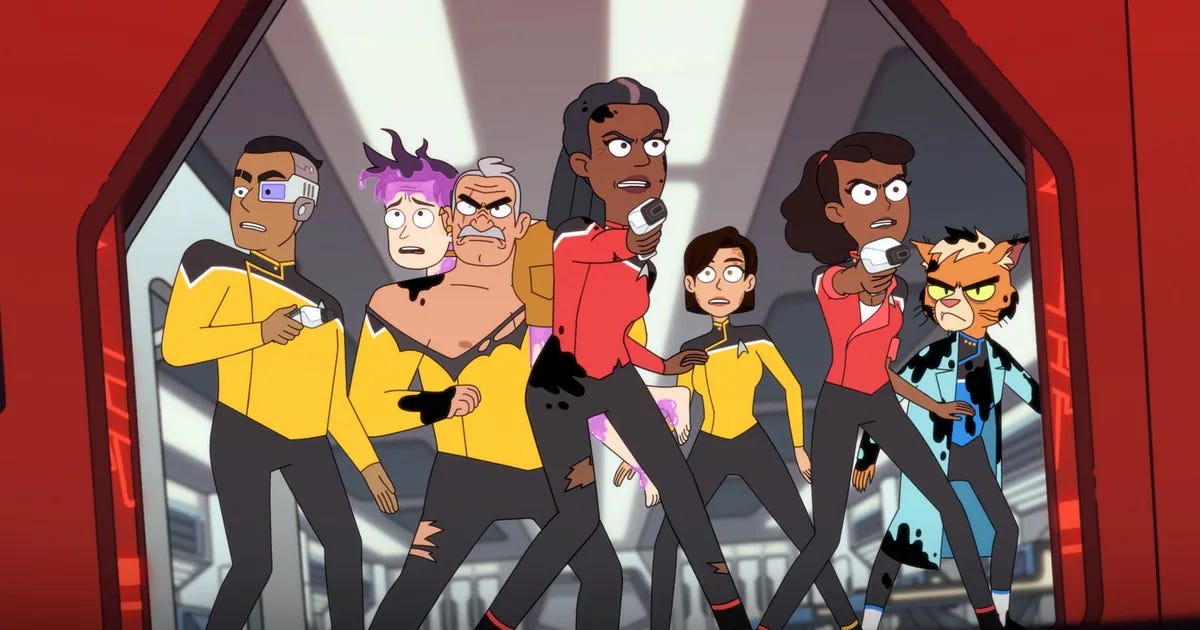
Lower Decks launched as the first animated Star Trek series since The Animated Series ended in 1974, and the first outright comedy the franchise had produced. Created by Mike McMahan, formerly a head writer on Rick and Morty, the show found its premise in a TNG episode of the same name: what are the lower-ranking crew members doing while the captain and senior staff handle the actual plot? Season 1 is uneven, as first seasons tend to be. McMahan described the writers as still figuring out what the show was, leaning hard on TNG-era callbacks. The formula gets repetitive across ten episodes. But the show’s fundamental instincts are right. It treats Star Trek lore with affection rather than contempt, and the four leads have genuine chemistry. Compared to what Discovery and Picard were doing at the same time, Lower Decks Season 1 looks like a masterpiece by default.
#4 — Discovery Season 5 (2024)
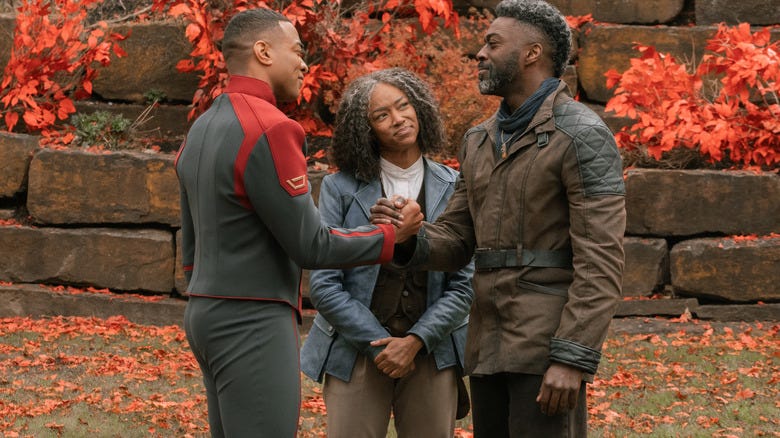
Discovery ran five seasons and ended in 2024. The fifth and final season is not the best of the run on a scene-by-scene basis, but it has the advantage of ending the series with a degree of intentionality that earlier seasons lacked. The plot follows the Discovery crew chasing fragments of an ancient alien device called the Progenitor technology, a callback to the TNG episode “The Chase.” Michael Burnham (Sonequa Martin-Green) is now captain, and the season functions more as an adventure serial than as the heavy serialized trauma drama the show defaulted to in its middle years. The show addressed fan criticism and course-corrected toward something lighter. The result is imperfect but watchable, which in the context of Discovery is an achievement.
#5 — Picard Season 3 (2023)
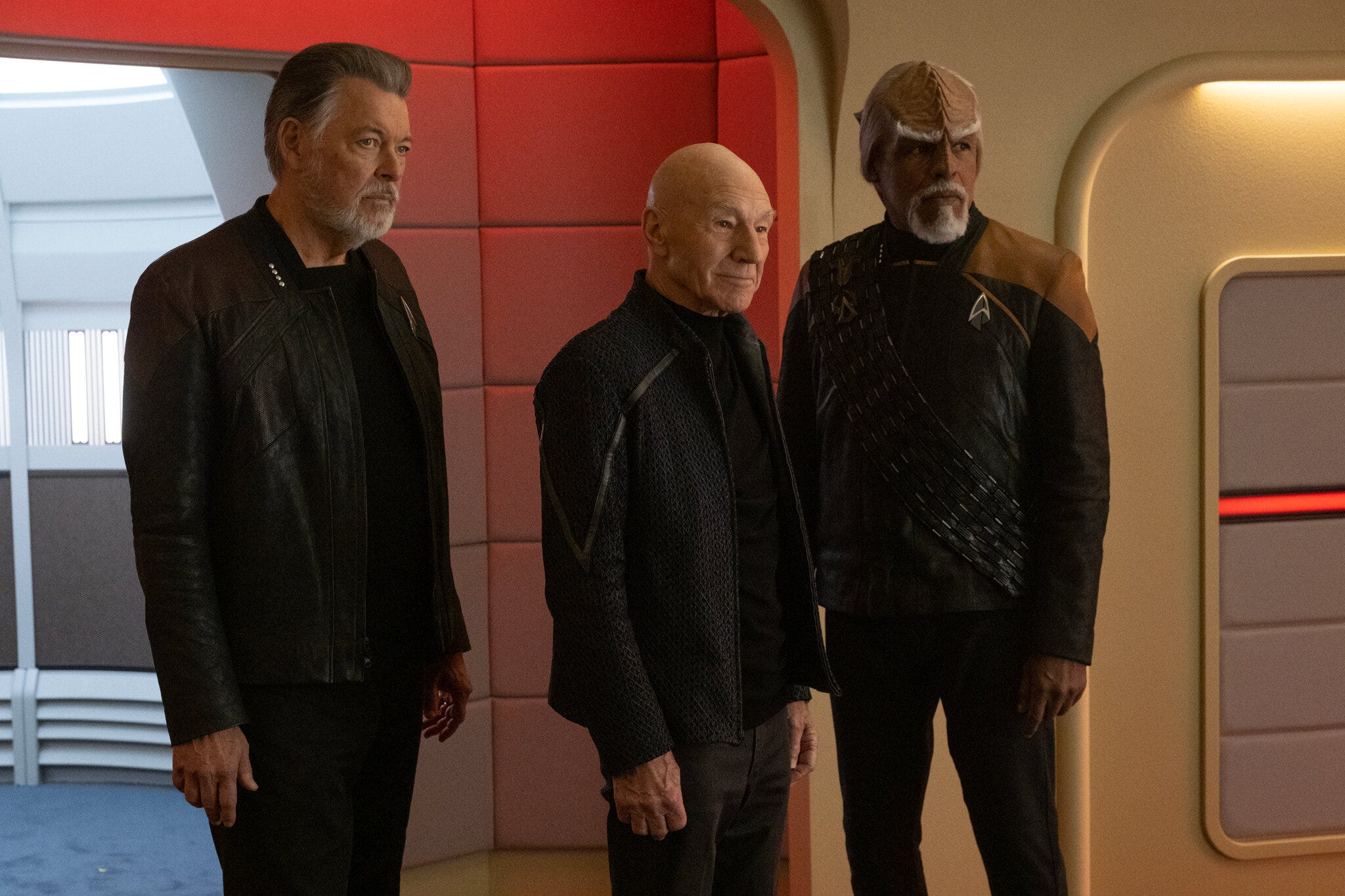
Picard Season 3 is the season fans of The Next Generation had been waiting for since the show was announced. Showrunner Terry Matalas assembled the original TNG main cast: Patrick Stewart, Jonathan Frakes, Gates McFadden, Marina Sirtis, LeVar Burton, and Michael Dorn all returned in substantial roles. The season’s plot involves a threat to the Federation tied to the Borg, with Picard’s son (Jack Crusher, played by Ed Speleers) at the center of the conspiracy. The season has real problems: it leans heavily on nostalgia, some of the plot mechanics are sloppy, and the Borg resolution recycles ground the franchise had already covered better. But it gives the original TNG cast a genuine send-off with real stakes, something the previous two seasons failed entirely to provide. The Enterprise-D flies again. For fans of a certain age, that lands.
#6 — Strange New Worlds Season 2 (2023)
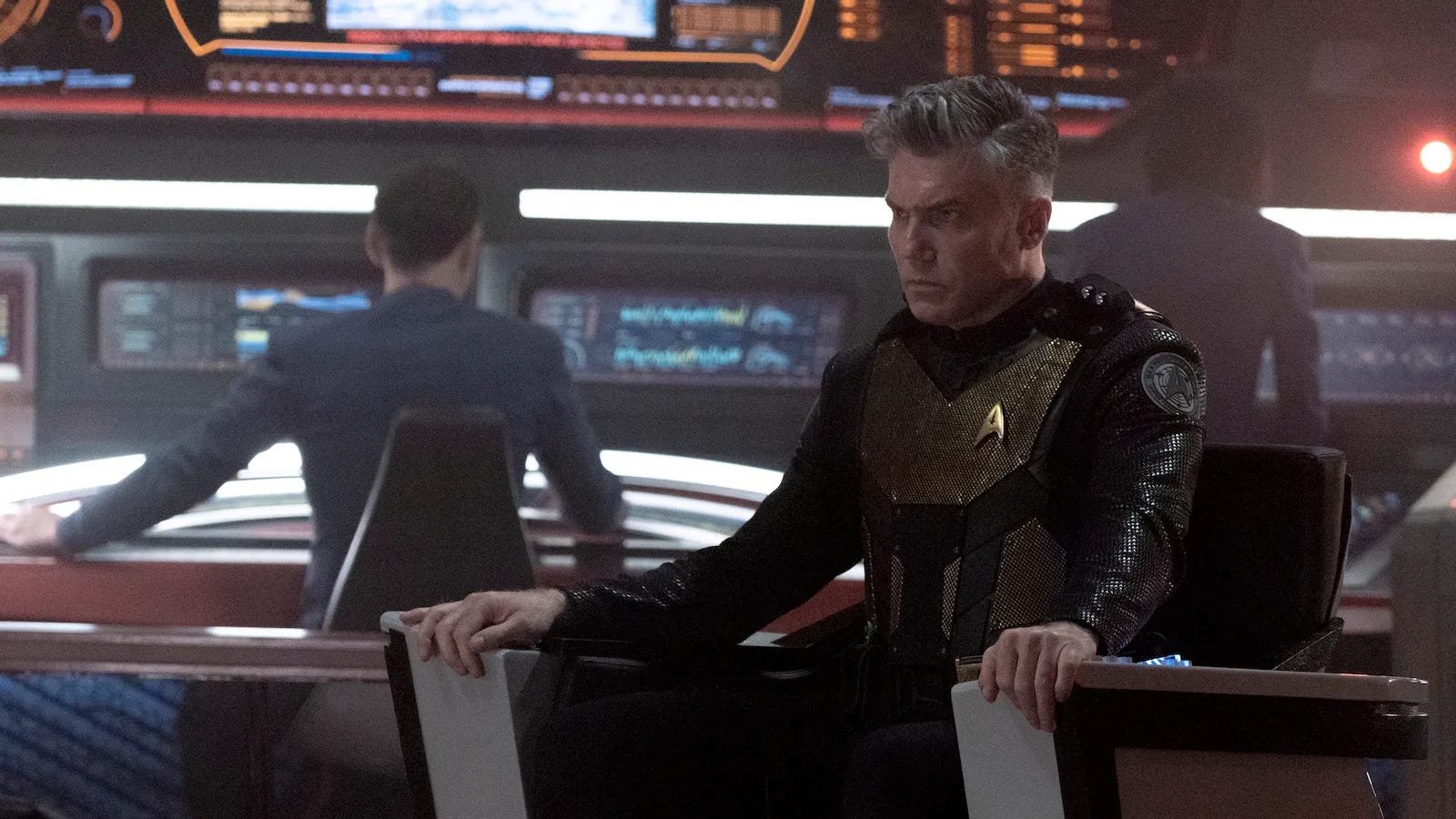
Strange New Worlds Season 2 is a step down from its first season without collapsing. The episodic format remains, and the cast continues to be one of the strongest in the Kurtzman era. The season introduces James Kirk (Paul Wesley) as a recurring figure, with the writers beginning to position the show’s timeline toward its inevitable TOS convergence. The crossover musical episode with Lower Decks divided fans sharply. Some of the season’s standalone entries match the first season’s best work. Others feel like the writers stretching to fill ten episodes. The Spock and Chapel arc grows heavy and gets more screen time than it earns. Season 2 is still among the better things the Kurtzman era produced, but the gap between it and Season 1 is real.
#7 — Picard Season 1 (2020)
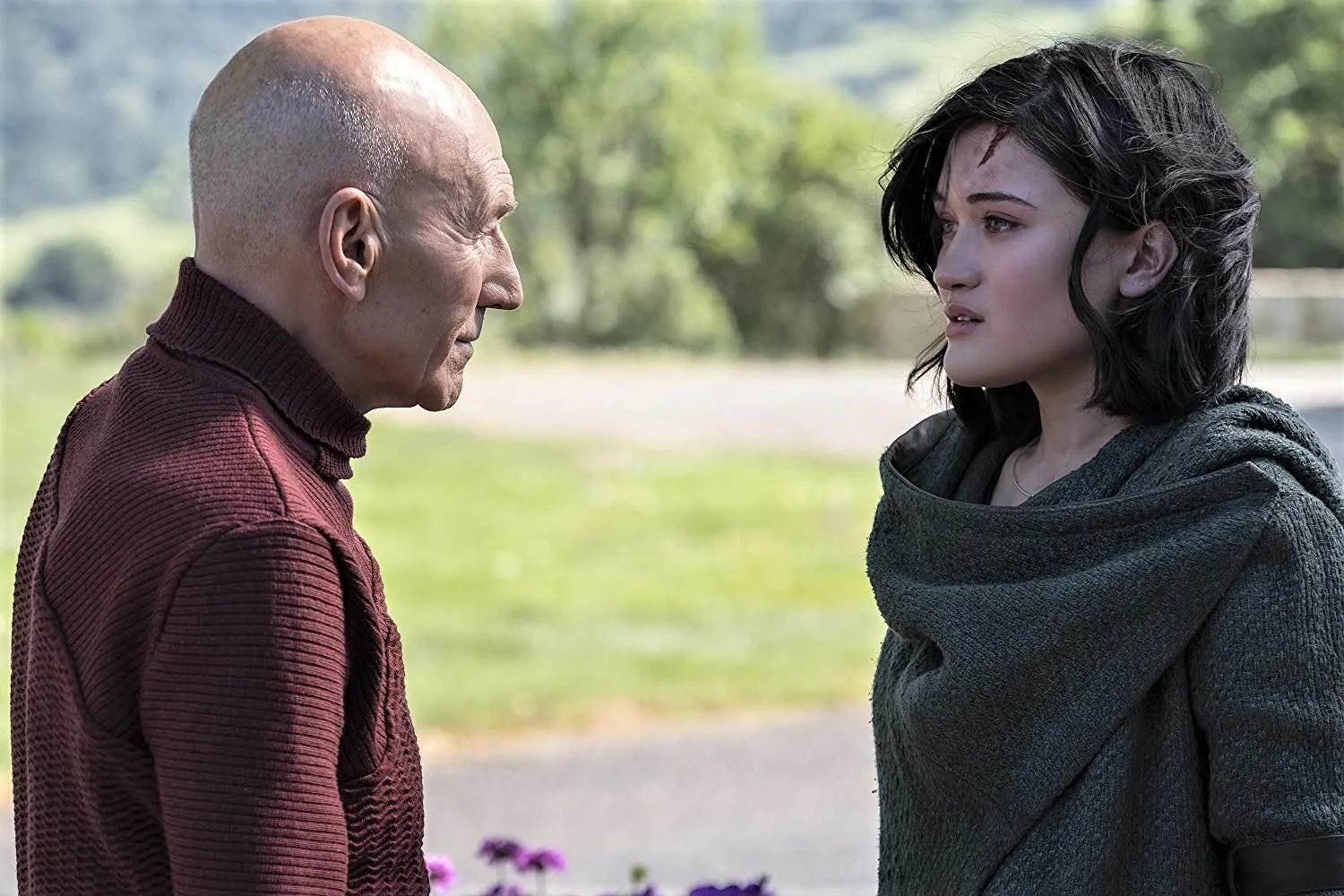
Picard Season 1 had a premise worth exploring: Jean-Luc Picard (Patrick Stewart), years after the events of the TNG films, is pulled back into action by a conspiracy surrounding synthetic life, the Romulan diaspora, and Data’s legacy. The first two episodes are the best the season produces. The mystery is intriguing and the tone is more measured than Discovery. Then the wheels come off. The season adds a new ensemble of largely underdeveloped characters, kills off a major figure in the premiere for shock value, and races toward a resolution involving a massively powerful alien force that the show does not have the budget or the writing to pay off. The Picard of the show bears little resemblance to the Picard of TNG. The season is a reminder that a good premise and a good show are not the same thing.
#8 — Strange New Worlds Season 3 (2024)
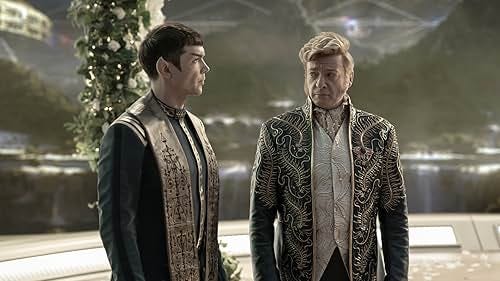
Strange New Worlds Season 3 arrives with the shadow of the show’s cancellation looming. Strange New Worlds was confirmed to be ending with Season 5, and Season 3 shows signs of the writers knowing their runway was limited. The season continues the serial creep that began in Season 2, with more arc-heavy plotting and less of the clean episodic storytelling that made Season 1 stand out. Some episodes work well. The Kirk material develops in ways that pay off prior setup. But the season as a whole sits below the first two entries and below Picard Season 1 in terms of sustained quality. It is a middle chapter that feels like a middle chapter.
#9 — Discovery Season 1 (2017)
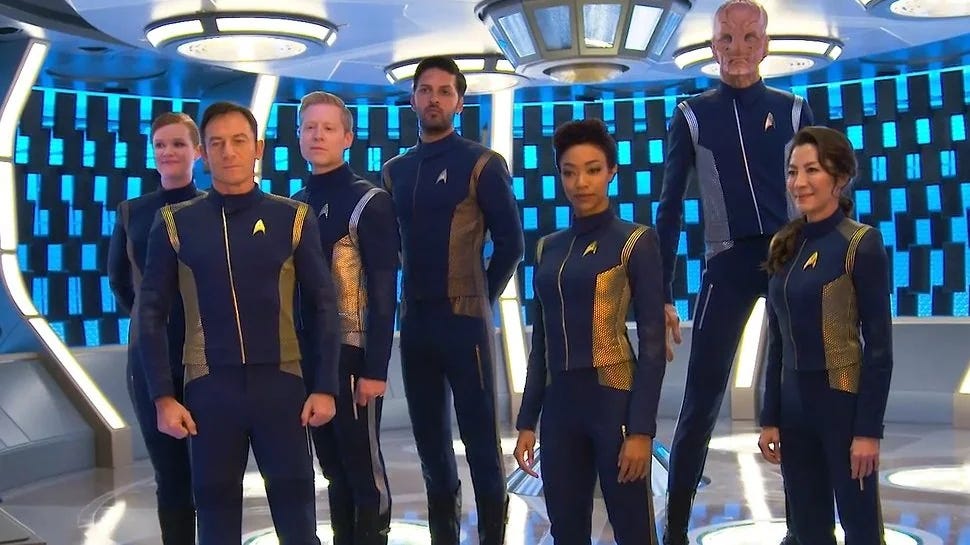
Discovery Season 1 launched the Kurtzman era and set the template for almost everything that followed, for better and worse. Created by Bryan Fuller and Kurtzman, the season begins in the years before Kirk’s five-year mission and centers on Michael Burnham (Sonequa Martin-Green), a human raised by Vulcans who commits a court-martial offense in the cold open and spends the season rebuilding her identity aboard a new ship. The production design is expensive and impressive. The show’s problems are structural. Discovery jettisons episodic storytelling entirely in favor of a single serialized arc, leans on serialized mystery-box plotting borrowed from Abrams-era science fiction, and kills its most interesting character (Captain Lorca, played by Jason Isaacs) by revealing him as a villain from the Mirror Universe, wasting a season’s worth of character investment. Fuller’s fingerprints are visible in the first few episodes; after he departed, the season lurches toward a finale that required retconning Klingon appearances, ignoring established canon, and staging a resolution that made no sense on its own terms.
#10 — Lower Decks Season 4 (2023)
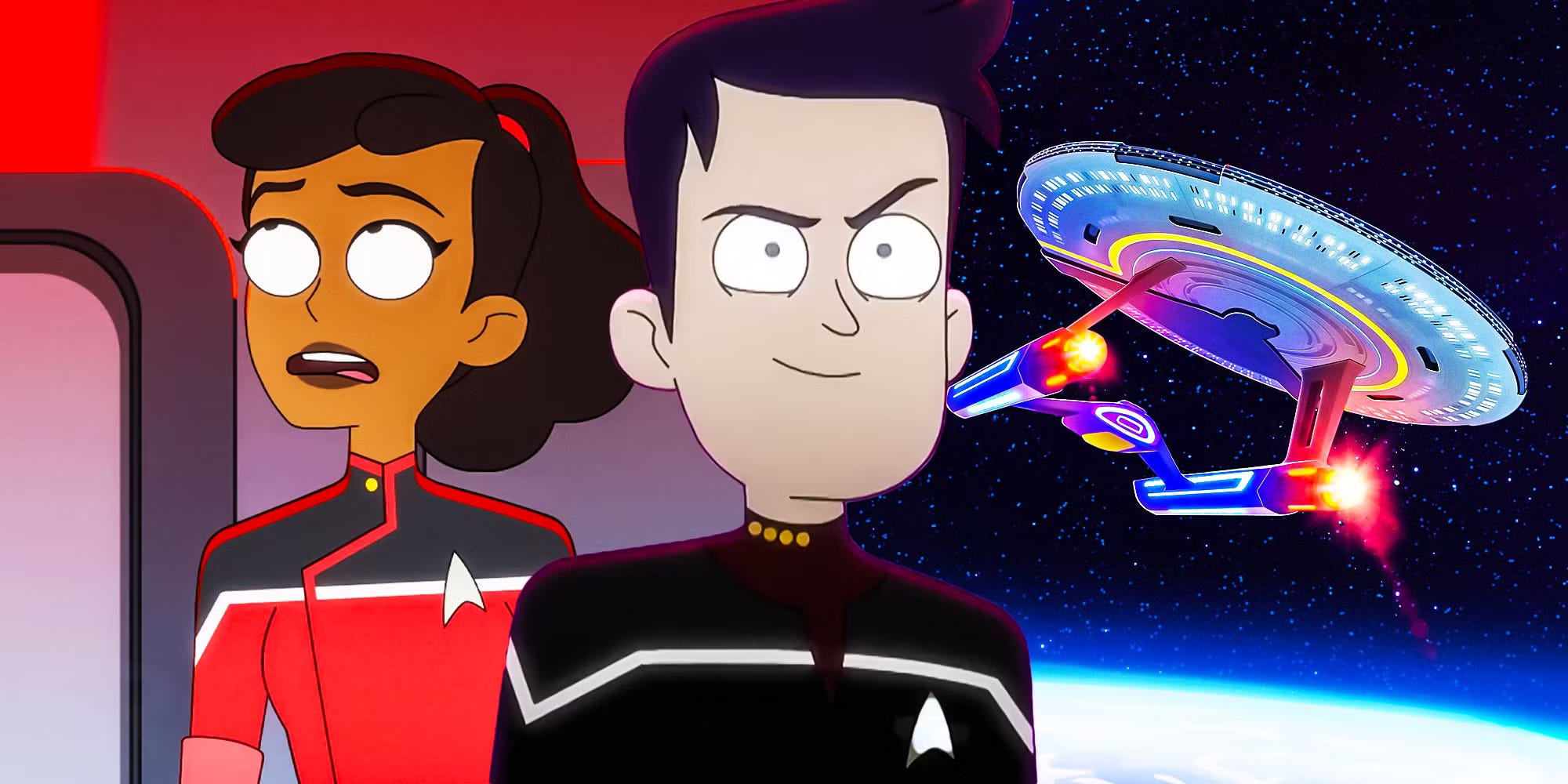
Lower Decks Season 4 pushes the show into more serialized territory, leaning into a season-long arc involving a secret Starfleet conspiracy. The shift produces some compelling episodes and gives the main cast heavier dramatic material than the show had previously asked of them. Mariner’s arc is the most emotionally demanding the character had been given. The trade-off is that the show loses some of the scrappy, irreverent comedy that made the earlier seasons work. Season 4 is well-reviewed and the ambition is real, but it increasingly feels like a show that decided to become something else in its final act.
#11 — Lower Decks Season 5 (2024)
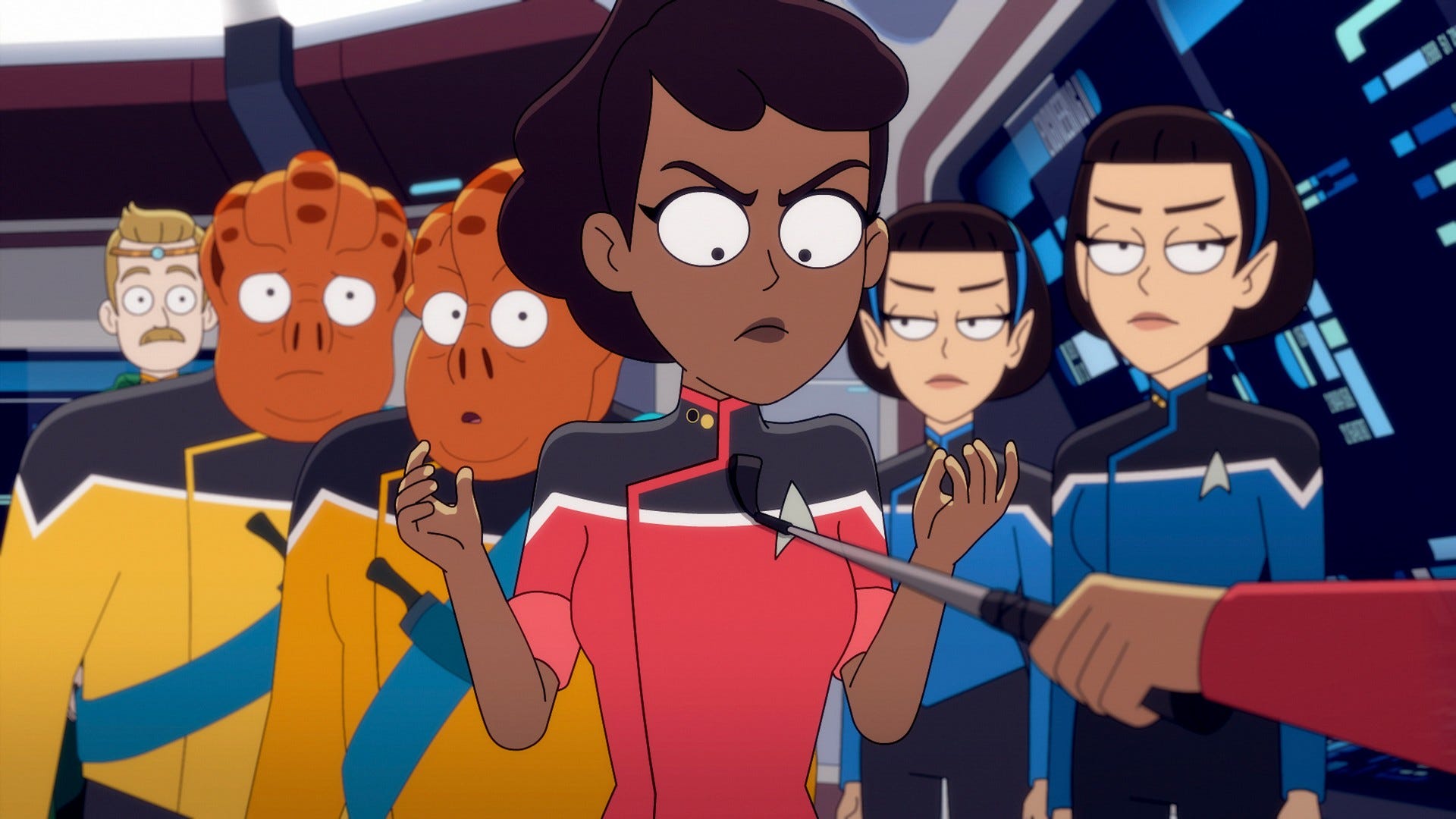
The final season of Lower Decks carries the weight of cancellation the way most final seasons do: trying to close arcs, deliver fan-service moments, and say goodbye in ten episodes. Season 5 succeeds at closure more than it succeeds as television. The Orion war subplot, the Klingon threads, and the character resolutions all land to varying degrees, and the series finale is generally considered satisfying. But the season is uneven, with some episodes that belong with the show’s best work and others that feel rushed. Lower Decks ended because Paramount cancelled it, not because the creative team was ready to stop. The seams show.
#12 — Picard Season 2 (2022)
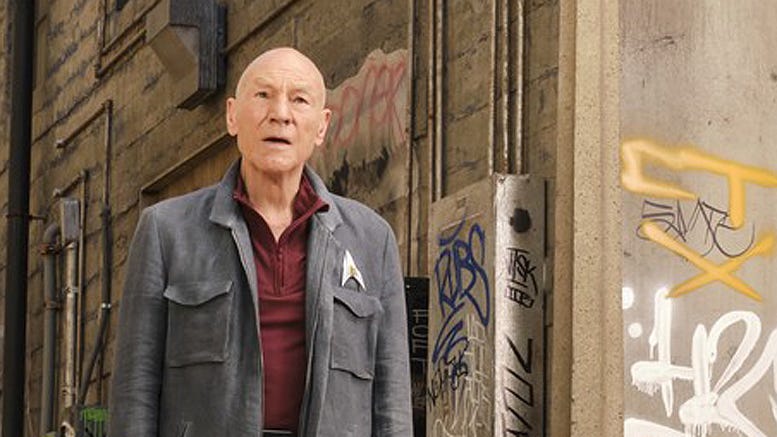
Picard Season 2 begins with a promising premise: Q (John de Lancie) fractures the timeline and sends Picard back to the 21st century, echoing the TNG episode “Time’s Arrow” and the general framework of the franchise’s time-travel stories. Q himself, played with his trademark charismatic menace by de Lancie, is the best thing about the season. What surrounds him is a mess. The season loses the plot in its middle episodes, giving most of the ensemble extended personal crisis arcs with no real stakes, and spends five episodes doing almost nothing to advance the actual story. The back half never recovers the momentum the premiere built. The season ends on a resolution involving the Borg Queen that retroactively complicates the setup without earning the payoff.
#13 — Lower Decks Season 2 (2021)
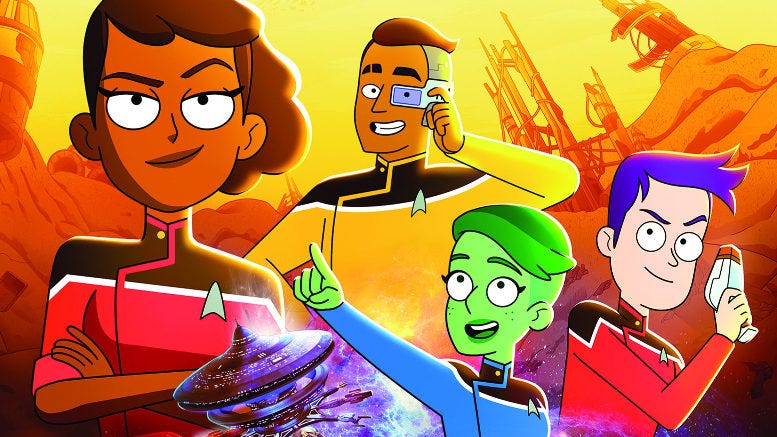
Lower Decks Season 2 improves on Season 1 in some areas and regresses in others. Boimler’s arc, returning from the Titan, gives the show its most interesting structural tension of the first two seasons. The finale raises the stakes and sets up Season 3 well. But the season also leans harder on the show’s worst habit: spinning its wheels on Mariner’s anti-authority shtick for extended stretches without developing it. Several mid-season episodes are filler. Season 2 is a functional but unremarkable piece of television caught between the roughness of Season 1 and the confidence of Season 3.
#14 — Discovery Season 2 (2019)
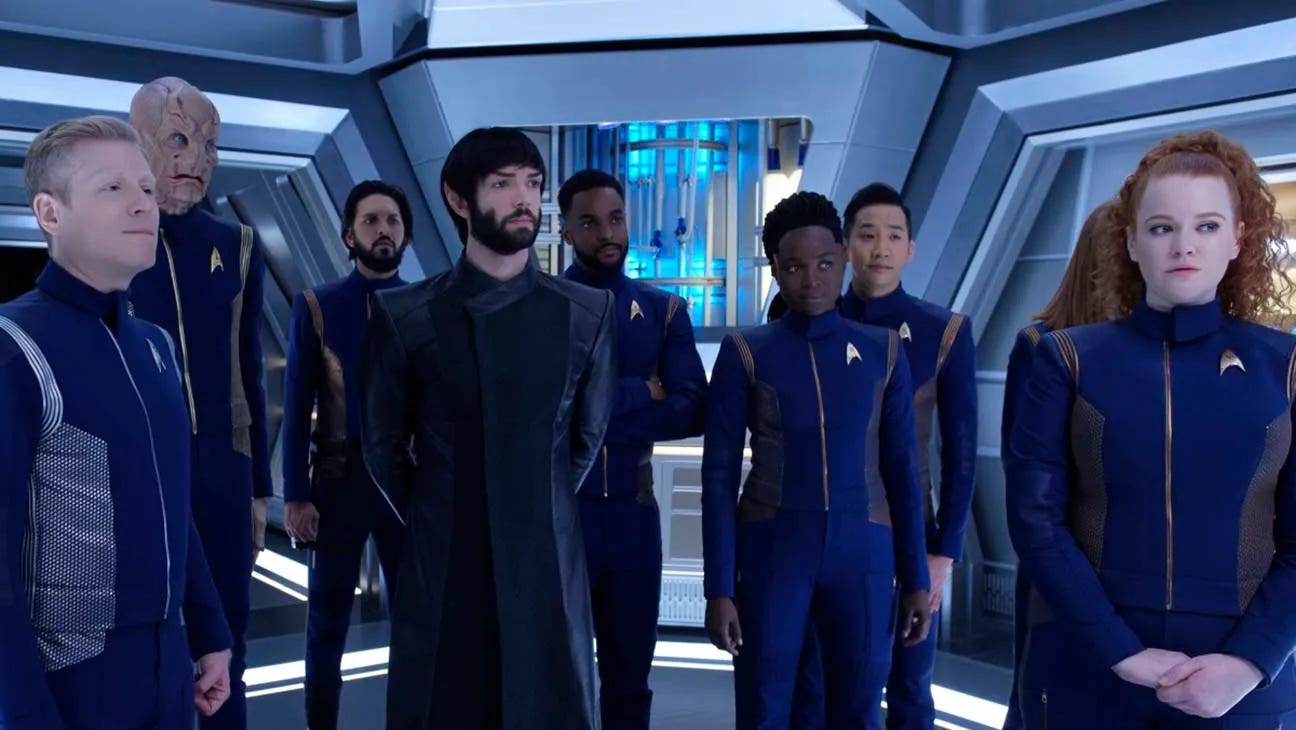
Kurtzman took over as showrunner midway through Discovery Season 2, which is the season that introduced Anson Mount’s Christopher Pike and Ethan Peck’s Spock to the franchise. Both castings are widely credited with saving the show from its Season 1 trajectory. The Red Angel mystery arc and the threat of Control, an artificial intelligence bent on destroying all organic life, propel the season. The season’s fundamental problem is that it is trying to do too many things: repair Season 1’s canon damage, introduce Pike and Spock as characters worth caring about, and deliver a serialized finale that justifies the crew’s 900-year jump into the future. The finale works only if you don’t look at the logic too hard. Discovery Season 2 is a course correction that succeeded at fixing certain problems while creating others.
#15 — Discovery Season 3 (2020)
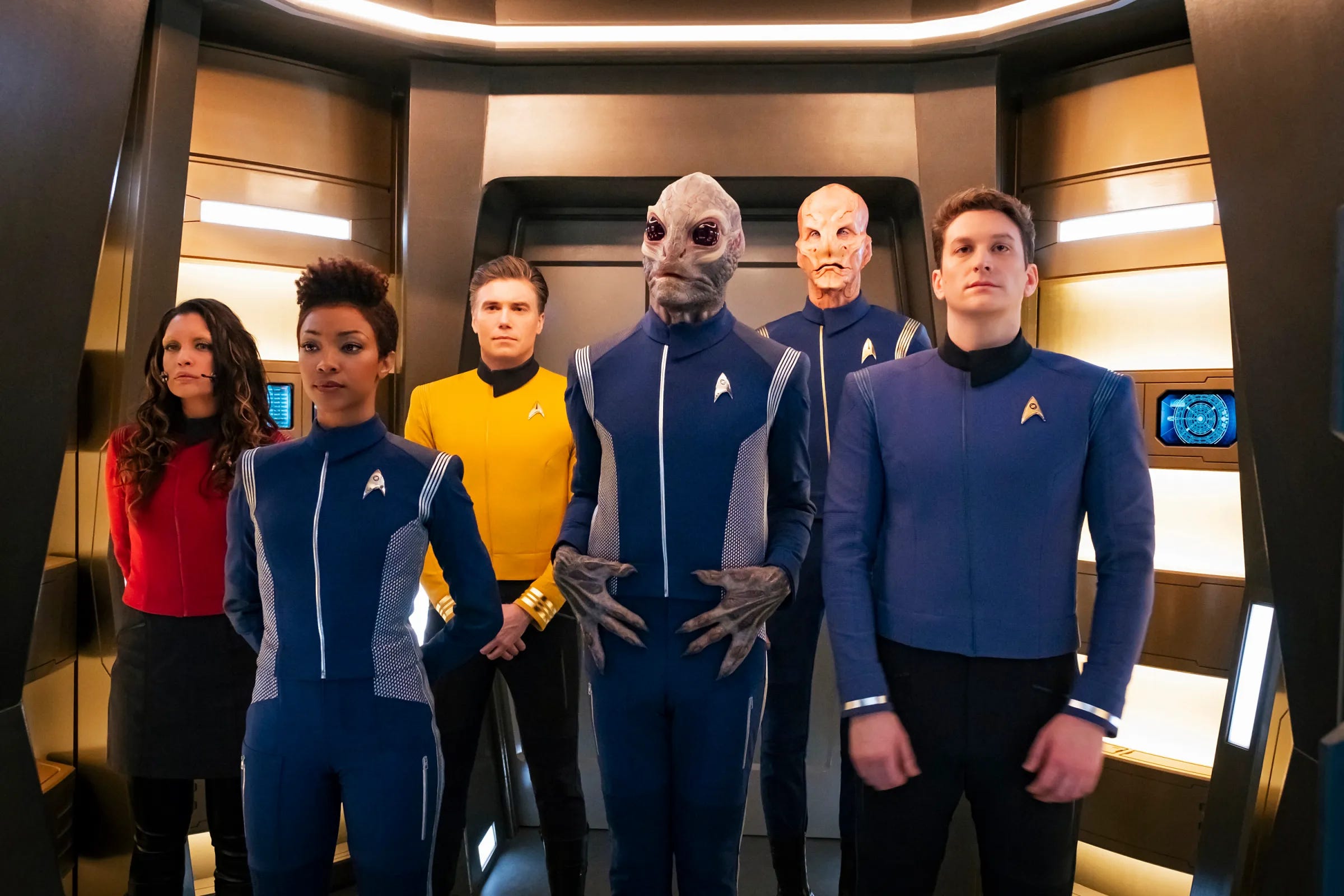
Discovery Season 3 drops the crew in the 32nd century, 930 years past the show’s original setting. The premise is designed to free the writers from canon constraints, and it succeeds in that narrow sense. The problem is that the 32nd century is not a compelling setting. The Federation has collapsed following an event called the Burn, a mass failure of dilithium across the galaxy. The season is ostensibly about Burnham and the crew rebuilding trust in Starfleet as an institution. In practice it is ten episodes of Burnham ignoring orders, the crew reacting to Burnham ignoring orders, and a finale that resolves the Burn through a piece of writing that fan forums dissected for weeks in terms of its failures. The season introduced David Ajala’s Book as Burnham’s love interest, a character whose reception was mixed and whose screen time in later seasons shrank accordingly.
#16 — Discovery Season 4 (2022)
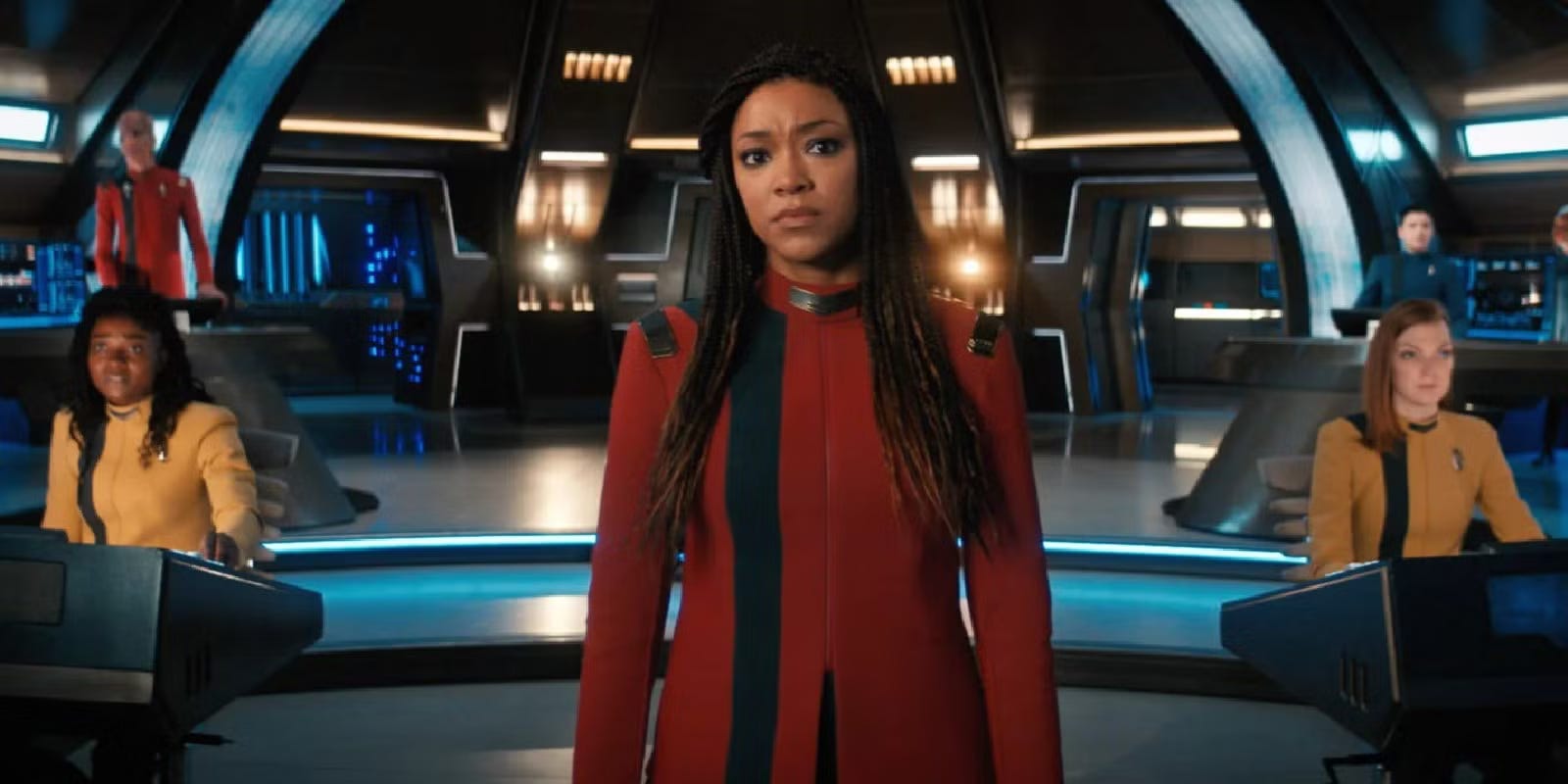
Discovery Season 4 is the nadir of the Discovery run. Following the events of Season 3, Burnham is now captain of the Discovery and the Federation faces a threat from an unknown alien intelligence called Species 10-C, which has been sending a gravitational anomaly through the galaxy and destroying star systems. The season stretches this premise across thirteen episodes, making it the longest single season in the Kurtzman era by episode count. The pacing is brutal. The Species 10-C storyline, which should be a first-contact story built on awe and tension, arrives in the final three episodes after ten episodes of the crew arguing about feelings and protocols. The season’s thesis, that communication and empathy can resolve any conflict, is applied with the subtlety of a sledgehammer. Season 4 is where Discovery stopped being a flawed show with potential and became a show that had given up trying.
#17 — Starfleet Academy Season 1 (2026)
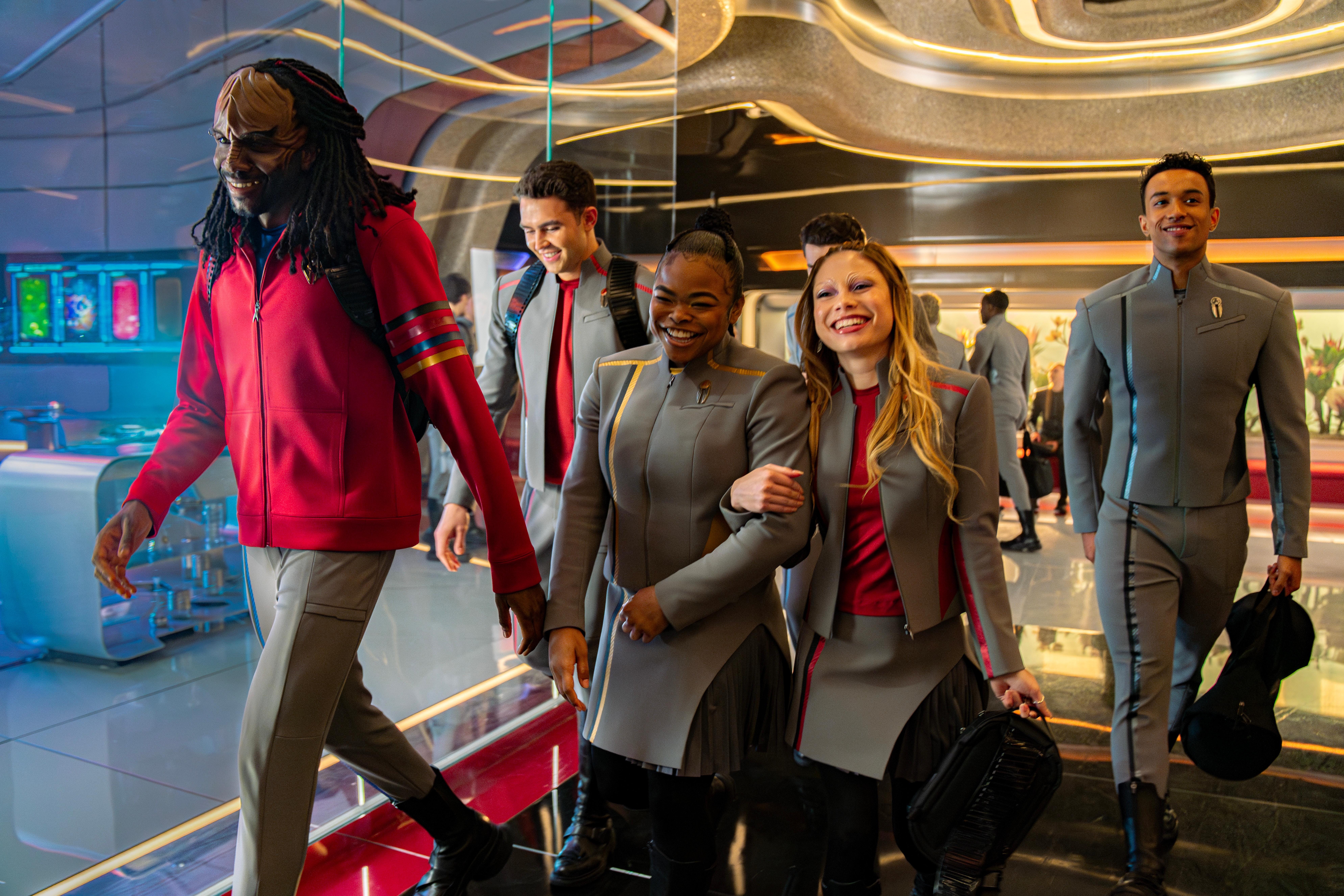
Starfleet Academy premiered in January 2026, Kurtzman’s seventh Star Trek series and the one he co-created and showran with Noga Landau. Set in the 32nd century established by Discovery’s later seasons, the show follows a new class of cadets learning to serve in Starfleet in the aftermath of the Burn. Holly Hunter leads the adult cast. The show is designed for a younger demographic than previous Trek series, positioning itself as a YA science fiction drama with ensemble cadet characters. Kurtzman described the show as optimistic by design and directly connected it to what he called Roddenberry’s vision of the future. Whether the show earns that description is a matter the first season largely fails to resolve. The 32nd century setting inherits all of Discovery’s worldbuilding problems, and the cadet premise limits the scope of storytelling the show can do. Starfleet Academy Season 1 sits just above Section 31 and not much higher.
#18 — Section 31 (2025)
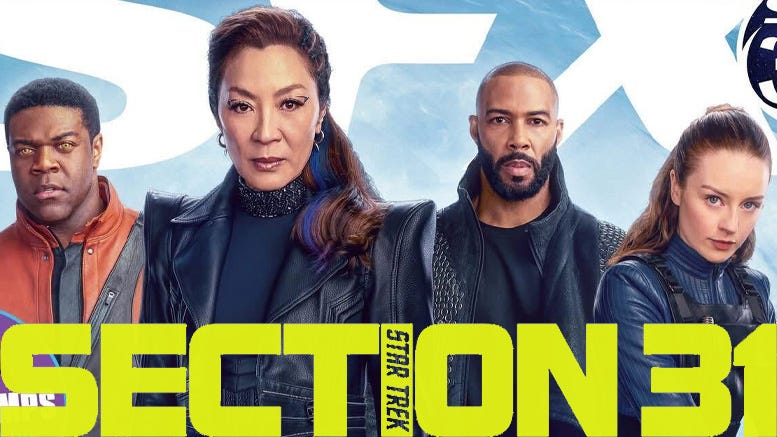
Section 31 is the worst thing the Kurtzman era produced, which is a notable achievement given the competition. Released as a Paramount+ streaming film in January 2025, Section 31 stars Michelle Yeoh as Philippa Georgiou, the Mirror Universe emperor who had been a Discovery regular since Season 1. The film had been in development hell since 2019, originally conceived as a television series before being retooled as a movie. The premise drops Georgiou into a team of covert Starfleet operatives tasked with a black-ops mission, framing itself as a kind of Star Trek action-thriller. The execution delivers none of the tension the premise promises. The supporting cast is underdeveloped, the action sequences are competent but forgettable, and the script gives Yeoh nothing to work with beyond her established Georgiou shtick. Section 31 is the logical endpoint of a decade of decisions that prioritized the aesthetics of serialized prestige television over the storytelling fundamentals that made Star Trek worth preserving in the first place.
Which Kurtzman-era season do you think deserves a different ranking? Let us know in the comments.
If the golden age of Trek and Babylon 5 left a hole in your sci-fi diet, The Stars Entwined fills it — interstellar espionage between two civilizations on the brink of war. Read The Stars Entwined on Amazon!
NEXT: IDW’s New Star Trek Comic Is Not for Star Trek Fans, And That’s The Point
You were much kinder to Discovery than it deserved, but right on about everything else.
Lorca was the only aspect of Discovery that made stomach-churning season 1 watchable. After that, forget it. Season 2 left me with vomit-flavor in my mouth and I refused to buy season 3.
Picard season 1 was almost entertaining, but the forced lesbian flow at the end was enough for me to never want to watch any further.
So done with gender and sexual "journeys." That is NOT science fiction, unless the story analyzes the absurdity of these stupid self-identity "journeys."