


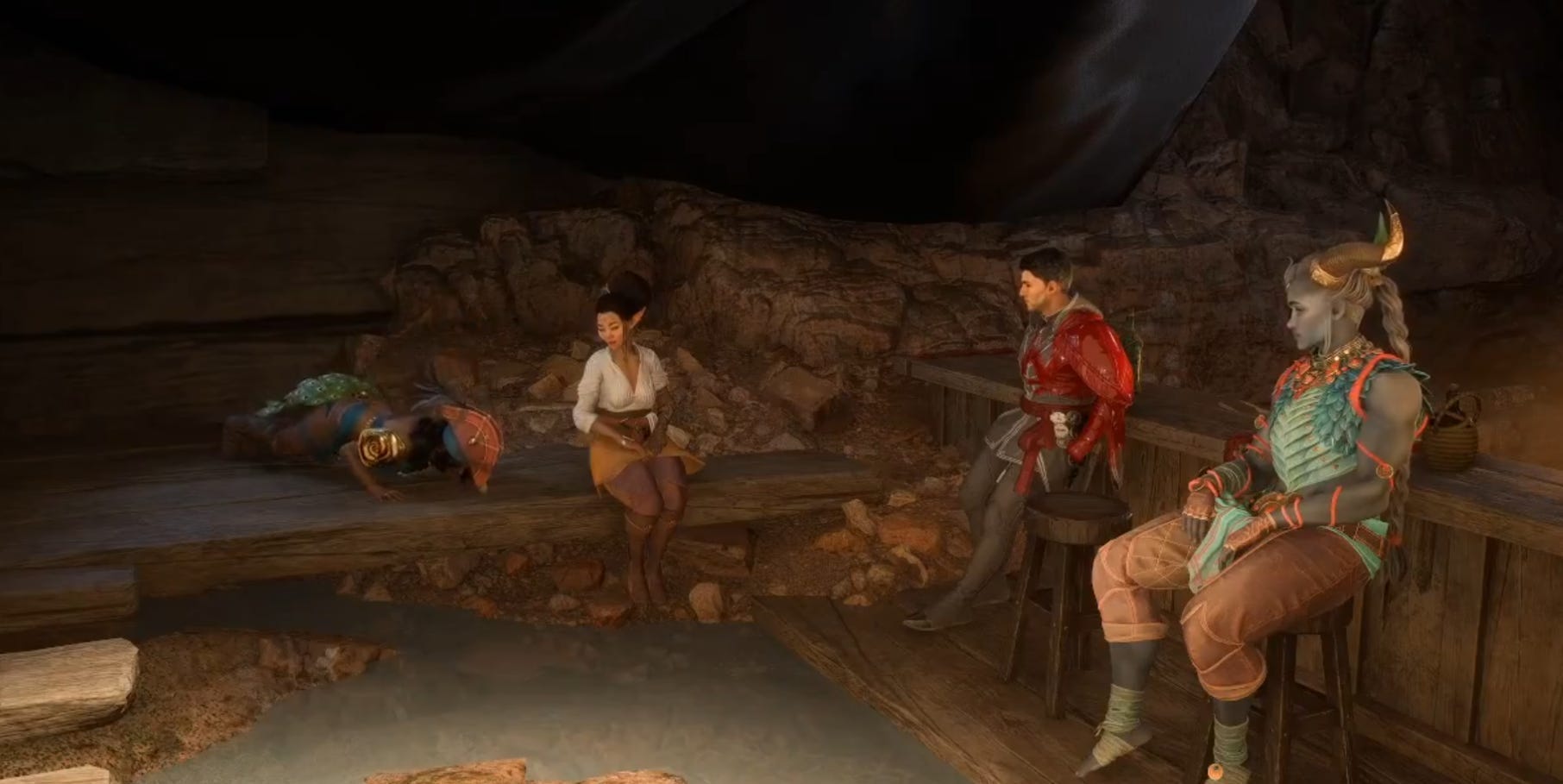
EA CEO Andrew Wilson briefly touched on Dragon Age: The Veilguard’s commercial failure noting the game “did not resonate with a broad enough audience.”
During EA’s Q3 2025 Earnings Conference Call, CEO Andrew Wilson said, “Q3 was not the financial performance we wanted or expected. We know as a leader in global entertainment great titles even when built and delivered with polished execution can sometimes miss our financial expectations.”
From there, he listed off three objectives that the company’s blockbuster strategy employs, “First, create an authentic story and experience for the core audience. Second, build innovative, groundbreaking features. And third, emphasize high quality launches across both PC and console.”
“In order to break out beyond the core audience, games need to directly connect to the evolving demands of players who increasingly seek shared world features and deeper engagement alongside high quality narratives in this beloved category,” he said.
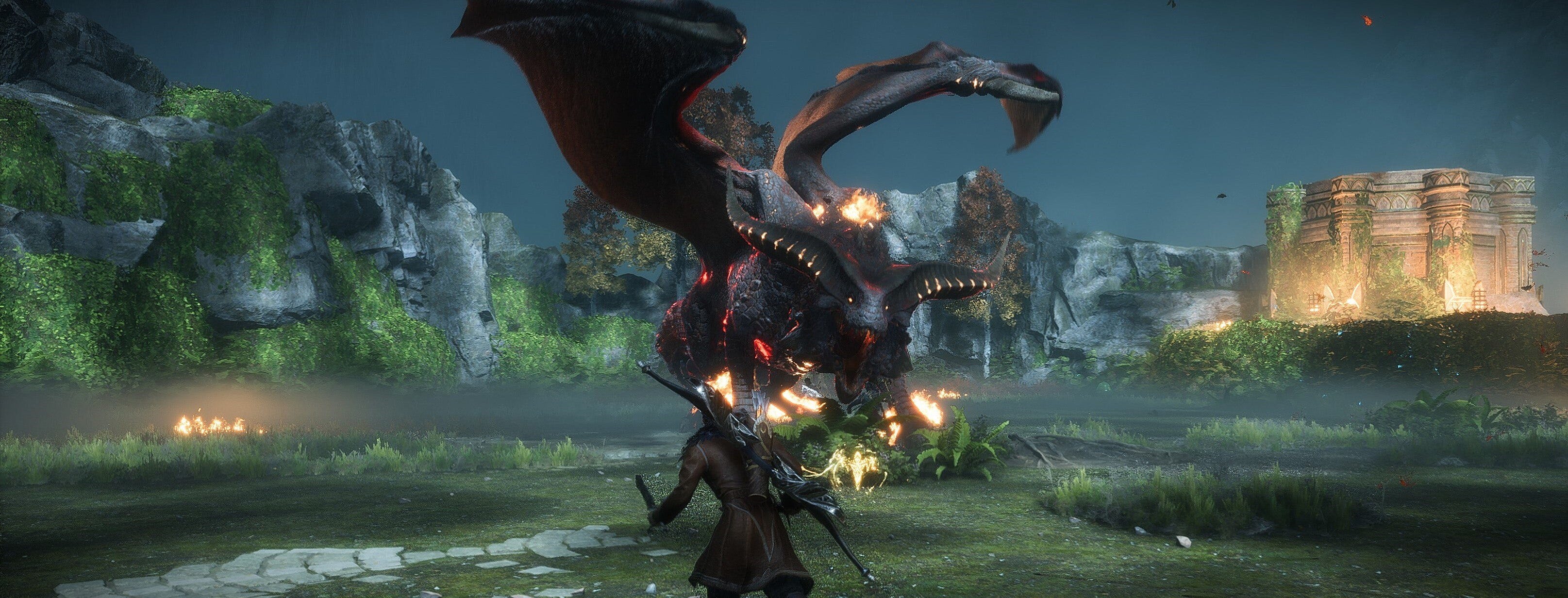
He then specifically addressed Dragon Age: The Veilguard, “Dragon Age had a high quality launch and was well reviewed by critics and those who played. However, it did not resonate with a broad enough audience in this highly competitive market.”
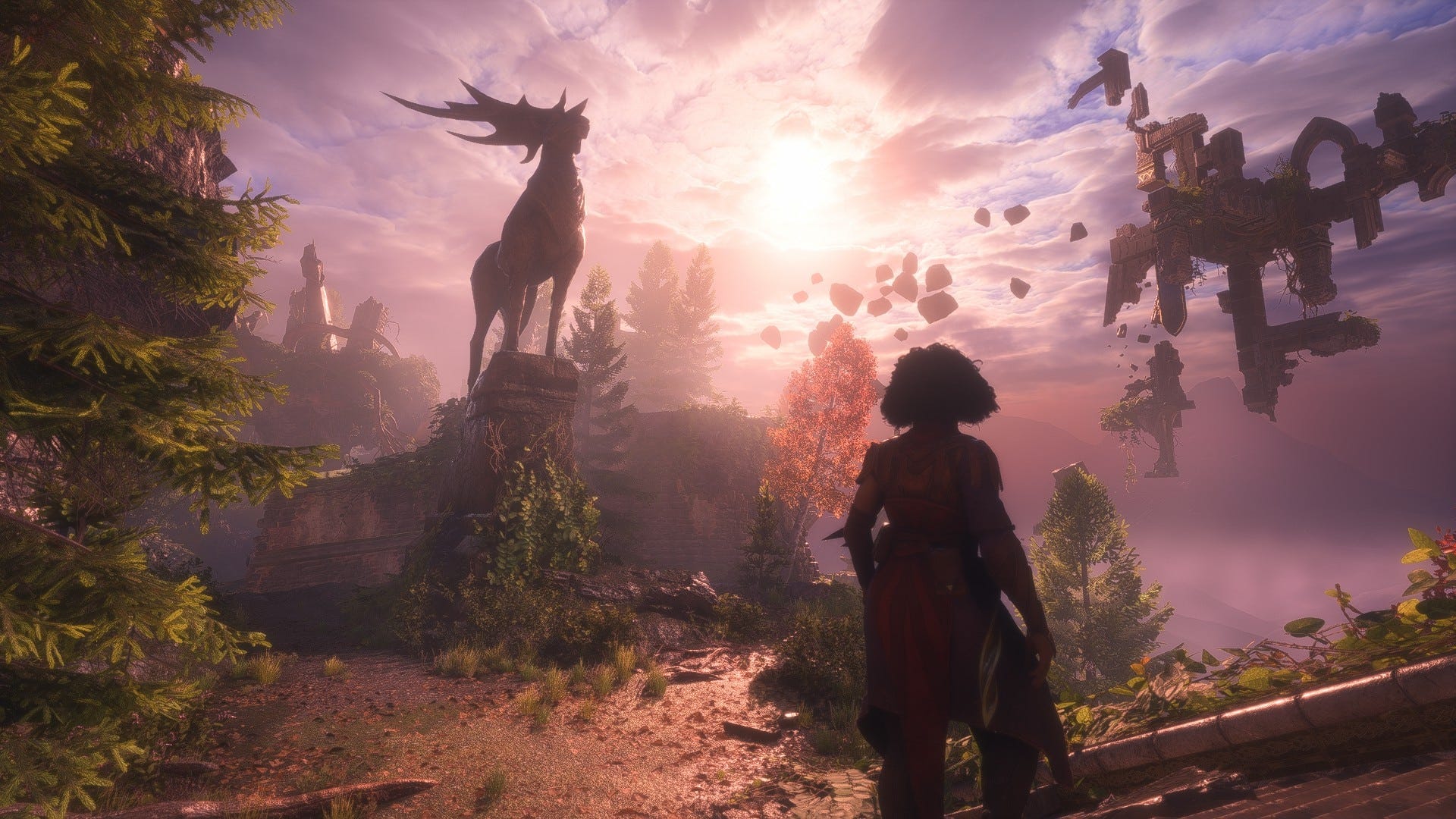
Wilson’s comments come in the wake of EA admitting in a press release ahead of its Q3 FY25 report and earnings call that “Dragon Age engaged approximately 1.5 million players during the quarter, down nearly 50% from the company’s expectations.”
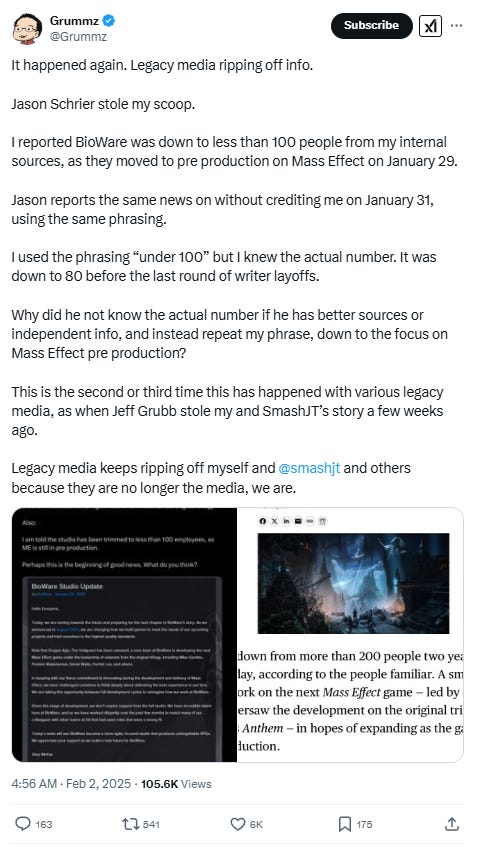
Following that report, EA gutted BioWare with recent rumors and reports claiming that only 80 employees are left in the company.
Former World of Warcraft Team Lead Mark Kern aka Grummz noted at the beginning of this month that the company was down to 80 employees “before the last round of writer layoffs.”
READ: Indie Dev Trashes 'Kingdom Come: Deliverance II' As "Gay And Anti-European Subversive Trash"
The most recent round of layoffs was announced by BioWare General Manager Gary McKay in a blog post. He wrote, “We have incredible talent here at BioWare, and so we have worked diligently over the past few months to match many of our colleagues with other teams at EA that had open roles that were a strong fit.”
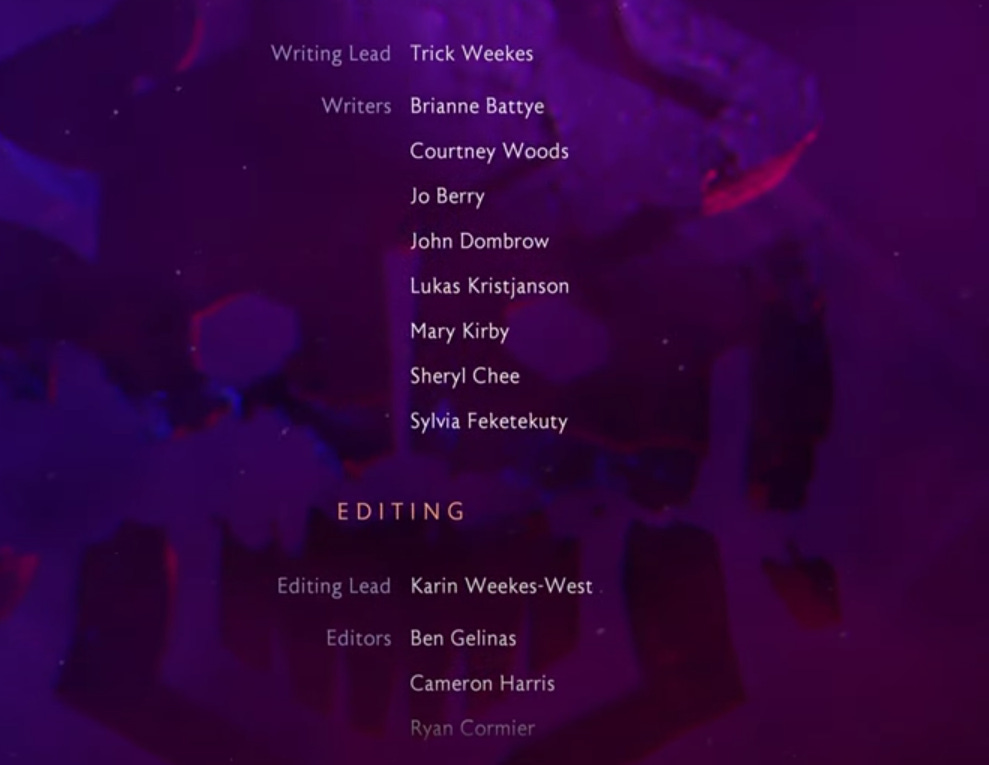
Among those laid off or relocated within other studios at EA was the entire writing and editing team for Dragon Age: The Veilguard.
In fact, none of the individuals who are credited in the game’s credits as writers or editors are still working at BioWare.
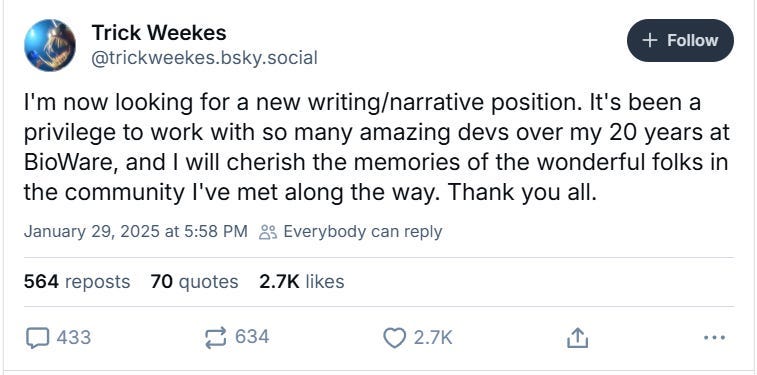
Writing Lead Patrick Weekes announced he was laid off on BlueSky, “I'm now looking for a new writing/narrative position. It's been a privilege to work with so many amazing devs over my 20 years at BioWare, and I will cherish the memories of the wonderful folks in the community I've met along the way. Thank you all.”
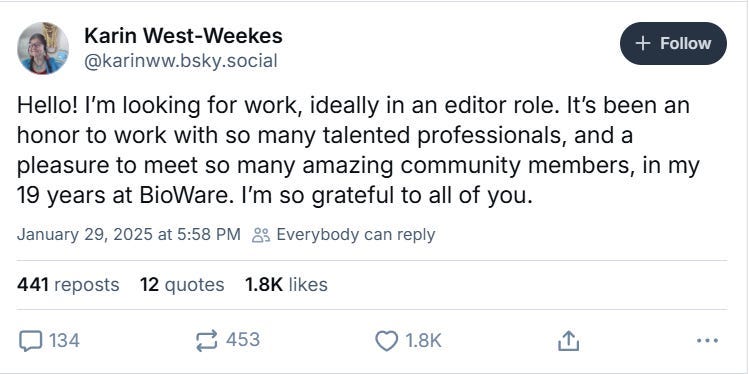
Editing Lead Karin Weekes-West also indicated she was no longer at BioWare, “Hello! I’m looking for work, ideally in an editor role. It’s been an honor to work with so many talented professionals, and a pleasure to meet so many amazing community members, in my 19 years at BioWare. I’m so grateful to all of you.”
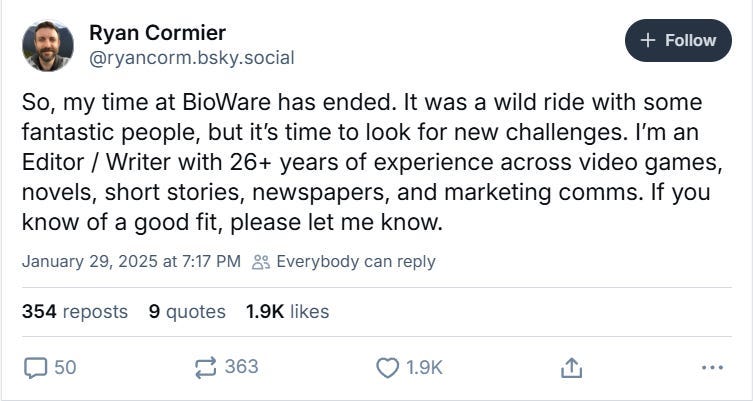
Editor Ryan Cormier also announced he was no longer with the company, “So, my time at BioWare has ended. It was a wild ride with some fantastic people, but it’s time to look for new challenges. I’m an Editor / Writer with 26+ years of experience across video games, novels, short stories, newspapers, and marketing comms. If you know of a good fit, please let me know.”
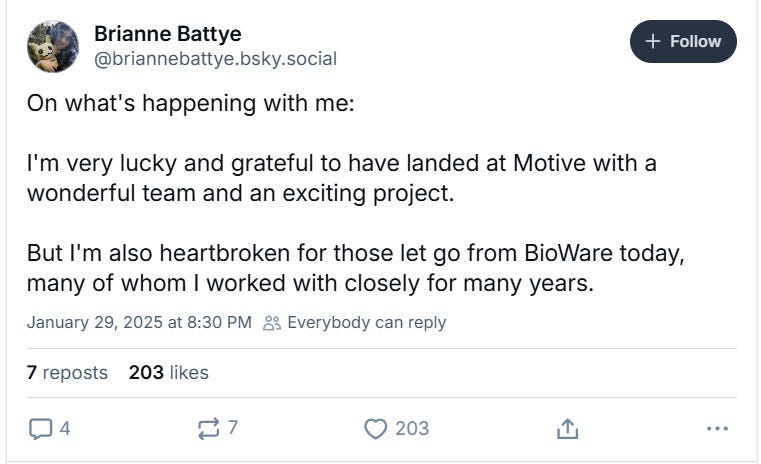
Writer Brianne Battye announced she moved to Motive. She wrote, “On what's happening with me: I'm very lucky and grateful to have landed at Motive with a wonderful team and an exciting project. But I'm also heartbroken for those let go from BioWare today, many of whom I worked with closely for many years.”
Motive is another subsidiary of EA.
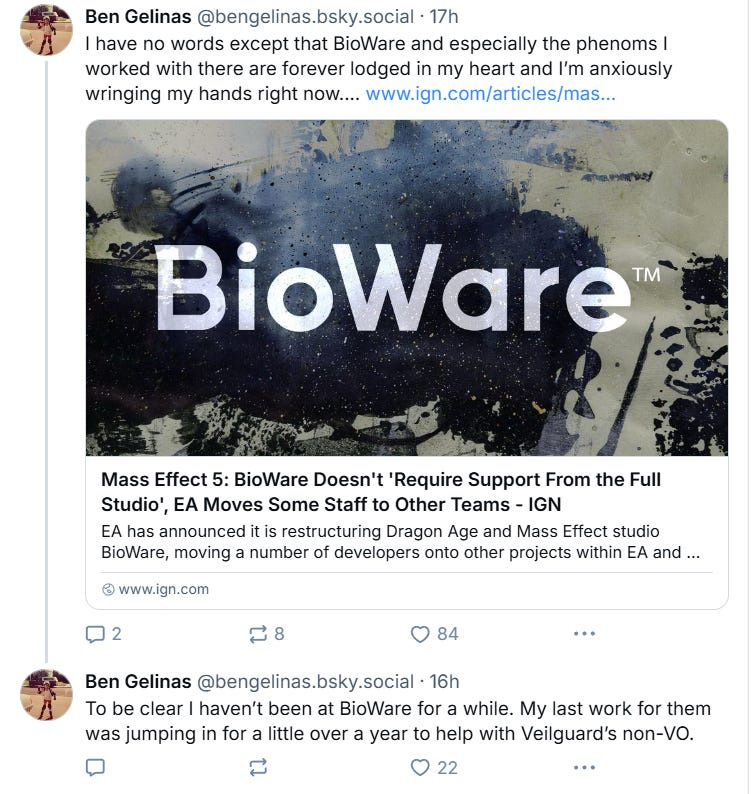
Editor Ben Gelinas also noted that he is no longer with the company but that he had left it awhile ago.
He wrote on BlueSky, “To be clear I haven’t been at BioWare for a while. My last work for them was jumping in for a little over a year to help with Veilguard’s non-VO.”
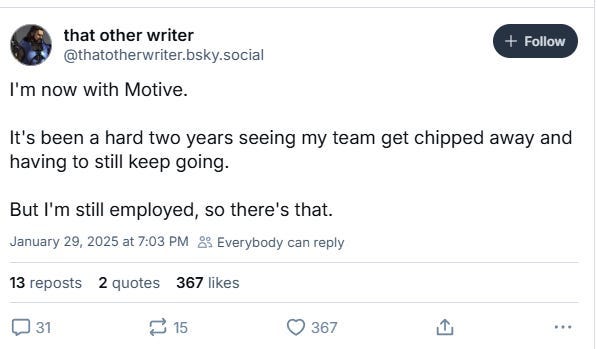
Sheryll Chee announced her departure as well. She wrote, “I'm now with Motive. It's been a hard two years seeing my team get chipped away and having to still keep going. But I'm still employed, so there's that.”
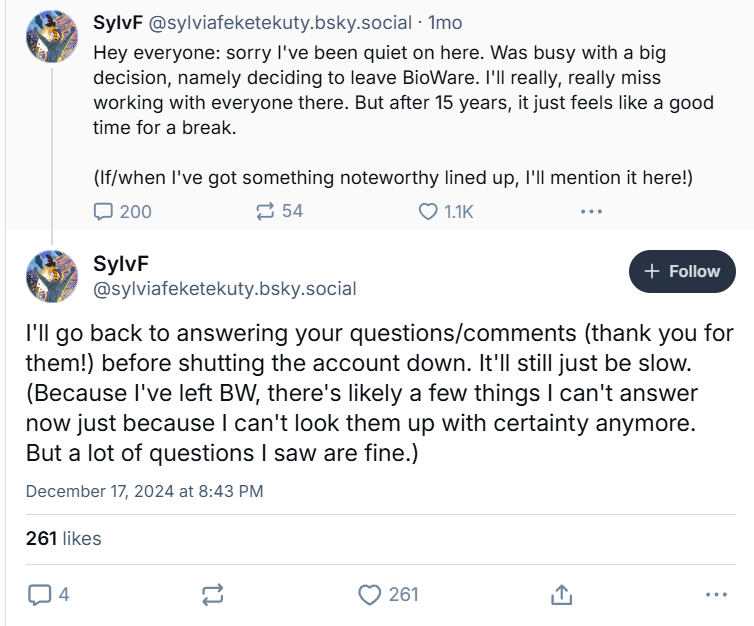
Writer Sylvia Feketekuty had previously announced she was leaving the company back in December. She wrote on BlueSky, “Hey everyone: sorry I've been quiet on here. Was busy with a big decision, namely deciding to leave BioWare. I'll really, really miss working with everyone there. But after 15 years, it just feels like a good time for a break.”
Writer John Dombrow left for Sucker Punch in 2023 and is a Senior Writer working Ghost of Yotei. Similarly, Courtney Woods joined Sucker Punch back in September 2022.
Mary Kirby’s LinkedIn profile claims she left BioWare in September 2023. Lukas Kristjanson also left the company in 2023. Cameron Harris announced she was not only leaving BioWare, but the video game industry at-large back in 2016.
Jo Berry left BioWare in 2017 and has been at Motive since then.
READ: ‘Dragon Age: The Veilguard' Director Hired To Work On New 'Dungeons & Dragons' Video Game
Given these lay offs and Wilson’s comments it’s hard not to assume that EA upper management saw Dragon Age: The Veilguard as a total failure when it comes to a high quality narrative.
He also hints that making the game single player might have hurt it as well given his comments about shared worlds, but given the success of a number of single player games over the past year especially Elden Ring, it’s unclear if there is evidence to back that up. Albeit Elden Ring is developing a multiplayer game in Elden Ring: Nightreign.
What do you make of Wilson’s explanation?
"Did Not Resonate With A Broad Enough Audience"
Can I go off on a limb here and say that they couldn't find enough LGBT+ players to make a go of it? Plus, nobody wants to be lectured about pronouns and virtue signaling.
This is stating the obvious. Wilson has to ask himself why it didn't resonate and after that shut down Bioware.