


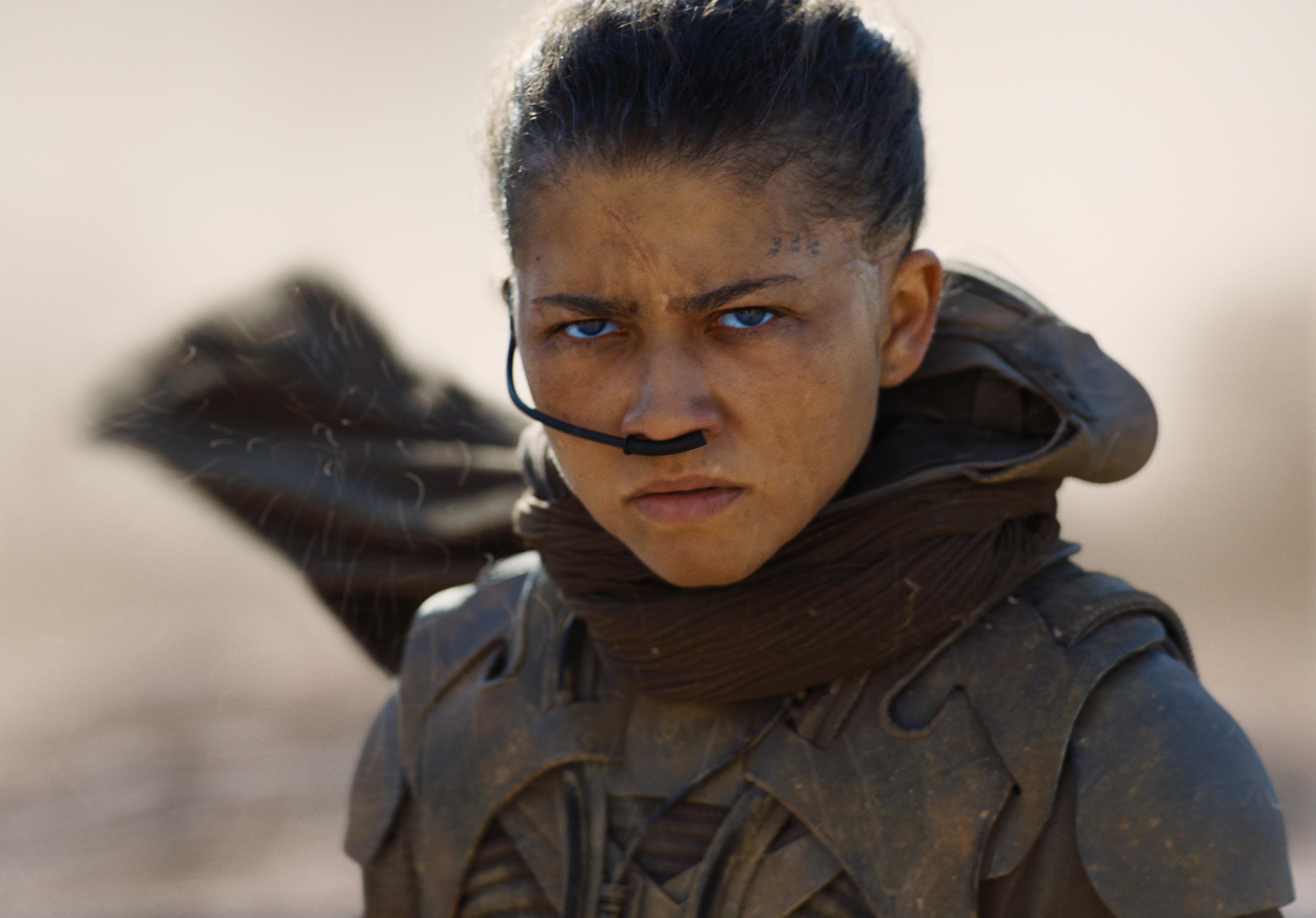
Dune: Part Three changes the central relationship in Frank Herbert’s Dune Messiah, and six weeks before release the cast is already defending the decision, showing there might be problems for the marketing of the film.
The film opens December 18 and adapts the 1969 sequel novel. Dune (2021) grossed $411 million worldwide, holds 83% on Rotten Tomatoes and won six of its ten Oscar nominations. Dune: Part Two grossed $715 million, holds 92% and won two of its five nominations. Both films drew large audiences, and many of those viewers have read the books.
Messiah opens about 12 years after the first novel. Paul Atreides is Emperor, and the jihad fought in his name has killed 61 billion people. His visions show him a worse outcome, so he lets the war continue.
A conspiracy forms against him. The Bene Gesserit recruit Princess Irulan, Paul’s political wife, who secretly gives his Fremen consort Chani contraceptives so Paul never gets an heir. Spacing Guild Navigator Edric uses his prescience to shield the plotters’ meetings from Paul’s visions. The Tleilaxu supply Scytale, a Face Dancer, along with a ghola of Duncan Idaho named Hayt and a weapon called the stone burner. Their agent Bijaz plants a kill command in Hayt.
Chani is the victim in the novel, not a plotter. She switches to a Fremen fertility diet to stop Irulan’s tampering and becomes pregnant, but years of contraceptives have weakened her. A stone burner blinds Paul. Chani dies in childbirth after bearing twins, Leto II and Ghanima. Paul had foreseen only the daughter. Her death breaks Hayt’s programming and restores Duncan Idaho’s memory. Scytale then threatens the infants and demands that Paul abdicate. Paul kills him, guided by a vision, and is left blind in every sense.
Paul walks into the desert alone, as blind Fremen do, and that wins the tribes’ loyalty for his children. Alia takes the regency and has Edric and the Reverend Mother Mohiam executed. Irulan renounces the Bene Gesserit and vows to teach the twins.
Herbert described the book as a reversal. In “Dune Genesis,” his 1980 essay in Omni, he wrote: “Dune Messiah performs a classic inversion of the theme.” The first novel asks the reader to admire a superhero, and the sequel shows what follows. In the same essay he wrote: “Heroes are painful, superheroes are a catastrophe.” He also wrote: “Don’t give over all of your critical faculties to people in power.”
Villeneuve says he is working from that intent. At a March 2024 talkback for Part Two he said: “People saw Dune as a celebration of Paul Atreides.” He said Herbert “wanted the book to be a warning regarding messianic figures.” That is why, he explained, he rebuilt Chani. In the novel she accepts Paul’s political marriage and, in his words, “kind of disappeared in Paul’s shadows.” He added: “The character becomes less interesting.” He saw “a strong opportunity there to create a character” who could “give us a new perspective on Paul.”
Part Two ended with Chani walking away from Paul in anger, and Part Three has to deal with the exit Villeneuve built. The final trailer, released October 27, shows her opposing him and apparently joining the conspiracy. In the book she never plots against Paul. The film also begins 17 years after Part Two, five years more than the novel’s gap, and casts the twins with older actors, Nakoa-Wolf Momoa and Ida Brooke. In the novel they are born as Chani dies. Robert Pattinson plays Scytale, Jason Momoa plays Hayt, Anya Taylor-Joy plays Alia and Florence Pugh returns as Irulan.
Villeneuve frames the film as personal. He told Empire: “It’s a movie that is talking about something that is very human, which is the idea of a separation, the idea of a divorce.” He added: “With me, it happened.” At the March trailer event he called it “one of my most personal films, if not my most personal film.” Chalamet said at the July trailer launch that the third film is “perhaps where, I would say, Denis took the most creative liberty.”
Then came the New York Times interview on November 4. Zendaya conceded the gap between film and novel: “There’s a lot in this film that is very true to the source material, and there are departures.” Pattinson answered readers who object: “You got to be kind of crazy if you’re going to be picking fault with this one.” He also said: “The script was really cool, but it was quite complicated.” He continued: “And watching the film, it’s not about what I thought it was going to be about at all.” Chalamet, asked whether he was satisfied with Villeneuve’s ending to the trilogy, said: “Absolutely. It didn’t feel like the bar dropped at all, Denis just changed the location of the bar.” He added: “This movie is its own thing.”
A studio that trusted the changes to land would let the film speak. Sending its stars to the Times to explain the departures, and to tell objecting readers they would have to be kind of crazy, looks like damage control aimed at the people who read the books.
Villeneuve says Herbert wrote Messiah as a warning about messianic figures. Does turning Chani from the book’s victim into Paul’s enemy keep that warning intact, or replace it?
First contact with the Oridians was supposed to be humanity’s proudest moment. Instead, their chief engineer is dead, their ship is sabotaged, and an ancient alien technology is stealing souls. Book one of the Valiant Frontiers series delivers exploration, mystery, and the kind of crew you’ll want to follow across the galaxy. Read The Soul Catcher on Amazon and start the adventure.
Why can’t they simply make they own story from scratch, instead of telling us “here is Dune, but it’s not a real Dune”?
I don't mind them taking creative liberties with the original story, as long as it results in a good film. Humans are allowed to rewrite & adapt stories. That's what keeps it interesting. I thought the first two films were OK-good, not great, but not bad either, so maybe them deviating from the novel(s) on the third one could be a good sign.