



Dragon*Con has revealed its anti-business bias by removing an AI artist from the convention after a coordinated harassment campaign by traditional artists who can't compete with superior technology. The convention's capitulation to the mob and not posting rules for the tables in advance shows negligence and a hurt for a creator who is only guilty of selling work.
The controversy began when vendor Oriana Gerez, operating under @ogartofficial on Instagram, was selling what was alleged to be AI-generated artwork at Dragon*Con booth A10. Instead of celebrating technological innovation and artistic evolution, jealous traditional artists launched a harassment campaign that ultimately forced convention organizers to remove Gerez from the show floor with police present.
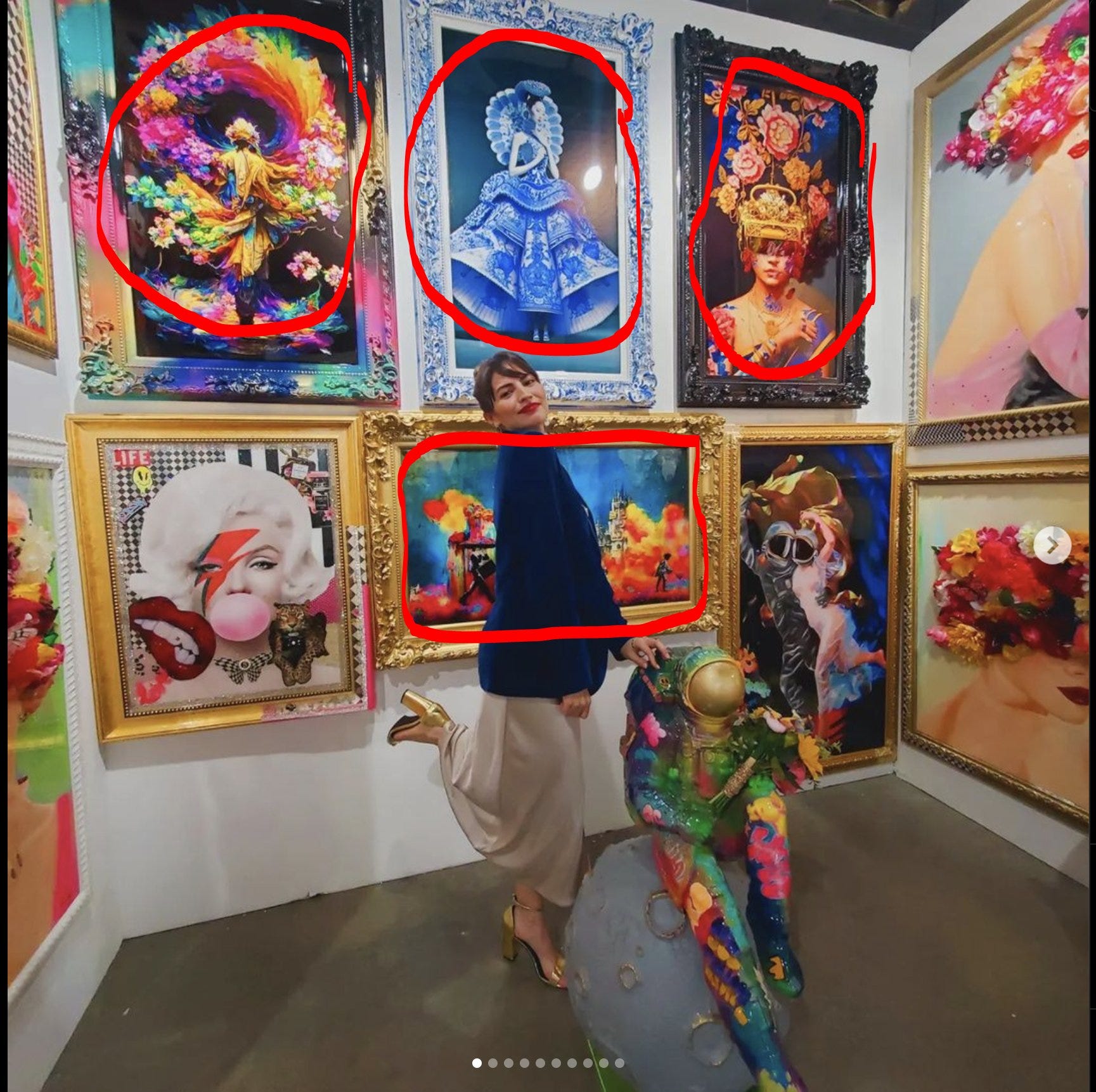
Dragon*Con's failure to establish clear guidelines about AI art sales created this mess entirely. The convention operates in a legal and technological vacuum, refusing to acknowledge that AI art is legitimate artistic expression protected by the same commercial rights as any other creative medium. Their lack of explicit policies enabled mob rule to determine vendor eligibility rather than consistent business standards.
The artist mob's reaction on social media revealed their true motivations: protecting their economic interests rather than defending artistic integrity. Lauren Walsh perfectly captured this jealousy-driven mentality, posting: "I love getting waitlisted for a con so that someone can sell AI images. It's like my favorite thing..." Her sarcasm barely conceals the bitter resentment of artists who can't adapt to technological progress.
Gerez defended her sales success on Instagram before the harassment forced her to make her Instagram account private. She posted: "I'd share a screenshot of my sales this weekend but don't have to show it give any explanations to you losers. You guys are sore because you don't sell sh*t and will be forever broke. Have fun being a broke bitch."
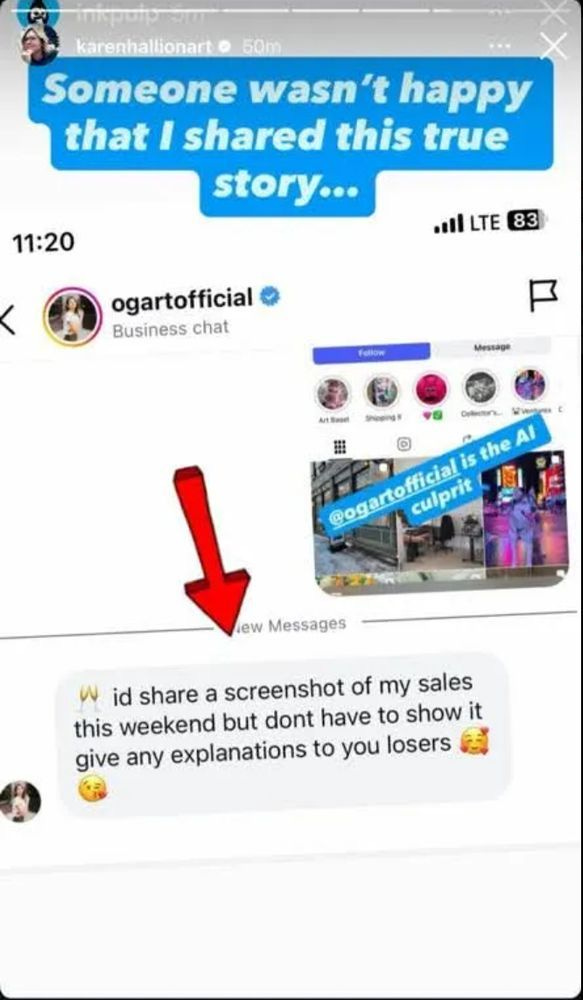
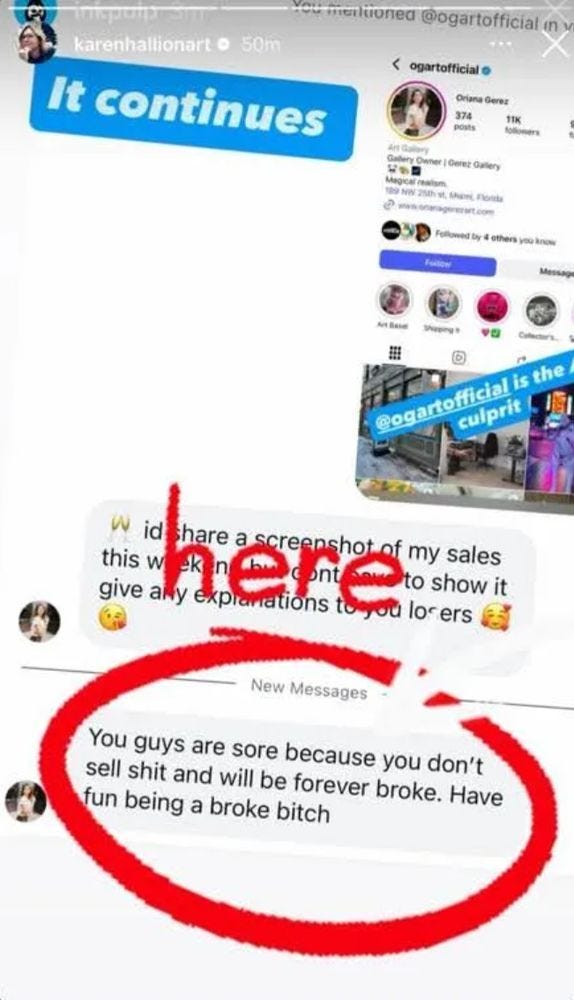
While Gerez's language was provocative, her core point stands: AI art was outselling traditional artwork because consumers preferred it. The market spoke clearly about quality and value, but instead of accepting this verdict, traditional artists demanded intervention to protect their inferior products from competition.
The harassment campaign that followed Dragon*Con's removal of Gerez proves that traditional artists are more interested in eliminating competition than improving their craft. Rather than learning from AI techniques or developing new skills, they're using mob tactics to maintain artificial scarcity in the art market.
Dragon*Con's decision to remove a successful vendor based on harassment rather than policy violations sets a dangerous precedent for convention commerce. If vocal minorities can force the removal of legal vendors through intimidation, no business is safe from ideological targeting over any hot topic issue. The convention has essentially announced that mob pressure trumps commercial rights and technological progress.
The anti-AI artist movement represents the same Luddite mentality that has opposed every technological advancement in human history. Photography was once dismissed as "not real art" by painters who feared obsolescence. Digital art faced similar resistance from traditional media artists. Now AI art faces the same reactionary opposition from people who refuse to adapt to progress.
Having to cal lthe police is even more ridiculous as the police should have been activated to protect the artist from the mob rather than to assist them in forcing her to leave.
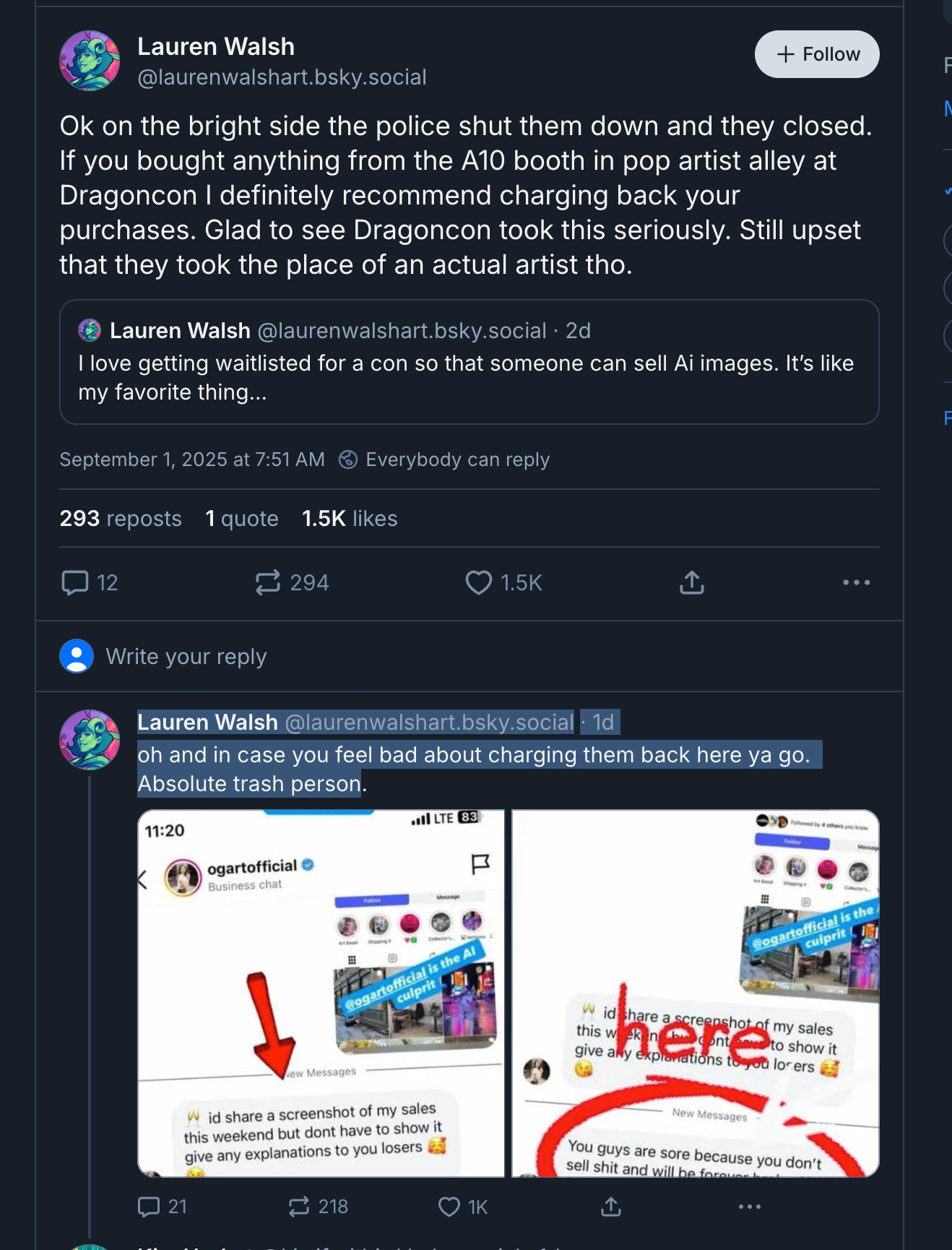
On BlueSky, artist Lauren Welch then cheered the removal of the AI artist, saying, “Ok on the bright side the police shut them down and they closed. If you bought anything from the A10 booth in pop artist alley at Dragoncon I definitely recommend charging back your purchases. Glad to see Dragoncon took this seriously. Still upset that they took the place of an actual artist tho.”
She went further as well doubling down by calling her an “absolute trash person.”
AI is democratizing artistic expression and pushing creative boundaries in ways that traditional methods cannot match. The technology allows for rapid iteration, style experimentation, and concept exploration that would take human artists months or years to achieve. Consumers recognize this value, which is why AI artwork was selling successfully at Dragon*Con.
What do you think about this AI art controversy? leave a comment and let us know.
Join my comics Substack for some great superhero reading to fight back against the mainstream industry:

NEXT: Police Called At Canadian Comic Expo Over Anti-AI Protest
Nasty cat-ladies gonna nasty. Sad.
Removed because she was cute! If she was another freakish leftish hag they would have let it slide.