


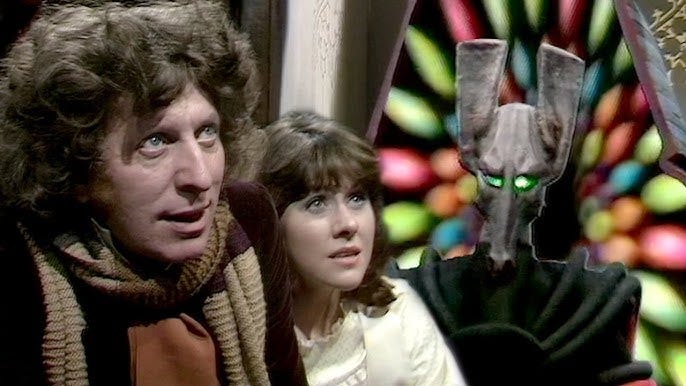
With Doctor Who’s future uncertain and ratings at an all time low in the latest seasons, one of the show’s most revered producers has offered his prescription for fixing the Time Lord’s troubles. Philip Hinchcliffe, who oversaw some of the series’ most beloved episodes in the 1970s, believes the answer lies in returning to longer storytelling formats.
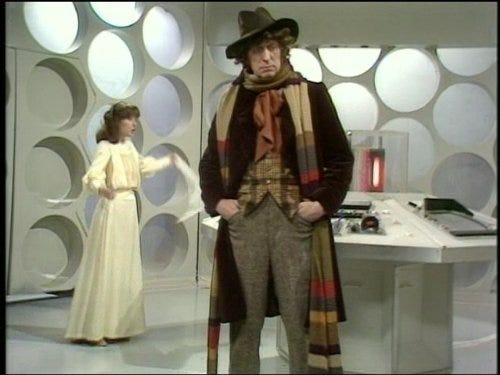
Philip Hinchcliffe served as Doctor Who producer from 1974 to 1977, presiding over what many fans consider the show’s creative peak. Working alongside script editor Robert Holmes and starring Tom Baker as the Fourth Doctor, Hinchcliffe delivered classic serials including “The Seeds of Doom,” “Pyramids of Mars,” “The Deadly Assassin,” and “The Talons of Weng-Chiang.”
His era became synonymous with sophisticated horror-influenced storytelling that appealed to both children and adults. The Hinchcliffe years established many of Doctor Who’s most enduring monsters and concepts while maintaining the perfect balance between science fiction adventure and character development.
Speaking at a BFI Southbank event, Hinchcliffe outlined his vision for revitalizing the struggling series. Though he insisted he’d “never be asked” to return as a creative consultant, he suggested Doctor Who should abandon its current 50-minute episode format in favor of the classic four-part structure.
“That’s a very good time for a movie or a television story to be told, in 100 minutes,” Hinchcliffe explained. “That gives you room to introduce characters, to unravel an inciting event of the story – the mystery, and what’s going wrong – and you’ve got the time to get to know the characters, to invest emotionally with the characters, not just the heroes, and there can be plot reversals, and suspense... it doesn’t have to be action all the time.”
He continued: “To try and tell an interesting story in 50 minutes is very difficult. I would want it to be of that length [100 minutes], because if you’re watching something, you want to invest in the [supporting] characters, not just the Doctor – it gives you room to tell the story, so that would be my main point that I think would benefit it.”
While Hinchcliffe’s format suggestion has merit, Doctor Who’s current problems run deeper than episode length. Under Russell T. Davies’ return as showrunner, the series has become increasingly focused on identity politics at the expense of compelling science fiction storytelling.
Recent seasons have prioritized messaging over plot coherence, with episodes like “The Church On Ruby Road” feeling more like fantasy adventures than the hard science fiction that once defined the show, which was intentionally done by Davies, who said that‘s where he was moving the series. The series has abandoned its educational roots and scientific curiosity in favor of contemporary social commentary that often feels forced and preachy.
The show’s ratings reflect this decline in quality. Despite the excitement surrounding Ncuti Gatwa’s casting as the Fifteenth Doctor, viewership has continued to drop as longtime fans abandon a series that no longer serves their interests.
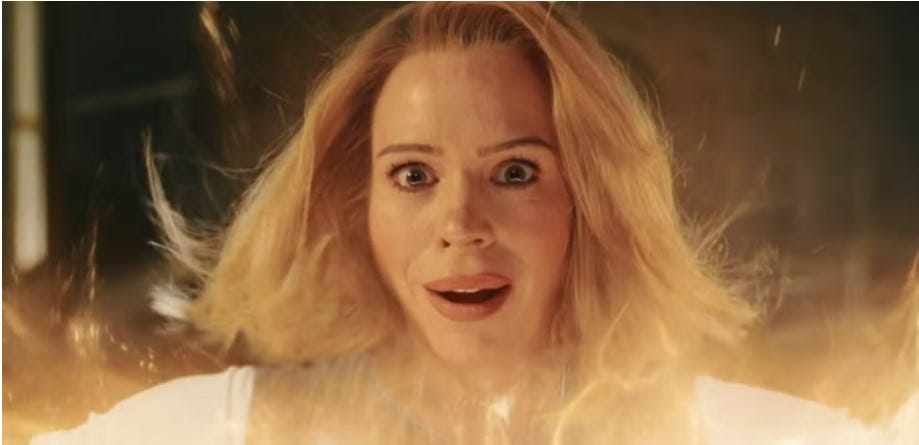
Davies’ second tenure has brought back many of the problems that plagued his original run - overemotional storytelling, deus ex machina endings, and a tendency to prioritize spectacle over substance. The recent series controversial ending, featuring the Doctor’s regeneration into Billie Piper, exemplifies the show’s current confusion about its own mythology and direction.
The series has also embraced a fantasy tone that contradicts Doctor Who’s scientific foundation. Magic and mysticism have replaced technological solutions and rational explanations, fundamentally altering what made the show special.
Hinchcliffe’s format suggestion addresses only one symptom of Doctor Who’s decline. The series needs a complete creative overhaul that returns to its core values: intelligent science fiction storytelling, compelling characters, and adventures that inspire wonder rather than deliver lectures.
The show requires writers who understand science fiction and respect the program’s legacy, not activists using the TARDIS as a platform for contemporary politics. Doctor Who succeeded for decades by telling universal stories about curiosity, exploration, and the triumph of intelligence over brute force.
Until the BBC addresses these fundamental creative problems, no amount of format tinkering will restore Doctor Who to its former glory. The series needs producers who prioritize storytelling over messaging and remember that entertainment comes first.
What do you think would save Doctor Who? Should the show return to longer episodes, or does it need more changes to its creative direction?
For a great alternative to mainstream science fiction, with spy thriller action, read The Stars Entwined on Amazon!

NEXT: Doctor Who Insider Reveals The Real Reason Why Ncuti Gatwa Suddenly Quit The Show
The left fell off a cliff long ago. If anyone wants to save Doctor Who, one essentially has to remove all leftist control and hand it all over to conservatives.
Maybe that sounds too bold to "moderates," but it's the truth.
I used to be a big fan, to the point that I taught myself how to knit, so that I could make my own Tom Baker scarf. I stopped watching years ago, sometime during Moffat's writing. Not because of the format, but because of too much "identity politics" and bad plotting. Sounds like it got a lot worse since then. Not going back. I don't even wear the scarf anymore.