


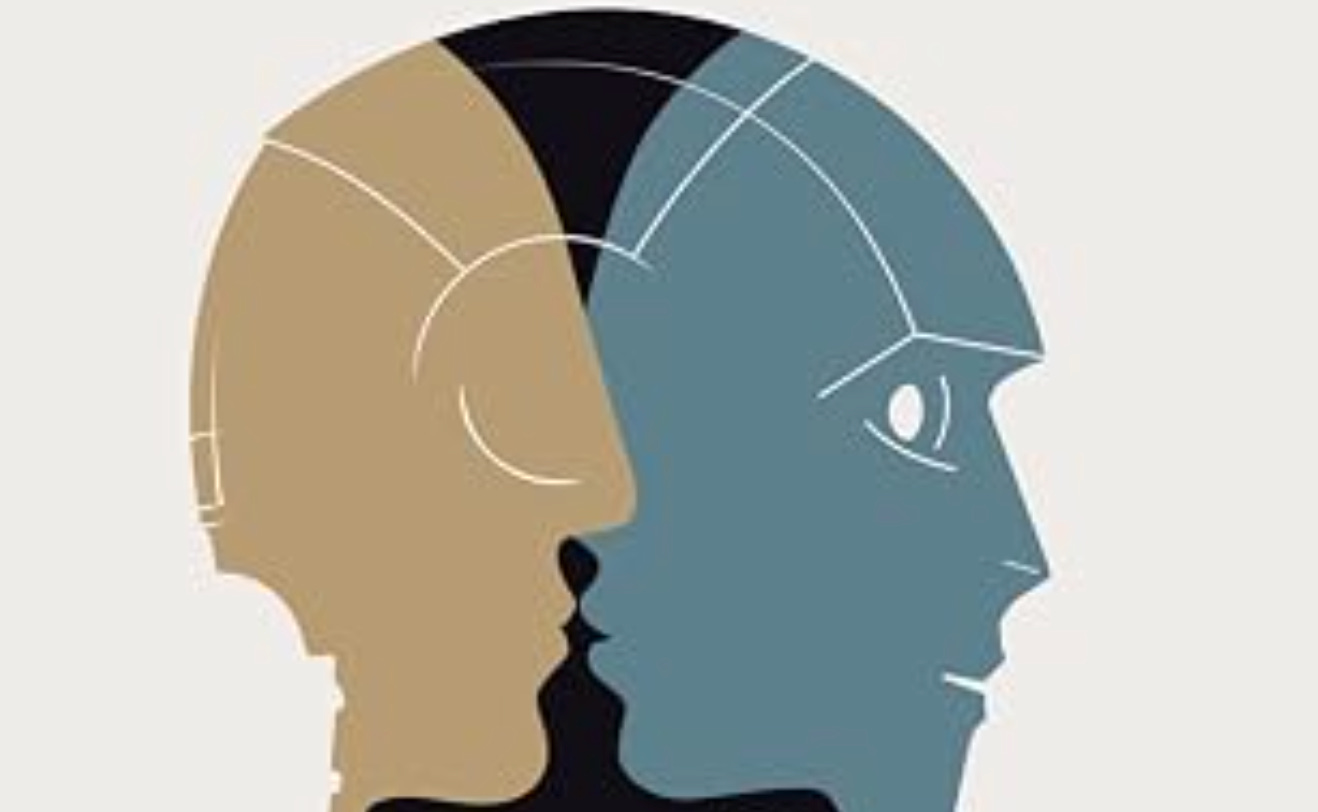
Debut novelist Paul von Tisenhusen-Khera has released United States of Mind, a speculative fiction novel that follows a married couple from corporate intrigue in the 2030s into deeply personal stakes by 2046. The book opens with a marriage most people would envy. It ends by asking whether that marriage can survive the death of a body.
Ivy is a material scientist. Alan is the inventor who loves her. Ten years into a marriage the book’s blurb describes as “a private world of shared wonder, intimate rituals, and the kind of love most people only dream of,” a fatal accident leaves Ivy comatose with no future left to bargain for. Alan makes an impossible choice: he uploads her consciousness into an android body, gambling everything on an untested procedure and a desperate act of love.
Von Tisenhusen-Khera describes the emotional center of the book this way:

“At its core, the story centers on Ivy and Alan, a couple in a steady, long-term relationship. When a devastating accident shatters their world, Alan is left alone to decide what of Ivy should be preserved. Rather than recreating her based on what matters to him, Alan rebuilds Ivy through what mattered to her—her journals, work records, and family photographs. He realizes their relationship was always built on mutual interaction; Ivy must resurrect her own sense of self if their union is to endure. Ultimately, the emotional heart asks: Will love survive? Can we encode enough human experience and desire into a digital processor—or at least create the illusion of sentience—to help someone navigate the depths of grief?”
That question runs through the rest of the novel as Ivy’s mind expands inside her new synthetic form. Her senses sharpen. Her intellect grows past anything a human brain could hold. And she has to convince Alan, the man who saved her, to step into the world she is becoming.
Von Tisenhusen-Khera was careful about where he placed the technology in the story. He didn’t want the AI to be the villain.
“I wanted to write a book where technology isn’t the enemy; it’s a reflection of our values,” he said. “We have been making machines for thousands of years to defend ourselves and to feed ourselves. Ivy builds the ultimate machine to protect them, but will they choose to use it?”
He added that he wanted the novel to chart a different course than most of the genre. “Plenty of authors have written about their fears of these directions, but I wanted to explore what happens in a story where we are intelligent enough to make them work—one where the human race survives and thrives. What conditions are required to make that happen?”
The author also addressed the parallels readers may notice between Ivy and Alan and the story of Adam and Eve, humanity’s first married couple, cast out of a garden and sent into an unknown world.
“It wasn’t intentional, but partway through writing the book, I noticed the parallels myself. I chose not to edit them out; it’s amusing to me that they’re there, perhaps arising subconsciously,” he said.
He went further on the connection in a later answer. “Just as Adam and Eve were cast out of Eden into a vast, challenging world, Alan and Ivy are ultimately exiled from Earth—their original Eden—when humanity rejects them. Instead of despairing, they turn outward. I wanted to signal to the reader that despite all the advanced tech, synthetic drives, and deep physics, this is fundamentally a story about two people stepping into an infinite wilderness together to start anew.”
He cites Alastair Reynolds’ House of Suns and Becky Chambers’ The Long Way to a Small, Angry Planet as touchstones, and the novel’s chapter headings reference several other books along the way.
Von Tisenhusen-Khera holds a degree in Applied Physics and spent fourteen years living in the Himalaya, background that runs through both the hard science and the philosophical questions in the novel. Writing fiction is a new chapter for him. For four decades he has worked as a designer, including a long-running collaboration with the band Suede designing album artwork and merchandise and photographing their live shows. He also composes spiritual, reflective jazz with the Himalayan Jazz Quartet.
United States of Mind is available now. Readers can find von Tisenhusen-Khera at paulkhera.com and on social media as @kherapaul.
If a machine can hold every memory you ever had and still choose to love you every day anyway, what’s left to call a soul?