


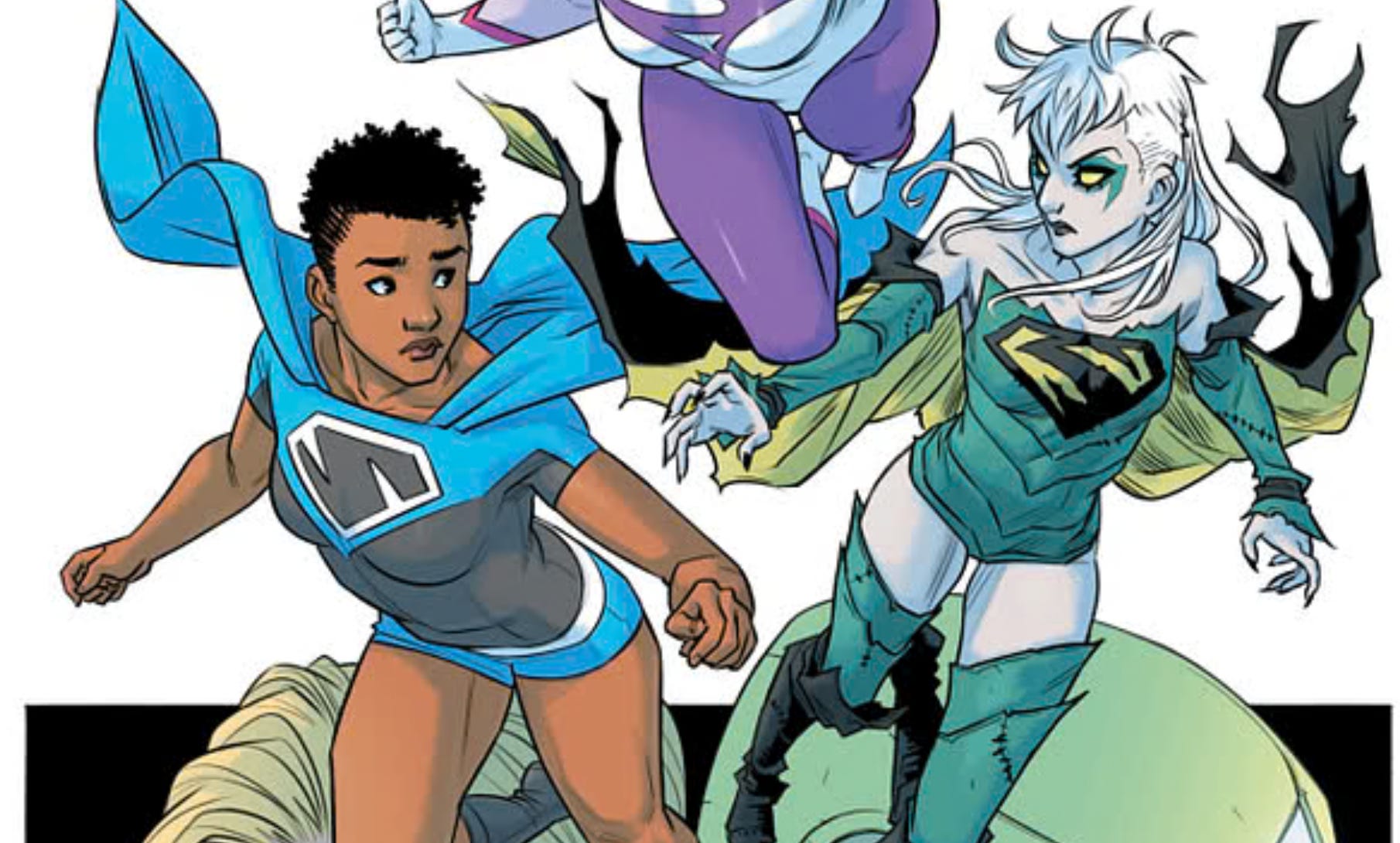
Supergirl #19, released Wednesday, gives the Supergirl name to a black clone called Thundergirl while Kara Zor-El spends the issue without superpowers.
The issue is the nineteenth of the ongoing Supergirl series DC launched in May 2025 as part of its Summer of Superman push. Sophie Campbell writes, pencils and inks it, Tamra Bonvillain colors it and Becca Carey letters it. It carries a $3.99 cover price. Kara has held the Supergirl name since the character debuted in 1959. Her team in the book is called Super Force, and its newest member is Thundergirl.
Thundergirl is a Kandor clone labeled “Subject 003,” built from the DNA of Boy Thunder (David Sikela) and stabilized with genetic information from Kim-Da. She came out of a program called Team Thunder, has powers that include flight and a sonic voice, and broke free of Kim-Da’s control earlier in the run.
DC’s solicitation sets up the premise in four sentences. The first reads: “Kara Zor-El’s exposure to gold Kryptonite has left her without superpowers but not without super friends.” Gold Kryptonite is the variety that strips Kryptonians of their abilities, so the book’s title character is written out of the costume by a plot device. The blurb also tells readers the book is about her supporting cast, which is where it is heading.
The second sentence: “The recently reborn Matrix and gloriously goth Nightflame get into a fight to prove themselves worthy of the Supergirl mantle, but another of Kara’s Super Force might surprise everyone.” Two characters compete for a name that belongs to someone else, in an issue where its owner sits out. Matrix already held the Supergirl title in earlier stories, so DC is returning to a well it has used before. The “might surprise everyone” clause is the setup for Thundergirl.
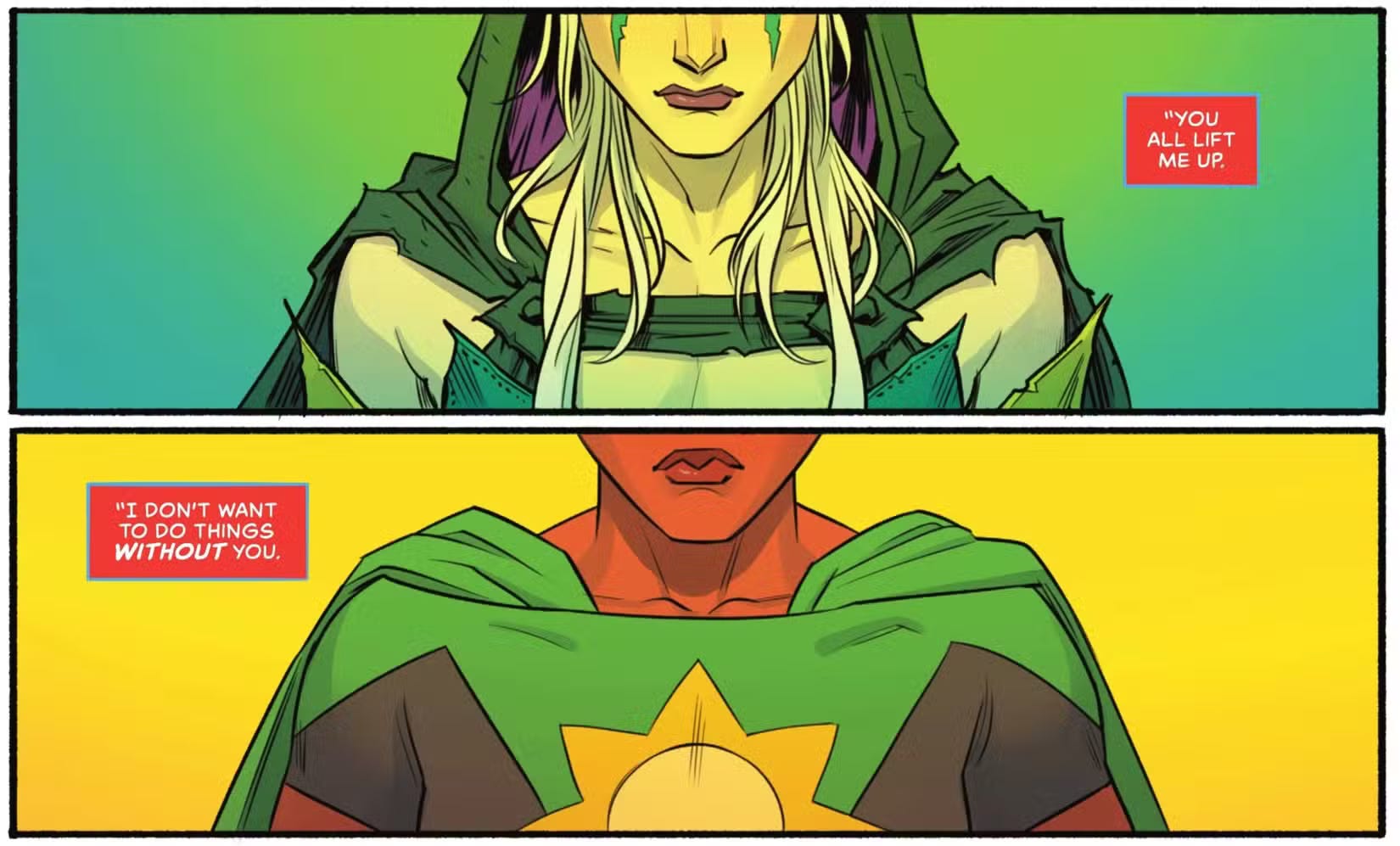
The issue’s dialogue carries the argument DC is making to readers. Kara tells Thundergirl in an attempt to get the character and the reader to accept the Supergirl mantle: “It doesn’t have to be who you are forever.” That line frames the name as a role she can step into and out of, which is the opposite of how a legacy name has worked for Kara since 1959.
She continues: “It can be a step toward whoever you’ll end up being.” Here Kara pitches the mantle as a stage in Thundergirl’s development, so the title character’s identity becomes a stepping stone for a supporting character.
Kara goes on: “The persona is a way for you to connect with people, animals, the world.” That sentence treats Supergirl as a persona, something worn, and not as Kara herself. It is the clearest statement of the premise: the name and the person are separable.
She then says: “Go out there and be super.” The instruction is plain and the permission is complete. Kara hands over the role without conditions in the panel.
Her next line is the thesis of the issue: “Like I said, Supergirl is bigger than one person.” The phrase “Like I said” shows this is a point the book has been building toward. It also redefines the character: Supergirl becomes a title that can pass between people, which is the standard framing publishers use when a legacy character is replaced.
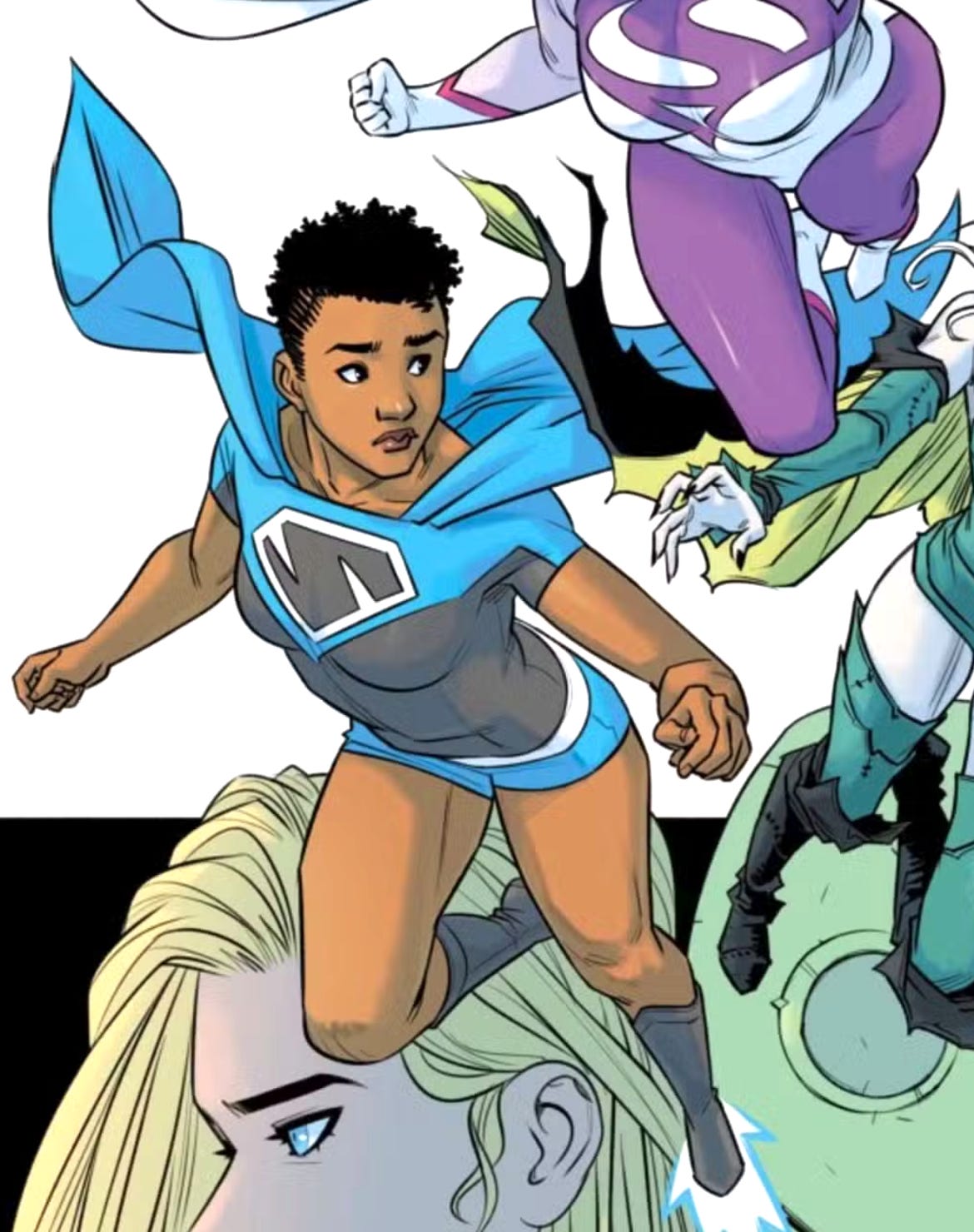
Thundergirl’s thoughts answer Kara. She narrates: “I think Kara might be right. This place and its creatures... are fascinating and beautiful. Their faces, their eyes, they’re so different from the Science Council’s. Maybe I can do this.” Her origin as a lab-built clone supplies the contrast, and the issue uses it to make the reader sympathize with her taking the name. She closes: “Maybe I can even, one day, find a name. A real name. And in the meantime, maybe I actually can be... Supergirl.” The last word lands on the title of the book, with the character who owns it offstage.
The creator behind the swap has said on the record that his work carries a political charge, though he rejects the label. In 2015, after announcing he was transitioning, Campbell told The Mary Sue: “it’s not an agenda per se.” He added: “there’s nothing wrong with having an agenda.” Those two sentences sit side by side in the same answer, and the second one undercuts the first.
In an interview with Feminist Frequency, he described how his characters read to others: “how it’s this default political statement, even though it’s what I’ve always been doing.” He went on: “I realized what I was doing, and I doubled down on it.” His own account is that he saw the reaction and leaned into it.
On the industry he said: “I feel like the only time I hear about trans characters is the negative stuff.” He also said: “If there’s some poor trans kid who feels alone, there could be stuff out there but they can’t access it.” Both quotes give his motive as supplying characters he believes are missing for readers like that.
He has said where he thinks those characters belong. In the same interview: “But I don’t think I will ever try to get a trans character into a licensed thing again.” Supergirl is a licensed DC property. When the series was announced, Bonvillain answered a critic on Bluesky with “Trans led, as Sophie and I are trans. It’s not the name of the book, and Supergirl isn’t trans.” That reply, together with Campbell’s line, means neither is claiming Kara is trans.
Campbell’s 2018 comments to Comicosity are blunter. He hoped for “more opportunities for women of color, more trans creators, and more comics with trans characters.” He also said he wanted “more men in comics being busted for harassment and fired.” He has been just as direct about what he plans to make next. He told The Mary Sue he wants “something new that has a trans main character and maybe a mostly trans cast.”
His DC interviews about Supergirl contain none of this. He describes the run as “weird and silly, but also have real emotions,” and says of Kara: “She’s related to Superman, she’s from Krypton, but she’s warmer, I think.”
Fandom Pulse reviewed the first arc months ago, and found it to be a decent Supergirl story, but it seems like identity politics can’t help but creep into these things.

This is not the first time the Supergirl book has been used for this kind of storytelling. Supergirl #19, on sale March 14, 2018, introduced Lee Serano, a non-binary friend of Kara’s. Steve Orlando and Vita Ayala wrote the issue, with art by Jamal Campbell and a cover by Jorge Jimenez. Bleeding Cool reported that the issue would be “co-written by a non-binary identifying creator,” naming Ayala. DC’s solicitation said Lee “struggles with their parents and bullies at school for acceptance as non-binary.”
In the issue, Kara answers a bully on Lee’s behalf with the line “Those people don’t know you, Lee. But I do.” The story ends with Lee telling their parents and being accepted. It is the same issue number as the one that came out this week, nearly nine years apart.
The late-1990s Supergirl series starring Linda Danvers featured Andy Jones, a lesbian comedian who could turn into a male hero called Comet. Andy used she/her and Comet used he/him. Retrospectives describe the character as one of DC’s first lesbian heroes, and some call the character genderfluid or non-binary. Supergirl: Being Super (2018) later gave Kara a lesbian best friend, Dolly Granger.
It seems they love shoving these types of concepts into this title because so few people pay attention to it.
The timing of this week’s issue is what makes it a story. DC Studios’ Supergirl film, starring Milly Alcock, opened June 26 and finished with about $125.8 million worldwide on a $170 million budget, with at least $100 million more spent on marketing. That makes it the lowest-grossing DC film since Catwoman in 2004, which made $82 million, and it landed below Blue Beetle and Shazam! Fury of the Gods. James Gunn and Peter Safran were removed from DC Studios on Nov. 9, and Latcham takes over Dec. 1.
The comic that carries the character’s name sold well enough to place Supergirl #16 at No. 45 in ICv2’s August comic-shop chart, which ranks units from a ComicHub sample and not dollars. DC chose this week, with the movie underperforming and the studio heads gone, to put another character in the costume.
The question for readers is what DC is building toward. If Kara returns with her powers in a few issues, #19 is a temporary swap. If the book keeps Thundergirl in the lead, the series becomes the story of a successor in a title that already has a lead. What do you want from the book: Kara back in the cape, or a new Supergirl?
Support indie comics! Ayla Rin: Gateway to Doom Crowdfund, as a return to classic and great science fiction with a cover by legendary Green Lantern artist, Ethan Van Sciver:

This is Tumblr level dogshit. Dead Comics is what DC is.