


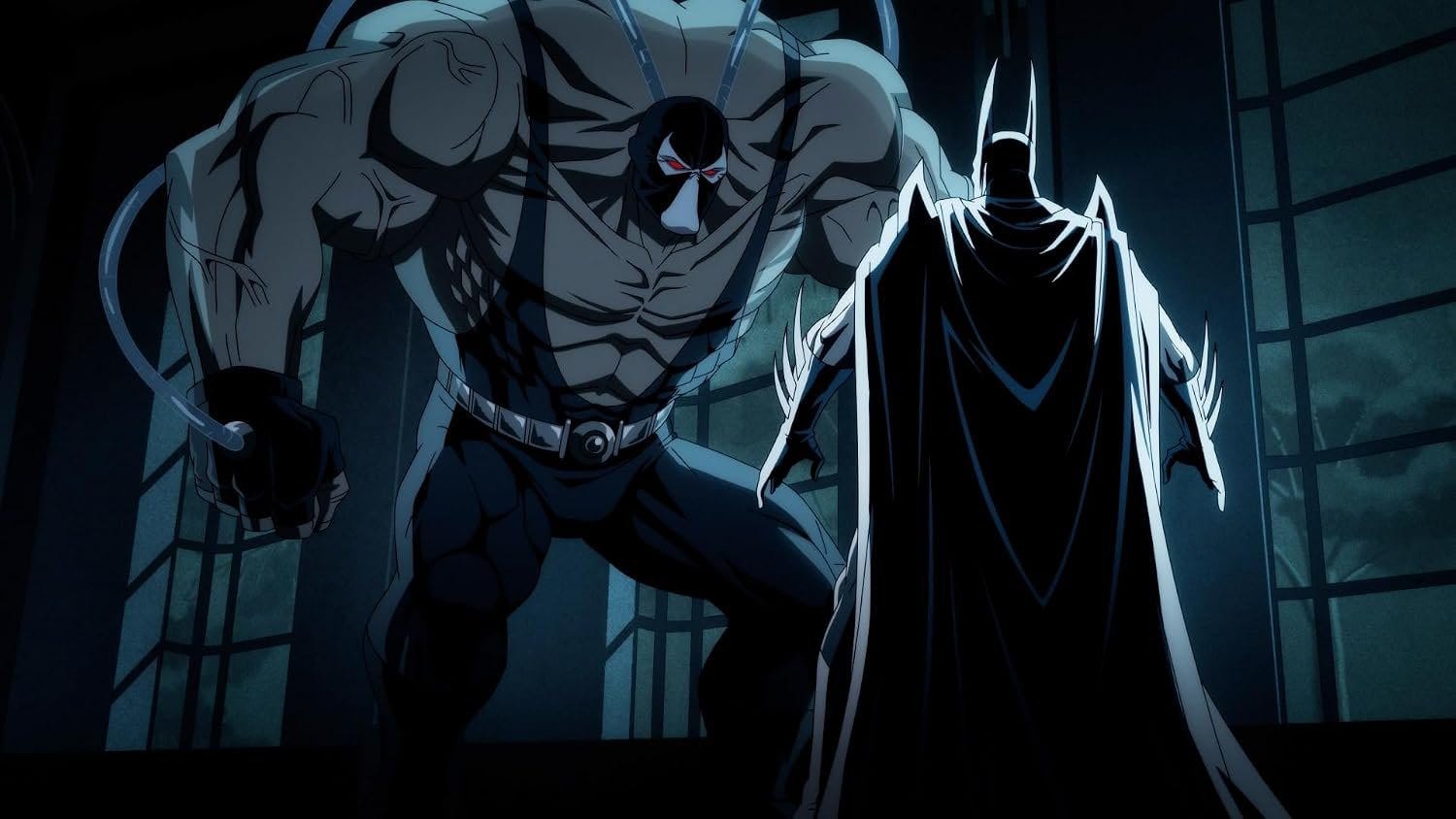
Warner Bros. Animation, DC, and Warner Bros. Home Entertainment announced Batman: Knightfall, a multi-part animated event bringing to life one of the most iconic and beloved runs in the rich history of Batman comics. Part One premiered at Annecy in June 2026 to thunderous applause. The animated Batman: Knightfall film series is officially R-rated. Anson Mount voices Batman, Michael Mando plays Bane, and Pablo Schreiber voices Jean-Paul Valley. Jeff Wamester directs the first film from a screenplay by Jeremy Adams. The second and third films, covering Knightquest and KnightsEnd, follow after.
Chuck Dixon posted a meme this week acknowledging both the Knightfall announcement and Tartakovsky’s Conan animated series, noting he gets paid either way. That is about as cheerful as a comic book creator gets in 2026.
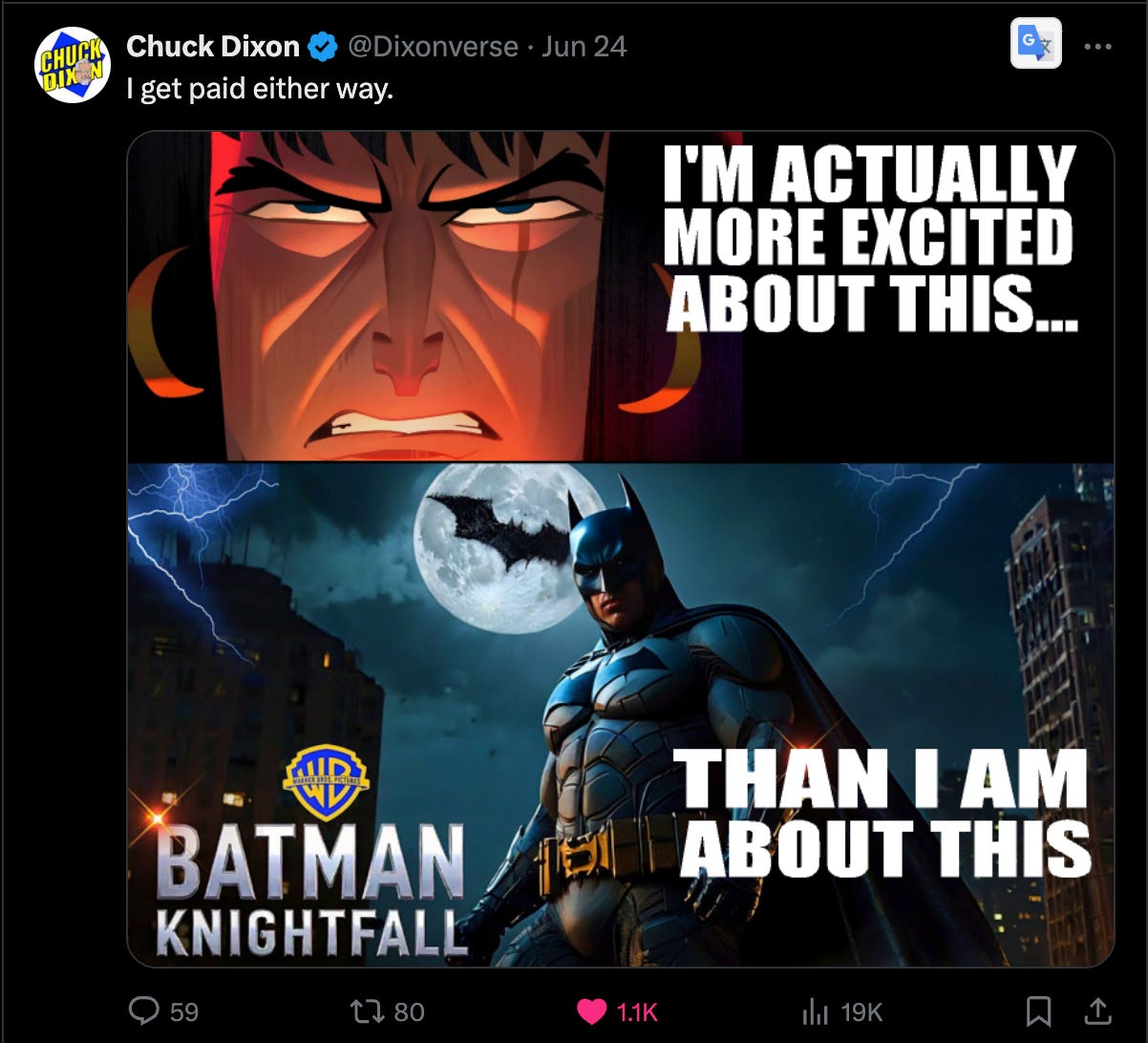
He has earned the cheerfulness. Dixon is one of the most prolific and underappreciated writers in DC Comics history, and Knightfall is the work that should have cemented his legacy decades ago. The industry’s treatment of him since has been a different story — but the adaptation is happening, and the source material is worth understanding fully before Part 1 arrives later this year.
Knightfall is a 1993-1994 Batman story arc published by DC Comics. It consists of a trilogy of storylines that ran across Knightfall, Knightquest, and KnightsEnd. The story takes place over approximately six months. Bruce Wayne suffers burnout and is systematically assaulted and crippled by a super steroid-enhanced genius named Bane. Bruce is replaced as Batman by an apprentice named Jean-Paul Valley, who becomes increasingly violent and unstable, tarnishing Batman’s reputation. Eventually, Bruce is healed through paranormal means and reclaims his role as Batman.
The architecture of the story is what makes it work as more than a stunt. Bane does not simply fight Batman. He studies him. He studies Gotham. He frees every prisoner in Arkham Asylum and forces Batman to hunt them all down one by one, across weeks, with no rest. By the time the two actually meet, Bruce Wayne is not the Batman who fought the Joker or Ra’s al Ghul. He is a man running on reflex and willpower who cannot win. Bane, introduced in Batman: Vengeance of Bane #1 by Chuck Dixon and Graham Nolan, was an orphan born and raised in a Central American island prison, self-taught and ruthless, who underwent an involuntary experimental operation to become a new type of supersoldier before breaking free and deciding to take Gotham City from its king, Batman
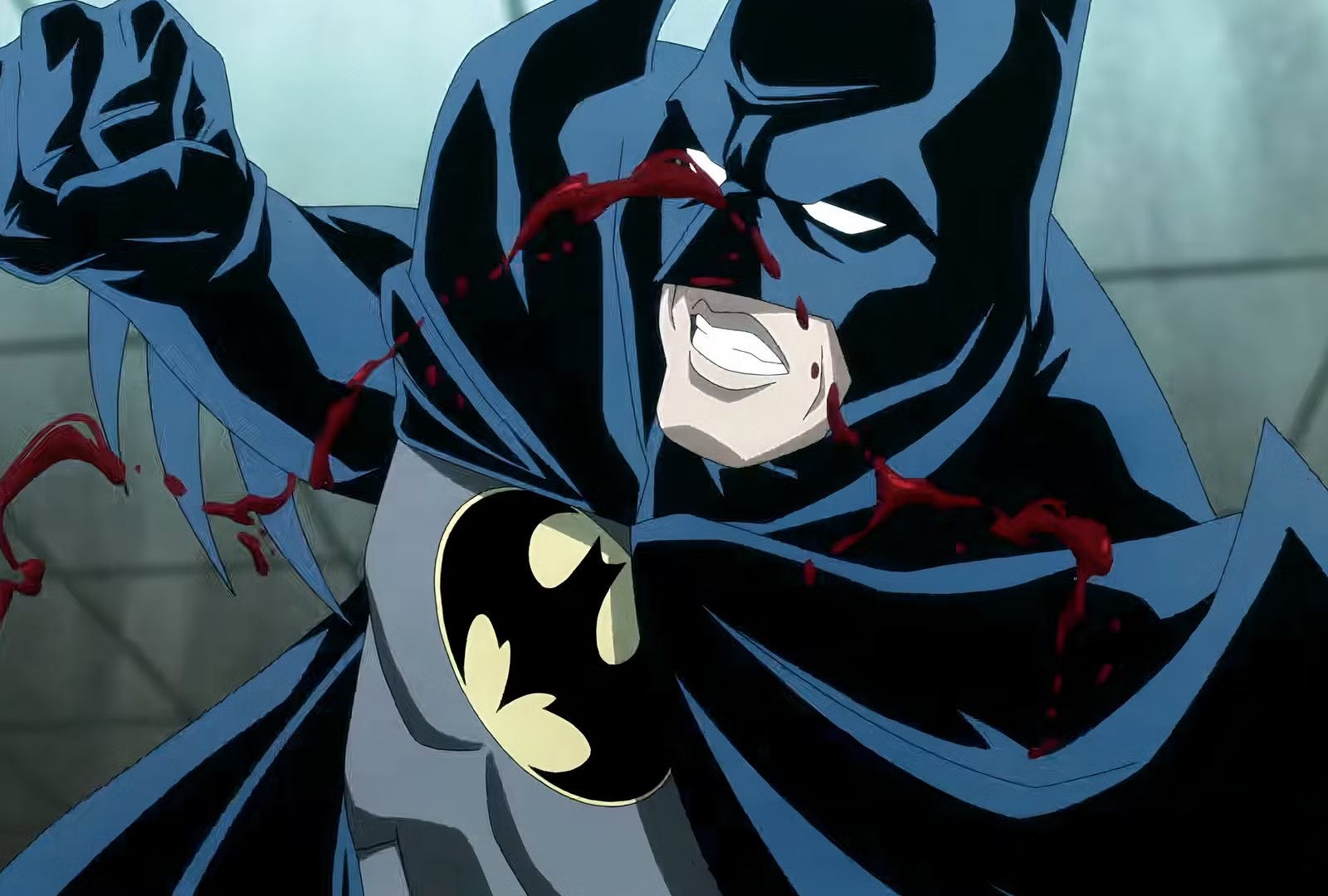
The back-breaking scene is the moment every reader who experienced it remembers. Batman comes home to Wayne Manor, depleted, and Bane is waiting. The fight is not a contest. It ends with Bane lifting Bruce over his head and driving his spine across his knee. It was the most shocking moment DC had published since the death of Jason Todd, and unlike Jason Todd’s death, it was the opening move of a three-act story rather than a conclusion.
The second act, Knightquest, is the most interesting part structurally. Jean-Paul Valley, a former assassin-monk who had been training alongside Batman, takes up the cowl. He is not a bad man. He is a damaged one, and the programming his religious order installed in him since childhood surfaces when he puts on the costume. His Batman is brutal, effective, and frightening. He crosses lines Bruce Wayne would not cross. He lets a killer die when he could have saved him. He modifies the suit until it looks nothing like Batman. Knightfall resulted in long-term ramifications for the Batman continuity, as Batman’s trust from the police, the public, and his fellow superheroes had to be rebuilt due to Azrael’s violence. The city’s relationship with Batman had to be rebuilt from nothing.
KnightsEnd is Bruce’s return. It is not triumphant in the conventional sense. He has to defeat a man wearing his own symbol, in front of a city that has watched that symbol commit atrocities, and then spend years earning back what Azrael spent.
The complete story is about what a hero owes to the symbol he carries, what happens when that symbol gets separated from the person who built it, and what it costs to reclaim both. It is the deepest sustained examination of the Batman mythology that DC’s main continuity has produced.
Dixon never typed the words “Batman and Robin” without getting goosebumps, by his own account. “I can’t believe I’m doing this,” he has said.
Born in West Philadelphia in 1954, Dixon came up through independent comics before Dennis O’Neil brought him to DC in the early 1990s to write a Robin miniseries featuring Tim Drake. The series proved popular enough to spawn two sequels, and Dixon eventually wrote Robin for 100 issues. He worked on Detective Comics from 1992 to 1999, going through Knightfall, KnightsEnd, Contagion, Legacy, Cataclysm, and No Man’s Land, creating Bane alongside Graham Nolan and creating Stephanie Brown alongside Tom Lyle. He also wrote Nightwing for 70 issues and created Birds of Prey with Jordan B. Gorfinkel. That is a body of DC work that shaped the Bat-family mythology for a decade and still reads as the definitive take on those characters.
His celebrated run with DC eventually ran its course, in part due to the industry’s progressive transition. The editors he worked with earlier in his career eventually left the business, replaced by those he says were “indifferent to comics.” “I didn’t have as much value to them,” he has said. It didn’t help that his conservative views clashed with those of some of his colleagues.
He has never hidden those views. “I’d have Batman give the most passionate arguments against guns, and I’m a lifelong NRA member,” he has said. “I put a Hillary Clinton joke in a ‘Birds of Prey’ title. That’s as far as I went.” Dixon’s political views never entered his superhero writing because he understood the difference between what he believed and what served the character. Batman opposes guns because Batman opposes guns, and Dixon wrote that conviction without qualification regardless of his own position on the Second Amendment. That is what professional craft looks like.
DC parted ways with him on June 10, 2008. His 12-volume Levon Cade vigilante book series drew Sylvester Stallone’s attention. The two collaborated on The Expendables Go to Hell graphic novel and eventually on Lionsgate’s 2025 action film A Working Man starring Jason Statham as Levon Cade, which earned $89 million worldwide. He has also adapted The Hobbit into a New York Times bestselling graphic novel and contributed to Rippaverse Comics.
DC Animation, for its part, has spent years proving it can honor source material in ways the live-action division frequently cannot. The Death of Superman and Reign of the Supermen two-parter, the Batman: Hush adaptation, The Long Halloween two-parter, and the Crisis on Infinite Earths trilogy have all served their source material better than any theatrical equivalent. The first trailer leans on the more gothic and exaggerated designs of Kelley Jones, who worked on the original comics, with glimpses of the Joker, Mister Freeze, Scarecrow, and the Riddler. The R rating suggests nobody is softening the back-breaking moment or what comes after it.
Dixon gets paid for the Conan animated series too, which he mentioned with the equanimity of a man who has seen enough of the industry to appreciate a royalty check without irony. The Knightfall trilogy is a better reason to be cheerful. Thirty years after the original run, the story is finally getting the adaptation it deserved, with an R rating and a creative team that appears to be taking the material seriously.
The fans who read those issues in 1993 and 1994 are now in their forties and fifties. Their kids have grown up on animated DC films. Knightfall serves both audiences simultaneously, which is exactly what the best Batman stories have always done.
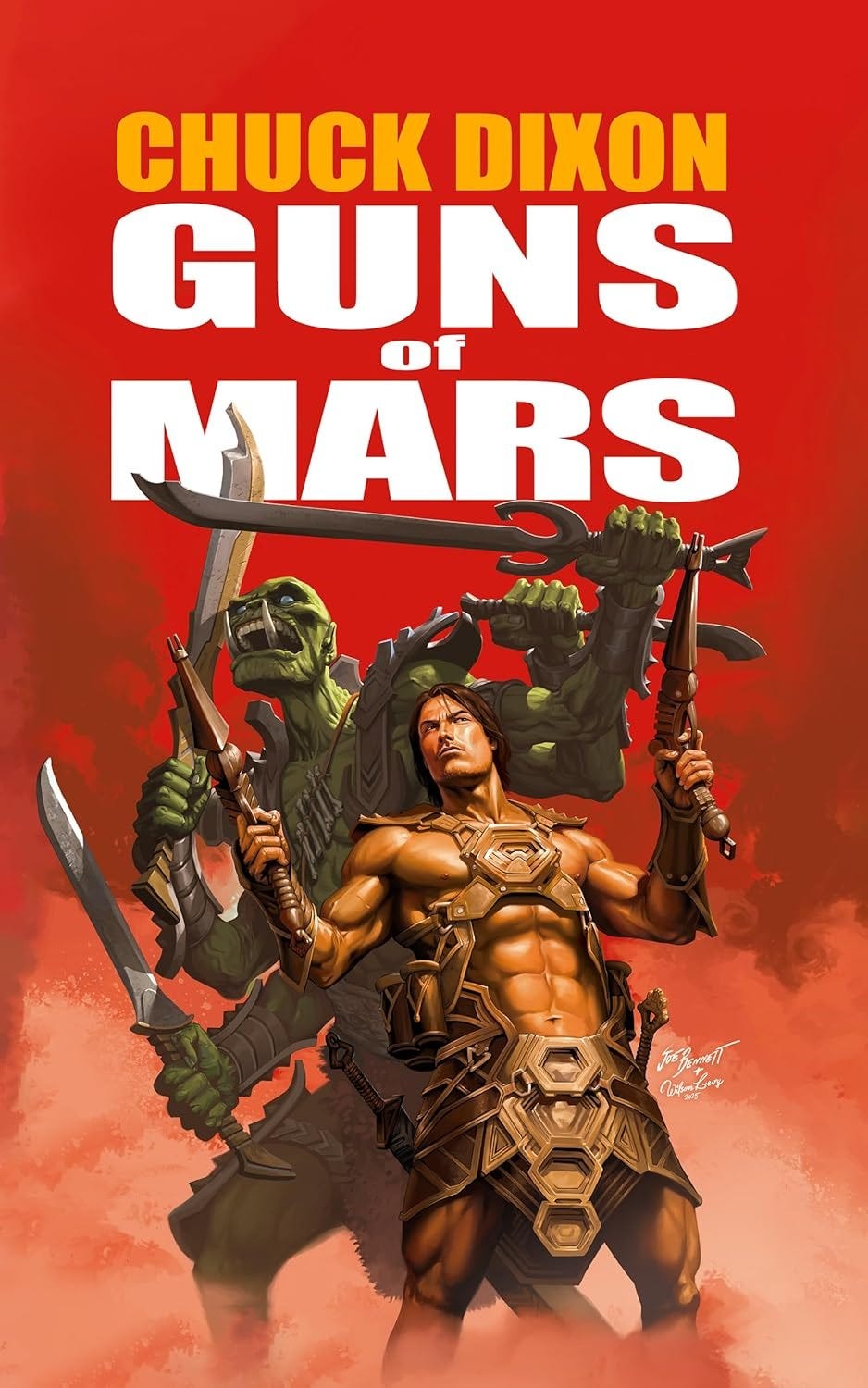
Return to the World of John Carter with this pulpy action epic by Batman writer Chuck Dixon. What happens to Barsoom a thousand years after John Carter? Find out by reading today.
Anson Mount being in it already makes me want to skip this movie. Sorry, Chuck Dixon.
I did see the original Animated Series episode with Bane and it was quite good. Batman's victory in that episode involved a hilariously grotesque scene.
(It was interesting to note the original super-soldier animated Bane vs. the Christopher Nolan one.)
I'll wait on both new movies until reviews come out.