


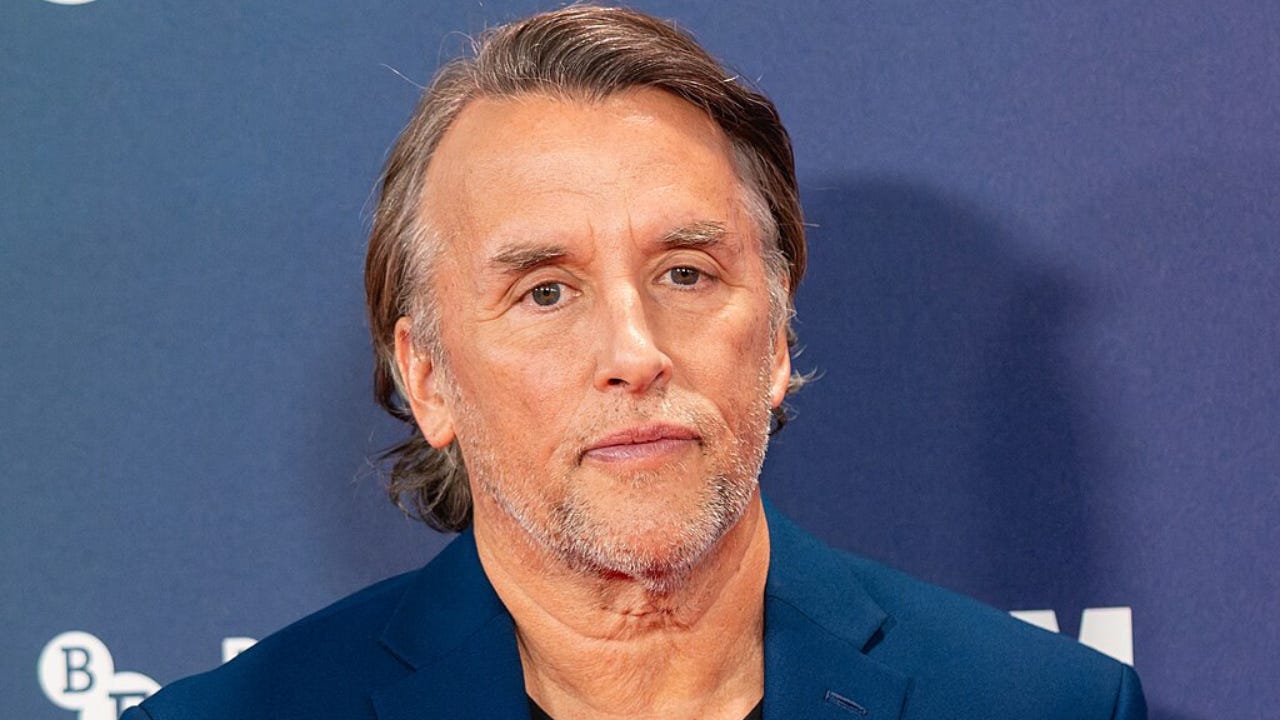
Richard Linklater, the director of Dazed and Confused, School of Rock, and Slacker, recently shared that the ‘90s was the last great era of studio movies.
In an interview with the New Yorker, Linklater discussed the state of the studio industry, “I mean, even when I started, you know, in the early ‘90s, it was always gloom and doom, and we were actually in a pretty good era. It was, what seems to me, the last great era of studio movies.”
“They had bigger slates of films,” he explained. “They took chances on young filmmakers. Like, come on, they gave me $6M to make a film with no stars, but at some point they were like ‘no, we’re not doing that.’”
Linklater said something similar in an interview with The Hollywood Reporter back in 2023 when he was asked, “You’re such a pioneer of American indie cinema. Do you think a career like the one you’ve cut out for yourself and enjoyed over the years is possible anymore? How do you view the current state of American moviemaking coming out of the pandemic?”
He answered, “It feels like it’s gone with the wind — or gone with the algorithm. Sometimes I’ll talk to some of my contemporaries who I came up with during the 1990s, and we’ll go, ‘Oh my God, we could never get that done today.’ So, on the one hand, selfishly, you think, ‘I guess I was born at the right time. I was able to participate in what always feels like the last good era for filmmaking.’ And then you hope for a better day.”
“But, man, the way distribution has fallen off. Sadly, it’s mostly just the audience,” he said. “Is there a new generation that really values cinema anymore? That’s the dark thought.”
Linklater later added, “I don’t think I have any deeper analysis than anyone else would, and it’s not in my nature to make huge statements about whether it’s all over. I just feel we’re all treading water and hoping we don’t drown. Challenging times are certainly here.”
“With a changing culture and changing technology, it’s hard to see cinema slipping back into the prominence it once held,” he went on. “I think we could feel it coming on when they started calling films “content” — but that’s what happens when you let tech people take over your industry. It’s hard to imagine indie cinema in particular having the cultural relevance that it did. It’s hard to imagine the whole culture is going to be on the same page about anything, much less filmmaking. We can be self-absorbed and say it’s just about cinema, but it’s really all of our modern cultural life. You could say the same things about reading books. A lot of young people can’t really read a book, because they’re just on their phones.”
While he recognizes the cultural decay, he indicated he’s working to change it, “You have to believe that everything can change and that things can go back to being a little better. Isn’t that what we all want for everything these days, from democracy on down? Can’t we just go back to being a little better?”
Linklater is not alone in his comments. Novelist Brian Niemeier has repeatedly noted that cultural ground zero was 1997. He explained, “That was when the sputtering engine of creativity stalled, and it happened almost exactly at the beginning of that year. The dividing line between the last semblance of a healthy culture and the subsequent smoking crater is that sharply defined.”
He added, “Western pop culture froze as solid as a gas station burrito on the summit of K2 at the stroke of midnight on January 1, 1997. The corpsesickle has since blasted into the ground like a Siberian comet strike.”
Like Linklater, Niemeier believes we can overcome this cultural malaise, “It’s up to artists like the up-and-coming generation of creators I proudly stand among to build something new in the ruins.”
NEXT: Counter Rumor Claims ‘American Psycho’ Remake Won’t Gender Swap Patrick Bateman
A movie like The Blair Witch Project could probably never get made today. And that was 1999. All of the low budget independent classics that came before it would never get a second look in Gen Z America where the average attention span is about .005 seconds.
No chance of turning this around. The audience is gone. More like their attention span. I offer in evidence a certain piano my grandmother bought CHEAP because everyone was getting hi-fis and didn't need to make their own music anymore. How many people you know out there now buying private pianos to make their own music? Creativity died to make way for content.