


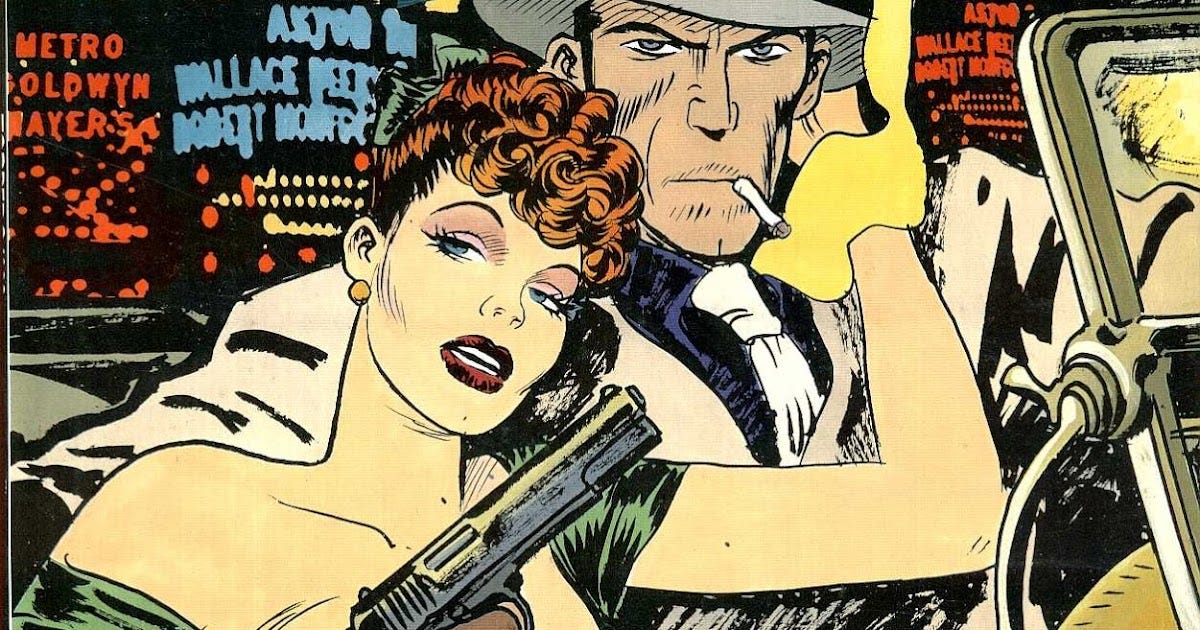
Comic books may be an American medium, but creators from other countries have taken the ball and run with it. Since the Big Two first made it clear they are dedicated to suicide by incompetence and woketardery, many of my countrymen have been crowing about how manga has supplanted them in the sequential art market. But it's not just Japan with a thriving, profitable graphic novel industry. France has that, too.
Those aren't the only countries currently eating the lunch of mainstream comics in the US. And foreign competition isn't a recent development. This anthology came from Spain in the early 1980s and was translated into English and sold here by the mid-1980s.
THE STORIES:
American culture may be in a late stage of disintegration, but from the period roughly between the world wars up to the aftermath of Vietnam, it inspired creators around the world. In this collection of stories from a writer in Spain, it's obvious he loved Depression-era gangster movies, crime pulps, and, of course, film noir.
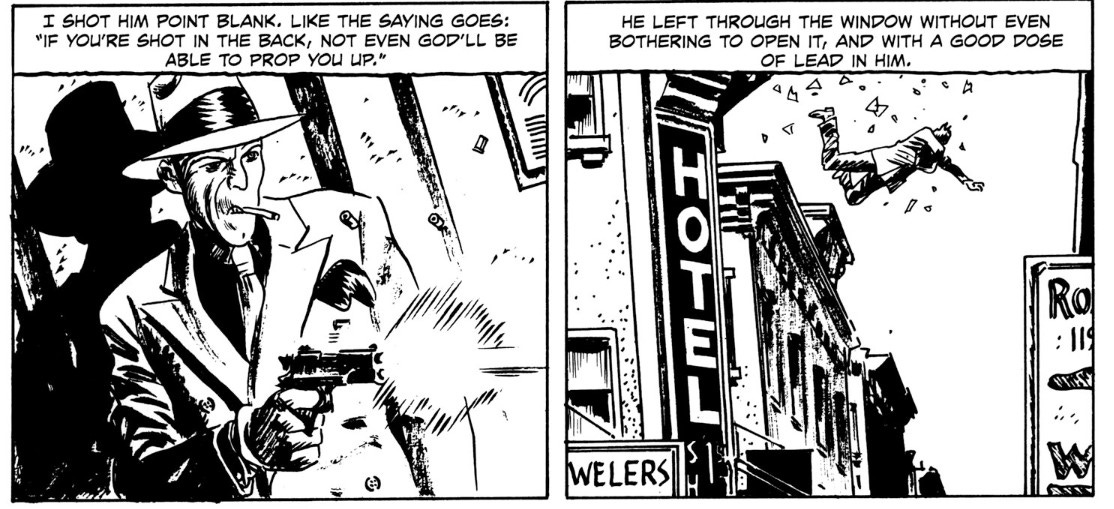
The setting is New York City during the New Deal. "Torpedo" is both the nickname of Luca Torelli, and a gangland term for an assassin--which Torelli is.
The Torpedo is paid as much as $10 grand on some hits, and that was a lot of scratch in 1936, but he is hardly a big time hitman. What keeps him small time, primarily, is that he's streetwise but dame foolish. He's cunning and clever enough to outsmart others frequently, but almost every time there's a broad with a nice rack involved, it's him who gets outsmarted.
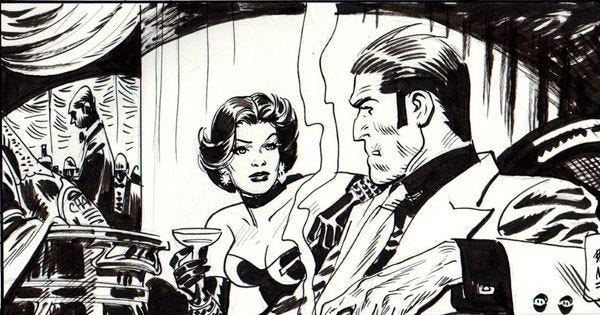
He's got a habit that many tough guy immigrants likely had back in the day, of trying to show off his English skills by mixing idioms and axioms into his narration, but often missing some intricacies of how they're supposed to work. Sometimes it's difficult to tell Abuli's typos from his intentional linguistic fumbles.
Torelli is a sort of ronin--unaffiliated with any particular mob. And though Italian, he'll work for the Irish, too. He's got a sidekick, Rascal, who remains loyal and trustworthy despite Torelli's abuse.
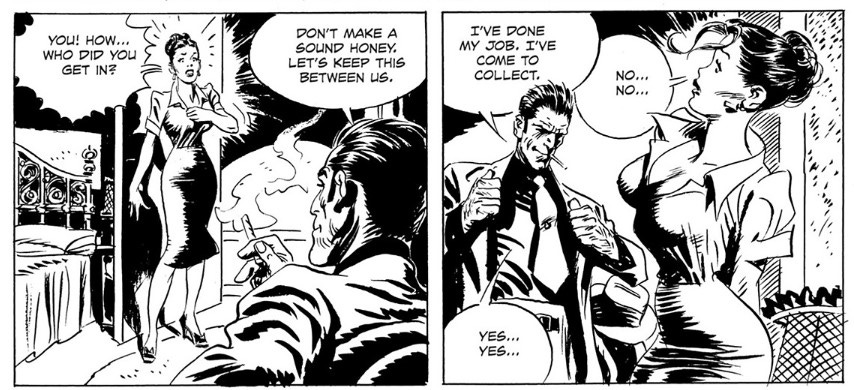
Antiheroes and amoral storytelling is nothing new, even in the USA, but it was rare enough in comic books during the '80s as to be remarkable. Nearly everybody in Torpedo's world is a dirtbag, scheming how to double-cross each other most of the time. There are a total of three decent human beings with morals portrayed in this volume--who all become victims of the Torpedo. It's tempting to consider Rascal as decent, given his consistent loyalty. But it's hinted in one story that he double-crossed Torelli, too.
If you're already jaded despite clinging to some modicum of morality, this book can be enjoyable despite that. But I wouldn't recommend letting children or even young adults read it.
THE ART:
Alex Toth drew two stories, then washed his hands of it due to the exploitative vice elements, unbalanced by any interest in the good, beautiful and true winning in the end. (Armchair critics today are fond of calling such work nihilistic.) Then Jordi Bernet took over. Both of them did a masterful job getting the details right (so far as I can tell) and transporting the reader into a hardboiled Depression-era underworld vibe.
Toth's word balloons have only a single line intersecting the balloon wall and extending toward the speaker. Bernet has more conventional balloon tails, but still with gaps that would serve as one of many nightmares for a colorist using digital tools to update the art.
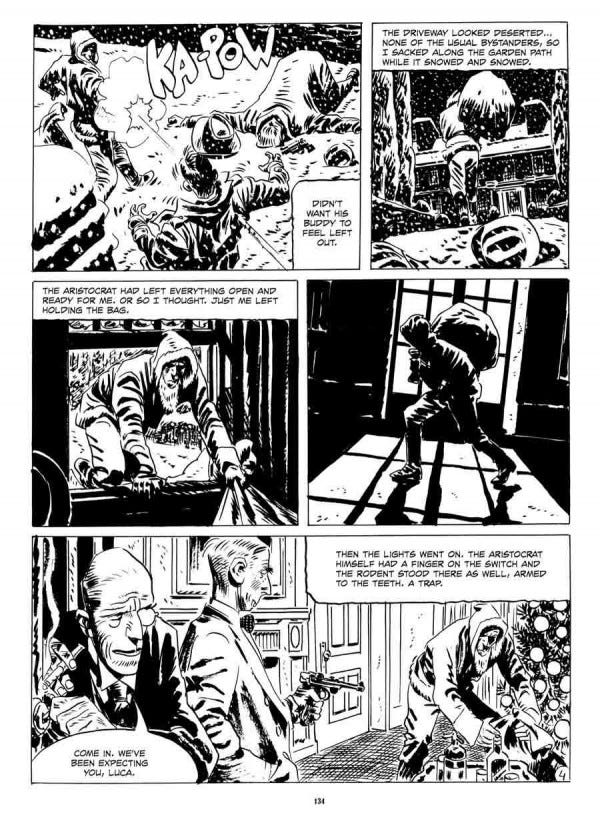
But with the exception of the book cover(s), Torpedo stories should never be colored. They were intended to be black & white, like the classic Warner Brothers gangster flicks. Anything more lush than the stark contrast in these panels would ruin them.
Speaking of panels, there's nothing fancy here: six panel pages, two panels per row. The frames are of universal dimensions, excepting an occasional splash panel at the top of a story. Seems like this is (or at least was) standard for European comics. And there is no disadvantage to it. When you watch a movie, the aspect ratio doesn't constantly change. Does that take away from the story? It doesn't here, either.
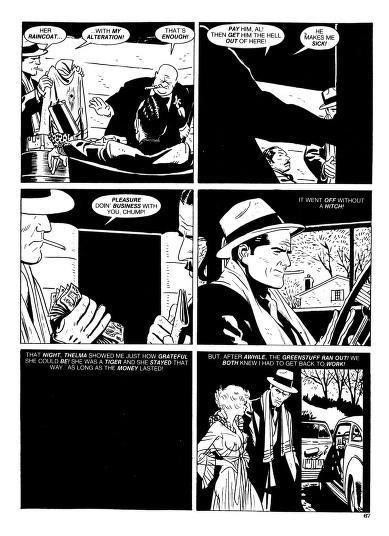
Bernet took over penciling duties with no harsh or awkward change in style. And that style is a bit on the cartoony side, almost-but-not-quite Dick Tracy-ish. It fits, and doesn't even seem all that cartoony in the panels with partial nudity (think R-rated '80s frat boy comedies).
CONCLUSION:
The sole redeeming quality of this anthology is it's retro-noir charm. These are cynical stories--as were popular in horror and crime comics of the past. If you're not a cynic, then they are probably too depressing to read through. Especially when you consider the price this anthology is pulling today.
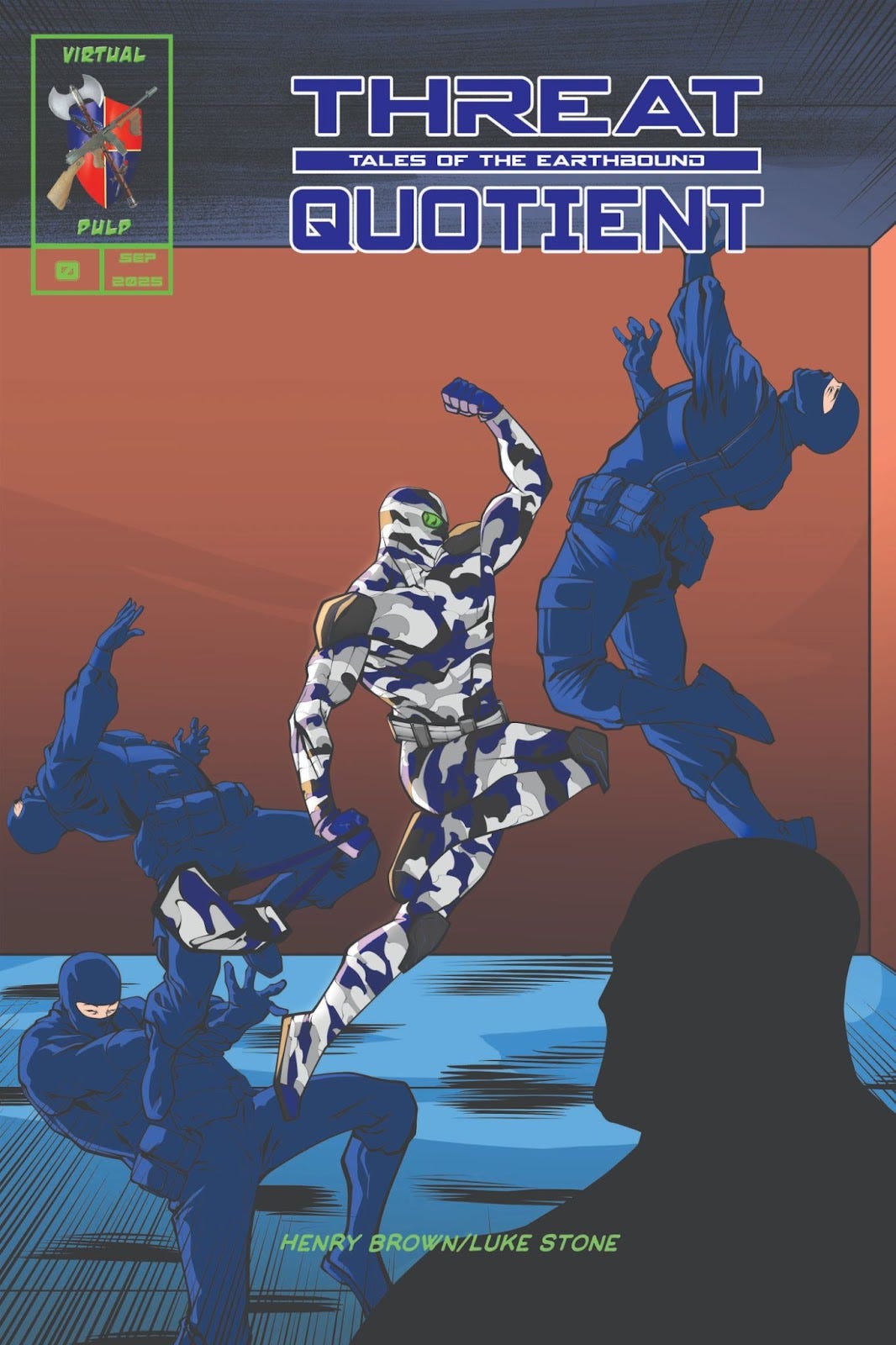
I have kicked off Tales of the Earthbound, a planned series of graphic novels. The first one, Threat Quotient, is drawing closer to a crowdfund campaign. I share episodes online every week and you should treat yourself to a superheroic escape.
