


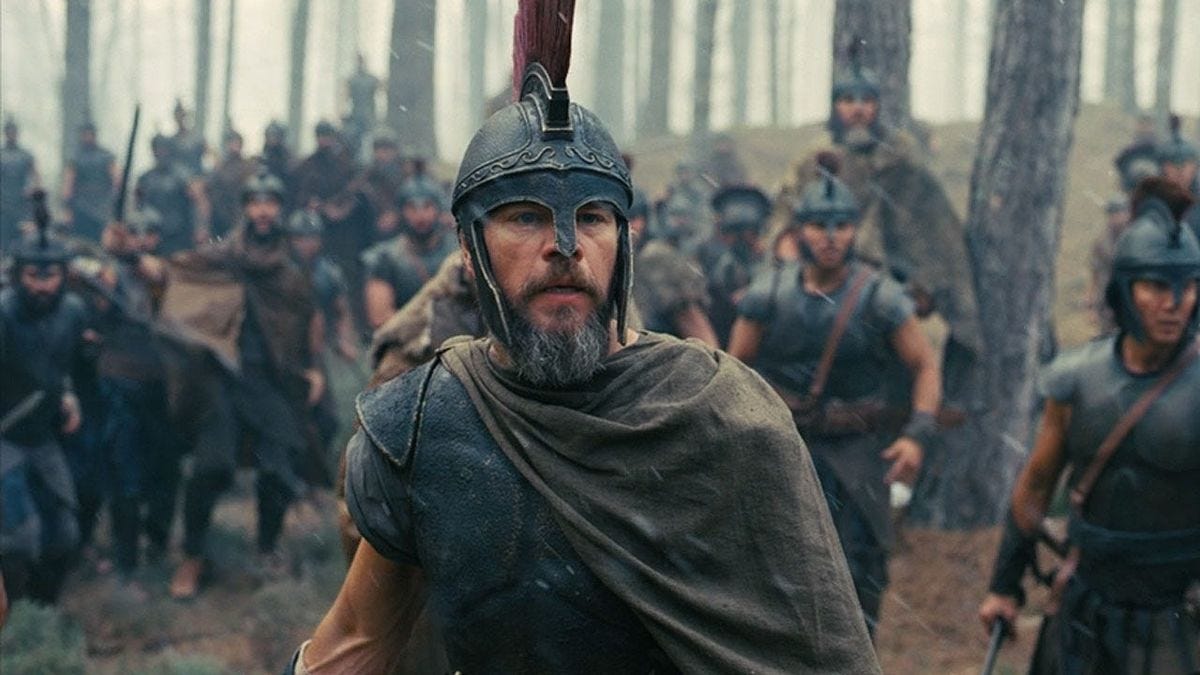
Christopher Nolan is one of the most respected directors working in Hollywood. Oppenheimer won him the Academy Award for Best Director. The Dark Knight is still cited as the gold standard for what a superhero film can be. When he announced he was adapting Homer’s Odyssey for the screen with a $250 million budget, shot entirely on IMAX cameras, and a cast including Matt Damon, Tom Holland, Robert Pattinson, Anne Hathaway, and Charlize Theron, the anticipation was enormous. This was supposed to be the definitive cinematic treatment of one of the greatest stories ever written.
Then the trailer dropped on May 5, and Robert Pattinson leaned toward Tom Holland and whispered: “You’re pining for a daddy you didn’t even know, like some sniveling bastard.”
The backlash came immediately, and it was mainly about language, but also the visuals of the giant cannibal enemies from Book X of Homer’s epic, who appear wearing what looks unmistakably like medieval plate steel armor in a film set during the Bronze Age. This is after the controversy of the rumored casting of Lupita Nyong’o as Helen of Troy. Underneath all of it, a question that nobody in Hollywood seems willing to sit with: when you take one of the most durable works of literature in human history and modernize it for contemporary audiences, at what point does accessibility become desecration?
The answer to that question runs directly through the translation Nolan chose as his sole source text, which explains more about this film’s problems than any single line of dialogue.
The Source of the Problem
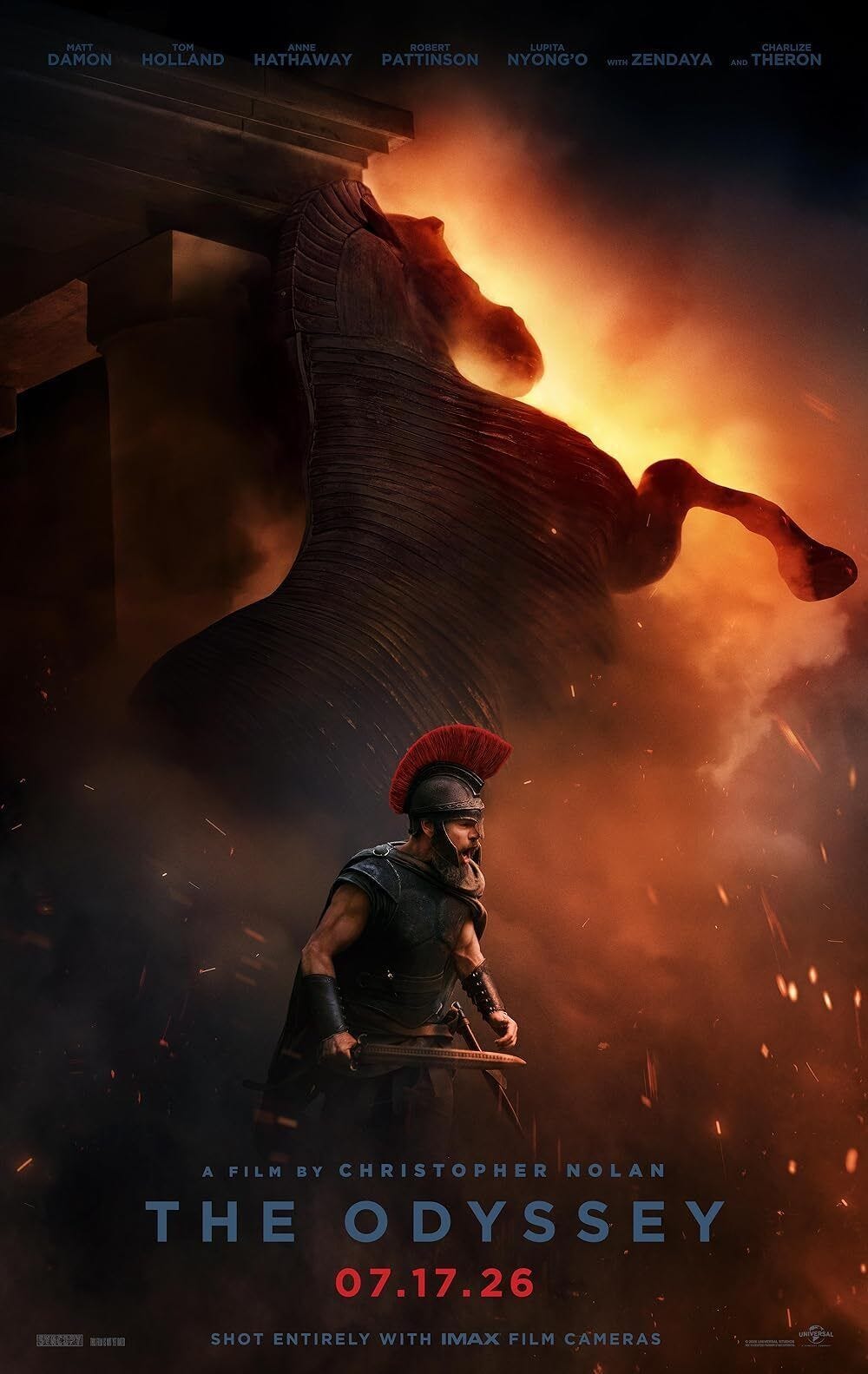
Nolan chose Emily Wilson’s 2017 translation of The Odyssey as the sole source text for the film. That decision is the origin of every linguistic controversy the trailer has produced.
Fandom Pulse spoke with Vox Day, who is overseeing the translation of many classic pieces of literature at the Castalia Library, on the importance of translations for tone of the work: “It really depends upon the degree to which liberties are being taken with the core elements of the story and the characters and the skill of the interpreter. For example, Eiji Yoshikawa’s version of the Chinese classic, The Romance of the Three Kingdoms, is substantially different than the original yanyi. Like Yoshikawa’s Sangokushi, this woman’s modernist translation is not a true translation; it’s a reinterpretation. Like the Nolan movie, it’s a transformation of an oral storytelling tradition to a fundamentally different medium.”
