


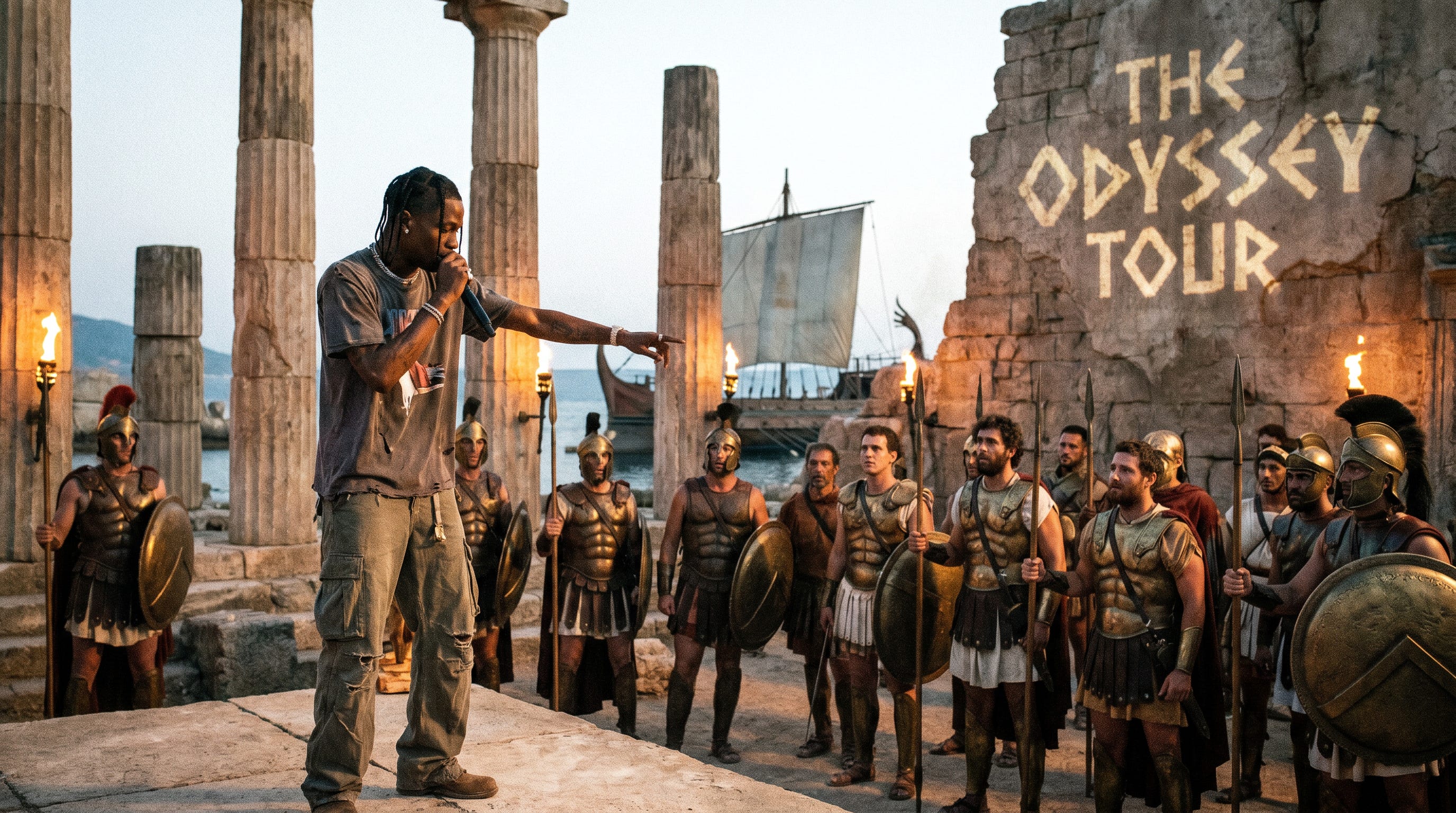
The Time magazine profile of Christopher Nolan published yesterday confirmed two things the internet had been speculating about for weeks. Lupita Nyong’o is playing Helen of Troy. She is also playing Clytemnestra, Helen’s sister, making her the only actor in the film with two confirmed roles. Rapper Travis Scott plays a bard, with Nolan explaining to Time that he “wanted to nod towards the idea that this story has been handed down as oral poetry, which is analogous to rap.” Elliot Page is in the film. Zendaya plays Athena, confirmed and visible in the trailer. Corey Hawkins and Jovan Adepo have undisclosed roles. The cast of a $250 million adaptation of the foundational text of ancient Greek civilization contains no Greek actors.
Matt Walsh posted on X after the Time profile dropped: “Not one person on the planet actually thinks that Lupita Nyong’o is ‘the most beautiful woman in the world.’ But Christopher Nolan knows that he would be called racist if he gave the most beautiful woman role to a white woman. Nolan is technically talented but a coward.”
Elon Musk replied: “True.” In a separate post, responding to a user who noted the Academy’s inclusion requirements for Best Picture eligibility, Musk wrote: “He wants the awards.”
That is the argument conservative commentators have been making since the casting became public. It is worth examining on its actual merits, because the Academy’s requirements are public documents and The Odyssey’s casting maps onto them with notable precision.
In 2020, the Academy of Motion Picture Arts and Sciences announced its Representation and Inclusion Standards under the Academy Aperture 2025 initiative. Beginning with the 96th Oscars in 2024, any film seeking Best Picture eligibility must submit the Academy’s RAISE form and meet two of four standards. The four standards are: on-screen representation; creative leadership and project team; industry access and opportunities; and audience development. A film meets Standard A, on-screen representation, if it satisfies one of the following criteria:
Standard A1: At least one lead or significant supporting actor is from an underrepresented racial or ethnic group, specifically including Black/African American, Asian, Hispanic/Latinx, Indigenous/Native American, Middle Eastern/North African, Native Hawaiian, or other Pacific Islander.
Standard A2: At least 30% of all actors in secondary and minor roles are from at least two underrepresented groups, including women, racial or ethnic minorities, LGBTQ+ people, or people with cognitive or physical disabilities.
Senator Ted Cruz described the requirements as “utter insanity” in March, arguing that previous Best Picture winners including No Country for Old Men and The Departed would not qualify under the new standards.
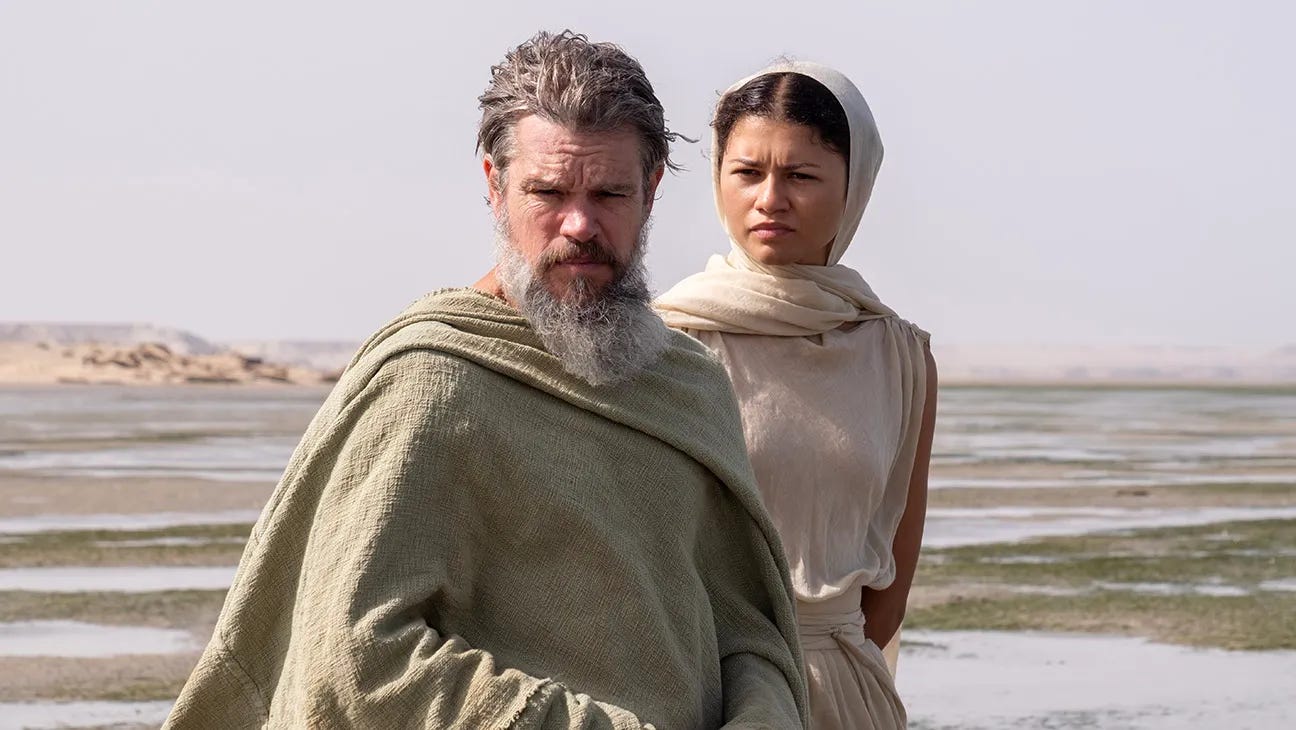
The Odyssey’s confirmed cast satisfies Standard A1 without difficulty. Lupita Nyong’o is Black. She is playing one of the most prominent roles in the film, appearing as both Helen of Troy and Clytemnestra. Zendaya, who is biracial, plays Athena, a confirmed significant supporting role. Travis Scott, who is Black, is also in the cast. Corey Hawkins and Jovan Adepo, both Black, have undisclosed supporting roles. The film almost certainly satisfies Standard A2 as well, given Elliot Page’s presence and the composition of the broader ensemble.
Whether this means Nolan cast these actors specifically to satisfy Academy requirements is a claim that cannot be proven. Nolan has offered other justifications. He told Time that casting Nyong’o was about honoring the idea that beauty transcends any single cultural definition. He said Travis Scott’s presence honors the oral tradition of Homeric poetry. He defended the plate armor anachronism in a separate Variety interview, arguing his production team made a deliberate aesthetic choice rather than an error.
The audience is not persuaded. The trailer reaction, the social media backlash, the Kangmin Lee post about whether any Greeks are in the film, and now the Walsh and Musk commentary all reflect the same underlying reaction: the casting decisions serve something other than the story. Nolan can call it artistic intent. The Academy’s published requirements provide an alternative explanation that does not require inferring anything about his private motivations. The requirements exist. The casting satisfies them. The film wants Best Picture consideration. Those three facts sit in proximity without requiring further commentary.

What makes the situation more pointed is Nolan’s own stated purpose for making the film. He told Stephen Colbert it was “really for people who haven’t read it” and “don’t know anything about it.” The people who know Homer are watching the casting choices accumulate — Nyong’o as Helen, Page as Achilles, Scott as a bard who raps the oral tradition, Zendaya as Athena, no Greek actors anywhere — and drawing the obvious conclusion. This is not a film made for the audience that loves the source material. It is a film made for the Academy that will give it awards.
Nolan’s last film won him the Best Director Oscar. He wants another one. The Academy told him exactly what the film needs to be eligible. His casting choices reflect that checklist with a specificity that strains coincidence.
Does the Academy’s DEI eligibility system explain Christopher Nolan’s casting choices, or is there another explanation that makes more sense?
Epic Fantasy hasn’t been this hard-hitting since Tolkien. In a world where humanity is akin to a Roman legion, a great darkness arises. Read A Throne Of Bones today.
NEXT: Christopher Nolan Compares Rap to Homer’s Epic Poetry, Defends Anachronisms In New Interview
I'm afraid this could be a potential blockbuster because so many people are devoted to Nolan, but imagine what a powerful message audiences could send if they stayed away from this misbegotten "Odyssey" and all its stunt casting...