


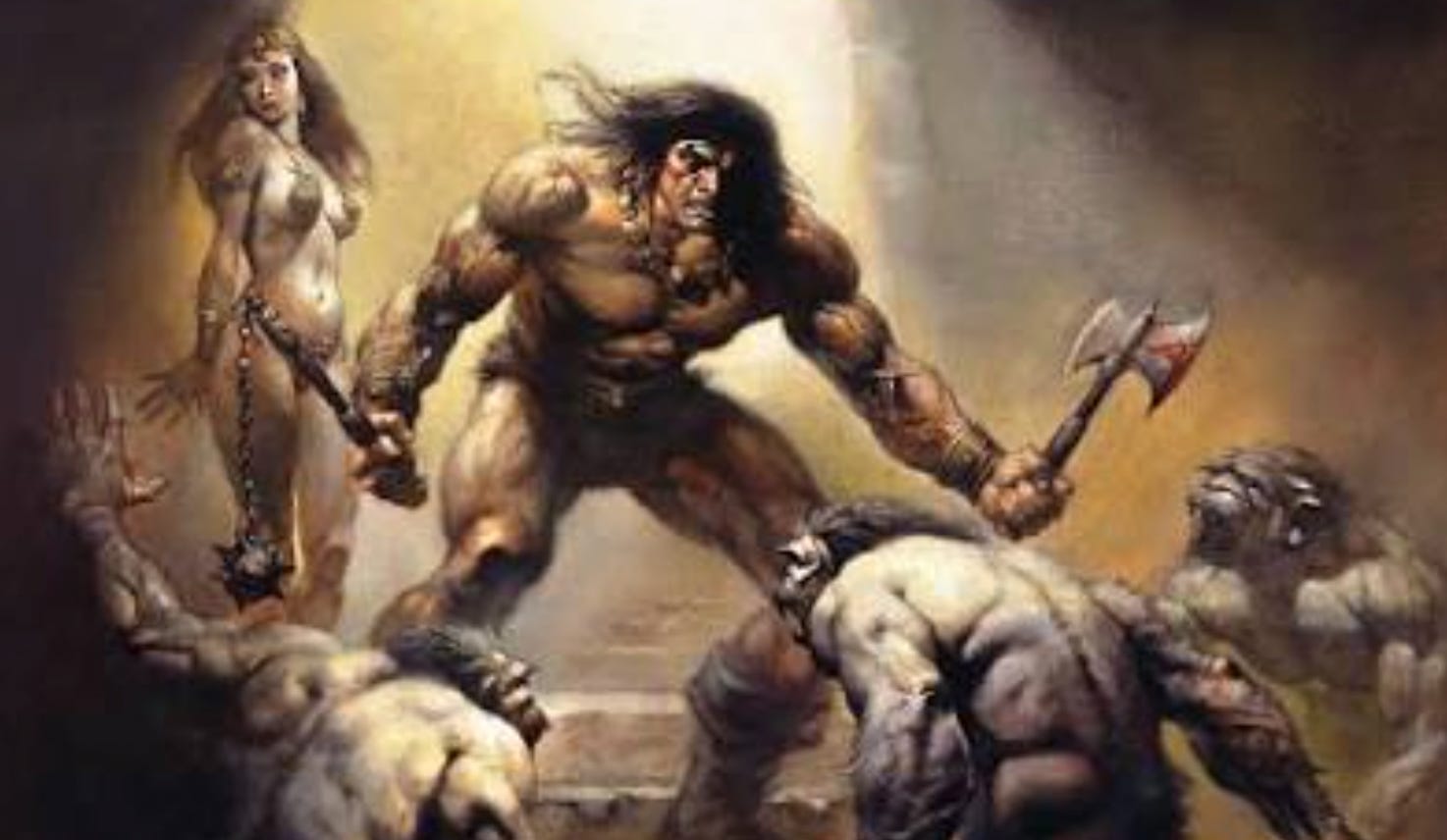
Julie Bell announced this week that her husband, fantasy artist Boris Vallejo, has officially retired from commercial and commissioned work. She posted the news on Facebook alongside their recent collaborative painting, “Inferno,” which the couple spent three years completing together:
“Hello everyone! I have an announcement to make and feel now is the time as we’ve received so many kind comments on our recently shared painting ‘Inferno.’ Boris and I worked together on this piece for the past three years and we deeply appreciate all the notes from people who enjoy our collaborative paintings. Boris is now 85 and has Parkinsons. He has been creating magical worlds for others to enjoy for over five decades and is now officially retired from commercial or commissioned work. ‘Inferno’ is his last piece of this type. This decision has taken quite some time to arrive at and even more time to feel ready to announce. He’s still signing prints and cards, he still does some painting for himself, and he still plans to be at Illuxcon in October in Reading, PA because he loves seeing all of you and chatting about art! We thank everyone for all of the love and support you’ve shown all these years!
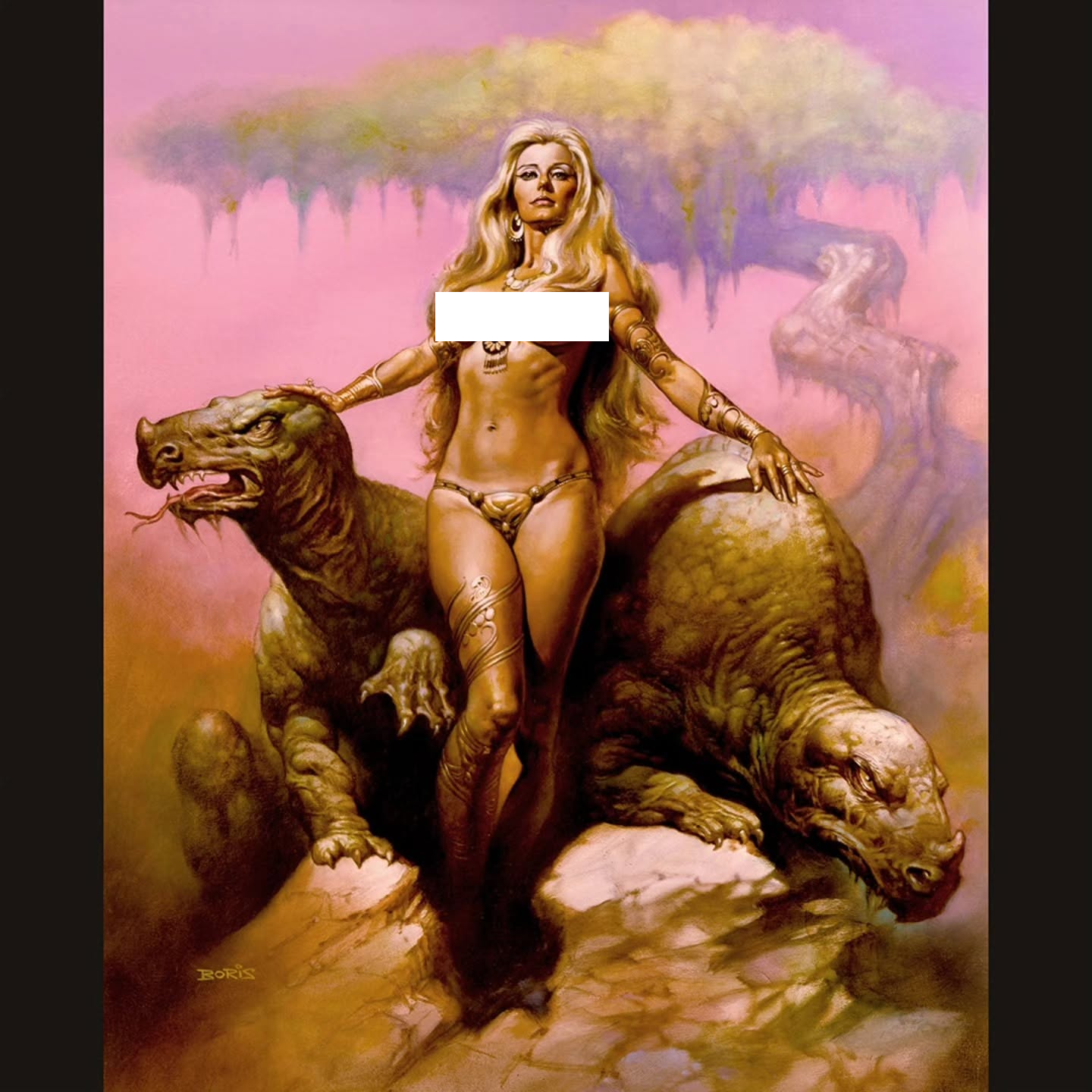
”
For anyone who grew up browsing a spinner rack of paperback fantasy in the 1970s or 1980s, Boris Vallejo’s name is inseparable from the genre itself. Born in Lima, Peru in 1941, Vallejo started painting at 13, sold his first illustration at 16, and earned a five-year scholarship to the Escuela Nacional Superior Autónoma de Bellas Artes, where he took home a gold medal before he’d even finished his training. He emigrated to the United States in 1964 at 23, and within a few years he’d built a reputation good enough to work for Warren Publishing’s horror line, painting covers for Creepy, Eerie, and Vampirella.
Marvel Comics is where Vallejo’s name really took hold. His covers for The Savage Sword of Conan in the mid-1970s were striking enough that fans and editors started calling him “the next Frazetta,” an enormous comparison to live up to and one Vallejo more than earned on his own terms. His painting for Savage Sword #1 in 1974, Conan and Red Sonja locked in a swirling battle against a horde of ghouls, is still considered one of the defining images of the entire sword-and-sorcery boom. From there, he moved into paperback covers for Ballantine and Del Rey, and for the next several decades there wasn’t a major pulp hero whose books didn’t carry his work at some point: Conan, Tarzan, Doc Savage, John Carter of Mars, Red Sonja. He painted the Gor novels, contributed pin-ups to Heavy Metal, and created movie posters for Knightriders, Barbarian Queen, and Q. His most widely seen piece of art, by his own admission, wasn’t a barbarian or a monster at all. It was the poster for National Lampoon’s Vacation, a self-aware parody of his own house style that millions of people saw without ever knowing his name was attached to it.
What made Vallejo’s work stand apart, even among a field full of talented genre painters, was a hyper-representational realism built almost entirely in oil on board, often composited from his own photo references to get the anatomy and lighting exactly right. It’s a technical rigor that turned pulp paperback covers, an art form most people treated as disposable, into paintings serious collectors still chase decades later. He earned a Locus Award for best professional artist in 1979, one of several honors across a career built almost entirely on commercial deadlines rather than gallery ambition.
Much of Vallejo’s later work became a shared act with his wife, artist and former bodybuilder Julie Bell, herself a celebrated fantasy and wildlife painter in her own right. The two built a body of collaborative paintings good enough that fans came to recognize both signatures on a single canvas as its own kind of seal of quality, and “Inferno” carries the weight of being the final entry in that specific chapter of his work.
Boris Vallejo isn’t disappearing. He’ll still be at Illuxcon this October in Reading, Pennsylvania, signing prints and talking with the fans who grew up on his covers, and he’ll still pick up a brush for himself when the mood strikes. But the commissioned work that put a barbarian, a warrior queen, or a half-glimpsed god on the cover of a paperback and made you pick it up off the shelf without knowing a single word inside it, that chapter is closed. Fifty years is a rare enough run for anyone in this business. Vallejo spent his entire adult life making the genre look exactly the way several generations of readers still picture it in their heads, and that’s not a small thing to leave behind.
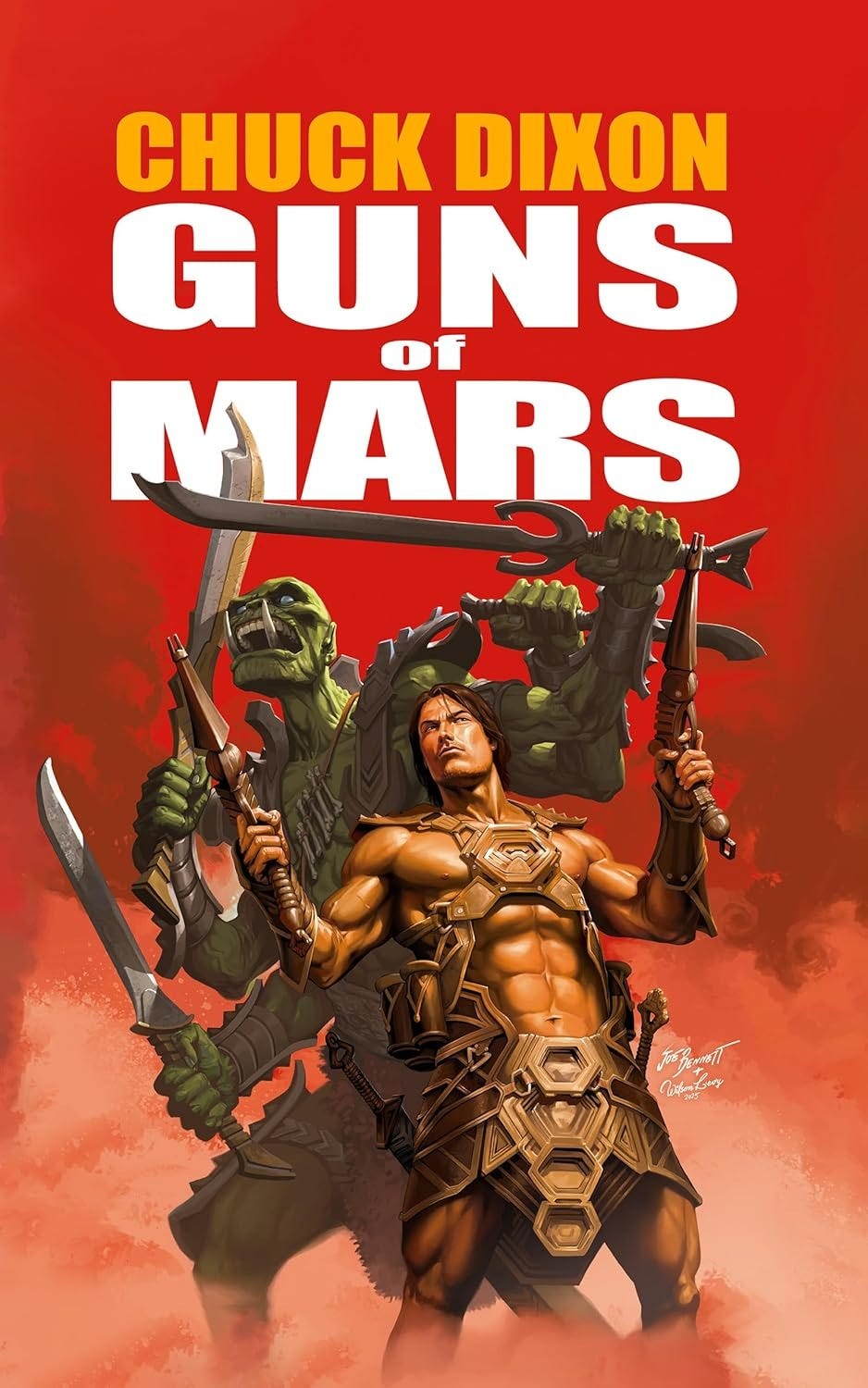
Return to the World of John Carter with this pulpy action epic by Batman writer Chuck Dixon. What happens to Barsoom a thousand years after John Carter? Find out by reading today.
NEXT: Savage Sword of Conan #15 Delivers Pulp Thrills and a Career-Best Backup From Titan Comics
It will be a great tragedy when this legend passes
Almost as tragic is the question: "where is the next generation of fantasy artists?"
Frazetta
Vallejo
Hildebrandt brothers
Howe
Bell
Royo
Whelan
Elmore
Caldwell
Easley
Parkinson
Lockwood
Brom
There are probably a dozen others I'm forgetting, but point is, we used to have an embarrassment of these guys (and a couple girls).
I'm pretty sure every one of those names were making art at least 35-40 years ago, Brom being the youngest I think I mentioned. What the heck happened?
Am I completely out of the loop, or are we just not blessed with these kind of artists anymore?
He was an interesting guy, did bodybuilding as well as painting, much like his wife and Frazetta, which means in a sense he was what he painted.