


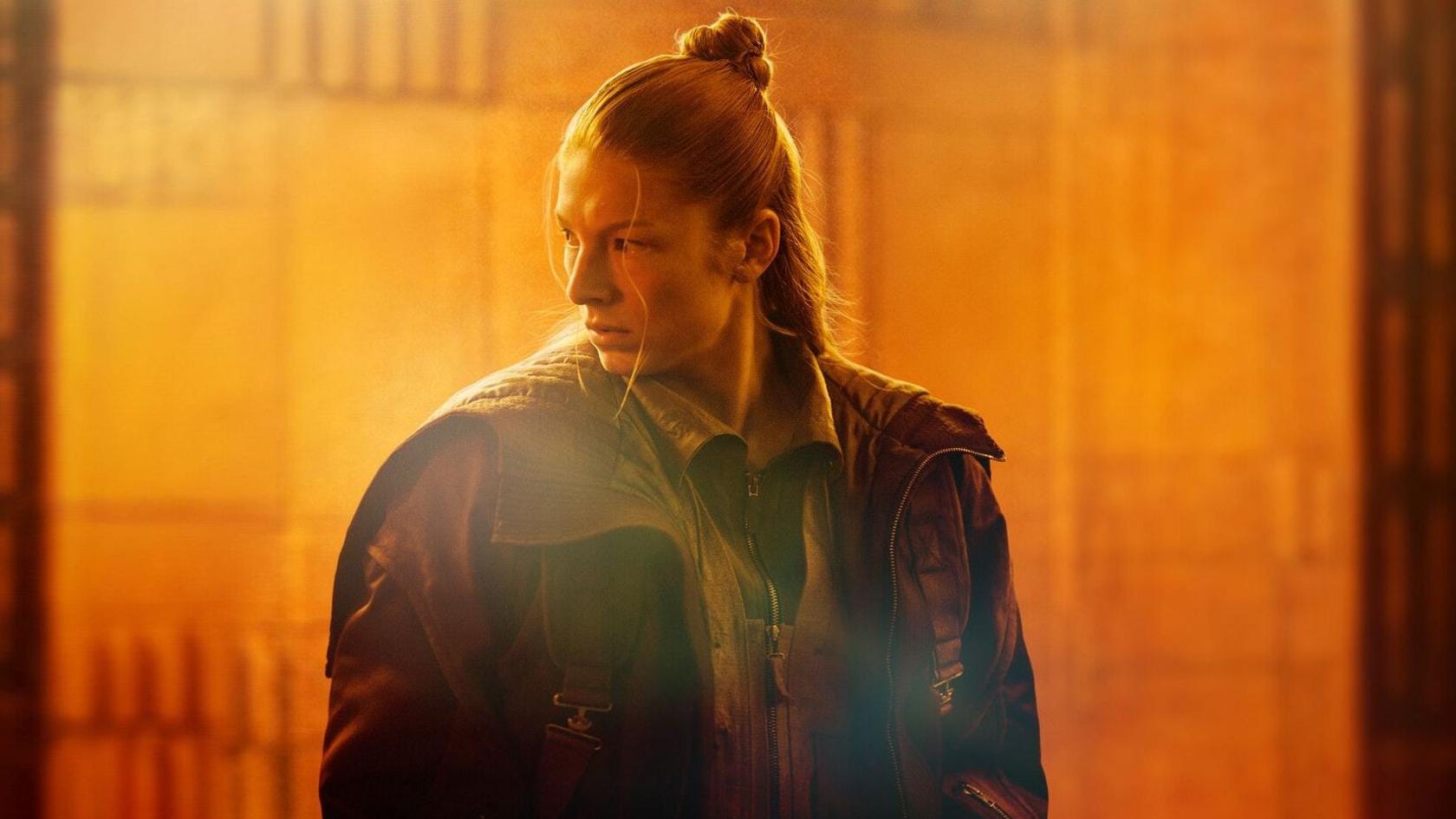
Two days before Blade Runner 2099 reached Prime Video, its co-lead answered the online backlash by agreeing with the people complaining. Hunter Schafer told the New York Times on November 23 that he found Blade Runner “quite punk and queer,” then added a ridiculous proposition has followed the show ever since. Amazon released all eight episodes on November 25, and audiences have given it a Popcornmeter score of 51%.
The series is a limited run from showrunner Silka Luisa, with Ridley Scott as executive producer, set fifty years after Blade Runner 2049. Schafer plays Cora, a human fugitive who passes as a replicant Blade Runner in a Los Angeles where replicants hold power. Michelle Yeoh plays Olwen, a replicant Blade Runner. Two women lead the show, and the people behind it have spent the week explaining why.
The scores show where viewers landed. Rotten Tomatoes lists critics at 70%, built from 46 fresh reviews and 20 rotten ones, with an average rating of 6.6 out of 10. Audiences are at 51%. Blade Runner 2049 holds an 88% Tomatometer and an 89% Popcornmeter, so the new series trails the last Blade Runner production by 38 points with audiences. Metacritic users give 2099 a 3.4, a score Metacritic labels “Generally Unfavorable.” The 2017 film carries an 8.3 user score on the same site, labeled “Universal acclaim.” The people who actually watched Blade Runner 2099 rejected it.
Amazon has not released viewership figures, and third-party charts had the show at second or third on Prime Video the day after launch. A limited series cannot be cancelled in the usual sense. The measure available is how viewers rated it, and they rated it near the bottom of what the franchise has earned.
Schafer’s answer to the Times, given as the backlash built before launch: “I always found ‘Blade Runner’ to be quite punk and queer. This franchise has always been woke.” He did not dispute the label critics attached to the show. He pushed it backward onto Ridley Scott’s 1982 film, a story about a cop hunting manufactured people and asking whether they have souls. A viewer who loves that film hears the lead of its sequel say the thing they loved was an ideological project from the first frame. The star of the show has put on record that he treats Blade Runner as a political text, and he told the audience that before they pressed play.
Two days later he told Queerty: “I do think there’s something that feels kind of inherently queer about Blade Runner… when you’re dealing with topics like what it means to be a human and otherness and everything, I think those themes will ring really true for our community.” The phrase that matters is “our community.” The audience he describes is one specific group, and the franchise is framed as speaking to them. Everyone else who bought into Blade Runner for forty years is outside that sentence. He described the show’s setting in the same interview as “super late-late-late stage capitalism,” a political description of the world offered as a selling point.
Luisa contradicts herself inside a single interview. Speaking to EL PAÍS this week, the showrunner explained the casting this way: “I write female characters, so of course my two leads were going to be women.” Later in the same piece she said: “Blade Runner has never been about the politics of the moment.” The first line says the leads were chosen because of who the writer likes to write. The second says the franchise stands apart from politics. Schafer has told the Times the franchise has always been woke, so the show’s lead and its showrunner cannot both be right. The EL PAÍS line also gives a source to the sentiment Luisa expressed to Gold Derby on November 13: “I am a female writer. I come from a family of very strong women, that is what I love to write.” That quote spread widely when it circulated, and the EL PAÍS interview repeats the same reasoning in new words.
Yeoh addressed the “all-female” lead pairing with Gold Derby: “Especially in the future, I don’t think there will be a difference between the genders.” The original films spent their runtime on the line between human and replicant. Yeoh’s answer to a question about two women leading is that gender differences disappear in the future, which turns the casting into a prediction about tomorrow and leaves the story reason unstated. A franchise built on the question of what makes someone human now answers the question of its casting with a shrug about gender.
The reviews were no kinder. Vulture called the series “a misfire on almost every level” and said Yeoh is “terrible as Olwen.” IGN gave it a 4 out of 10 and called both leads “miscast.” TVLine gave it a D and called it “a humorless slog.” Those verdicts came from mainstream entertainment outlets, and they sit inside the 70% the aggregator reports, which shows how many kinder reviews are propping up a critic number the audience refuses to match.
The online pushback followed the interviews. Critical Drinker said of Schafer: “Hunter Schafer over-acts like a Claire Danes parody… Misses the whole point of the original movie.” He added that “I think this one should be retired.” The post reached about 215,000 views.
The lead says the franchise has always been woke. The showrunner says Blade Runner has never been about the politics of the moment. Audiences have scored the result at 51%, and Amazon will not say how many are watching. When the people making a show cannot agree on what it is, who is it for?
I do think there’s something that feels kind of inherently conservative about Blade Runner… when you’re dealing with topics like what it means to be a human and otherness and everything, I think those themes will ring really true for our community.