


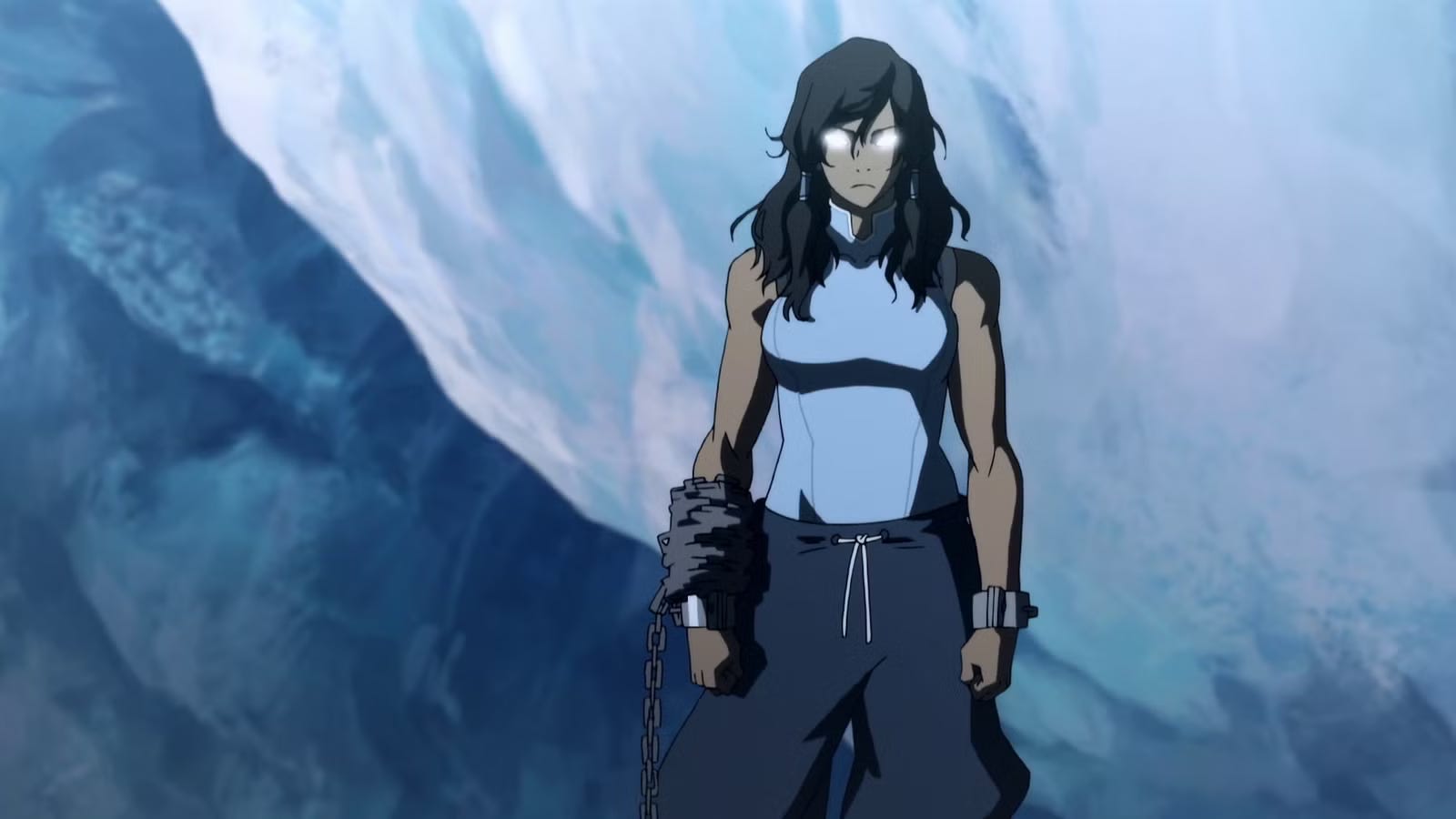
Avatar co-creator Bryan Konietzko told Teen Vogue that criticism of Korra comes from misogyny and homophobia, in the same week that Avatar: Seven Havens, the Paramount+ sequel he made with Michael Dante DiMartino, introduced Korra as the Avatar who ended the world. Fans who wanted to know how a show can blame its own heroine for an apocalypse and then accuse the audience of bigotry for noticing have found their answer in the interview.
What Konietzko Told Teen Vogue
Konietzko said: “If people don’t like Korra as a character, they don’t like that series, that’s totally fine.” He went on: “I think there’s a lot of misogyny, I think there’s a lot of homophobia.” On the Air Nomads, he said: “Aang’s entire people were wiped out, but nobody holds that against Aang.” His point was that fans hold Korra to a different standard than they hold Aang.
The comparison has a flaw. Aang spent the genocide of his people frozen in an iceberg, and his critics have never been fans who think he should have stopped it from there. A viewer can criticize Korra’s choices without touching her gender or her romance with Asami, and fans have done so for twelve years.
DiMartino was not part of the misogyny and homophobia remarks. The only comment from him I could find was: “Watch the show… she’s one of my favorite characters. The Avatars are never perfect heroes.”
Their Own Show Blames Korra for the End of the World
Seven Havens premiered October 9 on Paramount+ and takes place after Korra’s death. It follows Pavi, a young Earthbender who learns she is the next Avatar, and her long-lost twin Nisha, who have to save the Seven Havens after an apocalyptic disaster. In the pilot the world holds Korra responsible for the Cataclysm. The official history blames her, a festival reenacts her supposed part in it, and children talk about her as a monster. The trailer in July had already included a line that “the Avatar let us down” over an image of Korra in the Avatar State.
Janet Varney, who voiced Korra for all four seasons, wrote on X: “I sobbed through this pilot episode. I was shattered. I cannot emphasize it enough.” She added: “I’m so worried about all the people that love Korra and already defend Korra.” Watching children talk about her this way, she said, “was heartbreaking. I mean, it really hurt.” She asked fans to keep the faith, since the story is not finished.
Fans reacted to the trailer before the premiere. One wrote: “They said the same s*** about Aang for 100 years I’m not moved Korra will be redeemed.” Another wrote: “Enough with the anti Korra propaganda.” Some critics also say the show has homogenized the Avatar world’s Asian-inspired cultures and washed out their regional identities. Paramount+ renewed Seven Havens for four seasons in the week it premiered.
Korra’s Rocky Road From Nickelodeon to Now
The Legend of Korra ran from 2012 to 2014 and began as a planned miniseries before it grew to 26 and then 52 episodes. In July 2014 Nickelodeon pulled it from the TV schedule and moved the last five Book 3 episodes online, starting August 1, a step so unusual that it surprised the creators. Fans blamed thin promotion and a poor timeslot. DiMartino wrote on Facebook that “this was a disappointing development for sure,” and said a fourth season was in production. The finale in December 2014 ended with Korra and Asami holding hands as a couple, and Konietzko confirmed the romance on his blog.
The show’s Netflix arrival in August 2020 sent a new audience through it and reopened the Aang-versus-Korra argument that has run since the first season.
A Franchise With a Long Fight Record
The 2010 film The Last Airbender drew a backlash for casting white actors in lead roles of an Asian-inspired world and for what fans saw as a mangled adaptation. Years later Netflix announced a live-action series, and in June 2020 Konietzko and DiMartino stepped down from it over creative differences. DiMartino’s open letter on August 12, 2020 said: “whatever version ends up on-screen, it will not be what Bryan and I had envisioned or intended to make.” He wrote that “even an Air Nomad knows when it’s time to cut their losses and move on.” Netflix replied that it had “complete respect and admiration for Michael and Bryan” and was “confident in the creative team and their adaptation.” The series came out in 2024.
The new series carries its own arguments. Fans have been divided over the Seven Havens art style, which the creators said was influenced by the artist Jean Giraud and 1990s Japanese anime. A thread of the criticism holds that the show strips out the regional identities that made the original world feel distinct. The Korra storyline is the biggest fight of the lot.
If Konietzko believes nobody holds the Air Nomads’ fate against Aang, why did he and DiMartino write a sequel in which a whole world holds the end of everything against Korra, and will the redemption fans are promised arrive before the audience tires of waiting for it?
I stopped watching the franchise after the first season or so of Korra and I haven’t looked back since. It seems like I haven’t missed much. When writers start blaming their audiences for the choices they made, I, personally, know it’s not worth supporting.