


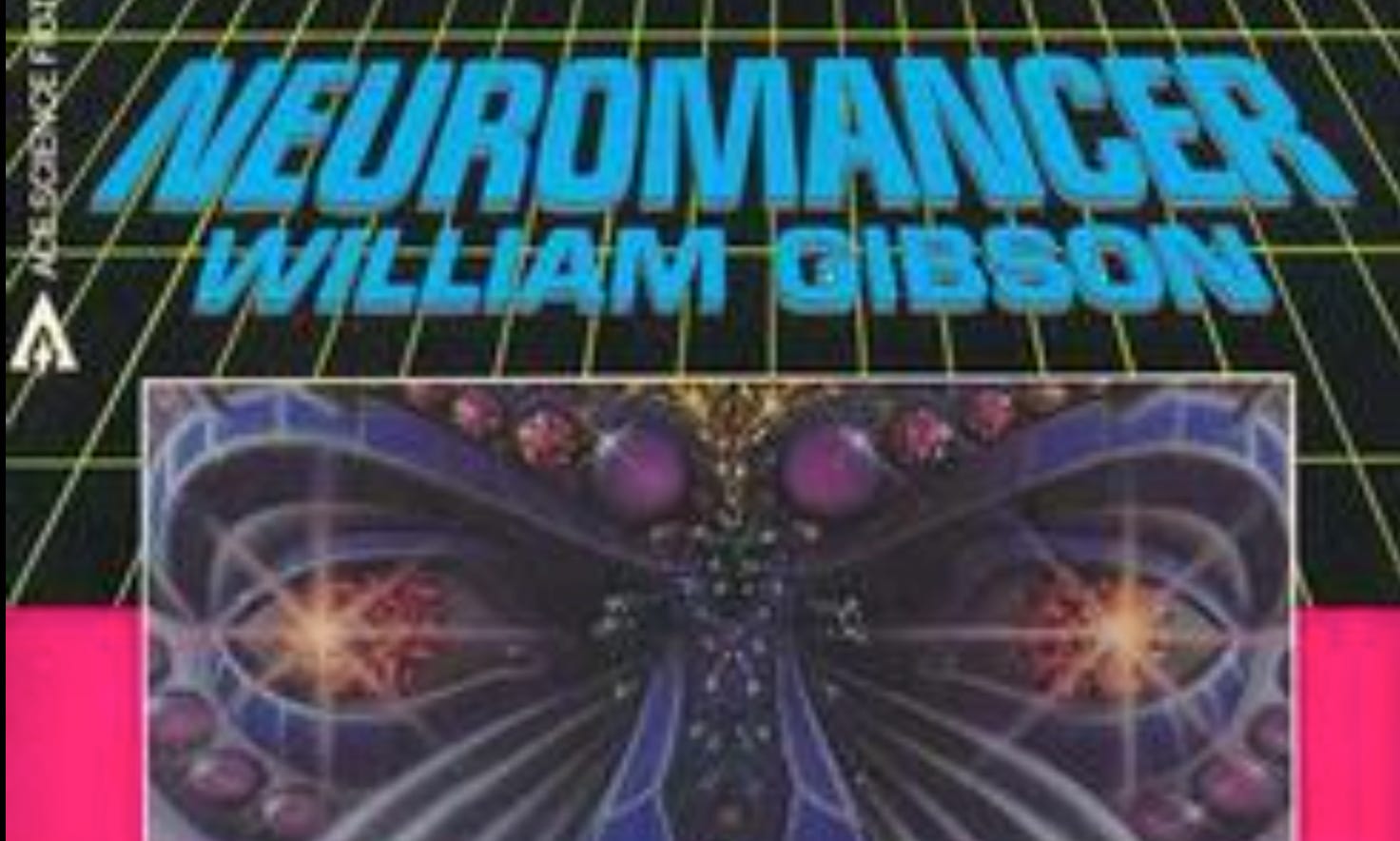
Apple TV+ is adapting William Gibson’s Neuromancer, the 1984 novel that defined cyberpunk and influenced science fiction for four decades. The streaming service announced the project with JD Dillard (The Falcon and the Winter Soldier, Devotion) directing and Graham Roland (Jack Ryan, Dark Winds) serving as showrunner. Production is scheduled to begin in 2025, with a tentative release in fall 2026 if the timeline holds.
The adaptation faces a challenge that has defeated Hollywood for 40 years: how to translate Gibson’s dense, allusive prose and abstract concepts into visual storytelling that works for audiences unfamiliar with the source material.
Apple TV+ has committed heavily to science fiction programming. The service launched with For All Mankind, an alternate history space race drama now in its fourth season. Foundation, based on Isaac Asimov’s novels, premiered in 2021 and has been renewed for a third season. Silo, adapted from Hugh Howey’s Wool trilogy, became one of the service’s most-watched shows. Invasion explores alien contact through multiple global perspectives. Severance blends workplace thriller with existential science fiction. Monarch: Legacy of Monsters expanded the Godzilla cinematic universe.
Foundation may be the best comparison piece to what to expect from Neuromancer, as it demonstrates both Apple’s ambition and its willingness to diverge from the source material. Asimov’s novels are philosophical explorations of psychohistory and societal collapse told through centuries of history. The show condenses timelines, adds action sequences, and creates character arcs that don’t exist in the books. The adaptation works as television but bears limited resemblance to Asimov’s original vision. Fans of the novels are divided, with some appreciating the visual spectacle and narrative momentum, while others see it as a betrayal of what made the books distinctive.
Neuromancer presents different adaptation challenges. Gibson’s novel follows Case, a washed-up console cowboy (hacker) hired by the mysterious Armitage to pull off an impossible heist in cyberspace. Case teams up with Molly Millions, a street samurai with retractable blade implants and mirrored eyes, to breach the security of Tessier-Ashpool SA, a wealthy family living on a space station called Freeside. The job is orchestrated by Wintermute, an artificial intelligence seeking to merge with its twin, Neuromancer, to achieve true consciousness.
The plot is relatively straightforward. The prose is not. Gibson writes in a fragmented, impressionistic style that evokes sensory overload and information density. His descriptions of cyberspace as “a consensual hallucination experienced daily by billions” is abstract and metaphorical rather than literal. The novel is short on exposition and heavy on atmosphere. Characters speak in clipped, jargon-heavy dialogue. Motivations are often unclear until late in the story. The world is presented without explanation, assuming readers will piece together how this future works through context.
Previous attempts to adapt Neuromancer have all failed. In the 1980s and 1990s, multiple studios optioned the rights. Directors including Chuck Russell and Chris Cunningham developed scripts that never made it to production. In 2000, Vincenzo Natali (Cube) was attached to direct with Hayden Christensen as Case. That version collapsed. In 2017, Deadpool director Tim Miller announced plans to adapt the novel, but the project stalled. In 2021, Apple acquired the rights and began development with the current creative team.
The core problem is translating Gibson’s cyberspace into visuals that feel like they remain science fiction in 2025 in an environment where we are all terminally online. When Neuromancer was published in 1984, the internet as we know it didn’t exist. Gibson imagined cyberspace as a three-dimensional virtual reality where hackers navigate data structures visualized as geometric shapes and neon grids. That imagery influenced every cyberpunk film and video game that followed such as The Matrix, Tron, Johnny Mnemonic, and countless others. By now, the visual language Gibson pioneered has been copied so many times it’s become cliché.
Any adaptation must either recreate Gibson’s original visionor reinvent cyberspace entirely, which risks losing what made the novel distinctive. The Matrix already adapted many of Neuromancer’s core concepts, including artificial intelligences manipulating humans, virtual reality as a battleground, and the idea that consciousness can be digitized. An adaptation that looks too much like The Matrix will be dismissed as derivative, even though Neuromancer came first.
The novel’s structure creates additional challenges. Large sections take place inside Case’s head as he navigates cyberspace or experiences drug-induced hallucinations. Gibson frequently shifts perspective without warning, jumping between characters and timelines. The climax involves Case simultaneously operating in physical space, cyberspace, and a simulated reality created by Neuromancer. Translating that into coherent visual storytelling requires quite a bit of restructuring.
JD Dillard brings experience with character-driven science fiction. His film Sleight blended street magic with sci-fi elements on a micro-budget. He directed multiple episodes of The Falcon and the Winter Soldier, demonstrating he can handle action and visual effects at scale. Devotion, his Korean War drama, showed skill with period detail and emotional storytelling. He’s a competent director, but Neuromancer will test whether he can balance Gibson’s abstract concepts with the narrative clarity television requires.
Graham Roland’s background is in thriller and action television. He co-created Jack Ryan for Amazon, a show that streamlined Tom Clancy’s novels into accessible espionage drama. He co-created Dark Winds, a crime series set on a Navajo reservation that balances procedural elements with cultural specificity. Roland knows how to structure serialized storytelling and maintain momentum across episodes. Whether he can preserve Gibson’s literary style while making the story work for television remains to be seen.
The show’s budget has not been disclosed, but Apple TV+ spends liberally on their current science fiction. Foundation’s first season reportedly cost over $45 million per episode. For All Mankind’s later seasons feature extensive visual effects for lunar and Mars bases. Neuromancer will require heavy VFX work for cyberspace sequences, futuristic cityscapes, and the Freeside space station. Apple has the resources to fund a visually ambitious adaptation.
Gibson has not publicly commented on the adaptation beyond acknowledging its existence. He’s been involved with previous failed attempts and has expressed skepticism about Hollywood’s ability to capture what makes his work distinctive. In interviews over the years, he’s noted that Neuromancer’s influence on visual culture makes adapting it paradoxically harder.
The fall 2026 release window assumes production, which has already begun on schedule in 2025 and encounters no major delays. That timeline allows for extensive post-production, which the show will need given the visual effects requirements. Apple has not announced episode count or season structure. Gibson’s novel is relatively short at 271 pages, which could support a limited series or a single season. Expanding it into multiple seasons would require inventing new material or adapting Gibson’s subsequent Sprawl trilogy novels which share the same universe but follow different characters.
What do you think? Can Neuromancer be faithfully adapted, or does Gibson’s prose style require too much compromise for television?
I’m putting out a trilogy of some of the best science fiction in years, bringing back the sense of wonder and exploration to the genre. The crowdfund is open now, and if you miss what sci-fi used to be, this is the series for you. Back it today.
NEXT: Angel Studios Shares New Trailer For Original Series ‘The Wayfinders’