



A viral post on the social media website X has opened up a debate on the popular Japanese anime series Dungeon Meshi, known in the west as Delicious in Dungeon, as to whether or not the culinary adventure, by author Ryoko Kui, was based on the popular tabletop roleplaying game, Dungeons & Dragons.
A user by the name of @MorganLeBlank, a self-proclaimed “D&D hater” was furious about a YouTube video by the YouTuber Beghast on the topic of Delicious in Dungeon. Beghast used his video, while shilling for a TTRPG platform, to talk about how the anime “understands Dungeons & Dragons” and compares and contrasts it to the tabletop game.
Specifically, the X user believes he is comparing it to the more recent Hasbro slop edition that is almost universally reviled by experienced D&D fans, and filled with changes to the core systems of the game in the name of “Diversity, Equity and Inclusion.” The user then blamed Critical Role, the popular voice actor-led Dungeons & Dragons adventure web series that made the tabletop game more pop culture friendly, and thus prone to infiltration from the worst sorts of people.
Dungeons & Dragons was originally developed by Gary Gygax and Dave Arneson as an extension of popular war simulation games, but placed in a medieval fantasy setting. Game Masters, the person controlling the game world, would lead players on a simulated role playing adventure, as the fate of their characters and their world would be determined by the roll of the dice.
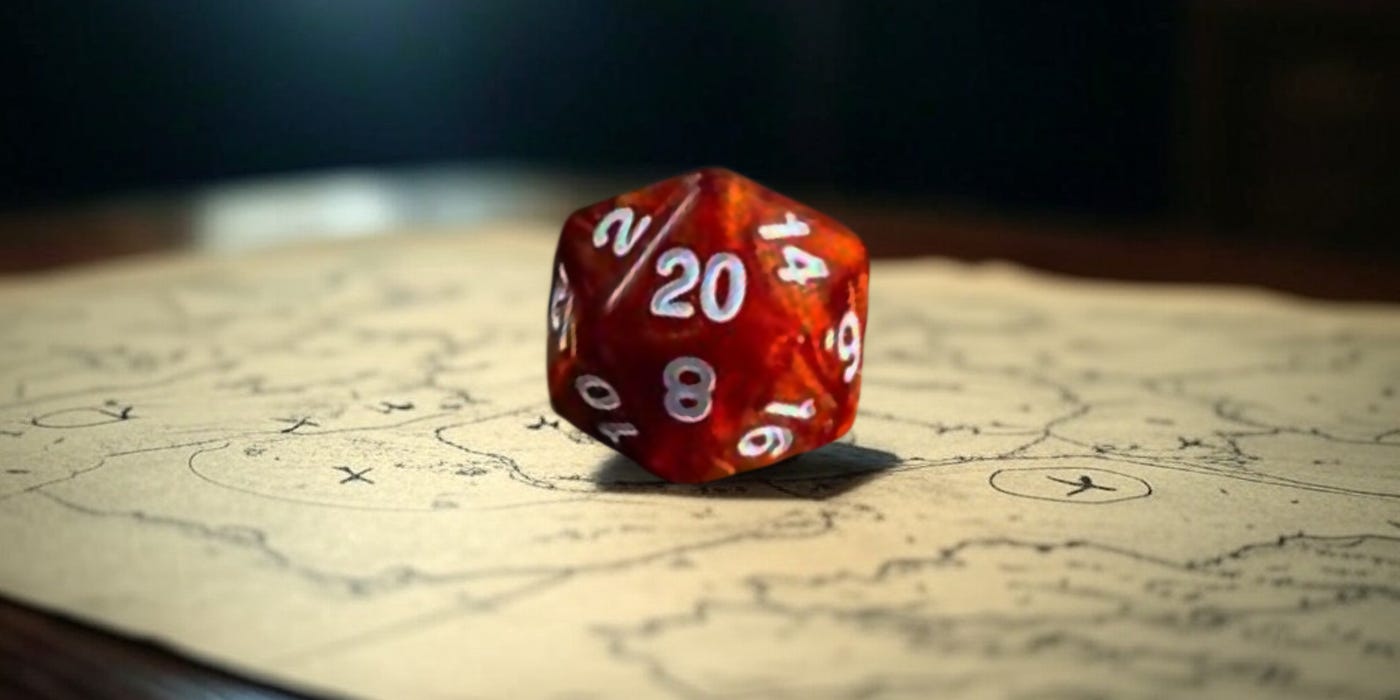
The simple nature of the game led to its immense popularity. With simply the game rules, some dice, something to represent the characters, and a pen and paper, players could chart a course through the ruins of an abandoned kingdom, or lay siege to the fortress of a powerful Lich. Players would have to be mindful to conserve their health and magic, and would routinely have to take time to carefully prepare their spells, hone their equipment, and even eat a refreshing meal, all to keep their characters in top condition to face whatever perils and trials await them.
If this sounds similar to Delicious in Dungeon, that’s because they share a common lineage. But does that mean the popular animated series is directly inspired by Dungeons & Dragons or a campaign thereof, like say, Record of Lodoss War? The answer is surprisingly simple: No, Delicious in Dungeon is NOT based on Dungeons & Dragons. So then, if the series is not directly inspired by D&D, what inspired it?
In August, Anime News Network, a highly disgraced, ideologically driven website that covers anime news while clickbaiting, defending bad localization, and promoting the doxing, stalking and harassment of Vic Mignogna and his fans, had a disastrously bad and widely panned interview with Delicious in Dungeon author Ryoko Kui.
It was evident from the start that ANN’s Lynzee Loveridge, one of the architects of the false accusations against Mignogna, was completely clueless and hadn’t done the bare minimum of research prior to the interview, short of watching the show itself. Loveridge asked Kui “From the manga series, it's obvious you enjoy TTRPGs. Can you tell us about one of your favorite player characters?” If she had done actual research she would know not to ask such a silly question.

In February, Kui was interviewed by popular Japanese magazine Famitsu, where she talked about her love of fantasy RPGs, and how they influenced her development of the world of Delicious in Dungeon. From a reddit translation of the article:
Interviewer: “When I first read Dungeon Meshi, I felt that its setting where a party consisting of characters like a human, an elf, a dwarf and a so-called hobbit venture deep into the dungeon was reminiscent of a classic fantasy RPG.”
Kui: “That's right. My father played various games on the NES console, starting with "Wizardry", and that was great entertainment for us, so it might have been something like a formative experience [in gaming, I guess] for me. When I was a child, these games were too difficult for me to play by myself. However, as I was growing up I started thinking, "I liked the atmosphere of that game" and "I want to draw something with that kind of atmosphere” and that was probably what inspired me.”
Interviewer: “Did you watch your father play games?”
Kui: “A lot. Among the various games, “Wizardry" was a bit different from the fun-to-watch games like "Dragon Quest", "Ultima" and "Fire Emblem”. Its first-person perspective with the continuously identical scenery made it seem like a rather plain game to my childish mind. However, I also remember finding great enjoyment in the monster illustrations found in its strategy guides and stared at them for hours on end.”
Interviewer: “Yes, the strategy guides had illustrations that you couldn't see in the game itself.”
Kui: “Growing up, I started playing RPGs and other games by myself, but because of times like taking entrance exams and when I started living on my own, I distanced myself from games for a while.”
Interviewer: “Yes, that's right. Many people have experiences like that, don't they?”
Kui: “I started playing games again when the serialization of Dungeon Meshi was decided. Learning that "Wizardry" itself has various influences from other works, I felt I should depict [my work] with a good understanding of those currents. So, while checking out computer games and TRPGs, I ended up exploring various works.”
Interviewer: “So. You started studying games because of Dungeon Meshi.”
Kui: “I also liked novels like "The Neverending Story" and "The Lord of the Rings", so I was already familiar with fantasy. However, I hadn't really thought about why similar terms appear in games here and there, so I thought to myself, "Come to think of it, why is it like that?"”
Interviewer: “So, from there, the world expanded. Regarding the title Dungeon Meshi, and there is also the English title which is “Delicious in Dungeon”, I assumed it was a nod to "Dungeons & Dragons."”
Kui: “The English title was actually chosen by my editor, and indeed, as far as I heard, it was consciously referencing "D&D." In fact, I only became aware of tabletop RPGs as an adult. When researching the history of games, you inevitably come across the name "Dungeons & Dragons". So, I read rulebooks and replay novels, and even played some computer RPGs based on "D&D". Since I didn't have anyone to play it with at the time, I feel like I haven't fully experienced it compared to people who have played it extensively.”
READ: Multiple Stores Announce Their Discontinuation of Games Workshop and Warhammer 40,000 Products
Returning to the Anime News Network interview, Ryoko Kui’s answer was to explain how it was video game RPGs, not tabletop RPGs, that led to the world of her series. “So, actually, I've never played Dungeons and Dragons; even the word "TTRPG" I hadn't learned until I became an adult. But I've seen a lot about Dungeons and Dragons, so I bought the Players' Guide and some of the related novels. So I have the knowledge to some extent, but I've never really played a TTRPG myself.”
Ryoko Kui’s development of Delicious in Dungeon had more to do with Wizardry, Dragon Quest, Baldur’s Gate, and The Lord of the Rings than it did with Dungeons & Dragons. While the games like Wizardry are inspired by the systems of Dungeons & Dragons, they are inspired more by the original Gygax-led version of the game, as opposed to the pronoun-filled, racial-bonus lacking, wheelchair accessible homunculus that currently exists.
It’s just another example of how Anime commentators, whether they are glorified bloggers with insider access in the industry, or YouTubers with a lot of time to fill for ad revenue and not a lot of actual substance to be found, are totally clueless about the shows they are watching. So no, Delicious in Dungeon is not based on Dungeons & Dragons, and definitely not based upon the works of whatever Hasbro employee is wearing D&D like a skinsuit as it attempts to Sweet Baby Inc. its way into the dustbin of history.
Are you a fan of Delicious in Dungeon and Dungeons & Dragons? Do you have any funny D&D campaign stories you’d like to share? Do you love or hate Anime News Network? Become a paid member to support our journalism and leave a comment.
Gator is an English language Vtuber and the host of the Anime Boomers Podcast with Cody Baier of Anime Outsiders, and Spooky Weebtrash. You can also find him on X as @TheGatorGamer.
"Based On", and "Inspired By" are two completely different things.............