


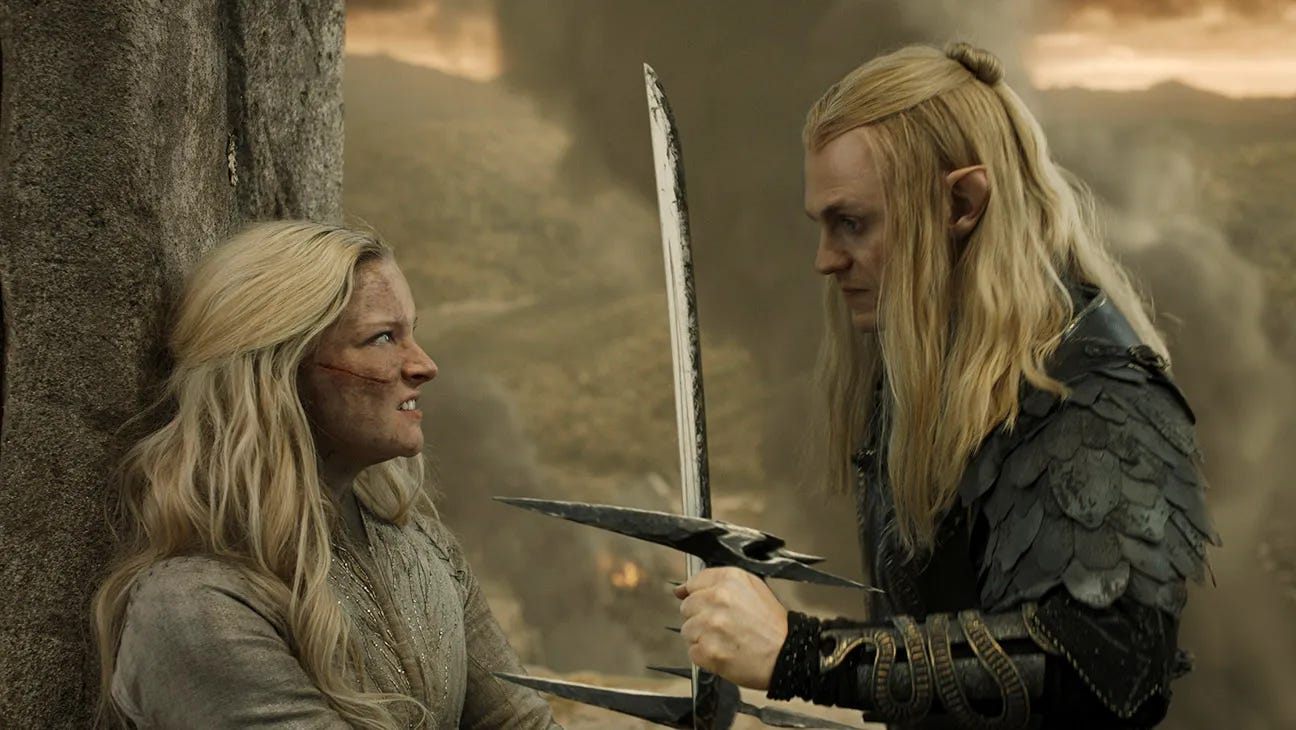
The Hollywood Reporter confirmed this week that The Lord of the Rings: The Rings of Power Season 4 is moving into pre-production this fall, with cameras expected to roll in early 2027. Season 3 premieres November 11, 2026 on Prime Video. The formal Season 4 greenlight has not been issued, but the production timeline is underway regardless. Amazon is building a fourth season of a show whose second season lost 60% of its first season’s audience.
Amazon paid $250 million for the initial rights deal with the Tolkien estate, HarperCollins, and New Line Cinema in 2018. Season 1 alone cost north of $465 million to produce, at roughly $58 million per episode, making it the most expensive television series ever made. The total investment across rights, production, and marketing for the full run is estimated to reach approximately $1 billion.
Production costs dropped significantly after Season 1 when the show relocated from New Zealand to the United Kingdom, capturing British tax incentives. Season 2 and Season 3 budgets have not been officially disclosed, but industry estimates place them at roughly $100 million and $80 million respectively. Season 4 is currently tracking toward an estimated $340 million total investment across all seasons at current projections, with Season 5 still to follow.
The audience for this investment is in freefall. A Luminate year-end report published in January 2025 found that Season 2 saw a 60% drop in total minutes watched compared to Season 1. Amazon disputed the framing while confirming the headline numbers. Third-party data from Samba TV showed only about half as many US households watched the Season 2 premiere as watched the Season 1 opener over their first three days. An independent analysis of Nielsen data estimated approximately four million US viewers for Season 2’s debut week, compared to roughly ten million for Season 1’s premiere. Season 1 itself had already lost the audience partway through its run: only 37% of US viewers who started the show finished the season.
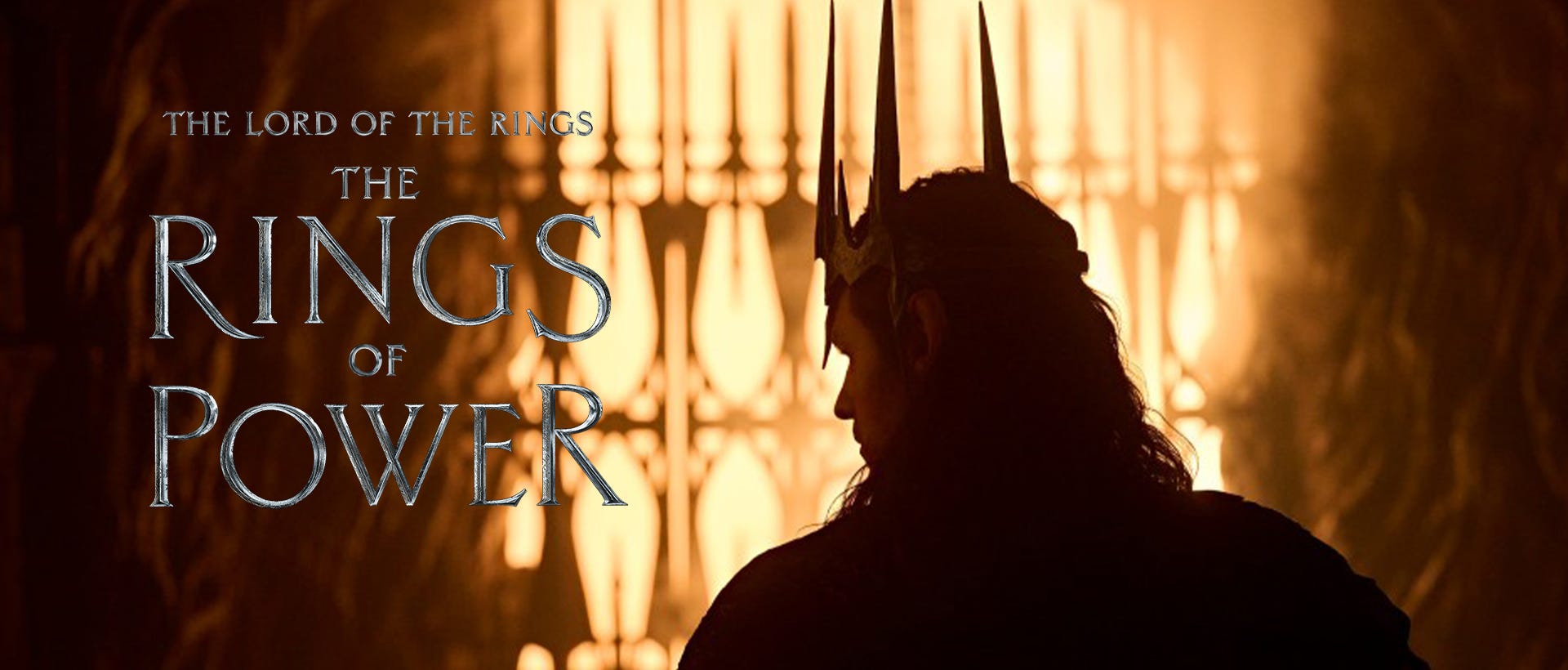
Amazon head Jennifer Salke touted 55 million global viewers for Season 2 in the month after launch. The number is rendered meaningless by the company’s refusal to define what constitutes a view. Amazon does not divide total viewing time by running time, meaning their figure is not comparable to any other platform’s reported viewership.
Season 3 introduces a significant creative pivot. The showrunners confirmed a major time skip between Season 2 and Season 3, with co-showrunner J.D. Payne describing Seasons 1 and 2 as “almost one roaring train” and expressing the aspiration for “big gaps in time later.” The time skip arrives after two seasons of compressed, non-canonical storytelling that collapsed Tolkien’s Second Age timeline from thousands of years into what felt like a single decade. The pivot suggests the showrunners recognize the pacing failed. It does not address the foundational problem, which is that the show invented characters, relationships, and plot lines with no basis in Tolkien’s actual writing.
Tolkien spent decades building the mythology of the Second Age in The Silmarillion, Unfinished Tales, and the appendices to The Return of the King. Amazon purchased the rights to adapt material from those appendices, not The Silmarillion or Unfinished Tales, which are owned separately. The showrunners built a five-season arc using Tolkien’s names and locations while inventing the connective tissue from scratch. Galadriel became a warrior protagonist hunting Sauron. Sauron spent a season disguised as a human character named Halbrand. The Harfoots were threaded through the central narrative for audience relatability. Tolkien fans recognized what was happening from the first episode.
The reason Amazon cannot simply cut its losses comes down to the kill fee. Amazon’s deal with the Tolkien estate includes a $20 million per-season penalty for any unproduced season of the originally committed five-season run. Canceling now, with two seasons remaining, costs $40 million before a single frame is shot. According to The Ankler, Jeff Bezos has maintained personal backing for the series beyond standard business metrics, with a source describing the show as being “under Bezos’ magical halo” and “protected for its run.” Amazon TV head Peter Friedlander reportedly visited the production to reassure the creative team they would be allowed to finish the story.
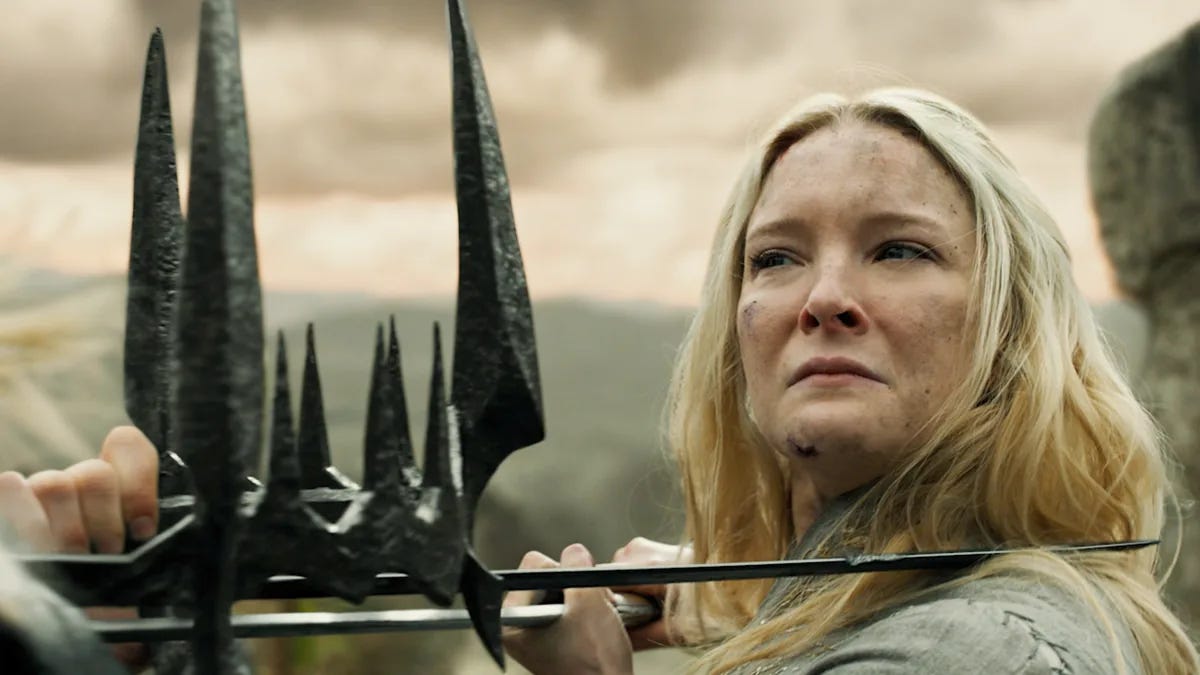
The math on cutting the cord is straightforward: $40 million in kill fees versus two more seasons of production at an estimated $80-100 million each, plus marketing and distribution costs, serving an audience that has halved twice in two seasons. The financially rational decision is to pay the $40 million, close the production, and redeploy that budget toward content that can actually grow an audience. Amazon is not making the financially rational decision because Bezos wants the show to exist.
The audience has been consistent on this show since 2022. The casting of Sophia Nomvete as Disa, a dwarf princess presented with no beard despite Tolkien’s explicit description of dwarf women, was a statement of intent. Arondir, an invented Black elf with no basis in Tolkien’s lore, was another. The collapse of the Second Age timeline to produce a watchable prestige drama was a third. None of it was what Tolkien wrote. All of it was framed in press coverage as an improvement.
Season 3 premieres November 11. Pre-production on Season 4 begins this fall. Season 5 follows. Amazon will spend what it costs to get to the end of the commitment, and Tolkien’s estate will collect its fees regardless of whether anyone watches.
The fans who wanted a faithful adaptation of The Silmarillion are still waiting. They will be waiting past Season 5.
What would it take for you to watch Rings of Power Season 3? Let us know in the comments.
Epic Fantasy hasn’t been this hard-hitting since Tolkien. In a world where humanity is akin to a Roman legion, a great darkness arises. Read A Throne Of Bones today.
NEXT: Reclaiming The Shire Part 9: The Tolkien Estate and the Amazon Problem
Money laundering, insurance scams, taxbreaks, networking with government for contracts etc means executives get paid regardless. Everyone else has paycuts or work for peanuts (activists) since they are happy for the platform or megaphone to run their mouths without needing paycheck to back it up.
They get around royalities since copyright is 20 % different or 80% same means it counts as a derinative work therefore royalities dont need to be paid to copyright holders.
Saving money to make money. Penny pinching. Penny squeezing. Hollywood greed.
Well if you'd pay me say 10% of the production cost of every episode I'd have to watch, I'd concider it. Short of that? Just... no.