



The debate around Alex Kurtzman’s tenure running Star Trek has never lacked for opinions. Fans have argued about the creative direction for years, the serialized storytelling, the visual overhaul, the politics baked into every script. But opinions don’t renew contracts. Numbers do.
The Tachyon Pulse Podcast sat down with data sourced from Nielsen ratings, platform subscriber counts, and an industry consultant working with one of the major demographic consultancy firms. What those numbers reveal about Kurtzman’s Star Trek is more layered than either his defenders or critics typically admit, and in at least one area, damning.
Discovery: A Strong Start That Nobody Remembers
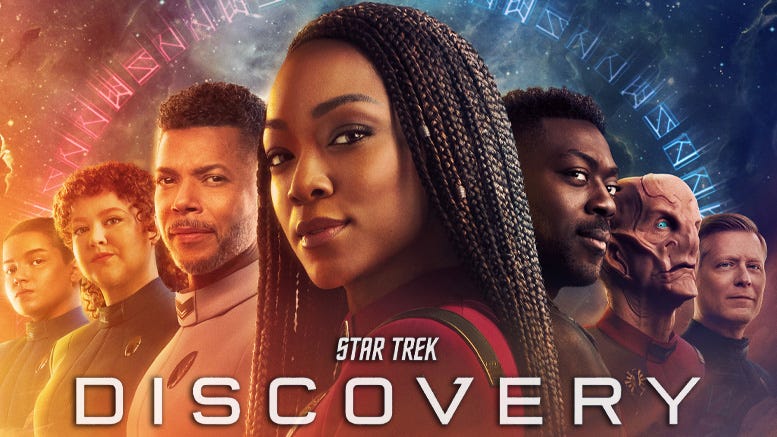
Discovery launched with momentum. The series premiere pulled nearly 10 million views in its first week and set an all-time single-day subscriber record for CBS All Access. For seasons one and two, the show also had Netflix as its international home, a vastly larger platform that propped up global numbers considerably.
By season five, the Nielsen picture was sobering. Discovery averaged 285 million minutes in its first seven days across its ten episodes. Not catastrophic, but noticeably behind where Strange New Worlds would land.
Strange New Worlds: The One That Worked
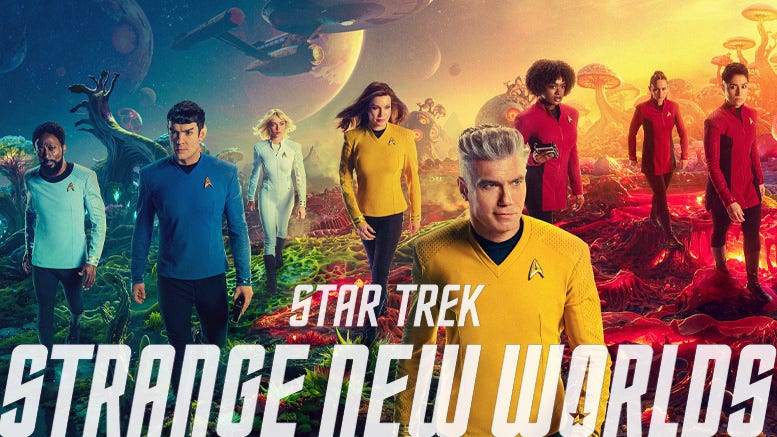
Strange New Worlds is the undeniable high-water mark of the Kurtzman era. Season two averaged 390 million minutes per week. Season three climbed to 470 million. That climb is notable because, by most fan assessments, season three was the weaker of the two. The audience discovered the show through the stronger season and carried that momentum forward.
Those numbers hold up even against Star Wars when you account for platform size. Paramount Plus has roughly 80 million subscribers. Disney Plus has 140 million, about 60% more. Applying that correction to Strange New Worlds season three puts the adjusted figure at 750 million minutes. That beats Andor’s 720 million and crushes The Acolyte’s 350 million, while costing nearly half as much per episode to produce.
That is the argument for Kurtzman in its strongest form. It is a real one.
The Cost Problem Nobody Is Talking About
Strange New Worlds costs between $10 and $11 million per episode. Starfleet Academy came in at $12 million, the most expensive Star Trek series under Kurtzman. Discovery, adjusted for inflation, runs about $11 million per episode.
Compare that to the shows that built Star Trek’s long-term financial foundation. The Next Generation cost $3.5 million per episode. Voyager ran about $5.8 million, both figures inflation-adjusted. The jump from $5.8 million to $11 million per episode is largely attributable to CGI spending, and that is where Tachyon Pulse lands its pointed critique: Kurtzman-era Trek leans on visual effects in a way that Star Trek fans have never demanded.
The Expanse, packed with CGI and inflated for modern production costs, still came in around $8 million per episode. Kurtzman overspent by approximately $3 million per episode on Strange New Worlds, Discovery, and Academy alike. Over a five-season run, that is a staggering amount of avoidable spend. For Academy alone, a two-season show, the excess likely exceeded $60 million.
Academy: Where It All Fell Apart

Star Trek: Academy’s first episode posted 343 million minutes, stronger than Discovery and not far off Strange New Worlds. On paper, a reasonable start. What followed was not reasonable.
Between episodes two and three, total viewership, domestic and international combined, was cut in half. The finale registered roughly 2.4 million minutes in the United States. Some outlets framed this as equivalent to 400,000 individual views, or even as low as 40,000 when accounting for the total minute-to-runtime ratio. Tachyon Pulse pushes back on those figures as US-only snapshots. Internationally, Academy averaged around 150 million minutes per episode across the season.
Even with that correction, the consultancy source was unambiguous: Academy came in 20% below the bottom end of their projected range. Paramount, according to the same source, looked at this show the way they looked at Section 31, as a decision that was flawed before production began, not just in execution.
The metric that seals it is minutes per million dollars spent. Strange New Worlds generates roughly 14 million minutes for every $1 million in production cost. Academy managed 12 million minutes per $1 million. For a show that cost more to make, that gap matters.
Section 31: The Number That Ends The Conversation

Section 31 generated 1.2 million minutes for every $1 million spent.
Not 14 million. Not 12 million. 1.2 million.
The show performed catastrophically in its opening week and then saw rewatchability fall off entirely. Nobody went back to it. The new Paramount leadership looked at Section 31 and reached a conclusion that carries serious weight: greenlighting a straight-to-streaming movie in this format was a bad business call from day one, not a marketing problem or a release timing issue. A fundamentally avoidable loss.
That assessment reportedly landed hard. Section 31, more than any other single title, is cited as the moment Paramount’s incoming leadership made up their minds about Kurtzman’s contract.
The Rewatchability Gap
This is the number that doesn’t make headlines but drives the entire long-term economics of franchise television.
Star Trek has always made its real money in syndication, in the decades-long tail of viewers who discover TNG or Deep Space Nine or Voyager and run through them multiple times. That is why Amazon MGM keeps Stargate alive. That is why these shows still air on cable in multiple countries. The initial viewership pays back the production cost. The rewatches generate the profit.
Star Wars scores a 48% rewatchability rating on the consultancy algorithm Tachyon Pulse cites. Classic Trek from the TNG era lands around 35 to 40%.
New Trek under Kurtzman scores 8%.
People are not going back to Discovery. They are not running through Picard again. Section 31’s rewatchability dropped after the first week and never recovered. The 8% figure explains why Paramount looks at Strange New Worlds’ decent initial numbers and still has no confidence. A show people watch once and abandon generates no long-term value. The production cost is not recouped over time. It is a sunk expense. At $10 to $12 million per episode, those expenses do not sink quietly.
The Verdict The Numbers Actually Support
Kurtzman’s Star Trek was not a total collapse. Strange New Worlds delivered real numbers, performed comparably to mid-tier Star Wars on an adjusted basis, and did so at a fraction of Andor’s per-episode cost. Discovery had a strong launch and built an international audience.
The financial decisions are a different matter. Overspending on CGI relative to genre peers, greenlighting Section 31, building Academy on a concept the market rejected before a single episode aired, these represent a pattern of miscalculation that compounds otherwise manageable viewing numbers. Layer in the 8% rewatchability score and Paramount’s long-term value proposition on Kurtzman Trek disappears entirely.
The numbers make one thing clear: whatever comes next, Paramount is doing it without Alex Kurtzman.
Thanks again to The Tachyon Pulse Podcast for delving into these numbers. Subscribe to him on YouTube.
What do you think? Do the numbers tell the full story, or is there a creative argument for Kurtzman that the data cannot capture? Get in the comments.
Three free books. No spam. Just new releases, deals, and the occasional update from the front lines of independent publishing. Sign up for the Jon Del Arroz newsletter and start reading today.

I could see a film school watching Academy as a case study in abject, but very expensive, failure. Research into catastrophic failure indicates that it rarely can be atributed to a single thing it is more more often a series of cascading mistakes. And kurtzman is just the guy to make them.
Nearly a dollar per minute of total viewership is insanity.
That's 1-900 number, Madame Cleo, Nintendo hotline spend.
Did no one tell Kurtzy that he MUST have parent's permission before calling?