


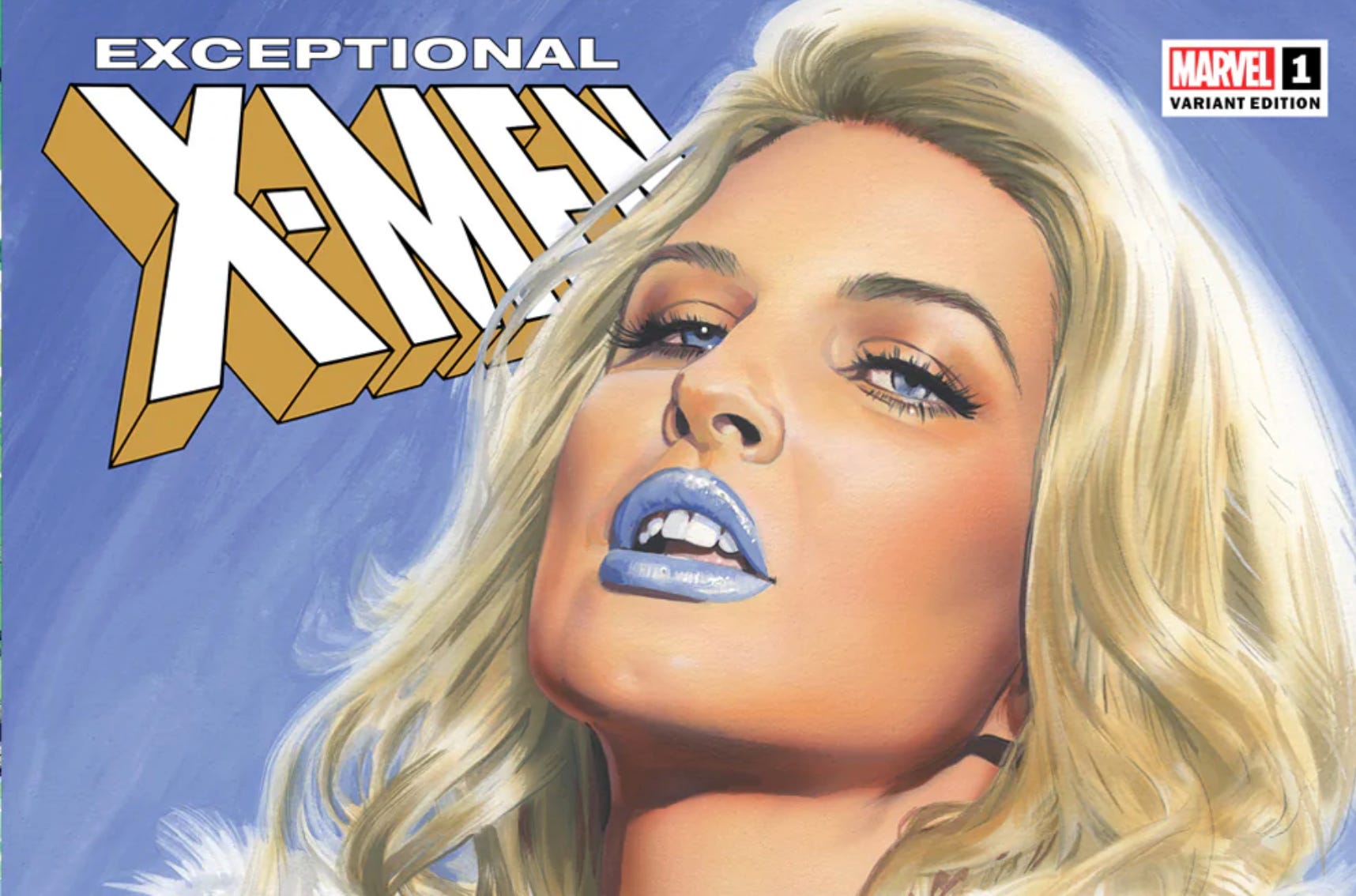
Mike Mayhew spent the last week of May detonating a grenade inside the comics creator community.
Mayhew is a photo-realistic cover artist with over thirty years of credits across Amazing Spider-Man, Fantastic Four, Star Wars, Batman, Justice League, and Vampirella. He runs Mike Mayhew Studio out of Glendale, California, producing exclusive variant covers, signed editions, original art, and CGC-graded comics that he sells direct to collectors without a middleman. He is not at San Diego Comic-Con this year. He will not be at any convention.
On Wednesday he posted a Summer 2026 Comic Con Manifesto on Instagram explaining why, and told every other creator in the industry to follow him:
“Fellow comic creators!! Stop giving away equity in your future and your brand! You don’t need these half-ass, part-time, tourists who call themselves stores! Half of them can’t handle it and crash into a wall from greed and stupidity and take us with them. Their interests are not in your best interest! You have wings that are being clipped! When you are exhausted after convention season, 60% of your energy will have been wasted on accommodating stores and fans. It’s unnecessary. Think of the art you could have made in the meantime. You are the proven innovator. You have extraordinary talent. Don’t kid yourself into thinking you need others to justify your success! And double your prices godammit! Your talent and your signature isn’t gasoline. You are not a commodity that should be available to everyone. You are special, and all those things ‘They’ll never sell’ will be on eBay tomorrow! Running a business is an art that can ignite your art in ways you never imagined! I will not be at any cons. I will be in the comfort of my own home with my family and traveling with loved ones for pleasure, while designing and scaling a creative brand with total freedom to do whatever I want. Take heed. Time is running out.”
Mark Brooks, another photo-realistic cover artist who runs his own studio with a similar business model, pushed back directly. Brooks is 53, has a teenage son, owns multiple properties, and says he is on track to retire in five years. He reads Mayhew’s position as ego dressed up as strategy:
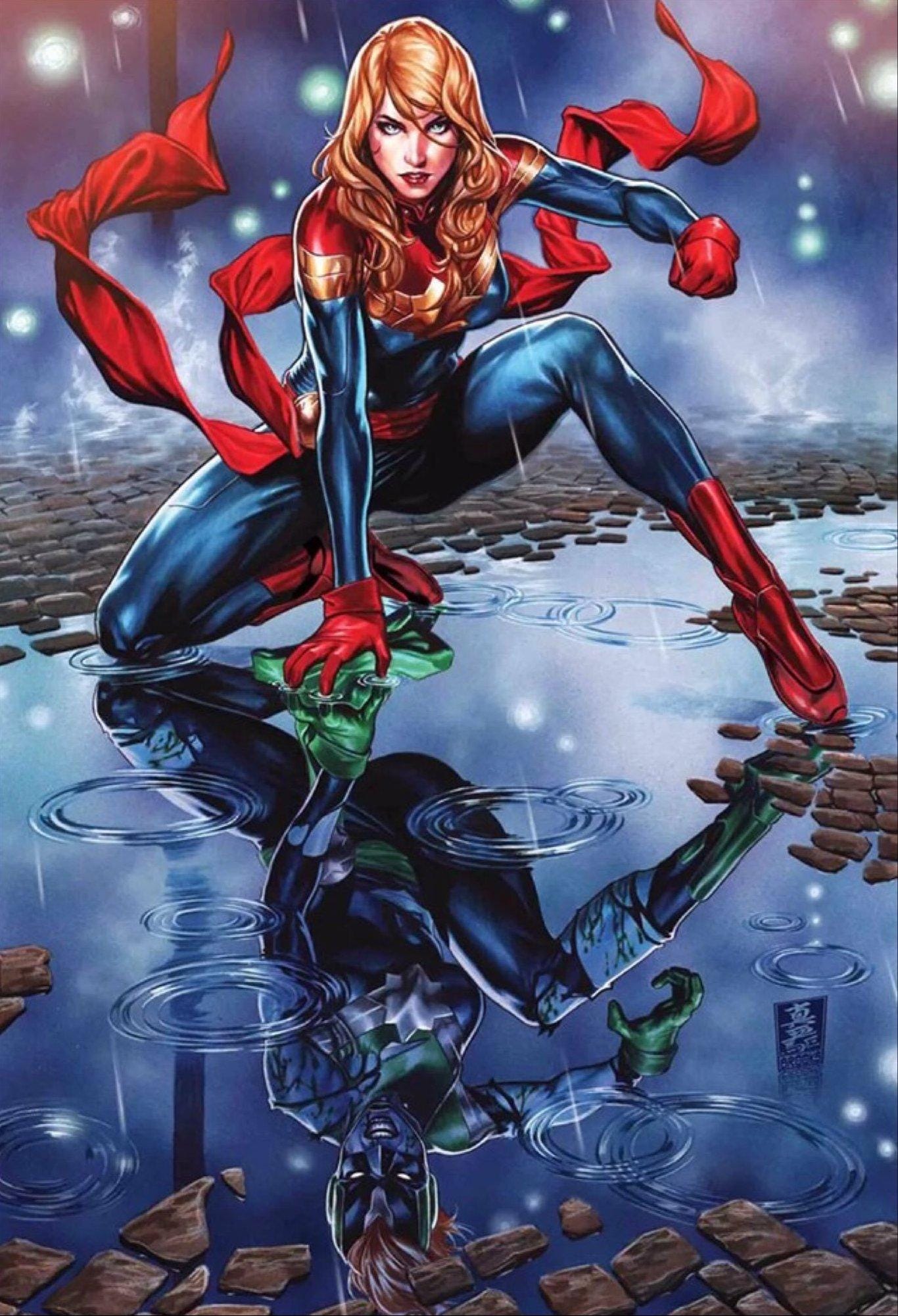
“My job is singular and solitary which I like. But conventions are how I recharge. I make plenty of money at home doing my thing but the money doesn’t buy camaraderie or the motivation I get when I meet the fans face to face that appreciate my work. A successful sale can fill my wallet for another month but it can’t fill my spirit. The bond with my peers and fans isn’t something I can buy my way into. Likewise, I love my representation and what they do for me. They handle logistics, customer service, and all the stuff that goes along with a successful online sale so I can focus on art. They earn every penny they get paid so I can feel stress free drawing and hanging out with my peers and fans. By doing that I produce more work that I’m paid for. It’s a win-win all the way around. Every artist in this business should do what works best for them so I won’t ever fault you for your decisions. The least you could do is do the same for your peers.”
Mayhew responded with context he had not initially offered, revealing the financial pressure behind the manifesto:
“I have extenuating circumstances in my life which prohibits or make it value proposition of whether I go to cons or whether I pursue this other really important part of my life that is not public. I’m 56 years old I’ve been in this industry for 33 years. I have two teenage children and I’m trying to pay for college, get ready for retirement, etc. Raising capital is a primary concern. I have invested $1 million printing Comics over the last eight years to have a message for my fellow comic artists. That was the nature of my post. I love going to conventions. I love meeting fans. There are decades of stories of me having warm encounters with fans. I love seeing and talking to other creators. I always make a point to tell them how much I appreciate their work. But the reality is that I’m gonna smoke all you guys by orders of magnitude on revenue. I think that’s something to think about. Because the convention experience trade-off is going to cost you an insane amount of money.”
Brooks responded:
“Trust me, I’ve been reading your replies. I get the exhaustion. I am doing things very differently than you, quite the opposite in fact. I’m on track to beat your year last year by loving my fans, getting out to see them, and producing work I love. I’ve also been fiscally minded since the day I began this job. I own multiple properties. I can retire fully in the next 5 years. Quite honestly, I’m exhausted by the cynicism of some of my peers that have grown grizzled and hard by a job that’s supposed to be fun. I’m 53. I’ve been doing this for 25 years. I have a teenage son I’m putting through college. Welcome to life. I too am constantly trying to earn, save, and protect my future. I do better every year, year after year. I think I’ll stick with what I’m doing. You’re welcome to do whatever it is you think you’re doing. Which at this point seems to be pissing off your fans and turning off your peers. You’re a hell of an artist but all of this is really confusing. If you do have a real message I think it’s getting lost in a lot of bad messaging and ego. But you don’t seem in the mindset to see that. Have fun with it I guess.”
Mitch Gerads, the Batman and Mister Miracle artist, kept his answer short: “I love cons. I love meeting new fans. I love seeing longtime fans. I love getting to hang out with my colleagues and friends. It’s a whole vibe and almost nothing fuels me creatively more than it.”
Dan Panosian, a penciller and inker with credits from Marvel, early Image, and creator-owned series including Slots, Canary, and Black Tape, was more open to Mayhew’s argument. He started skeptical:
“I personally love the conventions because it’s a great way to connect with the fans and honestly the whole vibe is inspiring. But you gotta find what works for you. For me, the conventions are a blast.”
Mayhew came back at him with specifics:
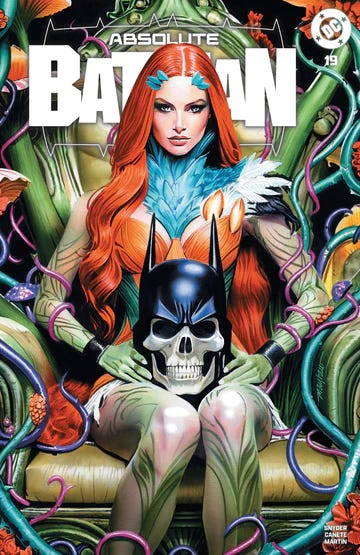
“I bet if you stayed home for one out of those six cons and did nothing but sketch covers, producing maybe 30 over 4 or 5 days, and sent those into CGC Signature Series and got the artist rate of $18, you would have made four times more money than going to that con. If you sold 30 9.8 sketch covers at $1k a piece that’s $30k. You can order as many sketch covers as you want through Lunar for $2-3 each. You don’t need a store to arrange all of this for you. You could put whatever you want on them. You could do 30 Absolute Batman sketch covers and they would probably go for $2000 apiece. I’m pretty sure that is game changing. We both live in LA. This shit is expensive. Traditional business would fantasize about an increase in revenue like that. You could promote them all month and then do one Whatnot stream or maybe two a month. It’s the same as having a Zoom meeting. Food for thought my friend.”
Panosian’s response shifted: “I’ve never tried something like that — but I don’t see why you couldn’t do both. I’ll definitely look into it. I still enjoy the conventions and seeing the fans and the other writers and artists. This is a very solitary job and it’s nice to see how the work is resonating with the readers and the other people in the business. But I’ll give the blank covers a go!”
Retailer Dennis Barger had no reservations at all: “You are the new comic book Jesus, go into the temple flip those f’in tables and chase out the middlemen who need creators more than they need them!!! Viva la revolution!”
Mayhew took the conversation somewhere broader in his final post, describing what he sees as a broken labor psychology unique to the comics industry:
“This is the mentality I’m trying to break. Damien Hirst isn’t doing anything for the people. Jeff Koons isn’t doing anything for the people. Takashi Murakami isn’t doing anything for the people. But in the comic book industry, comic creators and especially artists are conditioned that they’re lucky they’re even working in Comics and their gratitude should be on display and overflowing at all times. I think it’s a disproportionate expectation on this particular creative segment than you would find in any other creative field. Rock stars aren’t writing songs for you. Film directors aren’t putting you in a movie. Yet, comic book artists are supposed to give away free drawings and sign as many books as you want. I’m speaking in extremes to make a point. The farther I run away from this mentality, the more creative I can be, the more great collectibles I can produce and the more happiness I exchange with people. This is my truth. The language and the perspective surrounding the commerce of Comics and artists in the comic book industry is severely broken. Just like the gallery system in the fine art world is widely regarded to be a broken, failing system. In the art world a gallery takes a whopping 50% of the top of any art sold. Artists allow themselves to be taken advantage of for decades and then it’s too late.”
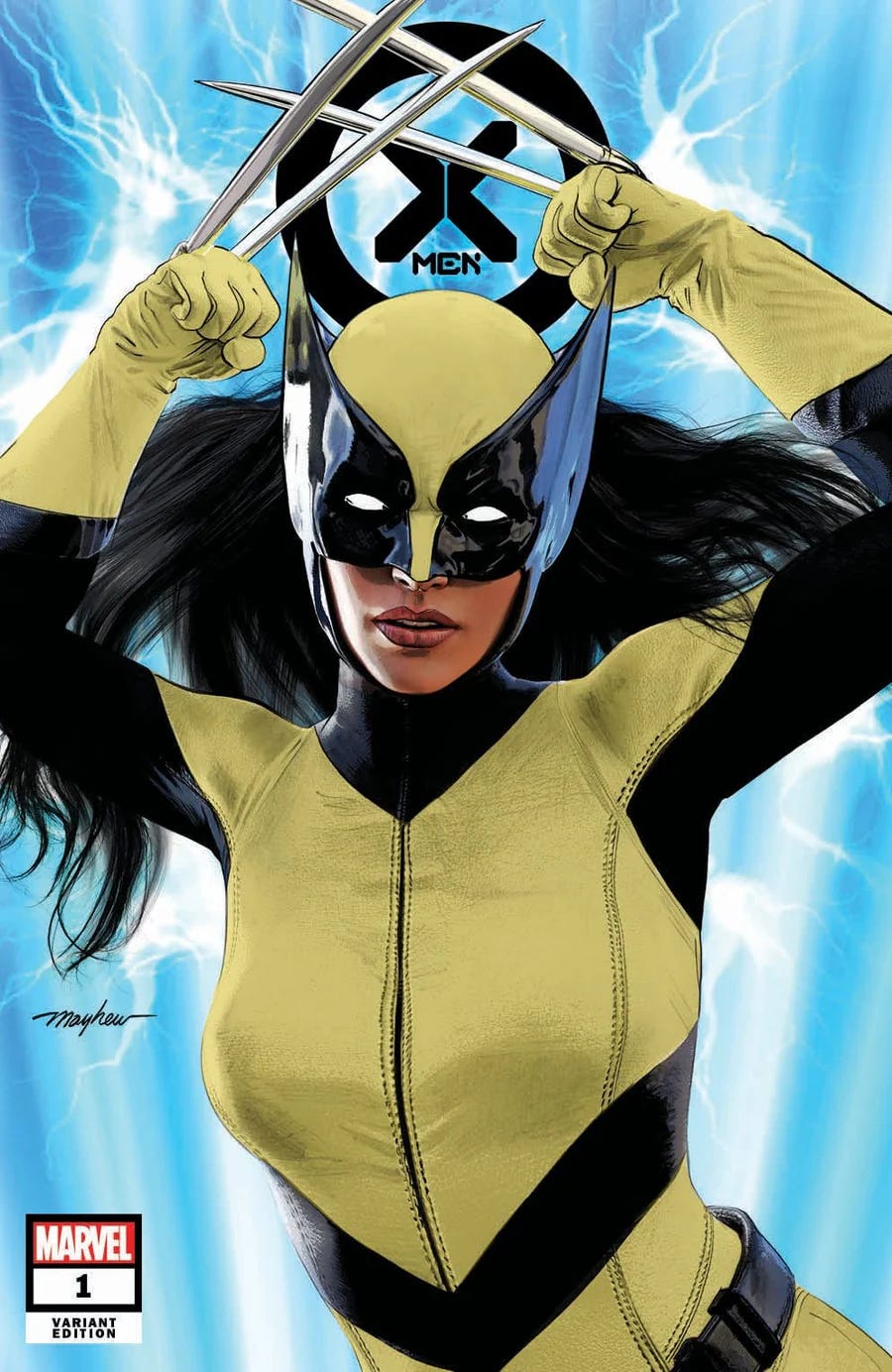
Mayhew is not being contrarian. He is making a business case in real numbers. Thirty Absolute Batman sketch covers at $2,000 each is $60,000 gross. An artist spending a weekend at a convention pays for travel, hotel, table fees, and opportunity cost on production time, and hand-sells to whoever walks by. Mayhew’s argument is that the same artist, staying home with a mailing list and a Whatnot stream, can generate multiples of that revenue while retaining full control over pricing, inventory, and the customer relationship.
He is also describing something the independent publishing community has been learning through hard experience: the convention and direct market retail infrastructure does not serve creators as well as it serves itself. The same dynamic that has creators waiting for a comic shop to order their book, or an online retailer to commission their cover variant, can be cut entirely with a direct relationship to the collector. The crowdfunding wave that built ComicsGate, Rippaverse, Ghost Machine, and dozens of smaller creator-owned operations in the last decade runs on exactly the logic Mayhew is articulating. Build a mailing list. Sell direct. Price according to the actual market value of your work, not according to what a con floor or a retailer will tolerate.
A livestream on Whatnot or YouTube is not a replacement for the creative energy of a convention floor, and Brooks and Gerads are not wrong that face-to-face time with fans does something that no digital interaction fully replicates. But as a pure revenue model, Mayhew’s math is hard to argue with. He has $1 million in inventory, a customer base built over thirty years, and zero need for a middleman to move product. He is 56. College tuitions are real. Retirement is real. The con floor is not the mechanism that solves either.
Is Mayhew right that comic artists should build direct and skip the conventions? Let us know in the comments.
450 pages of classic superhero storytelling that puts character first. The Flying Sparks Omnibus collects the complete saga of Meta-Girl — the kind of cape comic the mainstream forgot how to make. Sign up to get your copy.
NEXT: IndieGoGo Is Still Refusing to Approve Indie Comic Creators: Joe Sonntag Is the Latest
I started reading comics around 1976 and stopped for good in 2010. I never went to a con. Mayhew has the right idea. Who wants to be around fat Liberals who don't even appreciate him?
I understand Mayhew purports artist sympathy but his thinking is exactly how artists get replaced by AI.
Look at his quote: "I bet if you stayed home for one out of those six cons and did nothing but sketch covers, producing maybe 30 over 4 or 5 days, and sent those into CGC Signature Series and got the artist rate of $18, you would have made four times more money than going to that con"
Yeah and I bet if you fed all your art into a LLM and devoted yourself to churning out storyboard covers you finish you could make 5x money. Of course you torch the entire artist industry as a result in a year but sellsellsell!